


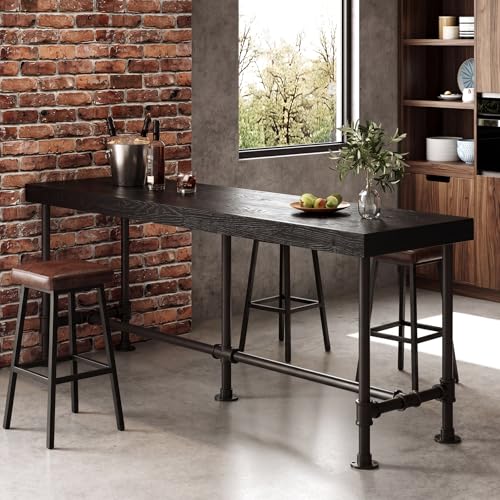
What Makes a 6-Person High Top Table Different?
A six-person high top dining table sits at the intersection of two popular formats: the sociable pub table and the family-sized dining set. Unlike a standard dining table that stands around 30 inches tall, a high top model elevates the eating surface to counter or bar height — usually somewhere between 36 and 42 inches. This transforms the dining experience into something more casual, energetic, and often more space-efficient for open-plan homes.
For a household of six, this format offers distinct advantages. Because the table footprint is often slightly more compact than a traditional six-seat rectangular table, it can fit into kitchens, lofts, and breakfast corners where a full dining set might feel cramped. The taller profile also creates visual separation between the dining zone and adjacent living spaces without the need for walls or room dividers.
However, a high top table is not simply a taller version of a standard table. The raised surface affects how chairs and stools are proportioned, how much knee clearance is available, and how the table interacts with lighting, windows, and room flow. Understanding these differences is the first step toward a purchase you will be happy with for years. If you are still deciding between the two formats, our guide on tall dining room tables explores the broader category of elevated dining furniture.
Choosing the Right Height for Your Six-Seat High Top
Height is the single most important specification to get right, because it determines which seating you can pair with the table and how comfortable the final setup will be. There are two primary height standards in the high top category:
Counter Height (around 36 inches)
Counter-height tables are the most common and the most versatile high top option. At roughly 36 inches, they sit only a few inches above a standard dining table, which makes them approachable for a wide range of guests. They typically pair with stools or chairs featuring a seat height of 24 to 26 inches. For a six-person setup, counter height strikes a comfortable balance between the casual pub aesthetic and everyday practicality — it is easier to get in and out of, and it feels less intimidating for older family members or guests who are unfamiliar with bar-height seating.
Bar Height (40 to 42 inches)
Bar-height tables push the surface higher, matching the height of a typical bar counter. They require seating with a 28 to 30 inch seat height and create a more pronounced pub or bistro atmosphere. A bar-height six-person table is a strong statement piece for a loft or an entertainment-focused home, but it demands more attention to stool stability and step-up access. For households with young children or guests who prefer a more grounded dining experience, counter height is usually the safer choice.
Whichever standard you choose, keep in mind the golden rule of clearance: the gap between the seat surface and the underside of the table apron should be roughly 10 to 12 inches. This allows comfortable legroom without forcing diners to hunch. If you are weighing standard versus elevated dining, our comparison of bar dining tables and 28-inch high dining tables offers useful reference points for how different heights feel in practice.
| Format | Typical Table Height | Paired Seat Height | Best For |
|---|---|---|---|
| Standard dining | 28–30 in | 17–19 in | Formal meals, families with young children |
| Counter height | 34–36 in | 24–26 in | Everyday dining, kitchens, versatile high top |
| Bar height | 40–42 in | 28–30 in | Entertaining, lofts, pub-style spaces |
Space Planning & Dimensions for Six Diners
A six-person high top table needs to accommodate not just six place settings, but also the elbow room, serving space, and walkway clearance that make daily meals comfortable. As a general rule, allow 24 inches of table width per person and 36 inches of clearance on all sides for chair pull-out and traffic flow.
For a rectangular six-seat high top, common dimensions land around 60 to 72 inches in length and 30 to 36 inches in width. Round six-seat tables, though less common in the high top category, typically require a diameter of at least 54 to 60 inches to seat six without crowding. Our guides on 60 x 36 inch dining tables and 30 x 30 inch dining tables help illustrate how footprint translates into seating capacity.
Room proportions matter just as much as table dimensions. A six-seat high top generally works best in a space of at least 10 by 12 feet, though that can flex depending on whether the table sits against a wall or floats in the center of an open-plan room. If your dining area is on the tighter side, our article on a dining table for 6 in a small space covers strategies for maximizing comfort without sacrificing the high top look. For rooms that need to switch between dining and social modes, a dining table that converts to a game table can add valuable versatility.
Seating & Stool Pairing for a High Top Table
The success of a high top dining setup depends heavily on the seating you choose. Unlike standard dining chairs, high top seating must be tall enough to deliver proper legroom while remaining stable and supportive. For a six-person table, you have three main seating directions:
Counter-Height Stools and Chairs
For a counter-height table around 36 inches, stools with a 24 to 26 inch seat height are the natural match. Look for models with a footrest — it makes a meaningful difference to comfort on a tall seat — and consider backless stools for a cleaner visual line or low-back stools for added support. Upholstered seats in a durable, wipe-clean material are a smart choice for daily meals.
Bar-Height Stools
For bar-height tables at 40 to 42 inches, choose stools with a 28 to 30 inch seat height. Stability becomes even more important at this height, so favor wider bases, weighted feet, or stools with a built-in footring. If your household includes children or older guests, a bar-height table with a lower secondary seating option nearby can be a practical compromise.
Benches and Mixed Seating
Some six-person high top arrangements use a bench along one side to increase seating efficiency. A dining table bench with a back can work well alongside individual stools, provided the bench height matches the table's seating standard. A black bench for a dining table is a popular option for visual contrast, while a round dining table with a round bench shows how curved bench seating can wrap around an elevated table.
Whatever seating you select, test the pairing against the 10 to 12 inch clearance guideline and confirm that the table apron or support structure does not restrict knees. You can learn more about proportion principles in our dining room table guide — it covers how table size and seating interact regardless of format.
Materials & Construction Tiers
High top tables are available across a wide spectrum of materials and build quality. To help you compare without relying on numeric figures, we group options into four consistent tiers used throughout this guide:
| Tier | Typical Materials | Construction Notes | Best For |
|---|---|---|---|
| Entry-level | Engineered wood, laminate tops, powder-coated steel legs | Basic joinery, lighter frames, good for occasional use | Starter setups, rental spaces, light daily use |
| Mid-range | Solid wood tops, veneer cores, reinforced metal frames | Sturdier joinery, improved stability, better finish durability | Everyday family dining, busy kitchens |
| Premium | Hardwood solids, stone or glass tops, heavy-duty bases | Precision joinery, refined finishes, commercial-grade stability | High-traffic homes, design-focused spaces |
| Luxury | Exotic hardwoods, natural stone, artisan metalwork | Hand-finished construction, heirloom-level materials | Statement dining rooms, long-term investment |
Material choice also shapes maintenance. Solid wood tops can be refinished over time, while glass and stone surfaces are easy to wipe clean but require care to avoid chips and scratches. Metal frames should be inspected for rust-resistant coatings, especially in humid climates. Our deep dives on glass and steel dining tables and steel and glass dining tables explain how those combinations perform in real-world use.
For a natural, warm aesthetic, a sheesham wood dining table or a small round wood dining table can be elevated to high top height with the right base. And if you prefer a sculptural look, a live edge dining table base can be adapted to a taller profile with the correct leg hardware.
Shape Options for Six Diners
The shape of your high top table affects both the dining experience and the way the table fits into the room. Here is how the main options compare for a six-person configuration:
Rectangular Six-Seat High Top Tables
Rectangular tables are the most common six-person format because they use linear space efficiently. They work well parallel to a kitchen island or along a wall, and they make it easy to add a bench on one side. A rectangular dining table style can also translate to indoor high top designs, and a 5ft dining table and chairs set illustrates how length corresponds to seating count.
Round and Oval Six-Seat High Top Tables
Round and oval tables promote conversation because every diner can see the others without turning. A white round dining table set for 6 shows how a circular footprint can seat a full household while keeping the room feeling open. For a high top version, look for pedestal bases that preserve legroom around the perimeter. If you need to seat more, our guide on 8 to 10 seater round dining tables explains how the sizing scales.
Square High Top Tables
Square tables offer a balanced, symmetrical look and can be a strong choice in compact dining zones. A 48-inch square dining table set demonstrates how a square top can accommodate six with careful placement, though a high top square for six is less common than rectangular or round.
Best Rooms & Placement Ideas
One of the strengths of a six-person high top table is its flexibility across room types. Here are the settings where this format tends to shine:
- Kitchens and breakfast nooks: A high top table creates a natural extension of the countertop, making the kitchen feel larger and more connected to the dining zone. A kitchen design dining table approach often uses the high top format to bridge cooking and eating spaces.
- Open-plan living areas: Because the table sits higher, it reads as a distinct zone without blocking sightlines. Pair it with a black light over the dining table to define the space visually.
- Lofts and studio spaces: A studio-size dining table with a high top profile can double as a workspace or social hub, while a dining table with chair storage helps keep compact rooms organized.
- Outdoor and patio settings: Many high top designs are built for covered outdoor use. Our articles on outdoor table dining sets and a long patio dining table cover weather resistance and material considerations.
When placing your table, avoid positioning it directly against a wall if you plan to seat someone on that side. A high top table typically benefits from floating placement or a clear 36-inch walkway on all active sides. If you are working with a long, narrow room, a tall square dining room table or a curved edge dining table can soften the layout and improve flow.
Buying Checklist for a 6 Person High Top Dining Table
Before You Buy, Confirm These Points
- Height standard: Decide between counter height (around 36 inches) and bar height (40–42 inches) based on household comfort and room style.
- Seat pairing: Verify that your chosen stools or chairs have the correct seat height and that the footrest is positioned comfortably.
- Clearance: Measure for at least 36 inches of pull-out space on all active sides of the table.
- Knee room: Check the apron or base structure to ensure it does not restrict legroom at any seat.
- Material durability: Match the surface material to your household — solid wood for refinishability, stone or glass for easy cleaning, metal for structural strength.
- Stability: Look for reinforced joinery, weighted bases, or cross-bracing, especially on bar-height models.
- Room flow: Consider how the table height interacts with windows, lighting, and adjacent living zones.
- Future flexibility: If your household size may change, consider an expandable metal outdoor dining table or a design with a leaf system.
Frequently Asked Questions
What is the standard height of a 6 person high top dining table?
Most high top dining tables fall between 36 and 42 inches. Counter-height models around 36 inches are the most common and versatile, while bar-height models at 40 to 42 inches create a more pronounced pub feel. The right height depends on your seating choice and household preferences.
How much floor space does a 6 person high top dining table need?
Plan for a table footprint of roughly 60 to 72 inches by 30 to 36 inches for a rectangular model, plus at least 36 inches of clearance on all sides. A room of at least 10 by 12 feet generally provides comfortable flow for a six-seat high top setup.
Are high top dining tables suitable for families with children?
They can be, with planning. Younger children may need age-appropriate seating or booster support, and stools should be stable with good back support. Many families choose counter height over bar height to make access easier for smaller members, or pair the high top with a lower secondary eating area.
What chair or stool height pairs with a high top table for six?
For a counter-height table around 36 inches tall, choose stools or chairs with a 24 to 26 inch seat height. For a bar-height table of 40 to 42 inches, select seating with a 28 to 30 inch seat height. Aim for roughly 10 to 12 inches between the seat and the table apron for comfortable legroom.
Ready to Elevate Your Dining Space?
Browse our curated selection of 6 person high top dining tables and find the format that fits your home, your household, and your style.
View Recommended Tables