
Solid Wood Antique Dining Table: A Timeless Centerpiece
Everything you need to know about choosing, evaluating, restoring, and styling a solid wood antique dining table — from wood species and joinery to patina, care, and modern placement.
Start the GuideWhy an antique solid wood table? A genuine solid wood antique dining table carries character no modern reproduction can replicate — years of grain development, hand-cut joinery, and a patina that deepens with every meal. This guide walks you through what to inspect, how to identify true antique construction, which wood species perform best, and how to integrate a heritage piece into a contemporary dining room.
What You Will Learn
- How to tell a real solid wood antique from a veneered or reproduction piece
- Which wood species age best and how to read grain and patina
- Joinery, legs, and structural checks before you commit
- Restoration decisions: preserve, refinish, or leave the patina
- Styling and pairing with chairs, lighting, and rugs
- Care routines that protect an heirloom for decades
What Makes a Dining Table a True Antique?
The word "antique" is often used loosely in furniture listings. Strictly speaking, a piece is considered antique when it is at least one hundred years old. In practice, dealers and collectors also use the term for pieces with documented period construction, even if the exact year is uncertain. What matters most is that the construction, materials, and wear patterns are consistent with an older piece — not just a distressed finish applied to a new table.
A genuine solid wood antique dining table will typically show evidence of hand work: slightly irregular tool marks, hand-cut dovetails or mortise-and-tenon joints, and a surface that has developed a warm, uneven patina over decades. Reproductions often mimic the silhouette but reveal themselves through uniform machine joints, perfectly consistent finishes, and modern hardware. Learning to read these signals is the single most valuable skill for any antique buyer.
Key Signatures of Authentic Antique Construction
- Hand-cut joinery: Look underneath the table. Dovetails, mortise-and-tenon joints, and pegged construction are strong indicators of period craftsmanship.
- Uneven patina: Genuine wear concentrates where hands, plates, and chairs actually touched the surface — not in random sanded patches.
- Wood movement evidence: Solid tops often show slight gaps or seasonal checks, which are natural and usually harmless.
- Old hardware: Hand-forged nails, wooden pegs, or period-appropriate screws are worth inspecting closely.
- Provenance: A documented history, maker's mark, or estate record strengthens authenticity.
If you are comparing a candidate antique against modern heritage-style options, our guide to hand-carved dining tables explains how carving quality differs between periods and today's reproductions. For a broader look at wood selection, see good wood for a dining table.
Wood Species Commonly Found in Antique Dining Tables
The wood species of an antique table determines its grain character, weight, durability, and how it responds to restoration. Most period dining tables were built from locally available hardwoods, so region of origin is a useful clue. The table below summarizes the most common species you will encounter and what each one means for a buyer.
| Wood Species | Typical Era / Origin | Character & Grain | Best For |
|---|---|---|---|
| Oak | 17th–19th century, Northern Europe & Britain | Strong open grain, heavy, honey-to-dark patina | Farmhouse and rustic interiors; heavy-duty family use |
| Walnut | 18th–20th century, Europe & North America | Rich chocolate tone, tight grain, elegant figure | Formal dining rooms and period-style interiors |
| Mahogany | 18th–19th century, colonial trade routes | Deep reddish-brown, fine grain, takes polish beautifully | Georgian, Victorian, and traditional settings |
| Pine | 18th–20th century, rural Europe & America | Soft, knotty, warm honey patina, casual feel | Country, cottage, and relaxed farmhouse dining |
| Teak | 19th–20th century, colonial Asia | Golden-brown, oily, naturally weather-resistant | Colonial-style interiors and high-humidity climates |
| Cherry | 18th–20th century, North America & Europe | Warm red-brown that deepens with light, smooth grain | Traditional and transitional dining rooms |
If you are leaning toward a lighter, Scandinavian-influenced antique, our Danish teak dining table and chairs guide covers mid-century examples and what to check on those pieces. For pine lovers, the vintage pine dining table guide is a useful companion read.
Structural Inspection: What to Check Before You Commit
An antique table is only as good as its structure. Cosmetic wear is expected and often desirable, but structural problems can turn an heirloom into a repair project. Use the checklist below during any in-person or remote inspection.
Top and Surface
- Warping and cupping: Lay a straightedge across the top. Small seasonal movement is normal; pronounced cupping or twisting is a red flag.
- Splits and checks: Hairline checks along the grain are usually cosmetic. Deep splits that separate the top into moving sections need professional attention.
- Patina consistency: A too-uniform finish on an allegedly old table can signal a recent refinish or a reproduction.
Joinery and Base
- Wobbly legs: Gently rock the table. A small amount of give may be fixable; significant looseness suggests failed joinery.
- Joint separation: Check where legs meet the apron and where the top attaches. Loose pegs or separated dovetails are common and often repairable.
- Replaced parts: Mismatched wood tone or hardware can indicate later repairs — not necessarily bad, but worth knowing.
Legs, Feet, and Hardware
- Leg style consistency: All four legs should share the same profile, wear, and finish. A mismatched leg often means a replacement.
- Foot wear: Even wear on the feet is a good sign of original use; sudden fresh cuts suggest recent modification.
- Stretchers and braces: Confirm that any stretcher bars are original and firmly attached.
If a table needs new legs or you are planning a repair, our wood dining table legs guide covers sourcing and matching period profiles. For a broader buyer checklist, see the first dining table checklist.
Ready to Explore Antique Solid Wood Tables?
Browse curated options, compare construction details, and find a heritage piece that fits your dining room.
View Recommended TablesRestoration Decisions: Preserve, Refinish, or Stabilize?
One of the most common questions about a solid wood antique dining table is whether to restore it. There is no single right answer — the decision depends on condition, rarity, and how you plan to use the table. In general, less intervention is better for value, but function should not be sacrificed for aesthetics.
Preserve the Patina
Best for tables with intact original finish and even wear. Clean gently, wax occasionally, and avoid sanding. This protects value and character.
Stabilize and Repair
Appropriate when joints are loose or the top has minor splits. Targeted repairs keep the original surface while making the table safe to use daily.
Full Refinish
Considered when the finish is failing, water-damaged, or has been painted over. A professional refinish can revive the grain, but reduces collector value.
When to Call a Professional
Structural repairs, veneer lifting, and finish removal on rare pieces are best handled by a furniture conservator. If you are weighing a DIY approach, our antique wood dining table revival guide walks through safe, reversible techniques. For surface-level fixes, the dining table refinishing guide and scratch touch-up guide are useful starting points.
Dealing with Water Rings and Heat Marks
Antique finishes are especially sensitive to heat and moisture. Before attempting any treatment, identify whether the finish is shellac, lacquer, oil, or wax — each responds differently. Our water ring removal guide and heat mark repair guide cover the safest methods for period finishes.
Styling a Solid Wood Antique Dining Table
An antique table is a statement piece, so styling should support rather than compete with it. The goal is to let the wood's grain and patina lead while surrounding it with pieces that feel intentional and harmonious.
Chair Pairing
- Match the era: Period-appropriate chairs reinforce authenticity. Windsor, ladder-back, and spindle-back styles pair naturally with oak and pine tables.
- Mix deliberately: A modern upholstered chair can work beautifully if the silhouette echoes the table's lines. Keep the palette grounded in warm neutrals.
- Bench seating: A wooden bench on one side opens up the room and softens the formality of a large antique table. Our seating bench guide covers sizing and style.
Centerpieces and Table Linens
Keep centerpieces low and natural — a simple bowl, a cluster of candles, or seasonal foliage. Heavy, tall arrangements block conversation and hide the wood. For linen, choose soft, undyed fabrics that let the patina show. Our dining table runner guide and beautiful dining table centerpieces guide offer practical ideas.
Lighting and Rugs
A pendant or chandelier centered over the table anchors the dining zone. Choose a rug large enough for chairs to pull out fully — a common styling mistake is an undersized rug under a large antique table. The dining table rug placement guide explains how to size and position correctly.
Room Context
Antique tables work in both formal and relaxed settings. In a modern room, contrast the heritage piece with clean-lined lighting and neutral walls. In a farmhouse or cottage setting, lean into texture: linen, stoneware, and warm woods. Our modern dining room table decorations and modern dining room table decor guides cover both directions.
Care and Maintenance for an Antique Wood Table
Antique wood is a living material. It expands and contracts with humidity, and its finish ages with exposure to light and use. A simple, consistent routine will keep the table stable and beautiful for decades.
Daily Habits
- Wipe spills promptly with a soft, slightly damp cloth — never soak the wood.
- Use coasters and trivets; antique finishes are thinner than modern catalyzed coatings.
- Avoid harsh cleaners, ammonia, and abrasive pads.
- Dust with a dry microfiber cloth weekly.
Seasonal Care
- Humidity: Keep indoor humidity between 40–55% where possible. Our humidity care guide explains why this matters for solid wood.
- Sunlight: Direct sun will fade and dry the finish. Use curtains or blinds during peak hours; see the sunlight fade prevention guide.
- Winter: Heating dries the air; a room humidifier prevents seasonal checking. The winter moisture control guide covers this in detail.
- Summer: High humidity can cause sticking drawers and joint swelling. The summer heat protection guide offers practical steps.
Long-Term Protection
Waxing once or twice a year with a natural furniture wax maintains the finish without buildup. Avoid silicone-based polishes, which can migrate into the wood and complicate future restoration. For deeper guidance, see the wood dining table wax and polish guide and the routine upkeep guide.
Moving and Relocating
Antique tables should be lifted, never dragged. Remove the top from the base when possible, wrap legs individually, and protect corners with padding. Our moving safely guide walks through the process step by step.
Where a Solid Wood Antique Dining Table Works Best
Antique tables are more versatile than many buyers expect. They can anchor a formal dining room, soften a modern open-plan space, or bring warmth to a compact apartment. The key is matching size and proportion to the room.
- Formal dining rooms: Pair a large mahogany or walnut table with period chairs and a statement chandelier.
- Open-plan living: A medium oak or pine table defines the dining zone without closing off sightlines. See our open concept dining layouts guide.
- Compact spaces: A small antique drop-leaf or gateleg table can double as a desk or console. The drop-leaf kitchen dining table guide covers options.
- Cottage and farmhouse: Pine and oak antiques feel at home with linen, stoneware, and woven textures.
If you are working with a narrow room, our narrow dining room furniture layout guide explains how to position a table without blocking traffic flow.
Understanding Antique Table Tiers
When evaluating antique and heritage-style solid wood tables, it helps to think in terms of quality tiers rather than specific figures. The framework below is relative and stays useful over time.
| Tier | Typical Construction | Best For | What to Expect |
|---|---|---|---|
| Entry-Level | Solid wood with machine joinery; often a later reproduction or simplified antique | First-time antique buyers and casual dining rooms | Solid character, straightforward repairs, limited provenance |
| Mid-Range | Period-consistent joinery, original hardware, documented age | Family dining rooms and collectors starting out | Better grain, stable structure, refinishable surface |
| Premium | Hand-cut joinery, rare species, strong patina, provenance | Formal dining rooms and design-led interiors | Investment-grade character and long-term stability |
| Luxury | Museum-quality period piece, documented maker, exceptional condition | Serious collectors and heritage interiors | Rarity, historical value, professional conservation recommended |
For a broader comparison of antique and vintage options, the Biedermeier dining table guide and the vintage dining table restoration guide are useful companion reads.
Frequently Asked Questions
How can I tell if a dining table is truly solid wood and not veneered?
Look at the edges and underside. Solid wood shows continuous grain wrapping around edges, while veneer often reveals a thin top layer with a different substrate beneath. Check for repeating grain patterns, which indicate a manufactured veneer. On antique pieces, hand-cut joinery and uneven patina are strong signals of solid construction. When in doubt, ask for close-up photos of the edges and underside.
Is it better to refinish an antique table or preserve the original finish?
Preserving the original finish is generally better for value and character, especially on rare pieces. Refinishing is reasonable when the finish is failing, heavily damaged, or painted over. Targeted repairs and gentle cleaning are often enough to make a table usable without removing its patina. Consult a conservator before refinishing a valuable antique.
How do I match chairs to an antique solid wood table?
Start with the table's era and wood tone. Period-appropriate chairs reinforce authenticity, while modern chairs can work if the palette and proportions harmonize. Wood tone does not need to match exactly — a complementary tone often looks more intentional than a forced match. Comfort and seat height matter as much as style, so test the pairing physically if possible.
What humidity level is safe for an antique wood table?
Aim for 40–55% indoor relative humidity. Below 35% wood can dry and check; above 60% it can swell and stick. A simple hygrometer helps you monitor the room. Avoid placing the table directly next to radiators, heating vents, or drafty doors, which create localized extremes.
Can I use a solid wood antique table as an everyday family dining table?
Yes, with sensible precautions. Use coasters, trivets, and a protective pad for hot dishes. Avoid dragging heavy items across the surface. A stable, well-repaired antique table is perfectly capable of daily use — the patina that develops is part of its character. If the finish is fragile, a custom table pad offers extra protection without hiding the wood.
What should I check for structural problems before buying?
Check for wobbling legs, joint separation at the apron and top, deep splits in the top, and mismatched replacement parts. Inspect the feet for even wear, and confirm that stretchers are firmly attached. Gently rock the table and look underneath. Minor loose joints are usually repairable; significant structural failure may not be worth the restoration effort.
Recommended Solid Wood Antique Dining Tables
⚠️ AFFILIATE DISCLOSURE: This website contains affiliate links. As an affiliate Associate, we earn from qualifying purchases. If you make a purchase through these links, we may receive a small commission at no additional cost to you. Read our full affiliate policy.

Furniture Dash Wood Dining Table Corona
Check price on Amazon
71 Inch Solid Wood Dining Room Table, Walnut | Rustic Kitchen Table, Large Wooden Rectangular Dinner Table for Dining Room, Home Office, Living Room Furniture, Easy Assemb
Check price on Amazon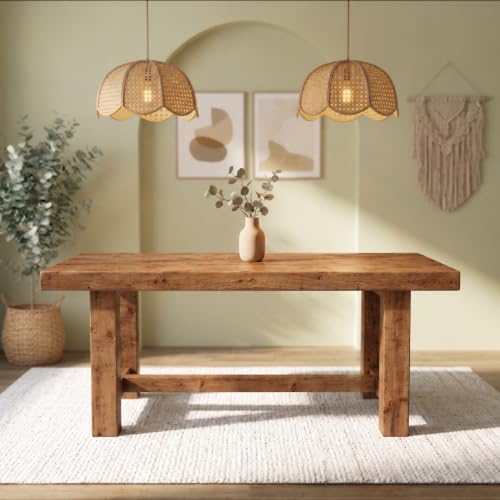
TRIBEWOOD 63-Inch Solid Wood Rectangular Dining Table for 4-6 People | Farmhouse Kitchen Table with Trestle Base, Natural Wood Finish for Dining Room, Elegant Details, Easy Assembly, Quick Setup
Check price on Amazon
Lexicon 60" Farmhouse Wood Dining Table for 4-6 People, Antique White | Solid Wood Frame Acacia Veneer Rectangular Kitchen Table, for Kitchen, Dining Room, Living Room, Assembly Required
Check price on Amazon
TRIBEWOOD Solid Wood Dining Table for 6, 63-Inch Farmhouse Kitchen Table with Heavy Duty Legs, Rectangular Wood Dinner Table for Dining Room, Living Room, Natural Brown (Only Table)
Check price on Amazon
First of a Kind Arcadia Rustic 60-Inch Solid Wood Round Dining Table in Antique White Ivory - Pedestal Base, Intricate Wood Inlay Detail, Upholstered Seating Style, Seats Up to 6
Check price on Amazon
RRI Goods Antique Round Dining Table - Solid Mango Wood Top with Wood Pedestal Base - Mango Teak Finish - 48" Dia. x 30" H
Check price on AmazonA Final Word on Buying an Antique Table
Buying a solid wood antique dining table is part practical inspection and part emotional connection. The right piece will show its age honestly, feel solid when you lean on it, and fit the way you actually live. Take your time, ask questions, and prioritize structural integrity over cosmetic perfection. A well-chosen antique table becomes the quiet anchor of a dining room — the surface where everyday meals and milestone gatherings alike take place for generations.
For more guidance, explore our care and maintenance hub and the shopping and reviews hub.