
Round Coffee Table to Dining Table: The Complete Convertible Guide
One table, two purposes. Discover how round convertible tables solve the space dilemma in compact homes, how their mechanisms work, what materials hold up to daily transformation, and how to choose a model that seats your household without compromise.
Explore Convertible OptionsWhy this guide matters: If you live in a studio, a compact apartment, or an open-plan space where the living room doubles as the dining room, a round coffee table that converts into a dining table is one of the most practical furniture investments you can make. This guide walks you through the conversion mechanisms, real-world seating limits, material durability, and the planning decisions that separate a table that frustrates you from one you rely on daily. For buyers already comparing specific products, the coffee table convertible to dining table overview pairs well with this deep-dive, and the convertible coffee table to dining table comparison covers direct model matchups.
How a Round Coffee Table Converts to a Dining Table
Round convertible tables are not a single product category — they are a family of designs united by one idea: the surface you use for lounging can be raised or expanded into a surface you can eat at. Understanding the mechanism is the single most important research step, because the mechanism determines stability, seating capacity, and how much daily effort the table demands from you.
1. Lift-Top Mechanism
A lift-top table keeps its original footprint but raises the tabletop on a hinge or scissor system, often with a small gas strut or locking latch. When lowered, it works as a standard coffee table; when raised, the surface sits at or near dining height. Many lift-top models also tilt the surface slightly toward the user, which is useful for laptops and reading but not for dining — check that the table can lock flat at full height. Lift-top designs are the most common conversion type because they are mechanically simple and require no extra floor space.
2. Pop-Up Leaf and Expander Mechanism
Some round tables conceal a leaf or an articulated extension inside or beneath the surface. A latch releases the leaf, and the tabletop splits or rotates to accommodate it, increasing both diameter and usable dining area. These models are attractive because the conversion adds seating capacity, not just height. The trade-off is complexity: more moving parts mean more joints to inspect, and leaf tolerances vary widely between entry-level and premium builds.
3. Nesting and Slide-Out Design
Nesting convertible tables store a smaller dining table beneath or beside the coffee table. You pull the dining table out, and the coffee table either becomes a side surface or tucks away. This design delivers the most generous dining surface of the three types, but it requires clearance around the table for the slide-out motion and a storage footprint that is easy to overlook in a tight room.
Mechanism check before you commit
Whether you choose a round coffee table to dining table model with a lift-top, a leaf, or a nesting design, test the following: the table must lock firmly at dining height with no wobble when weight is placed near the edge; the mechanism should move smoothly with one hand; and any gas strut or hinge should be replaceable. A table that shifts under a dinner plate is a safety issue, not a minor annoyance.
Height, Diameter, and Seating: The Numbers That Matter
The most common disappointment with convertible tables is a height mismatch. Coffee tables sit low — typically 14 to 18 inches — while dining tables need a surface around 28 to 30 inches. A convertible model must close that gap, and the quality of the mechanism at full extension is what separates a stable dining surface from a wobbly one.
| Specification | What to Look For | Why It Matters |
|---|---|---|
| Dining height | 28–30 inches at full extension | Matches standard dining chair seat height (17–19 inches) for comfortable posture |
| Coffee height | 14–18 inches when lowered | Keeps the living-room function ergonomic for sofa seating |
| Diameter (coffee mode) | 30–36 inches | Enough surface for drinks and remotes without crowding a small room |
| Diameter (dining mode) | 36–48 inches | Seats 2–4 people with elbow room; allow ~24 inches width per person |
| Clearance around table | 24–30 inches on all sides | Lets chairs pull out and people walk behind without squeezing |
| Weight capacity | Rated for full dinnerware load | Plates, serving dishes, and leaning elbows stress the mechanism, not just the top |
Seating capacity deserves special caution. A round table that converts from coffee to dining height usually seats two comfortably and four at a push. If your household regularly eats together at the same table, measure the expanded diameter and compare it against the per-person width rule above. Buyers who need a fixed, roomy dining surface for four should also review the dining table for 4 small space guide and the space-saving dining table and chair set overview, since a dedicated compact table may suit daily meals better than a convertible.
Materials and Construction: What Survives Daily Conversion
A convertible table is moved every day. That changes the durability equation. A fixed coffee table only needs a stable base; a convertible table needs a top, frame, and mechanism that tolerate repeated raising, locking, and loading. Construction quality matters more here than in almost any other furniture category.
Solid hardwood tops
Oak, walnut, and other hardwoods hold screws and hinges reliably and resist denting when dinnerware is set down. Solid tops are heavier, which actually helps stability at dining height. This is the most durable choice for daily conversion, and the solid oak dining table top guide explains grain and finish considerations that apply equally to convertible tops.
Engineered wood with quality veneer
A practical mid-tier option. The top is stable and flat, and modern veneers resist moisture well. The weak point is the hardware mounting: screws in particleboard can loosen after repeated cycles, so look for metal inserts or reinforced mounting plates at hinge points.
Metal frames and mechanisms
Powder-coated steel and aluminum frames are the backbone of a reliable lift system. Check for rust-proof finishes and reinforced pivot joints. High-grade steel hardware with locking latches is the hallmark of premium and professional-grade convertible tables.
Glass and stone tops
Glass tops are easy to wipe and visually light, but they add weight and require careful edge protection during conversion. If you prefer stone, note that a faux marble counter-height table is a different category entirely — stone-topped convertibles are rare and heavy, and the mechanism must be rated for the extra load.
Finish choice also affects maintenance. An oiled finish is easy to touch up but needs periodic re-oiling; a lacquered or powder-coated finish wipes clean but shows scratches more readily. Whichever surface you choose, plan for a protective pad or mat during the conversion cycle, since repeated contact between the top and the frame is where wear first appears.
Space Planning: Where a Convertible Round Table Actually Works
Round tables are space-efficient because they have no corners to catch hips or door swings, and a round convertible table is especially well suited to square-ish living zones. But the conversion motion itself needs room. A lift-top table needs vertical clearance above the surface; a leaf table needs horizontal clearance for the leaf to swing or slide; a nesting table needs a clear slide-out path.
Start by mapping the table's dining-mode footprint, not its coffee-mode footprint. Mark the expanded diameter on the floor with tape, then add 24 to 30 inches on every side for chair pull-out and walkway. If the marked zone collides with a sofa, a doorway, or a circulation path, the table will feel cramped in daily use even if it fits in coffee mode. The dining table space planning guide and the dining table walkway clearance guide provide detailed measurement methods you can apply directly to a convertible layout.
Lighting is the other planning factor. A pendant or chandelier sized for a coffee table will sit too low once the surface rises to dining height. The chandelier width over dining table guide helps you size a fixture that works in both modes, and the dining table lighting placement guide covers height and positioning for multi-use rooms.
A practical layout test
Before buying, simulate dinner: set four chairs around the taped dining-mode zone, sit in each one, and check knee clearance under the imagined table edge and elbow room between neighbors. If any seat feels cramped, size down to a two-seat configuration or consider a dedicated small 2-person dining table instead of pushing a convertible beyond its comfortable capacity.
Convertible Table Tiers: What Each Level Delivers
Convertible tables vary enormously in build quality, and the differences concentrate in the mechanism. The table below uses universal quality descriptors rather than figures, so it stays useful regardless of market conditions.
| Tier | Typical Construction | Mechanism Quality | Best For |
|---|---|---|---|
| Entry-Level | Engineered wood top, basic metal frame | Simple hinge or manual lift; may need two hands and careful alignment | Occasional conversion, light daily use, renters furnishing a first apartment |
| Mid-Range | Veneered hardwood or solid softwood top, reinforced frame | Smooth lift with locking latch; leaf extension on some models | Daily meals for one or two people; regular living-to-dining switching |
| Premium | Solid hardwood top, high-grade steel mechanism | Gas-strut or precision scissor lift; firm lock at full height; leaf expansion seats four | Households that convert the table multiple times a day and host regularly |
| Luxury | Statement hardwood or stone top, commercial-grade hardware | Engineered lifting system with damped motion and concealed hardware | Design-led open-plan homes where the table is a focal piece |
A useful rule of thumb: the more often you convert, the more the mechanism matters relative to the top material. A mid-range table with an excellent lift system will serve daily life better than a premium top mounted on a fussy hinge. Buyers weighing the trade-offs can pair this page with the multipurpose dining table guide for a broader view of dual-purpose furniture categories.
Buying Checklist for a Round Convertible Table
- Confirm both heights: coffee mode 14–18 inches, dining mode 28–30 inches, with a firm lock at full extension.
- Test the lock under load: the table should not flex or shift when weight is placed near the edge at dining height.
- Measure the expanded diameter and compare it with the number of people you actually seat — round tables fit fewer people than their width suggests.
- Map the dining-mode footprint with 24–30 inches of clearance on every side before committing.
- Inspect the mechanism materials: look for reinforced mounting plates, replaceable hinges, and rust-proof finishes on metal parts.
- Check the weight rating against a full dinner setting, not just a laptop and a cup.
- Plan lighting height for the raised mode so a pendant does not block sightlines or glare onto plates.
- Decide on finish maintenance: oiled surfaces need periodic care; lacquered and powder-coated surfaces need scratch awareness.
For households that need a dedicated table more often than a convertible, the space-saving dining table set for 4 and the small dining table and chairs overview are worth comparing side by side with convertible options. And if the room leans more living space than dining space, the coastal dining table decor guide shows how a multi-use table can be styled to fit a relaxed, open-plan aesthetic.
Recommended Round Coffee Tables That Convert to Dining Tables
⚠️ AFFILIATE DISCLOSURE: This website contains affiliate links. As an affiliate Associate, we earn from qualifying purchases. If you make a purchase through these links, we may receive a small commission at no additional cost to you. Read our full affiliate policy.

Elbionlife 34.5’’ Round Wood Coffee Table Lift Top, 2 in 1 Transformer Expandable Dining Table, Natural Wood, Variable Height, Space-Saving Design for Living Room, Home Office, Natural
Check price on Amazon
Merax 34.5" Round 2-in-1 Transformer Coffee Table with Adjustable Height,Solid Wood Lift-Top Cocktail Table,Converts from 16.5" Low Coffee Table to 29.5" High Dining/Bar Table,Natural
Check price on Amazon
Homiflex Dual Lift Top Coffee Table with Bench and Round Edge, 40'' Natural | Lifting Coffee Table with Hidden Compartment & Open Shelves for Living Room, 4 in 1 Convert Gaming/Reading/Dining Table
Check price on Amazon
Homiflex Lift Top Coffee Table with Bench, 47'' Oval Coffee Table, Natural | Dual Lifting Coffee Table for Living Room, 4-in-1 Convert Gaming/Reading/Dining Table, Large Center Table with Sliding Doors
Check price on Amazon
WIKLMOTH Folding Round Japanese-Style Tea Coffee Table Low Table, Foldable Dining Table, Study Table, Small Desk, for Tatami Sitting On The Floor Bedroom Bay Window Tea Room, Space Save(60 * 60cm)
Check price on Amazon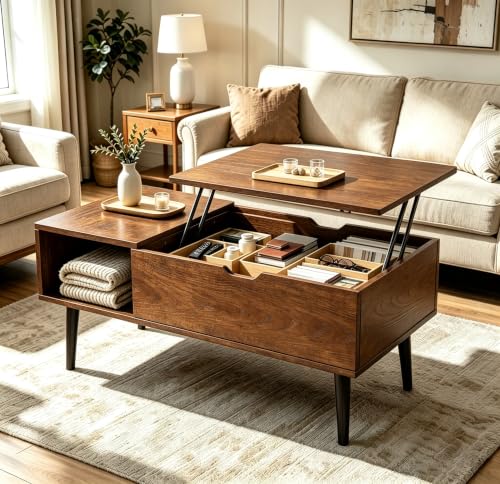
DUMOS Coffee Tables with Storage, Lifting Top for Living Room | Wood,Lift Top, Hidden Compartment, Storage Shelf, Center Table, Home, Living Room, Office, Rust Brown
Check price on Amazon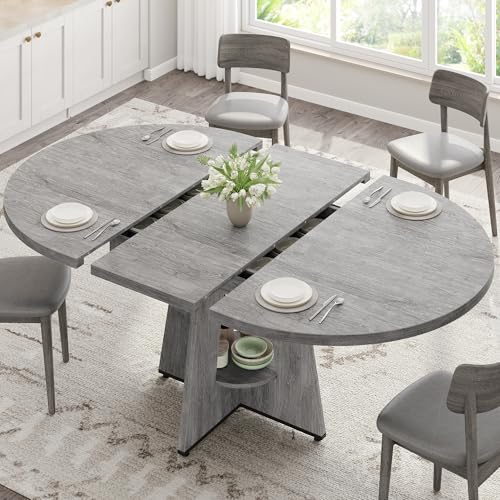
Extendable Dining Table, Round Kitchen Dining Room Dinner Table with for 4 6 8 People, Space Saving Modern Oval Expandale Furniture with Storage and Pedestal for Kitchen Living Room (Grey)
Check price on Amazon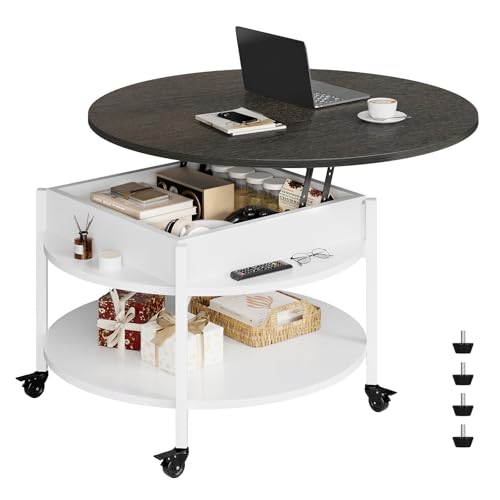
FABATO Small Round Lift Top Coffee Table with Wheels and Storage, White | 26.77’’ Rolling Lift Up Circle Center Table, Hidden Storage and Compartment, 2 Tier Small Circle Dining Table for Living Room
Check price on AmazonFrequently Asked Questions
How does a round coffee table convert into a dining table?
Most convertible round tables use one of three mechanisms: a lift-top system that raises the surface to dining height, a pop-up leaf mechanism that expands the tabletop, or a nesting design where a smaller dining table slides out from beneath the coffee table. Each mechanism has trade-offs in stability, ease of use, and seating capacity.
What height does a round coffee table need to reach to function as a dining table?
A standard dining table surface sits between 28 and 30 inches high. Coffee tables typically sit between 14 and 18 inches. A convertible model must raise its surface by roughly 12 to 16 inches to reach comfortable dining height, so check that the lift mechanism is rated for that range and remains stable at full extension.
How many people can a round convertible table seat?
A round table that converts from coffee to dining height typically seats two to four people comfortably. Models with an expanding leaf can seat up to four, while fixed-surface lift-top designs usually accommodate two. Confirm the expanded diameter and allow at least 24 inches of width per person for comfortable seating.
What materials are best for a convertible round table?
Solid hardwood tops and reinforced metal frames offer the most durable construction for a table that moves daily. Engineered wood with a quality veneer is a practical mid-tier option. Avoid lightweight particleboard in the lift mechanism, as repeated raising and lowering stresses joints. Look for powder-coated or rust-proof finishes on metal components.
Is a convertible table a good long-term choice for a small apartment?
Yes, provided the mechanism is well built and the dining-mode footprint fits your room. A convertible table is a long-term investment in flexibility: it lets one zone serve two purposes without a second piece of furniture. The main long-term risk is mechanism wear, so prioritize replaceable hardware and a solid lock over cosmetic features. Buyers who want a dedicated compact dining surface can also explore the compact round dining table guide.
Ready to Compare Convertible Options?
Review the recommended round coffee tables that convert to dining tables above, then check the expanded dimensions against your room before you decide.
View Convertible Tables