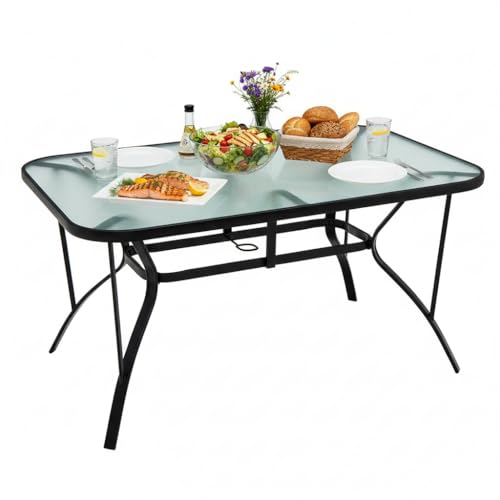
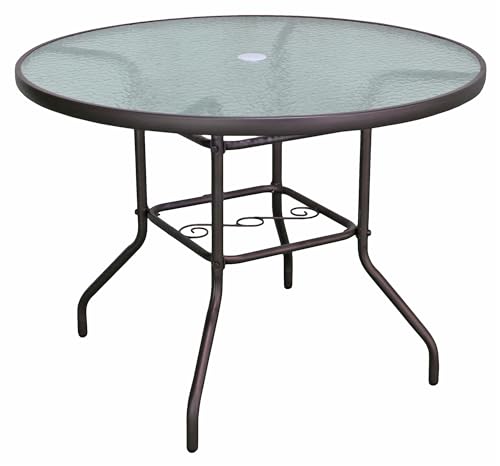
What Is an Outdoor Glass Dining Table?
An outdoor glass dining table is a patio or garden dining table featuring a glass tabletop — almost always made from tempered safety glass — supported by a weather-resistant frame such as powder-coated aluminum, stainless steel, or treated wood. Unlike indoor glass tables, outdoor versions are engineered to withstand UV exposure, rain, temperature swings, and wind. The glass is typically thicker (8mm to 12mm) and heat-treated so it shatters into small, blunt granules rather than sharp shards if broken.
Glass dining tables are a natural fit for outdoor spaces because they don't absorb moisture, won't warp or rot, and are easy to wipe clean after a meal. They also visually "open up" a patio, making small outdoor areas feel larger. If you're comparing materials, our glass dining table guide covers indoor and outdoor glass in more depth, while this page focuses specifically on the outdoor glass category.
Why Choose a Glass-Top Outdoor Dining Table?
Glass has distinct advantages for outdoor dining. Here's what makes it a compelling choice:
- Weather resistance: Glass does not absorb water, does not warp, and does not harbor mold or mildew the way untreated wood can. Rain simply beads off or evaporates.
- Easy cleaning: Spills, crumbs, and pollen wipe away with a damp cloth and a mild cleaner. No sealing or oiling is required.
- UV stability: Quality tempered glass resists yellowing and fading far better than many plastics and resins.
- Visual lightness: A transparent top keeps sightlines open, which is ideal for small balconies and compact patios. See our ideas for small apartment dining table ideas for related space-saving concepts.
- Modern aesthetic: Glass pairs well with slim metal frames, giving a contemporary look that suits both urban balconies and garden terraces.
- Heat tolerance: Tempered glass handles hot plates and sun exposure well, though a trivet is still recommended for very hot cookware.
Glass tables do have trade-offs: they show fingerprints and water spots, and they can feel cold in cool weather. A tablecloth or placemats solve the latter, and a microfiber cloth solves the former. For a deeper comparison of glass versus other materials, see our wood vs glass dining table breakdown.
Tempered Glass: The Safety Standard You Must Check
Not all glass is created equal. For outdoor use, you should only consider tempered (toughened) safety glass. Tempered glass is heated to over 600°C and then rapidly cooled, which creates internal compressive stress. The result is glass that is roughly four to five times stronger than ordinary annealed glass and, crucially, breaks into small granular pieces instead of large jagged shards.
When shopping, look for these markers of quality tempered glass:
- Thickness: 8mm is the practical minimum for outdoor dining tables; 10mm–12mm is preferable for larger tables and windy locations.
- Edge finishing: Flat-polished or beveled edges reduce the risk of chips that can compromise the glass.
- Certification marks: Reputable makers stamp or label tempered glass (e.g., EN 12150, ANSI Z97.1, or BS 6206).
- Uniform tint: A slight green or grey tint is normal; uneven tinting can indicate lower-grade manufacturing.
Safety tip: Even tempered glass can break under extreme point loads or thermal shock. Always use coasters and trivets, avoid placing the table directly beside a hot grill, and never sit or stand on the tabletop. Inspect the glass periodically for chips, especially along the edges.
Frame Materials for Outdoor Glass Dining Tables
The frame determines the table's durability, stability, and style. The three most common frame materials for outdoor glass tables are:
| Frame Material | Weather Resistance | Maintenance | Best For |
|---|---|---|---|
| Powder-coated aluminum | Excellent — rust-proof and lightweight | Wipe clean; touch up chips occasionally | Balconies, coastal areas, windy patios |
| Stainless steel | Very good — marine-grade (316) resists salt | Wipe with fresh water; avoid abrasive pads | High-end patios, coastal homes, heavy use |
| Treated / teak wood | Good — teak naturally repels water | Annual oiling or sealing recommended | Rustic and garden settings, covered patios |
| Wrought iron (coated) | Good if properly powder-coated | Check for rust at joints; repaint as needed | Classic and traditional outdoor looks |
If you love the look of wood beneath glass, a teak or acacia frame offers warmth that pure metal cannot match. Our guide to an extendable outdoor teak dining table explores how wood and glass can work together for flexible entertaining. For a more industrial vibe, a metal frame dining table and chairs pairing is a natural match for glass tops.
Glass Shapes, Sizes, and Seating Capacity
Glass tops are available in every common dining table shape. The right choice depends on your outdoor space and how you entertain:
Round Glass Outdoor Tables
Round glass tables encourage conversation and have no corners to navigate in tight spaces. They work especially well on small balconies and in nook-style patios. A round glass dining table and chairs for 4 is a classic compact outdoor setup. If you need a smaller footprint, a small glass dining table set for 4 or even a small glass dining table can fit a two-to-four-person patio.
Rectangular Glass Outdoor Tables
Rectangular glass tables maximize seating along the length and suit long, narrow patios. They pair naturally with bench seating — see our bench for dining table with back options for a coordinated outdoor look. A white glass dining table and chairs set gives a bright, coastal feel.
Square and Specialty Glass Tables
Square glass tables are space-efficient for four diners and fit neatly into corner patios. Specialty options include counter-height glass dining table sets for a more casual, bar-style outdoor experience. If you want a darker, more dramatic look, a black glass dining table for 6 makes a strong statement on a modern patio.
Not sure how much room you need? Our guide on how much room you should have around a dining table helps you plan clearances for chairs, walkways, and serving space.
How to Choose the Right Outdoor Glass Dining Table
Use this step-by-step framework to narrow your options:
- Measure your space first. Mark the table footprint on your patio with tape, then add 60–90cm of clearance on all sides for chairs and walkways. For compact areas, review dining table options for tight spaces.
- Decide on seating capacity. Two to four diners suits a round or small rectangular table; six or more points toward a rectangular glass top with a sturdy frame. See our dining table sizes for 4 reference for exact dimensions.
- Confirm tempered glass. Check thickness (8mm+), edge finishing, and certification. This is non-negotiable for outdoor safety.
- Match the frame to your climate. Coastal or humid areas favor aluminum or marine-grade stainless steel; covered patios can accommodate treated wood.
- Consider wind exposure. Glass tops act like sails in high wind. Choose a heavier frame and consider a table with a central pedestal or weighted base if your patio is exposed.
- Plan for storage and seasonality. If you live in a region with harsh winters, a folding or nesting design may be preferable. Browse folding dining tables on wheels and outdoor small dining table and chairs for flexible options.
- Coordinate chairs and accessories. Glass tops pair well with stackable metal chairs, rattan chairs, and benches. A rattan glass dining table combination is a popular outdoor style.
Care and Maintenance for Outdoor Glass Tables
Glass is low-maintenance, but a simple routine keeps it looking its best season after season:
- Weekly wipe-down: Use a microfiber cloth and a mild dish soap solution. Avoid ammonia-based cleaners, which can leave streaks and degrade frame coatings.
- Rinse after rain: Rainwater can leave mineral spots. A quick rinse and dry prevents buildup.
- Protect the frame: Touch up any chips in powder coating promptly to prevent corrosion. For steel frames, dry joints after heavy rain.
- Use coasters and trivets: Prevent heat marks and ring stains, especially on sunny days when the glass is already warm.
- Winter care: If you leave the table outside in freezing conditions, ensure water cannot pool on the glass or in frame joints. A fitted cover helps. Our dining table routine upkeep guide offers a broader seasonal checklist.
- Inspect regularly: Check glass edges for chips and frame bolts for tightness, especially after storms.
For deeper stain and scratch guidance, see our dining table stain removal guide and glass dining table cleaning guide.
Styling Your Outdoor Glass Dining Table
Glass is a neutral canvas that lets your setting shine. A few styling ideas:
- Layer with texture: A woven dining table runner or natural-fiber placemats adds warmth and contrasts the sleek glass.
- Bring the outdoors in: A small potted herb or a bowl of citrus makes a fresh, low centerpiece that won't block conversation.
- Choose weather-friendly linens: Outdoor-rated fabrics and wipe-clean placemats hold up to sun and spills. Our dining table placemat guide covers material choices.
- Add shade and light: An umbrella through a center hole (check that your glass top has one) or string lights overhead extends usable hours.
- Coordinate with seating: A bench seat with back for dining table pairs beautifully with rectangular glass tops for a relaxed, family-style setup.
Glass vs. Other Outdoor Tabletop Materials
How does glass compare with the main alternatives for outdoor dining?
| Tabletop Material | Pros | Cons | Best For |
|---|---|---|---|
| Tempered glass | Easy to clean, UV-stable, modern look, doesn't absorb odors | Shows spots, can feel cold, needs careful handling | Modern patios, balconies, coastal settings |
| Teak / hardwood | Warm look, naturally weather-resistant (teak) | Needs periodic oiling, can develop cracks if neglected | Garden terraces, rustic settings |
| Powder-coated metal | Very durable, low maintenance, rust-resistant | Can get hot in direct sun, dents possible | High-use family patios |
| Ceramic / stone | Premium feel, heat-resistant, scratch-resistant | Heavy, can chip, higher tier positioning | Luxury outdoor dining areas |
Glass wins on visual lightness and cleaning ease; wood wins on warmth; metal wins on toughness. Many buyers pair a glass top with a metal frame to get the best of both. For a head-to-head, see our wood vs glass dining table comparison.
Common Mistakes to Avoid
- Skipping tempered glass: Never accept annealed (ordinary) glass for outdoor use, no matter how good it looks.
- Underestimating wind: A large glass top on a light frame can tip or slide in gusts. Choose a substantial base and consider anchoring options.
- Ignoring the umbrella hole: If you want shade, confirm the table includes a properly reinforced umbrella hole and a weighted base.
- Placing beside a grill or fire pit: Thermal shock and embers are glass's enemy. Keep a safe distance.
- Neglecting frame maintenance: A rusted or chipped frame undermines the whole table. Touch up coatings annually.
- Buying before measuring: Confirm both the table footprint and the chair clearance before ordering. Our standard size of dining table for 4 reference helps.
Frequently Asked Questions
Is tempered glass safe for outdoor dining tables?
Yes. Tempered safety glass is the standard for outdoor tables because it is heat-treated for strength and breaks into small, blunt granules rather than sharp shards. Always confirm the glass is tempered, at least 8mm thick, and edge-polished before buying.
Can an outdoor glass dining table stay outside all year?
In most climates, yes, provided the frame is weather-resistant (aluminum or stainless steel) and the glass is tempered. In regions with heavy snow or freeze-thaw cycles, a fitted cover and clearing standing water are recommended to prevent frame corrosion and glass stress.
How do I remove water spots from a glass outdoor table?
Use a 50/50 mix of white vinegar and water with a microfiber cloth, then buff dry. For stubborn mineral deposits, a dedicated glass cleaner without ammonia works well. Rinse and dry after rain to prevent spots from forming.
Will a glass table get too hot in direct sun?
Tempered glass can become warm in direct sun, but it handles heat far better than plastic or resin. Use placemats and avoid placing very hot cookware directly on the surface. A patio umbrella or pergola reduces surface temperature significantly.
What frame material is best for a glass outdoor table?
Powder-coated aluminum is the best all-rounder for rust resistance, light weight, and value within its tier. Stainless steel (especially marine-grade 316) is the top-tier choice for coastal areas. Treated teak suits covered patios and rustic designs.
Can I use indoor glass table chairs outdoors?
Only if the chairs are rated for outdoor use. Indoor upholstery and untreated wood will degrade quickly in sun and rain. Choose stackable metal, rattan, or outdoor-rated fabric chairs to pair with your glass table.
Final Buying Checklist
- ✅ Tempered safety glass, 8mm minimum (10–12mm preferred for large tables)
- ✅ Polished or beveled edges with certification marks
- ✅ Weather-resistant frame (aluminum, stainless steel, or treated teak)
- ✅ Footprint measured with 60–90cm chair clearance on all sides
- ✅ Weighted or pedestal base for wind-prone patios
- ✅ Optional umbrella hole with reinforced ring
- ✅ Coordinated outdoor-rated chairs or benches
- ✅ Cover or storage plan for harsh seasons
With these points covered, you're ready to choose an outdoor glass dining table that looks great, performs in the elements, and lasts for many seasons of al fresco meals.