
Modern Centerpiece Ideas for Your Dining Table
Elevate your dining space with contemporary styling techniques, curated material pairings, and designer-inspired arrangements.
Explore IdeasWhy the centerpiece matters: A thoughtfully chosen centerpiece anchors your dining table visually and sets the tone for every meal, from casual breakfasts to formal dinners. Modern styling favors clean lines, intentional negative space, and a mix of textures over ornate, crowded arrangements. This guide walks you through the most effective contemporary approaches so you can style with confidence.
What Defines a Modern Centerpiece?
Modern centerpieces prioritize restraint and purpose. Instead of filling every square inch of the table, contemporary styling works with negative space to create visual breathing room. The result feels calm, intentional, and sophisticated. Key characteristics include:
- Clean geometric forms — cylinders, spheres, and angular vessels rather than intricate flourishes.
- Neutral or monochromatic palettes — soft whites, warm earth tones, matte blacks, and muted greens.
- Mixed materials — pairing ceramic with glass, wood with metal, or stone with linen.
- Asymmetry — off-center placements and varied heights create dynamic visual interest.
- Seasonal restraint — one or two statement elements instead of a dozen small accents.
The modern approach also considers function. A centerpiece should not block sightlines or make passing dishes awkward. Low-profile arrangements or tall, slender elements that leave the table surface visible are practical choices for everyday dining.
Modern Centerpiece Ideas for Every Dining Table
Below are design directions that work across a range of table shapes and interiors. Each idea can be adapted to suit round, rectangular, or extendable tables.
1. Sculptural Single Vessel
One oversized ceramic or stone vessel placed slightly off-center creates an immediate focal point. Choose a matte finish in a warm neutral tone and pair it with a single branch or dried stem for height. This approach suits white oak modern dining tables and minimalist interiors.
2. Trio of Varying Heights
Group three objects of different heights — a low bowl, a medium candle holder, and a tall vase — in a tight cluster. Keep materials consistent (all glass or all ceramic) for cohesion. This works especially well on round dining tables where a central cluster feels balanced.
3. Floating Greens in a Low Bowl
A wide, shallow bowl filled with water and floating greenery or single blooms offers a clean, low-profile centerpiece that never obstructs conversation. Ideal for small dining tables where space is at a premium.
4. Candle Cluster with Mixed Metals
Combine pillar candles of varying heights in brass, matte black, and brushed silver holders. The mix of finishes adds warmth without clutter. This is a strong choice for modern dining table styles with industrial or transitional influences.
5. Travertine or Stone Tray with Objects
A rectangular travertine tray corrals a few curated objects — a small plant, a candle, and a decorative sphere — into a tidy composition. The tray defines the centerpiece zone and makes rearranging easy. Pairs beautifully with travertine rectangular dining tables.
6. Monochromatic Floral Arrangement
A single-color floral arrangement in a sleek vase delivers drama without busyness. Choose one flower type in white, blush, or deep burgundy and let the form do the talking. This works well for dining room table centerpieces that need to feel elevated yet modern.
7. Natural Branch and Foraged Elements
Tall branches in a cylindrical vase bring organic architecture to the table. Foraged elements — seed pods, dried grasses, or bare twigs — create a sculptural, seasonal look with minimal effort. This suits rustic drop-leaf dining tables and natural-material interiors.
8. Textural Runner with Layered Objects
A linen or woven runner down the center of a rectangular table provides a base for layering. Add a low bowl, a pair of candlesticks, and a small stack of decorative books for a curated, lived-in look. This idea works particularly well on 8-person glass dining tables and long rectangular surfaces.
Matching the Centerpiece to Your Table Shape
The shape of your table dictates how a centerpiece should be scaled and positioned. A composition that works on a long rectangular table may overwhelm a small round one.
| Table Shape | Best Centerpiece Approach | What to Avoid |
|---|---|---|
| Round | Symmetrical central cluster, low bowl, or single sculptural vessel | Long linear arrangements that extend beyond the center |
| Rectangular | Linear runner with spaced objects, or two matching clusters near each end | One tiny object that gets lost in the expanse |
| Square | One central focal point or a tight grid of four small objects | Off-center arrangements that feel unbalanced |
| Oval | Elongated low bowl or a gentle curve of spaced candles | Overly tall elements that block sightlines across the curve |
| Extendable | Modular tray that can expand or contract with the table | Permanent fixed arrangements that don't adapt |
Material Pairings That Define Modern Style
The materials you choose for your centerpiece should relate to the table surface and the surrounding room. Modern styling often juxtaposes contrasting textures for visual depth.
For Wood Tables
Pair warm wood grain with matte ceramic, natural linen, and brushed metal. Avoid highly polished or overly ornate pieces that compete with the wood's natural character. A vintage teak dining table benefits from simple, earthy accents.
For Glass Tables
Glass surfaces reflect light, so choose centerpieces with varied opacity — frosted glass, opaque ceramic, or woven natural fibers. A 45-inch round glass dining table looks striking with a single bold vessel and a few scattered petals.
For Marble and Stone Tables
Let the stone be the star. Choose centerpieces in complementary tones — warm brass, soft cream, or deep green — with clean silhouettes. A small marble dining table set benefits from a low-profile arrangement that doesn't hide the surface.
For Painted or Lacquered Tables
If the table itself is a statement color, keep the centerpiece neutral and textural. Natural materials like wood, stone, and linen ground the look. This approach works well with small gold dining tables and other bold finishes.
Seasonal vs. Everyday Styling
A practical modern approach is to maintain a base centerpiece that stays year-round and swap out accent elements seasonally.
- Everyday base: A neutral tray, a low bowl, or a pair of candle holders that suit the table's proportions.
- Spring accent: Fresh-cut tulips or a small ceramic bird.
- Summer accent: Floating citrus slices in a water bowl or sea glass.
- Autumn accent: Dried branches, small gourds, or warm-toned candles.
- Winter accent: Evergreen sprigs, metallic ornaments, or frosted glass elements.
This modular approach keeps the table looking intentional without requiring a full redesign each season. It also aligns with the modern preference for fewer, better-chosen objects.
Recommended Modern Centerpieces & Dining Table Decor
⚠️ AFFILIATE DISCLOSURE: This website contains affiliate links. As an affiliate Associate, we earn from qualifying purchases. If you make a purchase through these links, we may receive a small commission at no additional cost to you. Read our full affiliate policy.

ZENLIV Rustic Modern Farmhouse Decor Set of 6 for Your Living Room Decor | Kitchen Counter, Home or Table Centerpieces Room Decor, Wood Round Decorative Tray Gifts for Women Men, Christmas Decorations
Check price on Amazon
Farmhouse Decor Candle Holder 6pcs with Flameless LED Candles Rustic Decor | Rustic Farmhouse Decorative Candles, Home Decor for Kitchen, Dining Coffee Table Centerpiece Decor, Fall Christmas Decor
Check price on Amazon
Rustic Farmhouse Glass Vase with Artificial Eucalyptus & Fairy Lights | 13.4" Tall Vintage Table Centerpiece with Clear Vase Plants Lights Metal Lantern Frame Ambient Decor for Living Room Kitchen
Check price on Amazon
Seraphic Dining Table Centerpiece Decor, Tealight Candle Holder, Clear | Votive Candle Holders, Wrought Iron 5 Cup Candelabra, Long Modern Coffee Console Decor, Black Finish, Clear Cups, 17in Long
Check price on Amazon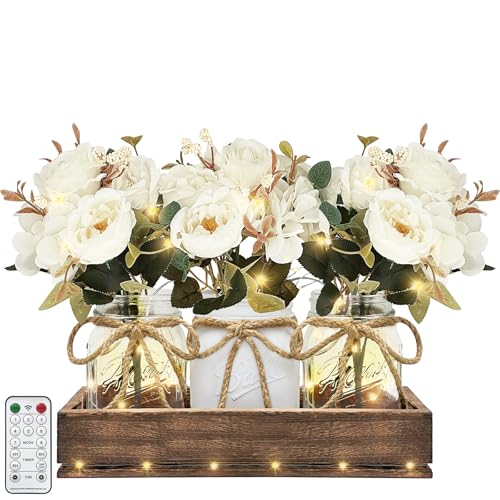
HOMECOR Mason Jar Centerpiece Table Decor with Remote Control LED Lights | Table Decor for Dining Room, Farmhouse Wood Tray with 3 Jars Flowers Decoration for Coffee Table Home Decor Living Room,White
Check price on Amazon
ZENLIV Rustic Modern Farmhouse Decor Set of 7 for Living Room Home Decor | Kitchen Counter, Home or Table Centerpieces Room Decor, Wood Round Decorative Tray Gifts for Women Men, Halloween Decor
Check price on Amazon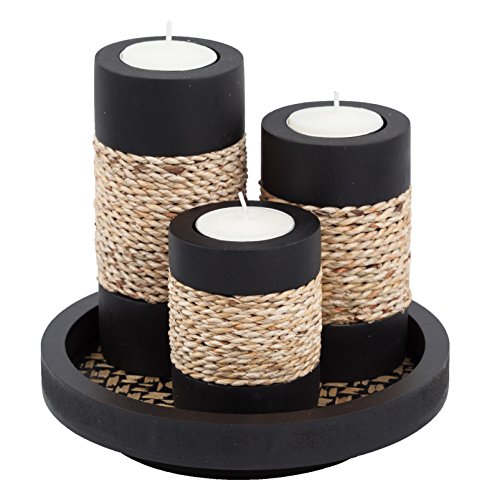
IYARA CRAFT Candleholder Set with Tray, Set of 3 Rustic Black Wooden Tealight Candle Holders with Natural Rope Accent, Coffee Table Centerpiece, Farmhouse Home Decor, Housewarming
Check price on Amazon
Nagobi Eucalyptus Mason Jar Table Centerpieces with Lights for Dining Room | 3 Piece Farmhouse Coffee Table Decor with Fake Flowers Wood Tray for Kitchen Living Room Bathroom Wedding Outdoor Decoration
Check price on AmazonReady to Style Your Dining Table?
Explore our full collection of dining table styling guides, from centerpieces to full tablescape design.
View Styling GuidesPractical Tips for Styling a Modern Centerpiece
1. Respect the sightline
Keep the centerpiece low enough that seated guests can see each other across the table, or use tall, slender elements that occupy minimal visual width. This is especially important for small dining bistro tables.
2. Use odd numbers
Groupings of three or five objects tend to feel more dynamic and natural than even numbers. The eye moves through the composition rather than pairing objects symmetrically.
3. Anchor with a tray or runner
A defined base — whether a stone tray, a woven runner, or a linen cloth — gives the centerpiece a boundary and makes the arrangement look deliberate. It also simplifies cleaning and rearranging.
4. Consider the room's color story
Pull one or two tones from the surrounding decor — a rug, artwork, or curtain — and repeat them in the centerpiece. This creates cohesion without matching everything precisely.
5. Leave breathing room
Modern styling embraces empty space. A centerpiece that occupies roughly one-third of the table's length or diameter is usually sufficient. This is particularly relevant for dining tables measuring 40 x 72 and similar standard sizes.
Common Centerpiece Styling Mistakes to Avoid
- Overcrowding: Too many small objects create visual noise. Edit ruthlessly.
- Blocking sightlines: Tall arrangements that prevent conversation defeat the purpose of a dining table.
- Ignoring scale: A tiny vase on a large table looks lost; an oversized arrangement on a small two-chair dining table overwhelms.
- Clashing materials: Mixing too many unrelated finishes (e.g., high-gloss ceramic, rough burlap, and polished chrome) can feel chaotic rather than curated.
- Neglecting function: The centerpiece should not interfere with serving dishes, passing food, or placing glassware.
Caring for Centerpiece Materials
Different materials require different care routines to stay looking their best:
- Ceramic and stone: Wipe with a soft damp cloth. Avoid abrasive cleaners that can dull the surface.
- Glass: Use a microfiber cloth and glass cleaner for streak-free shine.
- Metal (brass, silver): Polish occasionally with a suitable metal polish. Brass can be left to develop a patina for a more lived-in look.
- Natural materials (wood, dried branches): Keep away from direct moisture. Dust regularly with a soft brush.
- Linen and textiles: Spot clean or launder according to care instructions. Iron on low heat if needed.
For more on protecting your table surface beneath a centerpiece, see our guide to table cloths for dining tables.
Frequently Asked Questions
What is the ideal height for a dining table centerpiece?
For everyday use, keep the centerpiece below eye level when seated — typically under 12 inches — so it doesn't block conversation. If you prefer taller elements, use slender branches or single stems that occupy minimal visual width.
How do I choose a centerpiece for a round table versus a rectangular one?
Round tables suit symmetrical central clusters or a single sculptural vessel placed dead center. Rectangular tables benefit from linear arrangements — a runner with spaced objects or two matching clusters near each end. See our guide to round dining table centerpieces for more detail.
Can I use a centerpiece on a glass dining table?
Yes. Glass tables reflect light, so centerpieces with varied opacity — frosted glass, opaque ceramic, or natural woven materials — create depth. Avoid heavy, overly tall arrangements that could scratch or stress the surface.
How often should I change my centerpiece?
A modern approach is to maintain a year-round base (a tray or low bowl) and swap accent elements seasonally. This keeps the look fresh without requiring a full redesign each time.
What materials work best for a modern centerpiece?
Matte ceramic, stone, brushed metal, natural linen, and glass are all strong choices. The key is to limit the palette and mix textures — for example, a matte ceramic vessel with a linen runner and a brass candle holder.
How do I style a centerpiece for a small dining table?
Choose low-profile arrangements — a shallow bowl, a single small vase, or a compact trio of objects. Avoid oversized pieces that dominate the surface. Our guide to small dining table centerpiece ideas has more suggestions.
Final Thoughts
A modern centerpiece is less about filling space and more about creating a deliberate, calming focal point. By choosing clean forms, restricting your palette, and respecting the table's proportions, you can style a centerpiece that feels both contemporary and timeless. Whether you prefer a single sculptural vessel or a layered arrangement of natural textures, the principles in this guide give you a reliable framework to work from.
For further inspiration, explore our collections on cool dining table centerpieces and dining table decoration items.