
Centerpieces for Dining Room Table: The Complete Styling Guide
Transform your dining table into a focal point with thoughtfully chosen centerpieces. Learn how scale, shape, material, and seasonal styling work together to create a welcoming table for everyday meals and special occasions.
EXPLORE CENTERPIECE PICKSWhy a centerpiece matters: A dining table centerpiece anchors the room, sets the mood for every meal, and gives your dining space a finished, intentional look. The right arrangement draws the eye without blocking conversation, complements your table's material and shape, and adapts to the seasons. This guide walks you through every decision — from scale and silhouette to material and maintenance — so you can choose a centerpiece that looks refined and functions beautifully.
What Makes a Great Dining Table Centerpiece?
A centerpiece is more than decoration — it is the visual heart of your dining room. Before you shop, it helps to understand the four qualities that separate a well-designed arrangement from one that feels cluttered or awkward:
- Scale and proportion: The centerpiece should relate to the table's size. An oversized arrangement overwhelms a compact table, while a tiny object disappears on a long rectangular surface. A useful rule is that the centerpiece should occupy roughly one-third of the table's width or diameter.
- Sightline clearance: When guests are seated, the centerpiece should stay below eye level — generally under 12 inches tall — so conversation flows freely. Tall elements are fine for side placement or for tables used primarily for display.
- Material harmony: The finish and texture of your centerpiece should complement your table's surface. A natural wood table pairs beautifully with ceramic, linen, and fresh greenery, while a glass or marble top suits metallic accents and sculptural forms.
- Functional footprint: Leave enough open space for plates, glassware, and serving dishes. A centerpiece that must be removed every time you set the table quickly becomes a nuisance.
Matching the Centerpiece to Your Table Shape
Table shape is the single biggest factor in centerpiece selection. A round table calls for a different arrangement than a long rectangular or oval surface. Here is how to approach each:
Round Dining Tables
Round tables benefit from a single, centrally placed focal point. Because guests sit in a circle, a compact, low arrangement — a shallow bowl of seasonal blooms, a trio of pillar candles on a tray, or a sculptural ceramic vessel — keeps every seat connected to the conversation. Avoid sprawling arrangements that crowd the perimeter. If your table is on the smaller side, a round dining table centerpiece guide can help you fine-tune the footprint.
Rectangular and Oval Dining Tables
Long tables offer the most styling flexibility. You can use a linear arrangement — a runner layered with candles, greenery, and small vessels — or a repeating rhythm of identical elements spaced evenly along the centerline. For oval tables, an elongated centerpiece that echoes the curve of the table feels especially harmonious. If you are styling a table with a distinctive finish, our modern dining table styling guide offers complementary ideas for contemporary surfaces.
Square and Small Tables
Square tables work well with a single low arrangement or a tight cluster of small objects. On compact tables, prioritize height and footprint discipline — a slim vase with a few stems or a small tray of candles can be more effective than a full centerpiece. For space-conscious styling, see our small dining table centerpiece ideas.
Centerpiece Styles by Design Aesthetic
Your centerpiece should feel like a natural extension of your dining room's design language. These style families cover most interiors:
Modern and Contemporary
Clean lines, sculptural forms, and restrained palettes define modern centerpieces. Think matte ceramic vessels, geometric candle holders, single-stem arrangements, and metallic accents. Less is more — one well-chosen object often outperforms a crowded arrangement. Pair these with a modern centerpiece ideas collection for a cohesive look.
Rustic and Farmhouse
Natural wood trays, linen runners, wildflower bunches, and stoneware pitchers bring warmth and texture. Rustic centerpieces work especially well with solid wood tables, and they transition easily between seasons with simple swaps of greenery and blooms.
Traditional and Formal
Symmetry, fresh flowers, silver or brass candlesticks, and fine porcelain define the traditional look. A formal centerpiece should feel balanced and deliberate, with a clear focal point and refined materials that suit holiday dinners and entertaining.
Eclectic and Collected
Mixed materials, vintage finds, and layered textures create a collected, personal feel. A cluster of small vessels at varying heights, a mix of candle shapes, or a curated tray of objects can feel intentional rather than random when unified by color or material.
Centerpiece Tiers: Choosing the Right Level of Investment
Centerpieces span a wide range of craftsmanship and materials. Rather than thinking in terms of specific figures, it helps to classify arrangements by their market position and build quality. Use these universal tiers to match a centerpiece to your table and your styling goals:
Essential Tier
Simple, versatile arrangements built from accessible materials — glass vases, basic candle holders, and lightweight trays. Best for everyday styling, seasonal swaps, and first-time decorators who want flexibility without commitment.
Balanced Tier
Mid-range centerpieces with sturdier construction, thoughtful proportions, and refined finishes. These offer a good balance of durability and design flexibility, making them a solid choice for a primary dining table used daily.
Premium Tier
High-end arrangements featuring artisanal ceramics, hand-finished metals, and premium materials. These are long-term investments for formal dining rooms and homeowners who want a signature focal point that elevates the entire space.
In practice, most households benefit from combining tiers: an essential-tier base arrangement for everyday use, upgraded with balanced-tier or premium-tier accent pieces for holidays and entertaining. This layered approach keeps the table looking intentional year-round without overcommitting to a single aesthetic.
Centerpiece Materials Compared
Material choice affects durability, maintenance, and the overall mood of the arrangement. The table below compares the most common centerpiece materials by category, best use, and care considerations:
| Material | Best For | Care Notes |
|---|---|---|
| Fresh flowers and greenery | Seasonal styling, formal dinners, natural warmth | Trim stems, refresh water every two days, keep away from direct heat |
| Ceramic and stoneware | Everyday centerpieces, rustic and modern aesthetics | Wipe with a soft damp cloth; check for food-safe glazes if used for serving |
| Glass | Modern tables, minimalist arrangements, candle vessels | Handle with care; clean with lint-free cloth to avoid streaks |
| Metal (brass, steel, aluminum) | Contemporary and industrial interiors, candle holders | Polish occasionally; avoid abrasive cleaners that scratch finishes |
| Natural wood and rattan | Rustic, farmhouse, and coastal interiors | Dust regularly; keep away from prolonged moisture and direct sun |
| Textiles (linen, cotton) | Runners and layered bases under objects | Machine wash per care label; iron on low for a crisp finish |
Seasonal Centerpiece Ideas
Seasonal styling keeps your dining table feeling fresh without a full redesign. Rotate a few key elements each season and let the rest of the arrangement stay constant:
- Spring: Tulips, ranunculus, and soft pastel ceramics. A shallow bowl of floating blooms suits round tables especially well.
- Summer: Fresh herbs, citrus accents, and light linen runners. Keep arrangements low and airy for warm-weather entertaining.
- Autumn: Dried branches, amber glass, and warm-toned stoneware. Layered trays with candles and natural textures feel especially inviting.
- Winter: Evergreen sprigs, pillar candles, and metallic accents. A low, wide arrangement with generous candlelight creates a festive focal point.
For festive tablescapes, explore our dining table holiday tablescape ideas for more layered inspiration. If you are planning a full decorative refresh, our dining table decoration items guide covers the broader accessory toolkit.
How to Arrange a Centerpiece: A Step-by-Step Approach
Even a simple arrangement benefits from a structured approach. Follow these steps to build a balanced centerpiece:
- Start with a base: A runner, tray, or placemat defines the arrangement's footprint and keeps small objects grouped.
- Anchor the center: Place the tallest or most substantial element at the center, then build outward.
- Layer heights: Vary the height of surrounding objects — a low bowl, a mid-height candle, a small vessel — to create visual rhythm.
- Add texture: Mix materials such as ceramic, glass, metal, and greenery for depth.
- Edit and step back: Remove one element if the arrangement feels crowded. Negative space is part of the design.
Everyday vs. Occasion Centerpieces
Most dining rooms need two centerpiece modes: a low-maintenance everyday arrangement and a more elaborate setup for holidays and entertaining. For everyday use, choose a stable, low-profile arrangement that can stay in place during meals — a ceramic bowl, a small candle cluster, or a compact plant. For special occasions, layer in fresh flowers, taller candles, and finer linens, then return to the everyday version afterward.
If your table serves double duty as a workspace or homework station, consider a tray-based centerpiece that lifts off easily in one movement. Our dining table vignette ideas explore flexible styling approaches that adapt to daily life.
Common Centerpiece Mistakes to Avoid
- Blocking sightlines: Oversized or tall centerpieces force guests to lean around them. Keep the core arrangement below eye level.
- Crowding the table: Leave space for place settings. A centerpiece should accent the table, not dominate it.
- Ignoring the table material: A rustic wood table and a polished glass table call for different textures and finishes. Match the centerpiece to the surface.
- Skipping the base: Ungrouped objects scatter and look unintentional. A tray or runner pulls the arrangement together.
- Neglecting maintenance: Fresh flowers need water changes; metals need polishing; textiles need laundering. Choose materials you will realistically care for.
Frequently Asked Questions
What is the ideal height for a dining table centerpiece?
A centerpiece should stay below eye level when seated, typically under 12 inches tall, so guests can converse freely across the table without obstruction. Tall elements can be used on side surfaces or display tables.
How do I choose a centerpiece for a round dining table?
Round tables suit a single, centrally placed focal arrangement such as a low bowl of flowers, a candle cluster, or a sculptural object. Keep the footprint proportionate to the table diameter and avoid sprawling designs that crowd the perimeter.
Should a centerpiece stay on the table every day?
Yes, a modest everyday centerpiece can stay in place permanently as long as it is low, stable, and easy to move aside for serving. Swap in more elaborate designs only for special occasions.
Can I use a centerpiece on a glass dining table?
Absolutely. Glass tables pair well with glass vessels, metallic accents, and soft greenery. Use a protective runner or felt pads under hard objects to prevent scratches, and keep arrangements visually light to match the surface.
How often should I change my centerpiece?
Many households refresh their centerpiece seasonally and swap to a more formal arrangement for holidays. Everyday arrangements can stay in place for weeks if they are low-maintenance and easy to clean around.
Recommended Centerpieces for Dining Room Tables
⚠️ AFFILIATE DISCLOSURE: This website contains affiliate links. As an affiliate Associate, we earn from qualifying purchases. If you make a purchase through these links, we may receive a small commission at no additional cost to you. Read our full affiliate policy.

ZENLIV Rustic Modern Farmhouse Decor Set of 6 for Your Living Room Decor | Kitchen Counter, Home or Table Centerpieces Room Decor, Wood Round Decorative Tray Gifts for Women Men, Christmas Decorations
Check price on Amazon
FEXIA Boho Table Runner for Fall Home Decor 12x72" Rustic with Tassels | 72 Inches Long Farmhouse Kitchen Dining Room Macrame Burlap Coffee Table Decoration Dresser Runner Pottery Barn Furniture
Check price on Amazon
Farmhouse Decor Candle Holder 6pcs with Flameless LED Candles Rustic Decor | Rustic Farmhouse Decorative Candles, Home Decor for Kitchen, Dining Coffee Table Centerpiece Decor, Fall Christmas Decor
Check price on Amazon
White Ceramic Flower Vase home table decor Heart Shaped Vase Set of 2 | Boho Heart Shaped Minimalist Decorative Vases for coffee Table Centerpiece Wedding Dining Living Room Office House Decoration
Check price on Amazon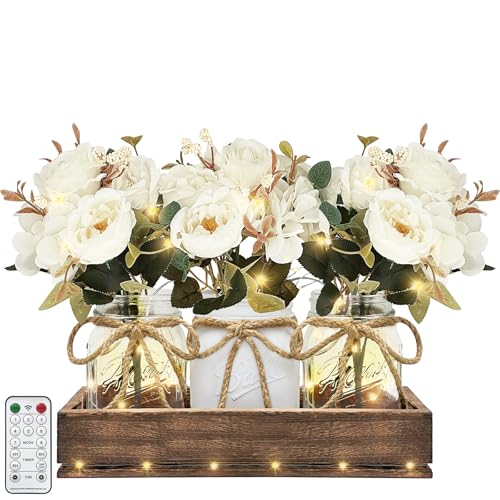
HOMECOR Mason Jar Centerpiece Table Decor with Remote Control LED Lights | Table Decor for Dining Room, Farmhouse Wood Tray with 3 Jars Flowers Decoration for Coffee Table Home Decor Living Room,White
Check price on Amazon
Leftover Fake Flowers in Vase,Faux Flowers in Vase,Table Centerpieces for Dining Room,Flower Centerpieces for Tables,Artificial Flowers,Kitchen Decor,Coffee Table Decor
Check price on Amazon
Romadedi Wood Tray with 4 Tea Light Candle Holders, Table Centerpiece | Farmhouse Boho Decor, Beaded Wood Design with Two Heights, forDinning & Coffee Table, Mantel, Shelf, Kitchen Counter
Check price on Amazon
3 Pcs Mason Jar Table Centerpieces for Dining Room with Wood Tray&Led Light | Coffee Table Decor, Dining Table Decor, Fall Table Centerpieces for Dining Room Kitchen Living Room, Terracotta
Check price on AmazonFinal thoughts: The best centerpieces for dining room tables balance beauty with function. Choose an arrangement that respects your table's shape and material, stays below sightline for seated conversation, and is easy to maintain in daily life. Start with a versatile base arrangement, then layer in seasonal and occasion-specific pieces as your styling confidence grows.
Whether you are refreshing a compact breakfast table or styling a formal dining room, the principles of scale, proportion, and material harmony apply universally. Use this guide as your reference, and revisit it whenever you want to refresh your table's look.