
Granite Dining Table Base: Stability, Style & Smart Selection
A granite top is only as good as the base beneath it. Learn how to choose a pedestal, trestle, or leg design that supports heavy stone, matches your interior, and keeps every meal steady.
EXPLORE THE GUIDEWhat This Guide Covers
- Why the base matters with granite
- Base types: pedestal, trestle, leg, and more
- Base materials and finishes
- Stability, weight distribution, and safety
- Matching the base to your granite top
- Seating, shape, and room layout
- Care and maintenance for bases
- Quick selection checklist
- Frequently asked questions
Why the Base Matters With a Granite Top
Granite is one of the heaviest common dining table surfaces, and that weight shapes every decision about the base. Unlike a thin veneer or glass top, a granite slab concentrates significant mass in a single, rigid plane. The base must carry that mass evenly, resist lateral movement, and absorb the small vibrations that come from everyday use — pulling out chairs, leaning elbows, or sliding a serving dish across the surface.
A well-chosen granite dining table base does three things at once. First, it distributes load across a wide footprint so the table does not rock or stress the stone. Second, it defines the seating geometry — a pedestal frees legroom on all sides, while a four-leg base frames each seat. Third, it sets the visual tone, from a sleek brushed-steel column under a polished black granite to a chunky reclaimed-wood trestle beneath a warm speckled slab.
Because granite tops are typically supplied separately from bases, many buyers treat the base as an afterthought. In practice, the base is where stability, comfort, and long-term durability are won or lost. A mid-range base with sound engineering will almost always outperform a decorative base that was never rated for stone.
Key idea: Always confirm that a base is rated for stone tops of your top's thickness and dimensions. If the manufacturer only lists wood or glass compatibility, treat it as unsuitable until proven otherwise.
Granite Dining Table Base Types
Most granite-compatible bases fall into four families. Each has a distinct footprint, legroom profile, and visual character. The right choice depends on table shape, how many people you seat, and how the room flows around the table.
Pedestal Bases
A central column on a wide foot spreads the granite's weight through a single support and leaves the perimeter completely open. Pedestal bases suit round and oval granite tops especially well, and they make small dining rooms feel less cluttered because there are no corner legs to navigate. For larger rectangular tops, double-pedestal designs add support without sacrificing legroom. A small pedestal dining table format shows how compact this approach can be, while the general principles of pedestal construction are covered in a dedicated dining table pedestal guide.
Trestle Bases
Two A-frame or slab supports joined by a stretcher create a trestle base. This is one of the most stable arrangements for heavy stone because the load is carried at both ends and tied together across the span. Trestle bases pair naturally with rectangular and oval granite tops and read as rustic, farmhouse, or industrial depending on materials. They do reduce usable legroom at the two ends, so they work best when those end positions are not primary seats.
Four-Leg and Multi-Leg Bases
Four legs at the corners give the most conventional look and clearly frame each seating position. For granite, the legs must be thick enough in section and firmly joined to an apron or cross-brace; slender decorative legs are usually a poor match for stone. Multi-leg designs with six or eight points of contact are occasionally used for very large tops, though they can crowd foot space. A sturdier variation is the dining table leg approach with reinforced joinery, which is worth studying before committing to a leg-based design.
Hybrid and Sculptural Bases
Some bases combine a pedestal core with outrigger feet, or use sculptural shapes in cast metal or bent wood. These can be striking under a granite top, but they demand careful verification of load ratings. Hybrid designs are common in the premium and luxury tiers, where engineering and aesthetics are developed together.
| Base Type | Best For | Legroom Profile | Typical Tier |
|---|---|---|---|
| Single pedestal | Round and oval tops, compact rooms | Open on all sides | Entry-level to premium |
| Double pedestal | Long rectangular tops, six to eight seats | Open perimeter, central support pair | Mid-range to high-end |
| Trestle | Rectangular and oval tops, farmhouse or industrial looks | Open sides, restricted at ends | Mid-range to luxury |
| Four-leg | Square and rectangular tops, traditional rooms | Framed per seat, corner posts | Entry-level to premium |
| Hybrid / sculptural | Statement tables, design-led interiors | Varies by design | Premium to luxury |
Base Materials and Finishes
The material of the base determines how much weight it can carry, how it ages, and how it looks beside the stone. Four material families dominate granite-compatible bases.
Steel and Metal
Powder-coated steel and stainless steel are the workhorses of granite support. High-grade steel offers excellent strength-to-profile ratio, so a relatively slim column can carry a substantial slab. Look for rust-proof finishes and reinforced weld joints, especially if the table sits near a kitchen or in a humid climate. Matte black, brushed steel, and bronze-tone finishes are the most versatile pairings for granite.
Solid Hardwood
Oak, walnut, and similar hardwoods bring warmth and absorb vibration well. Wooden bases for granite need generous dimensions — thick posts, deep aprons, and robust stretchers — because wood is less stiff than steel. A solid oak butcher block dining table demonstrates the kind of substantial timber construction that translates well to base design. Seasonal movement is normal; choose a finish that protects against moisture and check joinery periodically.
Cast Stone and Concrete
Cast stone and concrete bases are extremely heavy and stable, making them natural partners for granite. They suit modern and industrial interiors and can be shaped into sculptural forms. The trade-off is immobility: once placed, these bases are difficult to move, so plan the room layout first. A round concrete outdoor dining table illustrates how stone-like bases handle exposed settings.
Mixed Materials
Wood-and-metal combinations balance warmth with strength. A metal frame with wooden cladding, or a wooden column with steel feet, can deliver both visual interest and load capacity. Mixed bases are common in the mid-range and premium tiers and often represent good value for their class.
Finish tip: Match the base's sheen to the granite's polish. High-gloss granite often looks best over brushed or matte bases to avoid visual competition, while honed granite pairs comfortably with satin wood or powder-coated metal.
Stability, Weight Distribution, and Safety
Stability is the non-negotiable requirement of any granite dining table base. A granite top that shifts, rocks, or tips is a genuine hazard, and stone cannot flex to absorb stress the way wood can. The following factors determine whether a base is genuinely stable.
- Footprint width: The base's contact area should be wide enough that the table cannot tip when weight is placed near an edge. Pedestal feet and trestle footprints need particular attention on tall tables.
- Load rating: Confirm the base is rated for stone tops. Mid-range and premium bases usually publish a rated load; entry-level bases may not, which is a warning sign.
- Joint quality: Welded steel joints and mechanically fastened hardwood joinery should be tight and reinforced. Loose or glued-only joints are unsuitable for stone.
- Leveling: Adjustable glides or leveling feet let you compensate for uneven floors and prevent rocking, which is especially important with rigid stone tops.
- Top attachment: The connection between base and top should allow slight movement for expansion while holding the slab securely. Figure-eight fasteners or slotted brackets are common solutions.
Height matters too. The ideal height of a dining table is typically around standard dining height, and a granite top adds noticeable thickness. Check that the base's finished height, plus the slab thickness, lands in a comfortable range for your chairs. Taller formats, such as a high dining table with four chairs, need proportionally wider footprints or anchoring for confidence.
In commercial or high-traffic settings, a professional-grade or commercial-grade base with floor anchoring is the safer specification. For homes, careful sizing and leveling usually suffice.
Matching the Base to Your Granite Top
The visual relationship between base and top is what makes a granite table feel intentional rather than assembled. Three matching principles help.
Match by Tone
Read the granite's dominant color and veining. Warm granites with gold, brown, or red flecks pair naturally with wood tones, bronze, and brass. Cool granites in gray, blue, or black suit matte black steel, brushed stainless, and dark-stained wood. Neutral speckled granites are the most flexible and can go either direction.
Match by Scale
A thick, heavy-looking granite slab calls for a base with visual mass. A slim steel pedestal can work beautifully, but only if its engineering is genuinely robust — otherwise the table looks top-heavy and feels fragile. Conversely, a delicate base under a chunky slab creates a deliberate modern contrast, but it must be rated for the load.
Match by Style
Traditional and farmhouse rooms favor trestle and turned-leg bases in wood. Modern and minimalist rooms favor pedestals, slim steel frames, and sculptural forms. Industrial interiors welcome blackened steel and concrete. If you are sourcing a top separately, look at complete formats for inspiration — a round marble dining table or a white formal dining table shows how a stone top and base combine into a coherent whole, even though the stone differs.
Seating, Shape, and Room Layout
Base choice directly affects how many people can sit comfortably and how the room circulates around the table.
- Round tops: A single pedestal is usually the best pairing. It keeps the perimeter open and lets chairs tuck in evenly. A four-chair round dining set is a classic example of this geometry.
- Oval tops: A double pedestal or a wide trestle base supports the elongated shape without crowding the sides.
- Rectangular tops: Trestle bases and four-leg bases both work; choose based on whether end seats are primary or occasional. A rectangle four-seater dining table layout benefits from corner legs that frame each place.
- Square tops: Four-leg bases are the natural fit, with corner posts marking each seat.
Allow enough clearance around the table for chairs to pull out and for people to walk behind seated diners. In tighter rooms, a pedestal base plus a compact dining table footprint keeps circulation comfortable. If your layout is unusual, a corner dining table arrangement can free up floor space that a conventional centered table would consume.
For households that host occasionally, an extendable top paired with a suitably rated base offers flexibility. An extendable eight-seat dining table shows how a base can support both everyday and expanded configurations — just verify the base is rated for the table's full extended span.
Care and Maintenance for Granite Table Bases
The base needs less attention than the granite surface but should not be ignored.
- Steel and metal: Wipe with a damp cloth and mild detergent. Inspect powder coating for chips, which can lead to corrosion, and touch up promptly. Avoid abrasive pads that dull the finish.
- Wood: Dust regularly and apply a suitable polish or wax according to the finish. Keep the base away from direct heat and standing water, and re-tighten fasteners once or twice a year.
- Concrete and cast stone: Seal if recommended by the maker, and clean with pH-neutral products. Avoid acidic cleaners that can etch the surface.
- All bases: Check leveling feet and top fasteners periodically, especially after moving the table. Re-level if the table rocks.
General surface maintenance routines apply to the stone itself; a broader dining table routine upkeep guide covers the full table. For heavy stone tops, professional help is wise when moving the table, and the dining table moving safely guide outlines safe handling practices. If the table develops a wobble, the wobbly dining table fix guide walks through the likely causes.
Quick Selection Checklist
Use this checklist before committing to a granite dining table base.
- Confirm the base is explicitly rated for stone tops of your thickness and dimensions.
- Match the base type to the top's shape: pedestal for round, double pedestal or trestle for oval and long rectangular, four-leg for square.
- Check the footprint width against your room's walkway clearance.
- Verify joint quality, leveling feet, and top-attachment hardware.
- Choose a material and finish that harmonizes with the granite's tone and your interior style.
- Measure the combined finished height against your chairs' seat height.
- Plan for moving and maintenance — heavier bases need more forethought.
Frequently Asked Questions
What is the best base for a granite dining table?
A pedestal or trestle base in high-grade steel or solid hardwood is generally the best choice because it distributes the considerable weight of a granite top while leaving generous legroom. The right option depends on table shape, seating count, and room layout.
How much weight can a granite dining table base support?
Well-engineered bases in the mid-range and premium tiers are built to carry stone tops comfortably, but capacity varies by design. Always confirm the manufacturer's rated load and ensure the base is matched to the thickness and dimensions of your granite top.
Can I use a metal base with a granite table top?
Yes. Powder-coated or stainless steel bases are popular with granite tops because they offer strong structural support and a clean contrast. Choose rust-proof or weather-resistant finishes, especially for outdoor or humid settings.
How do I match a base finish to a granite top?
Look at the granite's dominant and veining colors. Warm granites pair well with wood tones and bronze or brass finishes, while cool-toned granites suit matte black, brushed steel, and dark-stained wood. Request finish samples whenever possible.
Does a granite dining table base need to be anchored to the floor?
Most residential bases do not require floor anchoring when properly sized and leveled. However, tall pedestal designs or tables in high-traffic commercial settings may benefit from anchoring or added counterweights for extra stability.
Recommended Granite Dining Table Bases
⚠️ AFFILIATE DISCLOSURE: This website contains affiliate links. As an affiliate Associate, we earn from qualifying purchases. If you make a purchase through these links, we may receive a small commission at no additional cost to you. Read our full affiliate policy.

28 Inch Metal Dining Table Base, 1200 LBS Load Suitable for Glass Tops | Heavy Duty Industrial Table Legs with Height-Adjustable Foot Pads and Suction Cups for Fits Glass Marble Wood Top
Check price on Amazon
ADYLEGS Black Metal Table Legs 28 Inch V-Shaped Dining Table Legs for Desk | Set of 2 V-Shaped Legs, Freestanding Base, Fits Square/Round Tops, Adjustable Feet, Dining Tables, Desks, Workbenches
Check price on Amazon
Leinuosen 1 Pack Bar Table Base, 22"x22" Cast Iron X-Base, 36" Tall | Counter Height, 500 Lbs Capacity, Table Pedestal Base Only, Fits 20-30" Tops, Anti-wobble, for Dining Cafe Indoor & Outdoor
Check price on Amazon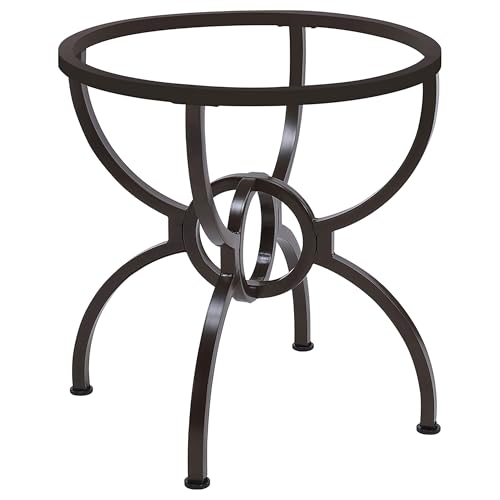
Coaster Aviano Transitional Dining Table Base, Gunmetal 108291 | Sculptural interlocking ring motif, Four curved legs, Metal, Floor levelers, Transitional style for dining room settings
Check price on Amazon
Metal Table Legs 28 Inch, Round Dining Table Base Fits Glass Marble Wood | 1000LBS Capacity, Golden Ratio Easy To Install with Suction Cups, 4 Adjustment Pads, Suitable for Indoor and Outdoor Use
Check price on Amazon
BOTAOYIYI 30 Inch Modern Table Base | Metal Dinning Table Legs with Suction Cups, Heavy Duty Desk Base for Marble,Glass,Wood Top, Set of 4 Furniture Legs for Home
Check price on Amazon