
Dining Table with Backed Bench: The Complete Buyer's Guide
Everything you need to know about choosing a dining table with a backed bench — from comfort and seating layout to frame materials, upholstery choices, and the best configurations for everyday family dining.
Why a backed bench changes the dining experience: A dining table with a backed bench blends the communal, space-smart appeal of bench seating with the ergonomic support of a chair. For households that want a relaxed, family-friendly dining setup, a backed bench offers a middle ground that standard chairs often cannot match. This guide walks you through every decision point so you can buy with confidence.
What You'll Learn
- What Is a Dining Table with a Backed Bench?
- Key Benefits of Backed Bench Seating
- Backed Bench Styles and Configurations
- Frame Materials and Upholstery Choices
- Sizing and Seating Capacity Guide
- Comfort and Ergonomics Checklist
- Room Layout and Placement Tips
- Care and Maintenance Essentials
- Backed Bench vs. Chairs vs. Backless Bench
- Frequently Asked Questions
Recommended Dining Table with Backed Bench Sets
⚠️ AFFILIATE DISCLOSURE: This website contains affiliate links. As an affiliate Associate, we earn from qualifying purchases. If you make a purchase through these links, we may receive a small commission at no additional cost to you. Read our full affiliate policy.

GarveeHome 5-Piece Dining Table Set for 4-8 People, 63 in Large Extendable Kitchen Table Set with 2 Benches and 2 Square Stools, Modern Dining Room Furniture Sets, Easy Assembly, Espresso
Check price on Amazon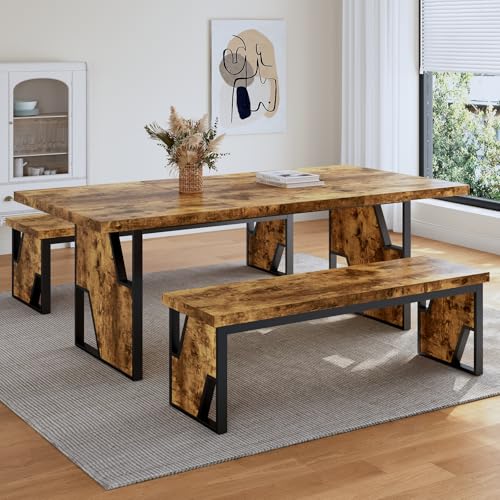
HIPIHOM 70.8" Wooden Dining Table with 2 Benches Kitchen Table and Chairs | Modern Table and Chairs set for 4-6 person, Thickened MDF Wooden Table with Dining Bench, for Living Dining Room, Office
Check price on Amazon
GarveeHome Kitchen Table with 2 Benches, Dining Table Set for 4,Brown | Unique X-Shaped Design,Vintage Tabletop,Saving Space,For Kitchen, Dining Room,Apartment,Sturdy Metal Frame
Check price on Amazon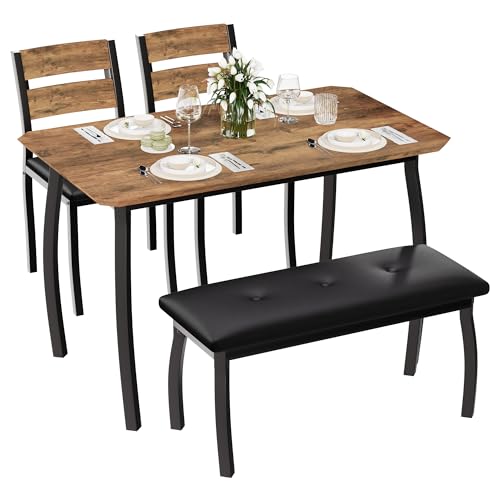
IDEALHOUSE 43'' Dining Table Set for 4, Wooden Kitchen Table with Upholstered Bench & 2 Cushion Chairs, Industrial Dinette Set for Studio, Kitchen, Dining Room, Apartment, Retro
Check price on Amazon
Karl home Corner Dining Table Set with Storage Bench, PU Cushions, Black | Breakfast Nook Table Set , Built-In Power Outlet, L-Shaped Layout with Hidden Storage, Space-Saving, Breakfast Nook
Check price on Amazon
FAVSH Dining Table Set for 4, Kitchen Table with 2 Benchs, Grey | Modern Functional 3 Piece Space-Saving Dining Room Table Set for Apartment, Breakfast Nook, Small Space
Check price on Amazon
HUAHUU 63" Farmhouse Dining Table Set for 4-6, Kitchen Table with 2 Benches, Space Saving 3-Piece Rectangle Wooden Dinette Table Set for Dining Room, Breakfast Nook, Small Space, Brown & White
Check price on Amazon
OUTLANE Dining Table Set for 4, Table with 2 Chairs & Upholstered Bench | Rustic Dining Table Set, MDF Dining Table with Steel Frame, Vintage Dining Furniture, Upholstered Dining Bench, Retro Black
Check price on AmazonWhat Is a Dining Table with a Backed Bench?
A dining table with a backed bench is a coordinated set that pairs a standard or extendable dining table with at least one bench that features a full or partial backrest. Unlike a traditional backless bench, the backed version gives diners lumbar and shoulder support, making it far more comfortable for longer meals, homework sessions, and casual gatherings.
These sets are especially popular in family homes because they offer the flexibility of bench seating — which can tuck neatly under the table to save floor space — while still providing the posture support that many people expect from a proper dining chair. A typical arrangement pairs one backed bench along one side of the table with two to four chairs on the opposite side, creating a balanced, sociable layout.
Quick Definition
A backed bench dining set includes a table plus a bench with a backrest. The bench is usually a fixed-length piece, though some models offer adjustable or modular designs. The backrest can be upholstered, slatted, or solid wood, depending on the style tier you choose.
Key Benefits of Backed Bench Seating
Choosing a dining table with a backed bench is a practical decision that brings several advantages over an all-chair setup. Understanding these benefits helps you decide whether this configuration matches your household's needs.
1. Ergonomic Support
The most obvious advantage is comfort. A backed bench with a well-angled backrest supports the lower back and encourages an upright posture. For families who spend extended time at the table — from long dinners to board games — this support reduces fatigue compared with a backless bench.
2. Space Efficiency
Bench seating can be pushed fully under the table when not in use, freeing up valuable walkway space. In a compact dining room or an open-plan kitchen, this makes a noticeable difference to how spacious the room feels. A backing that rises above the table edge still tucks away cleanly in most designs.
3. Sociable Seating
A bench places diners closer together, which naturally encourages conversation. Children especially enjoy sitting side by side, and a backed bench keeps younger family members supported during meals. This communal feel is one reason bench seating remains a fixture in farmhouse and rustic dining rooms.
4. Visual Cohesion
Because the bench is designed to match the table, a backed bench set delivers a cohesive, coordinated look that is hard to achieve when mixing individual chairs. The unified silhouette often reads as more intentional and design-forward.
5. Versatile for Multi-Use Rooms
In homes where the dining table doubles as a workspace or homework station, the backed bench becomes an impromptu desk seat. Its support makes it far more suitable for longer sitting sessions than a backless stool or bench.
Backed Bench Styles and Configurations
Backed benches come in a variety of designs, each suited to a different aesthetic and functional need. The right choice depends on your room's style, the table shape, and how you plan to use the seating.
Full-Back vs. Partial-Back Benches
A full-back bench features a backrest that spans the entire seating length, offering maximum support and a more chair-like feel. A partial-back or low-back design covers only part of the bench, creating an open, airy look that suits modern and Scandinavian dining rooms. Full-back models are the better choice for households with elderly diners or anyone who needs consistent lumbar support.
Upholstered vs. Slatted vs. Solid Wood Backs
Upholstered backs — whether fabric, faux leather, or performance weave — provide the softest experience and the most visual warmth. Slatted backs, common in farmhouse and coastal styles, offer breathability and a lighter profile. Solid wood backs deliver the most traditional, sturdy look and pair naturally with wooden dining tables.
Bench Position and Configuration
The most common configuration places a backed bench on one long side of a rectangular table, with chairs on the opposite side and ends. For round tables, a curved or single-sided backed bench can work, though rectangular tables offer the widest selection. A corner or L-shaped backed bench is an excellent space-saving solution for breakfast nooks.
If you are exploring bench-based seating more broadly, the dining table with bench 6-seater guide and the slim dining table with bench setup offer helpful comparisons. For a more upright bench option, see the high-back bench for dining table breakdown.
Frame Materials and Upholstery Choices
The durability and comfort of a backed bench depend heavily on its frame and upholstery. Choose materials that match your household's traffic level and your tolerance for maintenance.
Frame Materials
- Solid hardwood (oak, walnut, rubberwood): The most durable and traditional option. Solid hardwood frames resist wobble and hold their shape for years, making them a strong long-term investment.
- Engineered wood with veneer: A more stable and often more design-flexible choice. High-quality engineered frames with reinforced joinery perform well in everyday use.
- Metal frames: Steel and cast-iron legs add an industrial edge and excellent structural rigidity. Look for rust-proof finishes on any metal components.
Upholstery Options
- Performance fabric: Stain-resistant and easy to clean, ideal for families with children.
- Faux leather: Wipe-clean and durable, with a modern look that suits contemporary dining rooms.
- Linen and cotton blends: Softer and more breathable, but require more careful maintenance.
Material Tip for Busy Homes
If the bench will see daily use, prioritize tightly woven upholstery and a solid hardwood or reinforced metal frame. These choices are easier to maintain and hold up better to repeated use than soft, loosely woven fabrics or lightweight frames.
Sizing and Seating Capacity Guide
Getting the size right is critical when buying a dining table with a backed bench. An undersized bench feels cramped, while an oversized one crowds the room and makes the table hard to use.
How Many People Fit on a Backed Bench?
As a general rule, allow about 24 inches (roughly 60 cm) of seating width per person. A standard backed bench measuring around 48 to 60 inches seats two to three adults comfortably. Longer benches in the 72-inch range can seat three to four people, depending on the individual widths.
Matching Bench Length to Table Length
The bench should be slightly shorter than or equal to the table length it serves. A bench that is too long will protrude at the ends and block walkways; a bench that is too short leaves awkward gaps. For rectangular tables, a bench roughly two-thirds to three-quarters of the table length is a reliable starting point.
Seat Height Considerations
Standard dining tables are around 30 inches high, and the matching backed bench should offer a seat height of roughly 17 to 19 inches. A bench that is too low or too high relative to the table will feel uncomfortable regardless of how good the backrest is. Always confirm the seat height against the table height before buying.
For more space-planning context, the dining table space planning guide and the dining table size chart are useful references when finalizing dimensions.
Comfort and Ergonomics Checklist
A backed bench is only worthwhile if it is genuinely comfortable. Use this checklist when evaluating a set, whether in a showroom or through an online listing.
- Backrest angle: A slight recline (around 5 to 10 degrees) supports the natural curve of the spine better than a completely vertical back.
- Seat depth: The seat should support the thighs without pressing behind the knees. Around 16 to 18 inches is typical for dining benches.
- Cushioning: Firm, high-density foam holds up better over time than soft, low-density padding.
- Backrest height: A backrest that reaches the mid-back or shoulder area provides meaningful support; a very low back offers only minimal benefit.
- Stability: A well-built bench should not wobble or flex when weight shifts. Check joinery and leg construction.
Room Layout and Placement Tips
Bench seating changes the way a dining room flows. Keep these placement principles in mind to get the most from your backed bench setup.
Allow Enough Clearance
Leave at least 36 inches between the table edge and any wall or furniture to allow diners to slide in and out comfortably. Because a backed bench is entered from the side rather than the end, ensure there is clear access along the bench's open edge.
Place the Bench Against a Wall or Open Side?
Many families place the backed bench against a wall or in a corner to maximize floor space. This works well in compact dining rooms, but make sure the bench can still be pulled out slightly if needed. In open-plan spaces, a freestanding backed bench can act as a subtle room divider while keeping sightlines open.
Balance with Chairs
Pairing a backed bench with chairs on the opposite side creates a pleasing asymmetry and gives diners a choice between bench and chair seating. This mixed configuration is one of the most practical ways to use a backed bench in a family home.
For layouts involving tight spaces, the dining table for narrow space guide and the small width dining table selection offer useful planning context.
Care and Maintenance Essentials
A backed bench sees more contact than a standard chair because multiple people share its surface. Regular, simple care keeps it looking its best.
- Upholstery: Vacuum fabric backs weekly and blot spills immediately. Use a mild upholstery cleaner for stains, and always test on a hidden area first.
- Wood frames: Dust regularly and apply a quality wood polish every few months to maintain the finish. Keep the bench away from direct heat sources to prevent cracking.
- Metal components: Wipe with a damp cloth and dry immediately to prevent surface wear on the finish.
- Joint checks: Periodically tighten any bolts or screws, particularly on benches that are moved frequently.
For deeper guidance, see the dining table care and maintenance hub and the dining table routine upkeep guide.
Backed Bench vs. Chairs vs. Backless Bench
Understanding how a backed bench compares with the alternatives helps you choose the right seating for your household.
| Feature | Backed Bench | Dining Chairs | Backless Bench |
|---|---|---|---|
| Lumbar support | Moderate to high | High | None |
| Space efficiency | High | Moderate | High |
| Sociable feel | High | Moderate | High |
| Adjustability | Fixed | Individual | Fixed |
| Best for | Families, long meals | Formal dining, mixed users | Compact, occasional use |
A backed bench is the strongest choice when you want bench-style sociability without sacrificing support. If individual adjustability matters most, chairs remain the better option. For purely space-saving needs, a backless bench still has its place — but the backed bench is the more comfortable compromise.
Ready to Choose Your Dining Table with Backed Bench?
Browse curated backed bench dining sets, compare configurations, and find the setup that fits your space and household.
Explore Bench Dining SetsFrequently Asked Questions
A dining table with a backed bench pairs a standard dining table with a bench that features a backrest. Unlike backless benches, the backed version offers lumbar support, making it more comfortable for longer meals and everyday family dining.
A backed bench with proper lumbar support can be just as comfortable as a dining chair for many users. It encourages an upright posture and offers a communal seating feel. However, individual chairs still provide more adjustability and personal space.
A typical backed bench for a standard dining table seats two to three adults comfortably. Longer benches designed for large tables can seat three to four people. Always check the bench length and allow roughly 24 inches of seating width per person.
Solid hardwood frames such as oak, walnut, and rubberwood offer durability and a classic look. Upholstered backs in performance fabric or faux leather add comfort and are easy to maintain. For busy households, choose tightly woven upholstery and reinforced joinery.
If you are still refining your choice, the dining table with backed bench overview and the round bench seat for dining table guide provide additional configuration ideas, while the first dining table checklist helps you confirm every decision before you buy.