
Dining Table Turn Table: The Complete Guide to Lazy Susans
A dining table turn table, commonly known as a lazy Susan, transforms shared meals into a smooth, effortless experience. This guide explains how rotating serving platforms work, how to size them correctly, which materials suit different tables, and how to install and care for one so it serves your family and guests for years.
Why a turn table matters: Passing heavy platters and hot dishes across a crowded table is awkward and risky. A well-chosen dining table turn table keeps every dish within reach, encourages conversation, and makes family-style serving feel natural. Whether you are outfitting a new round dining table or upgrading an existing setup, understanding the core principles of size, material, and mechanism will help you choose a model that fits your table and your hosting style.
What Is a Dining Table Turn Table?
A dining table turn table is a circular rotating platform positioned at the center of a dining table. Diners spin the platform gently to bring dishes, condiments, and serving pieces within easy reach, eliminating the need to pass items hand to hand. The concept is simple, but the details, such as the bearing mechanism, edge profile, and surface material, determine how smoothly and quietly the platform operates over time.
Turn tables appear in two broad forms: integrated models built directly into the tabletop and freestanding models that rest on top of an existing table. Integrated versions create a seamless, flush surface that suits formal dining rooms and large round tables. Freestanding versions are portable, versatile, and can be added to almost any table shape, including rectangular tables where they anchor the center of the serving area.
Types of Dining Table Turn Tables
Built-In Turn Tables
Integrated into the tabletop, these rotate on a recessed bearing ring and sit flush with the surrounding surface. They deliver the cleanest look and are common on large round and oval dining tables designed for entertaining. Installation requires a table built to accommodate the mechanism.
Freestanding Lazy Susans
Portable platforms that rest on the table surface. They are simple to add, easy to remove for cleaning, and available in many diameters and finishes. Freestanding models suit renters, households that entertain occasionally, and rectangular tables that lack an integrated option.
Glass-Top Turn Tables
Tempered glass platforms offer a modern, reflective look and are simple to wipe clean. They pair well with glass and chrome dining tables and visually lighten the center of the table. Look for edge polishing and a sturdy hub for smooth rotation.
Wood Turn Tables
Solid wood or wood-veneer platforms match wooden dining tables and bring warmth to the table. Oiled or lacquered finishes resist everyday spills. Wood models are available in round, square, and multi-tier designs for larger spreads.
How to Choose the Right Size
Size is the single most important factor for usability. A turn table that is too large crowds place settings and leaves no room for plates; one that is too small cannot hold enough dishes to be useful. As a practical rule, the turn table diameter should be roughly 40 to 50 percent of the table width, leaving a comfortable ring of space for plates, cutlery, and glasses around the edge.
| Table Width | Suggested Turn Table Diameter | Best For |
|---|---|---|
| 36 inches (about 90 cm) | 15 to 18 inches (38 to 46 cm) | Compact round tables, two to four diners |
| 42 inches (about 107 cm) | 18 to 21 inches (46 to 53 cm) | Everyday family dining |
| 48 inches (about 122 cm) | 21 to 24 inches (53 to 61 cm) | Four to six diners, mixed serving dishes |
| 54 inches (about 137 cm) | 24 to 27 inches (61 to 69 cm) | Six diners, generous platters |
| 60 inches (about 152 cm) or larger | 27 to 30 inches (69 to 76 cm) | Large gatherings, multi-course meals |
If you are still planning your table purchase, our guides on how much room you should have around a dining table and dining table sizes for four provide complementary clearance guidance that pairs well with turn table sizing.
Materials and Finishes
The material of your turn table affects durability, cleaning effort, and visual harmony with your table. Consider these common options:
- Tempered glass: Easy to clean, scratch-resistant in everyday use, and visually light. Ideal for modern and glass-topped tables.
- Solid wood: Warm and traditional; oiled or lacquered finishes handle routine use well. Best matched to wooden dining tables.
- Engineered wood with veneer: A balanced option that offers consistent appearance and good stability across humidity changes.
- Metal and stone composite: Heavy-duty and stable; suited to large platforms and professional-grade use in busy households.
- Marble or stone: A premium, luxury-tier choice for formal dining rooms; requires sealing and careful handling to avoid chips.
Whichever material you select, check that the edge is smoothly finished. Rounded or beveled edges reduce the risk of knocks and feel more comfortable when diners reach across the platform. A hub or bearing ring made from high-grade steel or sealed nylon tends to deliver quieter, longer-lasting rotation than basic plastic components.
Bearing Mechanisms and Rotation Quality
The bearing system determines how smooth and quiet the platform feels. Entry-level models often use a simple plastic ring that can become stiff or noisy over time. Mid-range and premium models typically use sealed steel ball bearings or precision-machined rings that rotate evenly under the weight of full serving dishes.
- Entry-level: Basic plastic or nylon rings; suitable for light use and occasional entertaining.
- Mid-range: Sealed steel bearings with smoother rotation; a solid choice for daily family meals.
- Premium: Heavy-duty bearings with damped rotation and consistent spin; ideal for large platters and frequent hosting.
- Luxury: Precision mechanisms with silent operation and flush-fit installation; suited to formal dining rooms and designer tables.
Installation and Setup Tips
Freestanding Setup
Place the platform at the exact center of the table. Check that it spins freely without wobble. Add a thin felt or rubber pad beneath the base to protect the tabletop and reduce slipping. For rectangular tables, position the turn table where most serving dishes will sit.
Built-In Installation
Built-in models require a table designed for them or professional modification. Confirm the cutout diameter matches the platform, and that the bearing ring is level. If you are unsure about installation, consult a furniture technician to avoid damaging the tabletop.
Leveling matters more than most people expect. A platform that sits slightly off-level will drift when spun, and heavy dishes can slide. Use a small spirit level to confirm the table itself is level before placing the turn table. If your existing table wobbles, our guide on dining table base options may help you address stability before adding a rotating platform.
Serving and Hosting With a Turn Table
A turn table is most useful when it is loaded with intention. Arrange heavier platters near the center and lighter bowls toward the edge so the platform stays balanced. Avoid stacking dishes too high, and keep the rotation path clear of tall centerpieces that could tip during a spin.
- Place shared dishes and condiments on the platform; keep personal plates and glasses on the outer ring.
- Spin gently and let the platform settle before reaching for a dish.
- Use trivets or heat pads under hot serving pieces to protect the surface; our dining table hot pads guide covers safe heat protection.
- For formal meals, pair the turn table with a formal centerpiece arrangement that stays low and clear of the rotation path.
Care and Maintenance
Routine care keeps rotation smooth and the surface looking its best. Wipe glass and sealed wood surfaces with a soft, damp cloth after meals. Avoid abrasive cleaners that can dull finishes or scratch polished edges. Periodically check the bearing area for crumbs and debris, which can cause stiffness; a soft brush or vacuum nozzle is usually enough to clear it.
For wooden platforms, reapply a suitable oil or wax according to the manufacturer's guidance to maintain the finish. If your turn table sits on a wooden dining table, use a protective pad underneath to prevent scratches and moisture transfer. Our broader guides on table cloths for dining room tables and dining table runners can help you layer protective and decorative textiles around the platform.
Pairing a Turn Table With Your Dining Table
Round tables are the natural home for turn tables, but rectangular and oval tables can benefit too. On a round table, the platform echoes the table shape and keeps every seat equidistant from the dishes. On a rectangular table, a centered round platform anchors the serving zone while place settings line the long edges. If you are shopping for a table, our guides on round glass dining tables for four and modern round walnut dining tables show how a platform fits into a cohesive setup.
Smaller households can still enjoy the convenience. A compact platform works well on a small round dining table for four or a small glass dining table set for four, bringing shared dishes within easy reach without overwhelming the surface.
Turn Table Buying Checklist
- Measure the table width and choose a platform at roughly 40 to 50 percent of that width.
- Confirm clearance for plates and glasses around the platform edge.
- Match the material to your tabletop and cleaning preferences.
- Check the bearing type and rotation feel; prefer sealed steel bearings for daily use.
- Look for finished edges and a stable, non-slip base.
- Decide between built-in and freestanding based on your table and hosting frequency.
- Plan for storage if you choose a freestanding model and entertain only occasionally.
Ready to Upgrade Your Serving Setup?
Explore curated dining table turn tables and lazy Susan options selected for smooth rotation, durable materials, and balanced design.
Recommended Dining Table Turn Tables
⚠️ AFFILIATE DISCLOSURE: This website contains affiliate links. As an affiliate Associate, we earn from qualifying purchases. If you make a purchase through these links, we may receive a small commission at no additional cost to you. Read our full affiliate policy.

VEVOR 30 in Glass Lazy Susan Turntable, Clear Tempered Glass Dining Table | 6 Rotating Wheels, 360° Smooth and Silent Spin Tabletop Rotating Tray, for Family Gatherings, Banquets & Weddings
Check price on Amazon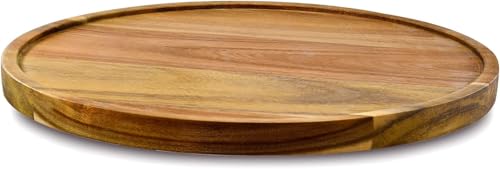
10" Acacia Wood Lazy Susan Organizer Kitchen Turntable for Cabinet Pantry Table Organization
Check price on Amazon
LAMU 2 Pack 9'' 10'' Lazy Susan Turntable Organizer for Table Top Cabinet, Wooden Lazy Susan for Kitchen, Pantry, Countertop, Bathroom Vanity, Spice Organization, Wood Decor
Check price on Amazon
ORIDOM Acacia Wood Lazy Susan, Wood Turntable Tray Cabinet Organizer,14"
Check price on Amazon
AMH 10-Inch Farmhouse Oak Lazy Susan Cabinet Organizer, Walnut Finish | Smooth rotating oak tray with walnut finish for dining tables, kitchen counters, pantries and cabinet storage.
Check price on Amazon
KOKSTOP Lazy Susan Organizer:9 Inch Rotating Spice Rack for Kitchen Countertop Round Wooden Turntable Holder for Cabinet, Dining Table, Cupboard Storage – Black
Check price on Amazon
9" Acacia Wood Lazy Susan Organizer Kitchen Turntable for Cabinet Pantry Table Organization
Check price on Amazon
30 Inch Glass Lazy Susan Turntable for Dining Table | Table Top Centerpiece Kitchen Turntable with 6 Rotating Wheels Large Round Silent & Smooth Spin Rotating Tray
Check price on AmazonFrequently Asked Questions
What is a dining table turn table?
A dining table turn table, often called a lazy Susan, is a rotating circular platform placed at the center of a dining table so diners can share dishes without passing them across the table. It keeps serving pieces within reach and makes family-style meals smoother.
What size lazy Susan should I choose for my dining table?
A useful rule is that the turntable diameter should be roughly 40 to 50 percent of your table width, leaving comfortable clearance for plates and place settings around the edge. Always measure the gap between the platform and the nearest place setting before finalizing your choice.
Are built-in turn tables better than freestanding ones?
Built-in turn tables offer a seamless look and sit flush with the tabletop, while freestanding models are portable and can be added to almost any existing table. The better choice depends on your table design and how often you entertain.
Can I use a turn table on a rectangular dining table?
Yes. A centered round platform works well on rectangular and oval tables, anchoring the serving zone while place settings line the long edges. Just confirm that the platform diameter leaves enough room for plates around the perimeter.
How do I keep the turn table spinning smoothly?
Keep the bearing area free of crumbs and debris, avoid overloading the platform with heavy stacks, and check that the table itself is level. Wipe surfaces with a soft, damp cloth and follow the manufacturer's care guidance for the specific material.