
Dining Table Size for 10: The Complete Dimensions & Fit Guide
Planning a dining table that seats ten takes more than counting chairs. Use this guide to get the measurements, clearance, and layout right the first time, so every meal feels comfortable instead of crowded.
Start With the DimensionsWhy size matters most for a ten-seat table: A dining table for 10 is one of the largest pieces of furniture in a home. If it is too short, elbows collide. If it is too wide, serving becomes a stretch. If the room is too tight, chairs cannot pull out. This guide breaks down the recommended dining table size for 10, the room space you need, and the seating and shape decisions that affect everyday comfort.
Recommended Dining Table Dimensions for 10 People
The standard rule is simple: each diner needs about 24 inches of linear table edge for elbow room, and the table should be at least 36 inches deep so two place settings can face each other with serving dishes in the middle. For ten people, that translates into the following baseline dimensions.
| Table Shape | Recommended Dimensions for 10 | Best For |
|---|---|---|
| Rectangular | 94–102 inches long × 36–40 inches wide | Long rooms, family gatherings, formal dining rooms |
| Round | 84–90 inches diameter | Conversation-focused layouts, square dining areas |
| Oval | 94–108 inches long × 42–48 inches wide | Rooms that need softened lines and a generous serving area |
| Square | 72–78 inches per side | Open-plan spaces with a dedicated square footprint |
These dimensions assume a standard seating arrangement of four on each long side and one at each end for a rectangular table. If you plan to seat all ten around a round table, the diameter needs to be larger because the circumference has to accommodate ten place settings without pinching the corners of the tabletop.
Depth tip: 36 inches is the floor, not the target
A 36-inch-wide table technically seats two people facing each other, but it leaves little room for a centerpiece or shared platters. For a table that seats 10, a 40-inch depth is a much more comfortable target and makes serving from both sides noticeably easier.
Room Clearance and Floor Space You Need
Table size is only half the equation. The room must also allow chairs to pull out and people to walk behind seated diners. The widely used guideline is 36 inches of clearance from the table edge to any wall or fixed furniture. Increase that to 42–48 inches along main traffic paths, such as the route between the kitchen and the living room.
Minimum room size for a 10 seater table
- Rectangular 96 × 40 inch table: plan for a room of roughly 14 × 12 feet or larger.
- Round 84 inch table: plan for a square area of about 13 × 13 feet to keep chair pull-out comfortable.
- Oval 100 × 44 inch table: plan for at least 14 × 12.5 feet, with extra space on the long sides if the table sits in a walkway.
Measure your room before you shop, and mark the table footprint on the floor with painter's tape. Include the chair pull-out zone in that tape outline. This simple step reveals whether the table will crowd a doorway, block a sideboard, or leave enough room for a serving cart.
If your dining area is tight, an extendable table can be a smart compromise. It seats a smaller group day to day and opens to a ten-seat footprint for holidays. Review the extended dimensions carefully, since some models grow past the clearance you have available. Our guide to extendable tables for larger groups covers the mechanics and trade-offs to consider.
Seating Strategy: How Ten People Actually Fit
Ten people at one table usually means a mix of side seating and end seating. The most common layout for a rectangular table is four chairs per long side plus one chair at each end. That arrangement works best when the table is at least 94 inches long, because four chairs need about 96 inches of linear edge at 24 inches each.
Chairs versus benches
Benches can seat more people per linear inch than individual chairs, which makes them appealing for a ten-seat setup. A bench along one long side frees floor space because it tucks under the table, and it works well in farmhouse and rustic layouts. The trade-off is that benches are harder to move and less comfortable for long meals. Many households combine a bench on one side with chairs on the other. If that appeals to you, our guide to dining table settees and bench seating explains how to balance comfort and capacity.
Chair height and table height
Make sure the chairs you pair with a ten-seat table leave 10–12 inches of clearance between the seat and the table apron. For a standard 30-inch dining table, that means a seat height of about 18 inches. If you are considering a counter-height or bar-height table, verify the chair-to-table ratio before committing. Our guide to the ideal dining table height walks through the numbers.
Quick capacity check
Divide the table's longest edge by 24 inches to estimate side seating. Add one seat per usable end for rectangular tables. Round tables use the circumference divided by 24. If the result is below ten, the table will feel tight for a full house.
Choosing the Right Shape for a Ten-Seat Table
Shape affects how the table fits the room and how conversation flows. Here is how each option behaves at the ten-person scale.
Rectangular
The most space-efficient shape for ten people. A rectangular table follows the natural line of a long room and makes it easy to serve from either side. It also works well with a chandelier centered above and a runner down the middle. Watch for end chairs that protrude into walkways in narrow rooms.
Round
A round table for ten needs a diameter of about 84–90 inches. Everyone can see everyone, which is a real advantage for conversation, but the table consumes a large square footprint. Round tables suit square dining rooms and breakfast areas. If your space is compact, a smaller round table paired with a leaf system is worth exploring. Our guide to round country dining tables covers style and layout options.
Oval
An oval table softens the room and gives a generous central serving area. It seats ten comfortably at 94–108 inches long and 42–48 inches wide. Oval tables are forgiving in rooms where a rectangular end would block a doorway, because the curved corners reduce the effective footprint. They pair well with pedestal bases, which keep the floor visually open.
Square
A square table for ten is uncommon but works in open-plan spaces where a symmetrical layout is the goal. You need roughly 72–78 inches per side. Square tables tend to feel formal and work best when the room has clear walkways on all sides.
Materials, Bases, and Support for a Large Table
A table that seats ten carries more weight, gets more contact, and spans a longer distance than a four-seat table. Construction quality matters more at this size. Look for reinforced aprons, sturdy legs or a well-engineered pedestal, and a top material that resists daily wear.
- Solid wood: A durable, long-term investment. Oak and walnut are common at this scale. Our guide to the oak butcher block dining table explains how that style handles a busy household.
- Stone tops: Marble and granite offer a premium look and a cool, easy-to-wipe surface. Weight is significant, so the base must be rated for it. A granite dining table base needs to be especially robust.
- Pedestal bases: Trestle and double-pedestal bases keep the floor open and reduce leg clutter for ten chairs. Check that the pedestal span matches the table length.
- Metal frames: Steel and aluminum frames add rigidity and suit industrial and modern styles. Reinforced joints are essential at a ten-seat span.
If you are choosing between a fixed table and one that grows, consider how often you host ten. A fixed ten-seat table is simple and sturdy. An extendable table is more flexible but adds a mechanism to maintain. Our comparison of extendable versus fixed dining tables covers the long-term trade-offs.
Common Layout Mistakes to Avoid
- Buying the table before measuring the room. Tape the footprint and clearance zone on the floor first.
- Ignoring the chair pull-out zone. A table that fits but leaves no room to pull out chairs is unusable.
- Forgetting the serving path. Ten diners mean more platters and more trips to the kitchen. Keep at least one side open.
- Overlooking lighting. A long table needs a linear fixture or multiple pendants centered over the tabletop, not the room. Our guide to dining table lighting placement explains the spacing.
- Skipping the rug check. A rug under a ten-seat table should extend at least 24 inches beyond the table edge so chair legs stay on the rug.
Recommended Large Dining Tables for 10
⚠️ AFFILIATE DISCLOSURE: This website contains affiliate links. As an affiliate Associate, we earn from qualifying purchases. If you make a purchase through these links, we may receive a small commission at no additional cost to you. Read our full affiliate policy.
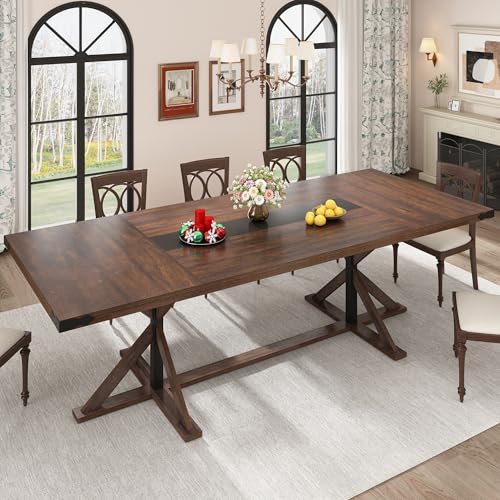
Hlivelood 94" Large Dining Table for 10 People, Rectangular Kitchen Farmhouse Table W/Thickness Waterproof Wood Tabletop,Long Dining Room Tables W/Wood Strip Base for Kitchen Living Room(238CM Brown)
Check price on Amazon
71-87 Inch Extendable Dining Room Table, Rustic Wooden Kitchen Table 6-10 | STHOUYN Expandable Dining Table, Farmhouse Rustic Style, Rectangular Wooden Top, Seats 6-10, Brown Kitchen or Dining Room
Check price on Amazon
Garvee 87" Heavy Duty Kitchen Table, 10 Person Dining Table, Brown | 87" Kitchen Table, Rustic Dining Table For 10, Sturdy 2x2 Metal Legs, Thick Wood Top, Waterproof Finish
Check price on Amazon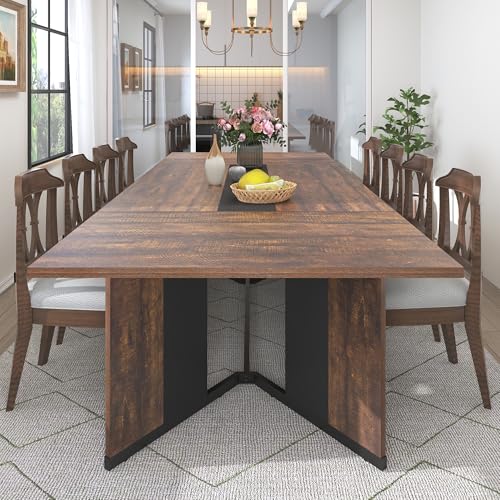
Hlivelood 94Inch Large Dining Table for 8 10 People,Wooden Rectangular Kitchen Table W/Waterproof Tabletop,Large Rectangle Furniture W/Adjustable Legs,Brown Dinner Table for Kitchen Dining Room(94IN)
Check price on Amazon
Extendable Dining Table Set for 10, Walnut 44-132" table & 10 Dining Chairs | Adjusts Through 6 Lengths From 44 To 132 Inch, Combining Flexible Dining Space, 10 Beige Cushioned Upholstered Chairs.
Check price on Amazon
Garvee 78.7″ Dining Table for 8-10 People, Large Kitchen Table (Only Table) | Brown Industrial Dinner Table with Heavy-Duty Steel Frame and High-Density MDF Thick Tabletop for Kitchen, Dining Room
Check price on Amazon
Aoomrty 11-Piece Large Wood Dining Table Set for 10,95" Extendable Table | Long Expandable Kitchen Table Set with 10 Velvet Chairs,Grey White Oak Tabletop,Hammered Trapezoid Base,for Party Gathering
Check price on Amazon
IRONCK 71-87 Inch Extendable Dining Table, Kitchen Table Seats 6-10 | Expandable Rectangle Dining Room Table with Leg Base, Wooden Dinner Table for Kitchen Dining Room Living Room, Walnut
Check price on AmazonA Simple Buying Checklist for a Ten-Seat Table
- Measure the room and mark the table footprint plus 36 inches of clearance on the floor.
- Confirm the table length is at least 94 inches for rectangular, or 84 inches in diameter for round.
- Check the table depth: 40 inches is a comfortable target for two facing place settings.
- Verify the base or leg design can support the top material and ten chairs without wobble.
- Test chair height against the table apron for 10–12 inches of legroom.
- Plan the serving path and lighting before you commit to a layout.
- If buying extendable, measure the extended footprint, not just the closed size.
For households that regularly host ten, a well-built mid-range or premium tier table is usually the more efficient long-term choice than a starter-tier model that may not hold up to daily use at this scale. For smaller everyday setups, our guides to small dining table ideas and compact dining tables show how to keep a flexible dining space without sacrificing hosting capacity.
Frequently Asked Questions
What is the minimum dining table size for 10 people?
A rectangular table for 10 should be at least 94–102 inches long and 36–40 inches wide. This provides roughly 24 inches of elbow room per diner and enough depth for place settings and serving dishes.
How much clearance do I need around a 10 seater dining table?
Plan for 36 inches from the table edge to walls or fixed furniture so chairs can pull out. Increase to 42–48 inches along main walkways where people pass behind seated diners.
Is a round or rectangular table better for 10 people?
Rectangular tables are more space-efficient in long rooms and easier to serve from both sides. Round tables encourage conversation but need an 84–90 inch diameter and a large square footprint.
What is the ideal room size for a dining table for 10?
Aim for at least 14 × 12 feet for a rectangular table, plus extra space on any side that sits along a walkway. Add the table dimensions to 36 inches of clearance on each usable side to estimate floor space.
Can an extendable table seat 10?
Yes. Many extendable tables reach 94–110 inches fully opened, which seats 10 comfortably. Check the extended footprint and leaf mechanism before buying.
Final Takeaway
The right dining table size for 10 comes down to three numbers: length, depth, and clearance. Aim for at least 94 inches of length for a rectangular table, 40 inches of depth for comfortable facing place settings, and 36 inches of clearance on every usable side. Match the shape to your room, verify the base can support the top, and measure the chair pull-out zone before you commit.
When those numbers line up, a ten-seat table becomes the natural center of the home rather than a daily obstacle. Use the checklist above, compare shapes against your floor plan, and choose a table built for the way your household actually eats.