
Counter Height Dining Table: The Complete Buying & Setup Guide
Everything you need to know about counter height dining tables — sizing, seating capacity, materials, chair pairing, and styling — so you can choose a table that fits your space and your lifestyle with confidence.
EXPLORE COUNTER HEIGHT TABLESWhy counter height tables deserve a closer look: A counter height dining table sits between a standard dining table and a bar table, usually around 34 to 36 inches tall. That extra elevation creates a relaxed, pub-style atmosphere, improves sightlines in open-plan spaces, and often makes compact kitchens feel less crowded. This guide walks you through the key decisions so your table works as well as it looks.
What Is a Counter Height Dining Table?
A counter height dining table is a table designed to stand taller than a conventional dining table. Standard dining tables are typically about 30 inches high, while counter height tables rise to roughly 34 to 36 inches — close to the height of a kitchen counter. This in-between height gives you the casual comfort of a pub table without the extreme elevation of a full bar table, which usually stands around 40 to 42 inches.
Because of this design, counter height tables pair with counter stools or taller chairs that have a seat height of about 24 to 26 inches. The result is a dining setup that feels more relaxed and social, ideal for breakfasts, quick meals, casual entertaining, and multi-use spaces where the table doubles as a work or gathering surface.
If you are still deciding between elevated and traditional designs, our counter high round dining table guide explores how shape and height interact, while the broader round dining table for four guide helps you compare seating layouts.
Counter Height vs Standard vs Bar Height
Understanding where counter height sits relative to other table types helps you choose the right fit for your room and the people who will use it. The table below summarizes the key differences.
| Table Type | Typical Height | Seat Height | Best For |
|---|---|---|---|
| Standard dining table | About 30 inches | About 18 inches | Formal dinners, families with young children, long meals |
| Counter height table | About 34–36 inches | About 24–26 inches | Casual meals, compact kitchens, open-plan spaces |
| Bar height table | About 40–42 inches | About 28–30 inches | Entertaining, pub-style settings, standing socializing |
Counter height is often the sweet spot: elevated enough to feel distinct and space-saving, yet low enough to remain comfortable for everyday dining. If you prefer a rounded shape at this height, the counter high round dining table guide covers the trade-offs in more detail.
Key Benefits of Choosing a Counter Height Table
Space Efficiency
The elevated surface and tall stools can make compact kitchens and breakfast nooks feel less crowded, since the visual weight sits higher and chairs tuck neatly underneath.
Casual, Social Feel
Counter height encourages a relaxed, pub-style atmosphere that works well for quick meals, coffee breaks, and informal entertaining.
Defines Open-Plan Zones
In open-plan layouts, a taller table helps visually separate the dining area from the kitchen or living space without the need for walls.
Improved Sightlines
Sitting higher often gives a better view across the room, which is helpful in spaces where a standard table would feel low or hidden.
Multi-Purpose Surface
Counter height tables double easily as workstations, homework spots, or casual gathering surfaces throughout the day.
Easy Transition from Kitchen
The height aligns closely with kitchen counters, creating a natural flow between cooking and dining areas.
How to Choose the Right Size and Seating Capacity
Sizing is the most important decision when buying a counter height dining table. A table that is too large crowds the room, while one that is too small leaves guests uncomfortable. Start by measuring your space, then plan for comfortable seating clearances.
- Allow about 24 inches of table width per person for comfortable dining, and slightly more for larger settings.
- Leave roughly 36 inches of clearance between the table edge and walls or other furniture so chairs can be pulled out easily.
- Account for stool footprint — counter stools often take up more floor space than standard chairs, especially backless or swivel designs.
- Consider the room's traffic flow so people can move around the table without squeezing past seated guests.
For a compact setup, a two-person extendable design may be the most flexible option — see our 2 person extendable dining table guide. For larger households or regular entertaining, a longer rectangular counter height table can seat four to six comfortably. If you are comparing rounded options, the 52 inch round dining table guide and the 5 seater round dining table guide offer useful sizing benchmarks.
Pairing Chairs and Stools with a Counter Height Table
The right seating makes or breaks a counter height setup. Counter stools and chairs typically have a seat height of about 24 to 26 inches, leaving roughly 9 to 12 inches of clearance between the seat and the tabletop. That gap is what keeps the setup comfortable for long meals and everyday use.
When choosing seating, consider these factors:
- Backrest vs backless: Backrests add comfort for longer meals, while backless stools tuck away neatly under the table to save space.
- Swivel vs fixed: Swivel stools make it easier to get in and out, which is helpful in tighter spaces.
- Upholstery: Padded seats add comfort; explore comfortable upholstered dining chairs for ideas on comfort-focused options.
- Style consistency: Match the chair or stool style to the table's material and finish for a cohesive look.
- Arm chairs: If you want a more anchored look, review dining tables with arm chairs for pairing inspiration.
For solid wood seating that ages well, our solid wood chairs for dining table guide covers durability and care considerations.
Materials and Finishes for Counter Height Tables
Counter height tables come in a wide range of materials, each with distinct advantages. Your choice affects durability, maintenance, and the overall style of the room.
| Material | Tier | Best For | Care Notes |
|---|---|---|---|
| Solid wood | Mid-range to high-end tier | Warm, traditional and farmhouse interiors | Periodic oiling or waxing; protect from moisture |
| Metal top | Essential to mid-tier | Industrial, modern, and utility-focused spaces | Wipe clean; check for rust-proof finish |
| Engineered wood with veneer | Entry-level to mid-range | Casual kitchens and breakfast nooks | Avoid standing water; use coasters |
| Stone or composite top | Premium to luxury | Elegant, high-use dining areas | Seal periodically; avoid harsh cleaners |
If you are considering a metal surface, the metal top dining table guide explains durability and styling considerations in more depth. Whichever material you choose, look for a solid build, reinforced joints, and a finish suited to your household's daily use.
Placement and Room Layout Tips
Counter height tables can transform a space when placed thoughtfully. Consider these practical layout guidelines:
- Anchor near the kitchen: Placing the table close to kitchen counters creates a natural flow and makes serving easier.
- Use as a room divider: In open-plan spaces, a counter height table can subtly separate the dining zone from the living area.
- Keep pathways clear: Leave enough room for people to walk behind seated guests without disruption.
- Mind the lighting: A pendant light or chandelier above the table helps define the dining zone and improves the ambiance.
- Consider the view: Because counter height tables elevate the eye line, think about what guests will see when seated.
For small or oddly shaped spaces, a square option can be surprisingly versatile — see the 55 inch square dining table guide for layout ideas that translate well to counter height designs.
Counter Height Table Tier Comparison
Counter height tables span a range of quality tiers. This comparison helps you align your selection with your household's needs and expected longevity.
| Tier | Typical Features | Best For |
|---|---|---|
| Entry-level | Simple construction, basic finishes, lighter frames | Occasional use, starter homes, temporary setups |
| Mid-range | Solid joinery, better finishes, sturdier frames | Everyday family use, regular entertaining |
| Premium | Quality hardwoods, refined finishes, reinforced bases | High-use dining areas, long-term ownership |
| Luxury | Statement materials, artisan detailing, exceptional build | Design-focused spaces, formal entertaining |
In general, mid-range and premium models offer smoother mechanisms and more durable finishes than entry-level options, making them a solid choice for busy households. Choose the tier that matches how often the table will be used and how long you plan to keep it.
Common Mistakes to Avoid
- Mismatched seat heights: Pairing standard chairs with a counter height table leads to discomfort. Always match seat height to table height.
- Ignoring clearance: Underestimating the space needed for stools to pull out and for people to walk behind can make the table feel cramped.
- Overlooking household needs: Counter height tables can be less comfortable for young children or guests with mobility concerns. Consider who will use the table most.
- Choosing style over durability: A beautiful finish that cannot handle daily use will wear quickly. Prioritize a solid build for high-use spaces.
- Skipping measurements: Always measure your space, your doorway, and the intended table footprint before ordering.
Care and Maintenance Basics
Counter height tables are used frequently, so a little routine care goes a long way. Wipe surfaces with a soft, damp cloth and avoid harsh abrasives. For wood tables, reapply oil or wax periodically to maintain the finish. For metal surfaces, dry promptly after cleaning to prevent water spots. Use coasters and placemats to protect the surface from heat, moisture, and scratches, and check fasteners occasionally to keep the table stable.
Recommended Counter Height Dining Tables
⚠️ AFFILIATE DISCLOSURE: This website contains affiliate links. As an affiliate Associate, we earn from qualifying purchases. If you make a purchase through these links, we may receive a small commission at no additional cost to you. Read our full affiliate policy.

SLEKVERSA Farmhouse Dining Counter Height Table with Wine Rack & 3 Shelves, 36" Wooden Tall Dining Table with 2 Drawers, Thick Frame Counter Height Kitchen Table for Bar & Entertaining, Retro Gray
Check price on Amazon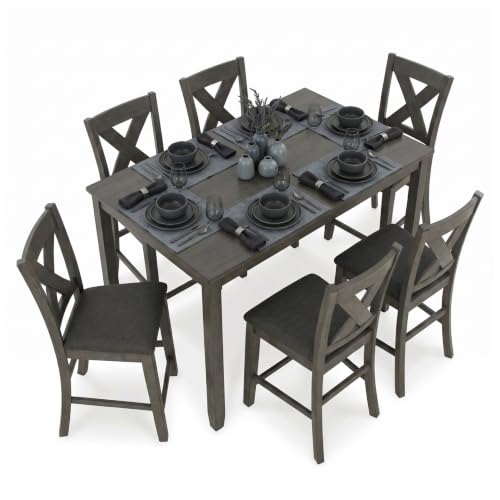
Signature Design by Ashley Caitbrook Counter Height Dining Table Set for 6 | 7-Piece Set, Hardwood Solids, Acacia Veneer and MDF Substrate Table, 6 Upholstered Stools, Antiqued Gray Wash Finish
Check price on Amazon
TRIBEWOOD 72-Inch Long Solid Wood Counter Height Dining Table, Rustic Brown | Commercial High Top Table for 6-8 People, Narrow Industrial Bar Tables with Metal Footrest, for Café & Restaurant(Table Only)
Check price on Amazon
Tribesigns 63-Inch Counter Height Bar Table with Metal Footrest | Industrial Rectangle Pub Table, Wood Kitchen Dining Table with Sturdy Metal Frame for Dining Room, Home Bar
Check price on Amazon
Signature Design by Ashley Moriville Counter Height Dining Extension Table | Farmhouse Dining Table Style, Veneers, Wood and Engineered Wood, Removable Drop-In Leaves, Seats Up to 8
Check price on Amazon
Signature Design by Ashley Round Counter Height Dining Set for 4 | Built-In Storage Shelves, Beige Polyester and Foam Stools, Solid Wood and Engineered Wood Frames, Cherry Brown Finish
Check price on Amazon
NicBex 5 Piece Counter Height Dining Table Set, Farmhouse Wooden Dinner Table Set for 4, 39" Square Table & 4 High Back Bar Stools, Black&Gray
Check price on Amazon
Signature Design by Ashley 5-Piece Round Counter Height Dining Set, Gray | 42-Inch Round Dining Table with 2 Storage Shelves, 4 Upholstered Bar Stools, Wrenning Series
Check price on AmazonFrequently Asked Questions
What is a counter height dining table?
A counter height dining table sits between standard dining and bar height, typically around 34 to 36 inches tall. It pairs with counter stools or taller chairs, giving a casual, pub-style feel while remaining comfortable for everyday meals.
How many people fit at a counter height dining table?
Seating depends on table length and shape. A small round or square counter height table comfortably seats two to four, while longer rectangular tables can seat four to six or more. Allow roughly 24 inches of table width per person for comfortable dining.
Are counter height dining tables good for small spaces?
Yes. Counter height tables often work well in compact kitchens, breakfast nooks, and open-plan areas because their elevated surface and tucked-in stools can make a room feel less crowded, while their height helps define a dining zone.
What chair height should I pair with a counter height table?
Counter height chairs and stools typically have a seat height of about 24 to 26 inches, which leaves roughly 9 to 12 inches of clearance between the seat and the tabletop for comfortable legroom.
Can a counter height table work in an open-plan space?
Absolutely. The extra height helps visually separate the dining zone from the kitchen or living area, and the elevated surface often improves sightlines across the room. Just be sure to leave enough clearance for stools and walkways.
Final takeaway: A counter height dining table is a practical, stylish choice for casual dining, compact kitchens, and open-plan living. Focus on correct sizing, matched seat heights, and a durable material for your household, and the table will serve you well for years. Explore the recommended options above to find the right fit for your space.