
Brown Dining Table with Bench: The Complete Buyer's Guide
A brown dining table paired with a matching bench is one of the most practical, warm, and design-versatile arrangements for modern homes. This guide explains wood tones, bench styles, sizing rules, durability factors, and how to pick the right set for your dining room before you buy.
Why Choose a Brown Dining Table with Bench?
Bench seating has moved far beyond the rustic cabin look. Today, a brown dining table with bench is a deliberate design choice that delivers practical benefits and visual warmth. The combination balances formality with comfort, and it fits beautifully into farmhouse, industrial, transitional, and even modern interiors when the proportions are right.
The main advantages of pairing a bench with a brown dining table include:
- Higher seating capacity. A single bench typically seats three to four people along one side, more than a comparable row of chairs.
- Space efficiency. Benches tuck fully under the table, freeing floor space in compact dining rooms and open-plan layouts.
- Family-friendly design. Children can slide in easily, and the continuous seat keeps everyone gathered together.
- Visual warmth. Brown wood tones and the low horizontal line of a bench create a grounded, inviting feel that chairs alone rarely achieve.
- Design flexibility. Benches pair naturally with upholstered chairs on the opposite side, letting you mix comfort and structure.
If you want to explore how bench seating integrates with built-in layouts, see our guide to a built-in bench dining table, which explains how fixed banquettes compare with freestanding benches.
Brown Wood Tones Explained
Not all brown is the same. The specific tone of a brown dining table affects the room's mood, how well it hides wear, and which interior styles it suits. Understanding tone families helps you choose deliberately rather than by sight alone.
Light and Honey Browns
Light browns such as natural oak, ash, and honey-finished pine feel airy and casual. They work well in Scandinavian, coastal, and small-space dining rooms because they reflect more light. They tend to show scratches more readily, so look for a protective topcoat. For solid wood options, our butterfly leaf solid wood dining table guide covers how extension mechanisms interact with different wood finishes.
Medium Browns
Medium tones like walnut, cherry, and warm oak are the most forgiving choice. They hide everyday marks, blend with most color palettes, and read as "quality" without being heavy. A cherry wood round dining table set is a good example of how medium brown tones work with rounded silhouettes and bench seating.
Dark Browns
Espresso, mahogany, and dark walnut create a formal, anchored look. They suit larger dining rooms with ample natural light. In smaller rooms, dark brown can feel heavy unless the bench is open-legged or the room has light walls and flooring.
| Tone Family | Best For | Wear Visibility | Typical Interior Style |
|---|---|---|---|
| Light / Honey Brown | Small rooms, bright spaces | Shows marks more easily | Scandinavian, coastal, casual |
| Medium Brown | Most homes, family use | Hides marks well | Transitional, farmhouse, modern |
| Dark Brown | Formal dining rooms, large spaces | Hides marks, shows dust | Traditional, industrial, luxury |
Bench Styles and Construction
The bench is not a single product category. Construction, back support, and storage all affect how the set performs day to day.
Backless Benches
Backless benches are the most common pairing with a brown dining table. They tuck fully under the table, keep sightlines open, and work well in narrow rooms. The trade-off is less lumbar support, so they suit shorter meals and casual dining better than long dinner parties.
Benches with Backrests
A bench with a backrest offers more comfort for longer meals and reads more like a banquette. These are ideal for family dining rooms where people linger. Keep in mind that a backed bench cannot slide fully under the table, so it needs more clearance behind it.
Upholstered Benches
Upholstered bench tops add comfort and soften the look of a hard-wood table. Look for removable or wipeable covers if you have children or pets. Pairing an upholstered bench with comfortable upholstered dining chairs on the opposite side creates a balanced, comfort-focused set.
Storage Benches
Some benches include lift-up or drawer storage for linens, placemats, and tableware. This is a strong option in smaller homes where every square foot counts. Check that the lid mechanism uses soft-close hinges, as these hold up far better than basic hinges over time.
Convertible and Multi-Use Benches
Some designs double as seating and side surfaces. A console table that expands to a dining table can be paired with a slim bench in compact apartments, giving you a flexible dining zone without a dedicated room.
Sizing and Clearance Rules
Bench seating changes how you measure a dining room. Because the bench is a continuous surface, you need to plan for entry, exit, and legroom differently than with chairs.
Bench Length vs. Table Length
As a general rule, a bench should be slightly shorter than the table it sits against, leaving a few inches on each end so people can slide in. Allow about 24 inches of bench length per person for comfortable seating.
Legroom and Apron Clearance
Leave at least 12 inches between the bench seat edge and the table apron. Less than that and knees will hit the apron, especially on a table with a deep apron design.
Walkway Clearance
Behind the bench, allow about 36 inches of walkway so people can step in and out. If the bench backs onto a wall, this clearance is not needed on that side, which is one reason bench seating works so well in tight rooms.
| Table Length | Suggested Bench Length | Comfortable Seats on Bench | Chairs on Opposite Side |
|---|---|---|---|
| 60 inches | 48–54 inches | 2–3 | 2 |
| 72 inches | 60–66 inches | 3 | 3 |
| 84 inches | 72–78 inches | 3–4 | 4 |
| 96 inches | 84–90 inches | 4 | 4 |
Durability and Finish Tiers
Durability of a brown dining table with bench depends on the wood species, joint construction, and finish. Rather than comparing by numbers, it helps to think in tiers of build quality.
Entry-Level Tier
Entry-level sets typically use veneered MDF or mixed woods with basic hardware. They are fine for light daily use, but the bench joints may loosen over time if the set is moved often. Look for reinforced corner blocks and a factory-applied protective topcoat.
Mid-Range Tier
Mid-range sets usually use solid wood legs with veneered tops and better hardware. This tier offers a strong balance of durability and design flexibility, and it is where most families find the best fit. Look for dovetailed drawers if the bench includes storage.
High-End and Premium Tiers
Premium sets use solid hardwood throughout, mortise-and-tenon or doweled joinery, and hand-applied oil or lacquer finishes. These sets are the best long-term investment for households that eat at the table daily. Solid oak and walnut are the most common premium species for brown finishes.
Commercial-Grade Construction
Commercial-grade sets are engineered for heavy use, such as in rental properties or busy family homes. They often use thicker aprons, reinforced bench stretchers, and impact-resistant finishes. If your household includes young children or frequent gatherings, this tier is worth considering.
Finish type matters as much as wood species. Matte oil finishes feel natural and can be re-oiled, while lacquered finishes resist stains better but are harder to spot-repair. For a deeper look at how finishes age, see our guide to counter height extendable dining table sets, which covers how finish choices affect flexibility and durability in everyday use.
Matching a Brown Dining Table with Bench to Your Interior
A brown dining set is highly adaptable, but the surrounding room determines whether it reads as rustic, modern, or formal. Consider these pairings:
Farmhouse and Rustic
Pair a medium or dark brown table with a solid wood bench, a slatted back, and warm textile cushions. Keep the surrounding palette in creams, sage, and natural linen.
Industrial
A brown wood top with a metal base pairs well with a steel-framed bench. See our guide to a counter dining table for how height and material combinations change the room's character.
Modern and Contemporary
For a cleaner look, choose a brown table with a slim profile and pair it with an upholstered bench in a solid neutral. A contemporary white dining table shows how lighter base tones can offset a brown bench, creating contrast without heaviness.
Small Spaces and Apartments
In compact rooms, a couch dining table set or a bench that doubles as seating elsewhere in the home can maximize utility. Consider a bench with storage to offset the space a full set of chairs would consume.
Counter and Bar Height Layouts
If you prefer a taller dining zone, a brown table with a matching counter-height bench can work, but the bench must match the table height. Our counter height dining room table sets guide explains the height ratios that keep bench seating comfortable.
Pre-Purchase Checklist for a Brown Dining Table with Bench
Before you commit to a set, run through this checklist. It covers the details that most buyers overlook until the set is already in the room.
- Measure twice. Confirm table length, bench length, and walkway clearance with tape on the floor.
- Check bench height. The seat should sit about 10 to 12 inches below the tabletop for comfortable dining.
- Confirm wood species and finish. Solid wood ages differently than veneer, and oil finishes need maintenance.
- Inspect joinery. Look for reinforced corners, stretchers, and quality hardware on the bench.
- Consider upholstery. If you choose a cushioned bench, check whether covers are removable.
- Plan for storage. A storage bench is a strong choice if you lack a nearby sideboard.
- Match chairs to bench. Mixing a bench with chairs is fine, but keep seat heights consistent.
- Verify delivery and assembly. Larger benches often ship in two pieces and require assembly.
For a broader comparison of seating options, our guide to comfortable upholstered dining chairs explains how to balance bench seating with chairs for a mixed set that stays comfortable over long meals.
Ready to Compare Brown Dining Table with Bench Options?
Browse curated sets below and compare features, wood tones, and bench styles side by side.
Explore Recommended SetsRecommended Brown Dining Table with Bench Sets
⚠️ AFFILIATE DISCLOSURE: This website contains affiliate links. As an affiliate Associate, we earn from qualifying purchases. If you make a purchase through these links, we may receive a small commission at no additional cost to you. Read our full affiliate policy.

COSTWAY Dining Table Set for 4 w/Bench & 2 Chairs, Storage Racks, Brown | 4-Piece Kitchen Table Set, Metal Frame, Anti-Slip Foot Pads, Industrial Dinette Set for Small Space, Apartment, Home Office
Check price on Amazon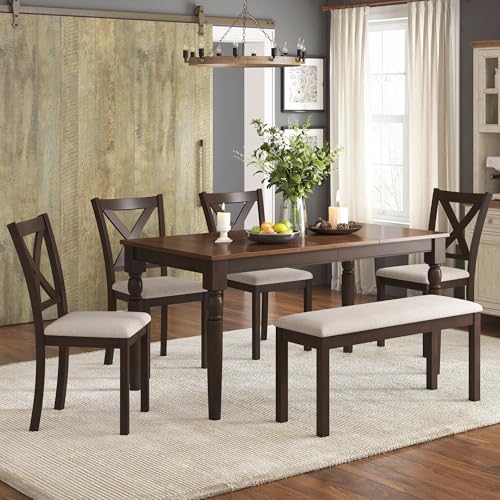
AMERLIFE 6 Piece Farmhouse Dining Set with 60" Solid Wood Table, Brown | Solid Wood Table, Upholstered Chairs, Bench Included, Seating for 6 to 7, Brown Finish
Check price on Amazon
Feonase 5-Piece Dining Table Set for 4-8 People, 63" Extendable Kitchen Table Set with 2 Benches and 2 Square Stools, Dining Room Table with MDF Wood Board, Easy Clean, Dark Brown
Check price on Amazon
AMERLIFE 6 Piece Farmhouse Dining Set with 71" Solid Wood Table, Brown | 71" Solid Wood Table, Upholstered Chairs, Bench Included, Rustic Dining Furniture, Brown Finish
Check price on Amazon
Signature Design by Ashley 1-Piece Wood Dining Bench, 48" 2-Tone Farmhouse | Sturdy Solid Wood Frame with Mango Veneer and MDF Substrate Seat, Space-Saving 48-Inch Profile, Wildenauer Series
Check price on Amazon
Signature Design by Ashley Ralene Tufted Upholstered Dining Room Bench, Medium Brown
Check price on Amazon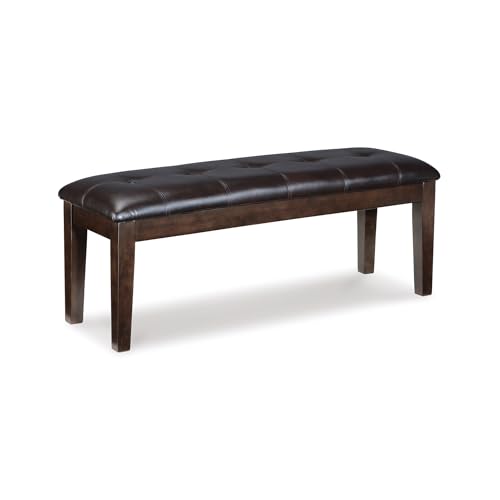
Signature Design by Ashley Haddigan 1-Piece Dining Bench, Faux Leather | Upholstered Button Tufted Seat, Wood and Engineered Wood Frame, 18.75 in Seat Height, 2-Person Capacity, Dark Brown Finish
Check price on Amazon
Plank+Beam Classic Dining Bench, 60 Inch, Pecan Wirebrush | Non-Toxic Finishes, Farmhouse Design, Elegant Details, Easy Assembly, Quick Setup, Solid Wood
Check price on AmazonFrequently Asked Questions
Is a brown dining table with bench good for family use?
Yes. Bench seating is family-friendly because it accommodates multiple people along one side, keeps children close to the table, and tucks neatly under the table to open up floor space.
What wood tones work best for a brown dining table with bench?
Medium brown tones such as oak, walnut, and cherry are versatile and hide everyday wear well. Darker espresso and mahogany tones suit formal rooms, while lighter honey and natural browns fit casual farmhouse and Scandinavian interiors.
How much clearance do I need for a dining bench?
Leave at least 12 inches between the bench edge and the table apron for legroom, and about 36 inches of walkway clearance behind the bench so people can slide in and out comfortably.
Can a dining bench be used with a rectangular table?
Yes. A bench works especially well along one long side of a rectangular brown dining table, paired with chairs on the opposite side. This mix balances seating and keeps sightlines open.
Should the bench match the table exactly?
Exact matching creates a cohesive look, but a bench in a slightly different brown tone can add depth to the room. If you mix tones, keep the wood species or finish family similar so the set still reads as intentional.