
Counter Height Extendable Dining Table Set: The Complete Buyer's Guide
Everything you need to know before choosing a taller, flexible dining set — from how the extension mechanism works and how much room it truly needs, to seating comfort, build quality, and the details that separate a starter-tier set from a premium one.
Explore Recommended SetsWhy this guide matters: A counter height extendable dining table set combines two features that rarely appear together — a raised, pub-style surface and a tabletop that grows when guests arrive. That combination solves real problems in compact homes, open-plan kitchens, and dual-purpose dining zones. But it also introduces trade-offs in comfort, footprint planning, and structural durability that most product listings never explain. This guide walks you through each one so you can choose with confidence.
Recommended Counter Height Extendable Dining Table Sets
⚠️ AFFILIATE DISCLOSURE: This website contains affiliate links. As an affiliate Associate, we earn from qualifying purchases. If you make a purchase through these links, we may receive a small commission at no additional cost to you. Read our full affiliate policy.

Signature Design by Ashley Moriville Counter Height Dining Extension Table | Farmhouse Dining Table Style, Veneers, Wood and Engineered Wood, Removable Drop-In Leaves, Seats Up to 8
Check price on Amazon
Signature Design by Ashley Round Counter Height Dining Set for 4 | Built-In Storage Shelves, Beige Polyester and Foam Stools, Solid Wood and Engineered Wood Frames, Cherry Brown Finish
Check price on Amazon
Signature Design by Ashley Counter Height Dining Extension Table, Trestle | Antique White Finish, Extends to 86 in, Rubberwood Solids, Ash Veneer and MDF Substrates, Robbinsdale Series
Check price on Amazon
Signature Design by Ashley Extendable Counter Height Dining Table | Hardwood Solids, Mango Wood Veneer, MDF Substrate, Trestle Base, Butterfly Leaf, Seats Up to 8, Wildenauer Series
Check price on Amazon
Signature Design by Ashley 5-Piece Round Counter Height Dining Set, Gray | 42-Inch Round Dining Table with 2 Storage Shelves, 4 Upholstered Bar Stools, Wrenning Series
Check price on Amazon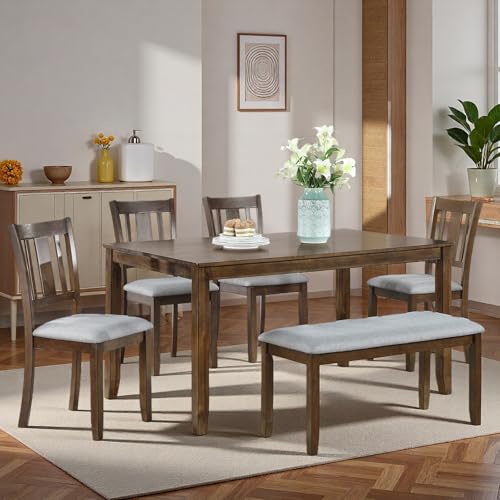
Trygoal 6-Piece Dining Table Set for 6, Counter Height Kitchen Set with Rectangular Wooden Table, Bench & 4 Chairs, Living Room Chairs with Comfortable Seating, Dining Table & Chair for Home, Walnut
Check price on Amazon
Coaster Lavon 5-Piece Counter Height Dining Set, Light Oak 106628-S5 | Extendable storage-pedestal table with four chairs, open backs and cushioned linen-colored polyester fabric seats
Check price on Amazon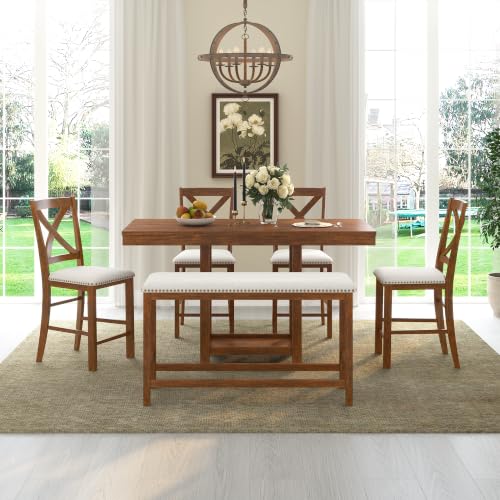
Solid Wood Counter Height Dining Table Set for 6, Expandable Bar Table with 4 Chairs and a Bench, Farmhouse Kitchen Table Set with 2-Tier Storage Shelves for Dinning Room Living Room (Brown-4.9)
Check price on AmazonWhat Is a Counter Height Extendable Dining Table Set?
A counter height extendable dining table set is a coordinated package built around a table that stands taller than a conventional dining table — typically with the surface positioned at counter level rather than standard dining level — and includes a mechanism that lets the top expand when you need more seating. The set normally pairs the table with matching counter height chairs or stools designed so that the seat height, footrest, and tabletop all align for comfortable dining.
The appeal is straightforward. The raised format gives a dining area a more open, airy feeling because the eye travels beneath the table rather than across a solid wall of furniture. The extension mechanism means the table can stay compact for everyday use and grow only when you are hosting. Together, these two traits make the format especially attractive for households that entertain occasionally but live in a space that cannot dedicate a large fixed table to dining.
If you are still exploring the broader category of tall dining furniture, it helps to understand how counter height differs from bar height before you commit. Counter height sits lower and is generally more comfortable for everyday meals, while bar height is taller and better suited to casual perching. This guide focuses on the counter height version because it is the more versatile of the two for family dining.
How the Extension Mechanism Works
Understanding the extension mechanism is the single most important step in choosing the right set, because it determines how the table behaves when it is fully open, how sturdy it feels, and how much storage you need when it is closed. Most counter height extendable tables use one of three common systems.
Butterfly Leaf
A butterfly leaf folds in half and stores inside the table body, unfolding outward when you need extra length. This is the most space-efficient design because you never need to store a separate leaf elsewhere. The trade-off is that the folding mechanism adds complexity, and the seam where the leaf meets the main top must be well engineered to sit flush. Mid-range and premium sets usually handle this better than entry-level ones.
Self-Storing Leaf
A self-storing leaf slides or tilts into a compartment beneath the tabletop. This design is common on taller tables because the extra depth under the surface provides room for the leaf to hide. It is generally simpler and more robust than a butterfly mechanism, and it keeps the leaf accessible without requiring separate storage.
Separate Removable Leaf
The table includes one or more leaves that you insert manually and store separately when not in use. This is the most common approach on entry-level and mid-tier sets because it is mechanically simple and durable. The downside is that you need somewhere to keep the leaf — a closet, a garage, or under a bed — and setting the table for guests takes a few extra minutes.
Buyer tip: Before purchasing, confirm whether the leaf is self-storing, butterfly, or separate, and check how many seats the table supports in each configuration. A set that seats four closed and six open is very different in practice from one that seats four closed and eight open — the second requires a much larger footprint when extended.
Space Planning: The Numbers That Actually Matter
Counter height sets are often chosen for compact spaces, but the raised format does not reduce the horizontal footprint you need for comfortable dining. The tabletop may be smaller, but the chairs are taller and often have a larger seat, and the extension adds length that must be accounted for in your room plan.
As a working rule, plan for roughly 36 inches of clear space around the table edge so that chairs can pull out and people can walk behind them without squeezing. When the table is extended, add the full extension length to your footprint calculation. A table that fits comfortably in a room when closed can become awkward when open if you have not planned for the expanded dimensions.
| Configuration | Typical Seating | Planning Consideration |
|---|---|---|
| Closed / compact | 2 to 4 seats | Best for everyday meals and tight dining nooks |
| One leaf extended | 4 to 6 seats | Add extension length to footprint; check chair pull-out space |
| Fully extended | 6 to 8 seats | Confirm walkway clearance and lighting coverage over the full span |
Lighting deserves its own note. A pendant or chandelier centred over a compact table may sit off-centre once the table is extended. If you plan to use the extended configuration regularly, choose a fixture that spreads light across the full length or plan to add a second light source. For layout guidance that applies to both standard and counter height tables, see our large dining table with leaves guide, which covers extension planning in detail.
Comfort and Seating: Getting the Height Right
The comfort of a counter height set depends almost entirely on the relationship between the tabletop, the seat, and the footrest. When these three elements align, the raised format feels natural and relaxed. When they do not, diners end up with dangling feet or knees pressed against the apron.
Look for sets where the chairs are designed specifically for the table rather than assembled from mismatched components. The footrest should sit at a height that lets most adults rest their feet flat or with a slight bend, and the seat should allow roughly ten to twelve inches of clearance between the seat and the underside of the tabletop. Sets that include a stretcher or footrest bar integrated into the chair frame are generally more comfortable than those that rely on a single crossbar low down.
Basic Comfort
Simple chairs with a single footrest bar. Adequate for occasional use and short meals, but less supportive for long dinners.
Everyday Comfort
Chairs with a well-positioned footrest, contoured seat, and padded cushion. Suitable for daily family meals.
Extended Comfort
Upholstered seats, lumbar support, and carefully tuned seat-to-table geometry. Best for households that dine together often.
If you are pairing the table with benches rather than individual chairs, note that benches at counter height require careful attention to seat depth and back support. Our round dining table with leaf extension guide discusses how extension seating changes the comfort equation, and many of the same principles apply here.
Materials and Durability: What to Look For
Counter height tables place more stress on their joints than standard dining tables because the legs are longer and the leverage on the frame is greater. That makes material choice and frame construction more important than they might seem at first glance.
Frame and Legs
Solid wood legs with reinforced corner blocks or metal-to-wood joinery are the most durable option. Metal frames — particularly powder-coated steel — offer excellent rigidity and are common on industrial and modern designs. Avoid tables where the legs are simply screwed into a thin apron without additional bracing, as these tend to develop wobble over time at counter height.
Tabletop
Solid wood tops are the most repairable and age gracefully, though they require periodic care. Veneered tops are stable and consistent but cannot be sanded as deeply. Stone and glass tops are easy to clean but heavier and more prone to chipping at the edges. For a durable, family-friendly surface, look for a sealed finish that resists moisture and heat.
Extension Hardware
The extension mechanism is the most stressed component of the set. Metal glides, locking pins, and reinforced leaf supports are signs of a well-built table. On entry-level sets, the hardware is often lighter and may loosen over time; mid-range and premium sets typically use heavier-gauge components that hold alignment better. If you plan to extend the table frequently, this is the area where investing in a higher tier pays off most.
Durability check: Ask whether the extension hardware is rated for repeated use and whether replacement parts are available. A set with accessible spare parts is a better long-term investment than one that must be replaced entirely if a single glide fails.
Styles That Suit Counter Height Sets
Because the raised format reads as more casual and contemporary, counter height extendable sets tend to suit certain design directions better than others. The most common pairings are industrial, modern farmhouse, and transitional styles.
Industrial
Metal frames, wood tops, and visible hardware give industrial counter height sets a workshop character that works well in loft apartments and open-plan kitchens. Our hammered metal dining table guide explores how metal textures pair with wood and how to keep the look cohesive.
Modern Farmhouse
Reclaimed or distressed wood tops with painted or whitewashed bases bring warmth to the taller format. The combination of a rustic surface and a clean, raised profile keeps the set from feeling heavy. For a deeper look at this direction, see our natural wood farmhouse dining table guide.
Transitional
Neutral grey and brown finishes with clean lines bridge traditional and contemporary rooms. A dark grey dining table finish is particularly effective at counter height because the darker tone visually grounds the taller silhouette.
If you are drawn to stone surfaces, our stone dining table extendable guide explains how stone tops behave when combined with extension mechanisms — a useful read if you are considering a stone-topped counter height set.
Who Should Choose a Counter Height Extendable Set?
This format is not for everyone, but it is an excellent fit for specific households and spaces. Consider it if you recognise yourself in one or more of the following situations.
- Open-plan living: The raised surface creates a subtle visual barrier between kitchen and dining zones without closing off the space.
- Compact dining areas: The extension lets the table stay small most of the time and grow only when needed.
- Frequent casual hosting: Counter height sets feel relaxed and social, and guests often prefer them for drinks and informal meals.
- Households with mixed ages: Taller chairs can be easier to get in and out of for some adults, though families with very young children should consider stool stability carefully.
- Dual-purpose rooms: A counter height table can double as a workspace or homework station, making it more versatile than a low dining table.
If you prefer a more traditional seated posture for long dinners, or if your household includes diners who find taller seating uncomfortable, a standard height extendable table may serve you better. The rectangle grey dining table guide covers standard height options in a similar visual style.
Pre-Purchase Checklist
Before you finalise a set, run through this checklist. Each item addresses a common source of regret among counter height buyers.
- Measure the extended footprint, not just the closed one. Include the leaf length and confirm walkway clearance.
- Confirm the extension type. Butterfly, self-storing, or separate leaf — each has different storage and setup implications.
- Check the seat-to-table geometry. Ideally ten to twelve inches of clearance between seat and tabletop underside.
- Inspect the footrest height. It should suit the height of the people who will use the set most often.
- Review the frame construction. Reinforced joints and solid legs matter more at counter height.
- Confirm the number of seats in each configuration. A set that seats four closed and six open is a different proposition from one that seats four and eight.
- Check the finish for moisture and heat resistance. Counter height tables are often used near kitchens, where spills are more common.
- Verify replacement parts availability. Extension hardware is the most likely component to need servicing.
Comparing Tiers: What Changes as You Move Up
Counter height extendable sets are available across a wide range of market positions. The table below summarises the practical differences between tiers so you can decide where your priorities lie.
| Tier | Best For | Typical Strengths | Trade-offs |
|---|---|---|---|
| Entry-level | Occasional use, starter homes | Simple separate-leaf mechanism, straightforward assembly | Lighter hardware, less refined joint alignment |
| Mid-range | Daily family dining | Self-storing or butterfly leaf, reinforced frame, better finish | Heavier to move, slightly more complex setup |
| Premium | Frequent hosting, long-term use | Heavy-gauge hardware, solid wood construction, tuned seating geometry | Larger footprint, requires more care during assembly |
| Luxury | Design-led interiors, statement dining zones | High-end materials, custom finishes, precision extension mechanisms | Limited flexibility in configuration; specialist care required |
The jump from entry-level to mid-range is usually the most meaningful for everyday use, because it is where the extension hardware and frame rigidity improve most noticeably. Moving from mid-range to premium is more about refinement and longevity than about basic function. For a broader comparison of extension formats, the black and gray dining room table guide covers how finish choices interact with extension design.
Care and Maintenance for Counter Height Sets
Counter height tables are often placed in high-traffic areas, so a little routine care goes a long way. Wipe spills promptly, especially on wood and veneer surfaces, and avoid dragging chairs across the floor — lift them instead to protect both the chair legs and the table base. Periodically check the extension hardware for loose screws or misalignment, and lubricate metal glides according to the manufacturer's guidance.
If your set has a wood top, plan for periodic resealing or oiling depending on the finish. Stone tops should be sealed according to the supplier's recommendations, and glass tops should be cleaned with a non-abrasive product to avoid scratching. For a deeper dive into surface care across materials, see the reclaimed solid wood dining table guide, which covers wood-specific maintenance in detail.
Frequently Asked Questions
What is a counter height extendable dining table set?
It is a coordinated dining set built around a table that stands taller than a standard dining table and includes a mechanism to extend the surface, usually paired with matching counter height chairs or stools.
Is a counter height dining table comfortable for daily meals?
Yes, when the chair seat height matches the table and the footrest is properly positioned. The raised format encourages a relaxed, semi-perched posture that many households find comfortable for everyday dining.
How much clearance do I need around a counter height extendable table?
Plan for roughly 36 inches of clear space around the table edge for comfortable chair pull-out and walkway access, and add the extension length to your footprint calculation when the table is fully open.
Do counter height sets work in small dining rooms?
They can work very well because the raised surface and vertical lines keep the eye moving upward, while the extension mechanism lets the table stay compact most of the time and grow only for guests.