
Asian Floor Dining Table: Complete Buying Guide & Tips
Explore the world of low-seating dining with our comprehensive guide to Asian floor dining tables. Learn about styles, materials, ergonomics, and how to choose the perfect floor-level table for your home.
Start ExploringWhat Is an Asian Floor Dining Table?
An Asian floor dining table is a low-profile table designed for seating directly on the floor or on floor cushions. Rooted in the dining traditions of Japan, Korea, China, and other East Asian cultures, these tables bring a distinct minimalist aesthetic and a relaxed, communal dining experience to the modern home. Unlike standard-height dining tables that sit around 28 to 30 inches tall, floor dining tables typically range from 12 to 18 inches in height, creating an intimate atmosphere where guests sit closer to the ground.
The concept has evolved far beyond traditional settings. Today, floor seating dining tables are embraced by design enthusiasts worldwide who appreciate their space-saving footprint and their ability to foster conversation. Whether you are furnishing a compact apartment, creating a zen-inspired meditation corner, or simply looking to break away from conventional dining furniture, an Asian floor table offers a distinctive solution that blends function with cultural artistry.
Design Note: Floor dining tables are not simply shorter versions of standard tables. Their proportions, leg structures, and surface dimensions are specifically engineered for seated-on-the-floor use, ensuring comfort and stability.
Key Benefits of Floor-Level Dining
Choosing a floor-level dining table comes with several practical and experiential advantages that appeal to a wide range of homeowners. Understanding these benefits can help you decide whether this furniture style aligns with your lifestyle.
Space Efficiency
Floor tables eliminate the need for full-height chairs, which can dominate a room visually and physically. In compact apartments or multi-purpose rooms, a low table can be easily moved aside, stacked, or repurposed. Many models, such as a Korean foldable dining table, are designed to collapse for storage, making them ideal for studio living.
Relaxed Social Atmosphere
Dining at floor level naturally encourages a more casual, intimate gathering. Guests sit closer together, conversation flows more freely, and the overall mood is less formal than a traditional dining setup. This makes floor dining tables particularly popular for tea ceremonies, casual family meals, and social gatherings with friends.
Aesthetic Versatility
Asian floor tables span a wide design spectrum, from ultra-minimalist Japanese chabudai to richly carved Korean soban. They can serve as a dining table, a coffee table, a workspace, or even a display surface. The multipurpose dining table approach is central to the appeal of floor-level furniture.
Ergonomic Variety
For some, sitting on the floor promotes better posture and core engagement. While it is not suitable for everyone, many people find that alternating between floor seating and conventional chairs adds variety to their daily routine and reduces stiffness from prolonged sitting.
Popular Asian Floor Table Styles
The term "Asian floor dining table" encompasses a rich variety of regional styles, each with its own character, construction, and cultural significance. Here are the most common styles you will encounter when shopping.
Japanese Chabudai
The chabudai is a low, round or rectangular table traditionally used in Japanese homes. It is often paired with zabuton floor cushions and is designed to be lightweight and portable. Many chabudai feature folding legs, making them easy to store when not in use. The clean lines and natural wood finishes of the chabudai make it a favorite for minimalist interiors.
Korean Soban
Korean floor tables, known as soban, are typically smaller and often used for individual servings or small group dining. They frequently feature elegant curved edges, lacquered finishes, and intricate joinery. The Korean foldable dining table is a modern adaptation that combines traditional aesthetics with space-saving functionality.
Chinese Kang Table
Historically used on heated platforms (kang), Chinese low tables are characterized by sturdy hardwood construction and sometimes elaborate carvings. They are wider and lower than Japanese chabudai and are designed for communal dining and tea service.
Modern Hybrid Designs
Contemporary furniture makers have blended Asian floor table concepts with modern materials and ergonomics. You will find low tables with adjustable heights, integrated storage, and convertible designs that allow the table to function as both a dining surface and a coffee table. A convertible coffee table to dining table is an excellent example of this hybrid approach.
Materials & Construction Essentials
The material of your Asian floor dining table determines its durability, visual warmth, and maintenance requirements. Because these tables sit close to the floor, they are more exposed to dust, moisture, and daily wear, so choosing the right material is critical.
Solid Wood
Solid wood remains the gold standard for floor dining tables. Hardwoods such as oak, walnut, teak, and maple offer excellent durability and develop a beautiful patina over time. A solid oak dining table top is a particularly popular choice for its strength and timeless grain pattern. Softwoods like pine are lighter and more budget-friendly within the entry-level tier, but they are more prone to dents and scratches.
Bamboo
Bamboo is a sustainable and remarkably strong material that fits perfectly with the Asian aesthetic. It is lightweight, resistant to moisture, and often used in modern floor tables. Bamboo surfaces are typically easier to maintain than solid wood and offer a clean, contemporary look.
Lacquered & Painted Finishes
Traditional Asian floor tables often feature lacquer finishes that provide a glossy, protective coating. Modern painted dining table options offer a wide range of colors and finishes, from matte blacks to vibrant reds. Lacquer and paint can hide minor imperfections and make cleaning easier, but they may require periodic touch-ups.
Glass & Stone Tops
For a more contemporary look, some floor tables feature glass or stone tops. A round glass patio dining table design can be adapted for indoor floor use, offering a sleek and reflective surface. However, glass and stone are heavier and require careful handling, especially in low-profile configurations.
Tier Guide: Entry-level floor tables often use engineered wood or bamboo; mid-range models feature solid softwoods or bamboo composites; premium and luxury tiers utilize solid hardwoods, hand-applied lacquers, and traditional joinery techniques.
Sizing & Space Planning
Because floor dining tables operate in a different spatial context than standard tables, sizing requires careful thought. You need to account not only for the table itself but also for the seating area and the clearance required for comfortable movement.
Table Height
Most Asian floor dining tables range from 12 to 18 inches in height. A height of around 15 inches is comfortable for most adults sitting on a 2- to 3-inch floor cushion. If you plan to sit directly on the floor without a cushion, a slightly lower table (12 to 14 inches) may be more comfortable. Taller individuals may prefer the upper end of the range.
Table Dimensions
Floor tables come in a variety of shapes and sizes. Rectangular tables measuring 36 by 48 inches can comfortably seat four adults on floor cushions. Round tables with a diameter of 36 to 42 inches are excellent for intimate gatherings and fit well in compact spaces. For larger groups, consider a round dining table for 8 with lazy susan, which facilitates shared dining and serving.
Clearance & Walkway
Allow at least 24 inches of clearance on all sides of the table for comfortable seating and movement. In smaller rooms, you can push the table against a wall when not in use, but ensure that there is enough space to pull it out for meals. A space-saving dining table and chair set philosophy applies equally to floor tables, where every inch counts.
Seating & Cushion Pairing
The right seating is essential to fully enjoy your Asian floor dining table. Floor cushions, meditation pillows, and low stools are the most common companions for these tables, and the choice of seating significantly affects comfort and aesthetics.
Zabuton & Floor Cushions
Traditional Japanese zabuton are square floor cushions filled with cotton or buckwheat hulls. They provide excellent support and are designed to be used directly on tatami or hardwood floors. Modern floor cushions come in a wide range of fabrics, from linen to velvet, allowing you to coordinate with your room decor.
Meditation & Buckwheat Pillows
For those who prefer firmer support, buckwheat-filled cushions conform to the body and promote better posture. These are particularly useful for longer meals or when using the table for work or study.
Low Stools & Benches
If sitting directly on the floor is uncomfortable, low stools or small benches can bridge the gap. A curved bench seat for dining table can be adapted to floor height, offering a middle ground between floor seating and conventional chairs. Many modern floor tables are designed to pair with low wooden stools that match the table's finish.
Cushion Storage
Floor cushions can take up space when not in use. Consider a table with integrated storage or a small dining table with drawers to keep cushions, napkins, and small dining accessories organized and out of the way.
Safety & Accessibility Considerations
While Asian floor dining tables are beautiful and functional, they are not suitable for every household. Understanding the safety and accessibility implications will help you make an informed decision.
Mobility & Comfort
Getting up and down from floor level can be challenging for individuals with knee, hip, or back issues. If you have elderly family members or guests with limited mobility, a floor dining table may not be the most practical choice for daily use. Consider a counter height folding dining table as an alternative that offers easier access while still providing a casual dining experience.
Children & Pets
Floor tables are generally safer for young children because there is no risk of falling from a height. However, small objects and tabletop items should be kept out of reach, as curious toddlers can easily access the surface. Pets may also be more inclined to investigate food at floor level, so supervision during meals is advisable.
Floor Surface
The type of flooring in your home matters. Hardwood, laminate, and tile floors provide a stable surface for floor tables, while thick carpets may make the table wobble. If you have wall-to-wall carpet, consider a table with adjustable feet or a firm mat underneath to ensure stability. A wall-mounted folding dining table can be a smart solution for rooms with uneven flooring.
Care & Maintenance Tips
Proper care extends the life of your Asian floor dining table and keeps it looking its best. Because floor tables are closer to the ground, they may require slightly different maintenance routines than standard-height tables.
Daily Cleaning
Dust the table surface daily with a soft, dry cloth. For food spills, wipe immediately with a damp cloth and dry thoroughly. Avoid using harsh chemical cleaners, especially on wood and lacquered surfaces, as they can damage the finish.
Protecting the Surface
Use placemats, coasters, and trivets to protect the table from heat, moisture, and scratches. A dining table table cloth can provide additional protection during messy meals or craft projects. For wooden tables, apply a furniture wax or polish every few months to maintain the finish and prevent drying.
Moisture & Humidity Control
Wood floor tables are susceptible to moisture damage, especially in humid climates or during rainy seasons. Keep the table away from direct sources of moisture and consider using a dehumidifier in damp rooms. If the table becomes wet, dry it immediately with a soft towel.
Storage & Handling
If your floor table is collapsible or foldable, store it in a dry, well-ventilated area. When moving the table, lift it rather than dragging it to avoid scratching the floor and damaging the legs. A wall-mounted folding dining table is an excellent option for rooms where floor space is at a premium.
Frequently Asked Questions
What is the ideal height for an Asian floor dining table?
Most floor dining tables are between 12 and 18 inches tall. A height of around 15 inches works well for most adults using a 2- to 3-inch floor cushion. If you prefer sitting directly on the floor, a table height of 12 to 14 inches may be more comfortable.
Can I use a floor dining table as a coffee table?
Yes, many floor dining tables double as coffee tables. In fact, convertible coffee table to dining table designs are specifically made for this dual purpose. The low height and often lightweight construction make them easy to repurpose.
How many people can sit at a floor dining table?
It depends on the size and shape. A 36-inch round table typically seats four adults comfortably, while a 48-inch rectangular table can seat four to six. Larger rectangular tables, such as a 4x8 dining table adapted for floor use, can accommodate eight or more guests.
Is a floor dining table suitable for daily use?
For many people, yes. However, if you have mobility issues or prefer the support of a chair, a floor table may not be ideal for every meal. Many households use floor tables for casual meals, tea ceremonies, or occasional gatherings rather than as their primary dining surface.
What cushions work best with a floor dining table?
Traditional zabuton (Japanese floor cushions) are a classic choice. Buckwheat-filled meditation cushions offer firm support, while memory foam or cotton-filled cushions provide softer comfort. Choose a cushion height that allows your knees to rest comfortably under the table.
Recommended Asian Floor Dining Tables
⚠️ AFFILIATE DISCLOSURE: This website contains affiliate links. As an affiliate Associate, we earn from qualifying purchases. If you make a purchase through these links, we may receive a small commission at no additional cost to you. Read our full affiliate policy.
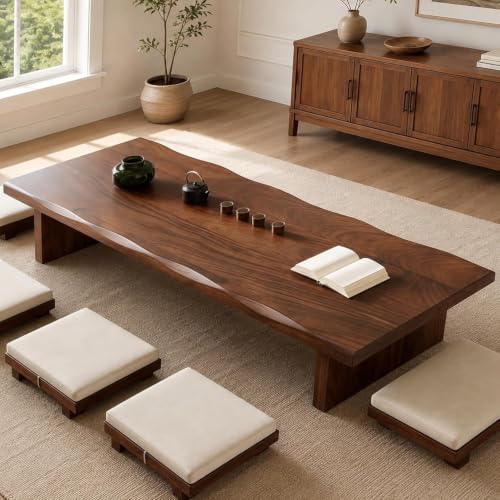
Sobstkeo 55" Solid Wood Japanese Floor Table, Low Dining Table for Floor Seating, Tatami Tea Table, Modern Chabudai Coffee Table for Living/Dining/Office (Walnut, 140 * 60 * 35cm)
Check price on Amazon
Ekjkldo Folding Japanese Floor Table -31.5 inch Bamboo Coffee Table Small | Low Coffee Table, Sturdy & Stable with 180 lbs Capacity, Floor Desk for Tea Room, Tatami, Dining, No Assembly
Check price on Amazon
Folding Coffee Table, Japanese Floor Low Bamboo Dining Table | Multi-function Outdoor Picnic Table, for Sitting on Floor,Bed Study No Assembly Needed (23.6x23.6x18.5in)
Check price on Amazon
WIKLMOTH Folding Round Japanese-Style Tea Coffee Table Low Table, Foldable Dining Table, Study Table, Small Desk, for Tatami Sitting On The Floor Bedroom Bay Window Tea Room, Space Save(60 * 60cm)
Check price on Amazon
Sobstkeo 55" Solid Wood Japanese Floor Table, Low Dining Table for Floor Seating, Tatami Tea Table, Modern Chabudai Coffee Table for Living/Dining/Office (Natural Wood, 140 * 60 * 35cm)
Check price on Amazon