
Antique English Oak Dining Table: The Complete Buying Guide
Learn how to identify, evaluate, and care for a genuine antique English oak dining table. Understand oak grain, traditional joinery, patina, sizing, and condition checks so you can buy with confidence.
Explore Recommended TablesWhy antique English oak endures: Oak has been the backbone of English furniture making for centuries. Its dense grain, natural resistance, and warm honey-to-amber tones make it one of the most sought-after materials for a dining table that carries history into a modern home. This guide walks you through every practical detail a careful buyer needs before committing.
What Defines an Antique English Oak Dining Table?
An antique English oak dining table is a solid oak table built in England, generally a century or more old, and valued for three defining qualities: the character of the oak itself, the traditional construction methods used to build it, and the patina that only time can create. Unlike a reproduction, a genuine antique carries evidence of its life — softened edges, oxidized surfaces, hand-tool marks, and joinery that reflects the workshop practices of its era.
English oak (Quercus robur) is a slow-growing hardwood with a tight, interlocking grain. When quarter-sawn, it reveals distinctive medullary rays — the silvery flecks that antique dealers prize. Over decades, the wood deepens from pale gold to a rich amber-brown, and this natural aging is one of the strongest signals of authenticity.
If you are still weighing material options, our broader guide to dark wood dining tables explains how oak compares with walnut, mahogany, and other classic timbers. For buyers prioritizing a slimmer footprint, the solid wood narrow dining table guide covers space-efficient alternatives.
The Character of English Oak: Grain, Color, and Patina
Understanding oak's physical traits helps you judge quality quickly. English oak is harder and denser than many imported oaks, with a grain that can be straight, wavy, or figured. The table surface of a well-preserved antique typically shows a mix of tones — lighter where it has been protected, darker where sunlight and handling have oxidized the wood.
Grain patterns to look for
- Medullary rays: Silvery streaks visible on quarter-sawn surfaces, a hallmark of high-quality oak.
- Tight growth rings: Slow growth produces dense, durable timber.
- Natural figuring: Subtle waves and curls that add visual depth without looking busy.
Patina versus finish
Patina is the accumulated surface character of aged wood — a soft sheen built from years of waxing, handling, and oxidation. A genuine patina is uneven and warm. A reproduction often has a uniform, sprayed finish that looks flat under raking light. When inspecting a table, tilt it toward a light source: authentic patina shifts in tone, while a synthetic finish stays constant.
Traditional Joinery: The Structural Signature
The joinery of an antique oak table is one of the most reliable indicators of both age and quality. English cabinetmakers relied on techniques that required skill and time, and those techniques leave telltale marks.
- Mortise-and-tenon joints: The classic frame joint, often secured with wooden pegs. Look for slightly proud or darkened peg ends.
- Dovetails: Hand-cut dovetails on drawers vary slightly in spacing — a sign of hand work.
- Peg construction: Visible wooden dowels through the apron or legs indicate traditional assembly.
- Hand-planed surfaces: Faint ripple marks on the underside are a common trace of pre-machine planing.
Machine-cut joints with perfectly uniform spacing, modern screws, or metal fasteners that look factory-fresh are red flags on a table claiming to be antique. If you appreciate structural craftsmanship in other furniture categories, our 8-piece dining table set guide discusses how joinery quality scales across larger sets.
Choosing the Right Size for Your Dining Room
Antique oak tables come in a wide range of proportions, from compact two-seater gatelegs to long refectory tables that seat ten or more. Matching the table to your room is as important as matching it to your lifestyle.
| Table Category | Typical Seating | Best For |
|---|---|---|
| Compact gateleg or drop-leaf | 2–4 | Small kitchens, apartments, occasional dining |
| Standard rectangular | 4–6 | Everyday family dining, mid-sized rooms |
| Large refectory or farmhouse | 8–10 | Formal dining rooms, entertaining, open-plan spaces |
| Extending antique | 6–12 | Flexible hosting, mixed-use rooms |
Allow at least 36 inches of clearance around the table for chair pull-out and walkway comfort. For long rooms, a substantial table such as a 94-inch dining table can anchor the space beautifully. If your room is long and slim, the wood long narrow dining table guide offers proportion tips that translate well to antique oak.
Condition Checklist Before You Commit
A century-old table will show wear, and that is part of its appeal. The goal is to separate characterful wear from structural problems. Use this checklist when inspecting in person or reviewing detailed photos from a seller.
Top surface
Check for deep gouges, staining, and unevenness. Light scratches and softened edges are normal; splintering or lifting veneer is not (solid oak rarely veneers, so any veneer suggests a different construction).
Joinery integrity
Gently rock the table. Loose joints, wobble, or visible gaps at the apron signal repairs or structural fatigue that may require a restorer.
Legs and feet
Look for shortened legs, mismatched replacements, or split feet. Replacement parts are acceptable if disclosed and well matched.
Underside
The underside is the honest part of the table. Aged oxidation, hand-tool marks, and consistent wood color confirm age; fresh, pale wood or modern fasteners suggest restoration or reproduction.
Woodworm evidence
Small flight holes are common in old oak. Active infestation shows fresh dust; historic, treated holes are usually harmless but worth confirming.
Finish and patina
Uneven, warm patina is desirable. A heavily stripped or over-polished surface loses character but is not necessarily a deal-breaker if the wood itself is sound.
Antique Versus Reproduction: How to Tell Them Apart
The market contains many convincing reproductions, some of which use reclaimed oak to mimic age. A few practical checks help separate genuine antiques from modern pieces.
- Wear patterns: Genuine wear follows use — chair-scuff marks at the ends, lighter wear where hands rest, darker tone in protected corners. Artificial distressing tends to be uniform.
- Wood shrinkage: Old solid oak develops fine cracks and slight movement at joints over time. Perfectly tight seams on a claimed antique are suspicious.
- Fasteners: Hand-forged nails and wooden pegs fit an antique; modern Phillips screws or staples do not.
- Smell: Aged oak has a dry, woody, faintly musty scent. Freshly finished reproductions smell of solvent or new varnish.
If you are comparing antique oak with other heritage finishes, our guide to a dark wood dining table explores how tone and finish change the feel of a room.
Styling an Antique Oak Table in a Modern Home
An antique oak table is remarkably versatile. Its warm, grounded tone pairs naturally with linen, ceramic, and natural fibers, and its robust proportions suit both rustic and contemporary interiors.
- Mix eras: Pair an antique oak top with modern chairs for a balanced, collected look. Our guide to white wood chairs for a dining table shows how contrast seating lifts a dark wood surface.
- Keep the centerpiece simple: A low bowl, a few candles, or a single vase respects the table's character.
- Add a runner: A natural linen runner protects the surface and softens the look without hiding the grain.
- Consider lighting: A pendant or chandelier hung low over the table highlights the patina and anchors the dining zone.
For a more formal direction, a marble and gold dining table offers a contrasting aesthetic that helps you decide whether warm oak or cool stone suits your space. If you are planning a larger seating arrangement, the 6-8 seater dining table guide covers layout considerations. Compact rooms may benefit from a 54 square dining table as a point of comparison.
Long-Term Care for Antique Oak
Proper care preserves both the structure and the patina of an antique oak table. The goal is gentle maintenance rather than aggressive restoration.
Daily habits
- Wipe spills promptly with a soft, slightly damp cloth, then dry immediately.
- Use coasters, placemats, and trivets to protect against heat and moisture rings.
- Dust weekly with a dry microfiber cloth to prevent grit from abrading the finish.
Seasonal care
- Keep the table away from direct radiators and strong sunlight, which can dry or fade the wood.
- Maintain moderate indoor humidity to reduce seasonal movement and cracking.
- Apply a thin coat of quality wax or a suitable oil once or twice a year, depending on use.
What to avoid
- Harsh chemical cleaners, bleach, and abrasive pads.
- Silicone-based polishes, which can build up and dull the patina.
- Over-sanding or refinishing unless a professional restorer recommends it.
For a broader maintenance routine that applies across wood types, see our related guidance on caring for solid wood dining tables.
Recommended Antique English Oak Dining Tables
⚠️ AFFILIATE DISCLOSURE: This website contains affiliate links. As an affiliate Associate, we earn from qualifying purchases. If you make a purchase through these links, we may receive a small commission at no additional cost to you. Read our full affiliate policy.
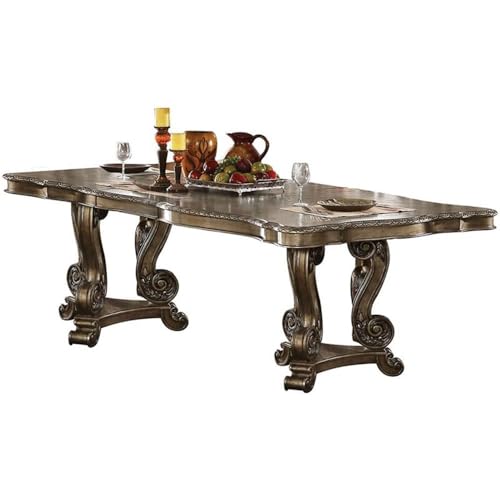
Acme Furniture Ragenardus Dining Table, Vintage Oak
Check price on Amazon
Signature Design by Ashley Bolanburg 6-Person Farmhouse Dining Table | Dining Table with Drawers, Veneers, Wood and Engineered Wood, Plank-Effect Top, Casual Dining
Check price on Amazon
ACME FURNITURE Forbes White Marble Dining Table, Walnut Finish.
Check price on Amazon
East West Furniture AMT-OAK-TP Antique Kitchen Dining Table - a Round Wooden Table Top with Pedestal Base, 36x36 Inch, Oak
Check price on Amazon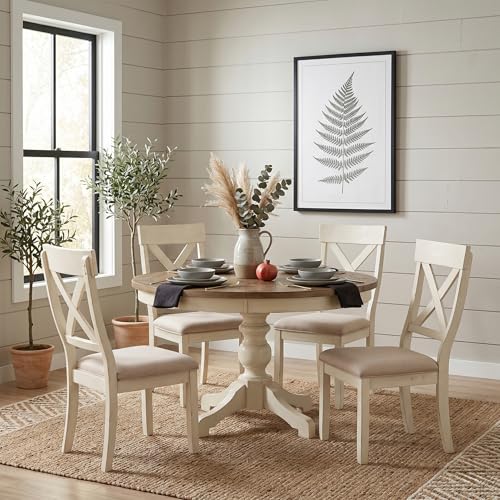
Roundhill Furniture Prato 5-Piece Round Dining Table Set with Cross Back Chairs, Antique White and Distressed Oak
Check price on Amazon
Roundhill Furniture Prato 6-Piece Dining Set, Dining Table with 4 Cross Back Chairs and Bench, Antique White and Distressed Oak Finish
Check price on Amazon
Roundhill Furniture Verta Solid Wood Leg Dining Table with Oak Veneer Top and Turned Legs
Check price on Amazon
HIPIHOM Farmhouse Square Oak Dining Table, 31.5 Inch Steel Legs for 2-4 | Natural Oak Grain, Smooth Curved Corner, Stain And Spill Resistant Surface, Cross Braced Anti Wobble Reinforced Steel Legs
Check price on AmazonFrequently Asked Questions
What defines an antique English oak dining table?
An antique English oak dining table is a solid oak table made in England, generally a century or more old, valued for its dense grain, traditional joinery such as mortise-and-tenon or peg construction, and a naturally developed patina.
How can I tell genuine antique oak from a reproduction?
Inspect the underside and joints: genuine antique oak shows uneven hand-tool marks, aged peg holes, oxidized surfaces, and wear patterns that follow decades of use. Reproductions often have uniform machine cuts, fresh fasteners, and artificially distressed edges that look too regular.
Is an antique oak dining table durable enough for daily use?
Yes. Oak is a dense, hard-wearing hardwood, and well-built antique tables are known for their structural longevity. A table in sound condition with intact joinery can serve as a daily-use dining table for generations with proper care.
How should I care for an antique oak dining table?
Keep it away from direct heat and strong sunlight, wipe spills promptly, dust regularly, and use coasters and placemats. Avoid harsh chemical cleaners and silicone polishes; a gentle wax or oil suited to aged oak maintains the patina without stripping it.
Can I mix an antique oak table with modern chairs?
Absolutely. The contrast between a warm, aged oak top and clean-lined modern seating is a popular and highly effective design choice. Keep chair heights compatible with the table apron and choose materials that complement rather than compete with the oak.
Ready to Bring Home a Piece of History?
Browse our curated selection of antique-style English oak dining tables and find the one that fits your room, your style, and your everyday life.
View Recommended Tables