
94 Inch Dining Table: The Complete Buying & Sizing Guide
A 94 inch dining table is a serious piece of furniture built for large families, frequent hosts, and open-concept homes. This guide explains exactly how many people it seats, how much room you need, which materials hold up best across a long span, and how to plan the layout before you commit.
Explore Table OptionsQuick summary: A 94 inch dining table measures roughly 7 feet 10 inches in length. It comfortably seats 8, comfortably stretches to 10 with proper spacing, and can host 12 at a squeeze. It requires a dining room at least 13 to 14 feet long for comfortable chair pull-out and walkway traffic. It is best suited to dedicated dining rooms, open-plan living areas, and households that regularly gather a crowd.
What Does a 94 Inch Dining Table Actually Look Like?
Ninety-four inches is a distinctive length in the dining table market. It sits above the common 84 inch size and just below the 96 inch benchmark, which means it is a genuinely large table without crossing into banquet-hall territory. In metric terms, that is approximately 239 centimeters. The extra length compared to a standard 72 inch table is not just about seating more people — it changes the character of the room, the way conversation flows, and the way you plan the surrounding layout.
A table of this size is almost always rectangular or oval. Round tables rarely reach 94 inches in diameter because a circle of that size becomes difficult to reach across and awkward to place in most rooms. If you prefer a circular silhouette, a round pedestal dining table in a smaller diameter paired with a separate buffet or side table often delivers a better balance. For most buyers searching for a 94 inch option, the goal is a long rectangular surface that anchors a large room.
Length alone does not tell the whole story. A 94 inch table typically comes in widths between 36 and 44 inches. The wider the table, the more comfortable the center of the surface becomes for serving dishes, centerpieces, and shared platters. A 40 inch width is a common sweet spot for tables this long because it keeps the middle of the table reachable from both sides while still offering generous serving space.
How Many People Can a 94 Inch Dining Table Seat?
Seating capacity is the single most common question about a table this size, and the honest answer depends on how much elbow room you want to give each person. The standard guideline is 24 inches of table edge per seated person for comfortable dining, and 30 inches per person for a more relaxed, formal setting. Applying those numbers to a 94 inch table produces a clear picture.
| Seating Configuration | People Seated | Edge Space Per Person | Best For |
|---|---|---|---|
| 3 per side + 1 each end | 8 people | Generous, formal comfort | Everyday family dining with room to spare |
| 4 per side + 1 each end | 10 people | Standard comfortable spacing | Regular entertaining and holiday meals |
| 4 per side + 2 each end | 12 people | Tighter, banquet-style | Occasional large gatherings |
| 5 per side, no ends | 10 people | Even distribution along the length | Bench seating or narrow side clearance |
In practice, most households treat a 94 inch table as a comfortable 8 to 10 seater. The 12-person configuration works, but it is best reserved for occasional events rather than daily use, because the tighter spacing makes it harder to move in and out of chairs. If your household regularly needs to seat 12 in comfort, consider an extendable dining table set so you can expand only when needed rather than committing to a permanently oversized footprint.
How Much Room Does a 94 Inch Dining Table Need?
Room clearance is where many buyers of large tables run into trouble. The table itself takes up 94 inches of length, but the usable footprint is far larger once you account for chairs, chair pull-out, and walkway traffic. The widely accepted rule is to allow at least 36 inches of clearance between the table edge and any wall or furniture, which covers both sliding a chair back and walking behind a seated guest.
Adding 36 inches to both ends of a 94 inch table produces a minimum room length of roughly 166 inches, or about 13 feet 10 inches. That is the absolute floor for comfortable use. For a more relaxed layout that allows sideboards, buffets, or a serving path, aim for a room 15 feet long or more. On the width side, a 40 inch table plus 36 inches of clearance on both long sides requires a room at least 112 inches wide, or about 9 feet 4 inches.
| Room Dimension | Minimum | Comfortable | Generous |
|---|---|---|---|
| Room length (94 inch table) | 13 ft 10 in | 15 ft | 16 ft or more |
| Room width (40 inch table) | 9 ft 4 in | 10 ft 6 in | 12 ft or more |
| Clearance per side | 36 in | 42 in | 48 in or more |
If your room falls short, you have a few options. One is to choose a narrower table width so the long sides need less clearance. Another is to seat people only on the long sides and skip the end chairs, which reduces the length requirement. A third is to accept that the table will be a focal point you walk around rather than past, which works well in open-plan spaces where the dining area flows into a living or kitchen zone. For homes with limited floor space, a dining table with a removable leaf offers the hosting capacity of a large table without the permanent footprint.
Best Materials for a 94 Inch Dining Table
Long tables place more stress on their structure than shorter ones. The span between legs or pedestals is greater, which means the frame, apron, and top material all need to work together to prevent sagging, wobble, and flexing under the weight of serving dishes and leaning guests. Material choice matters more here than it does on a 60 inch table.
Solid Wood
Solid wood is the most reliable choice for a table of this length. Oak, walnut, teak, and maple all have the density and structural integrity to span 94 inches without noticeable flex, provided the frame is properly reinforced. Oak is the most common choice because it is hard, stable, and takes a finish well. Walnut offers a richer tone and slightly better dimensional stability. Teak is naturally resistant to moisture and is a strong pick if the table sits near a kitchen or in a humid climate. Solid wood tables in the premium and luxury tiers typically include center support legs or a reinforced apron that prevents the top from bowing over time.
Stone and Engineered Stone
Marble, quartz, and granite tops work well at 94 inches as long as the base is designed for the weight. Stone is heavy, and a long stone top needs either a full pedestal base or multiple support legs. Quartz is the most practical engineered stone because it resists staining and does not require periodic sealing. Natural marble is stunning but porous and needs regular maintenance. Stone tops pair especially well with a pedestal base design that distributes weight evenly and keeps the legroom clear.
Engineered Wood and Veneer
Engineered wood with a veneer finish is common in the mid-range tier. It offers a consistent look and good dimensional stability, but the long span means you should check the internal construction carefully. A reinforced frame with a solid core is far more durable than a hollow-core top. For a 94 inch table, engineered wood is best reserved for households that do not regularly load the surface heavily and that want a lighter, easier-to-move piece.
Metal and Mixed Materials
Metal frames paired with wood or stone tops are increasingly common at this size. Steel and aluminum bases can support a long top with fewer legs, which keeps the under-table area open and makes the table feel less bulky in a large room. A high-grade steel frame with a rust-proof finish is a solid choice for durability, and it pairs well with the industrial and modern aesthetics that suit large open spaces.
Shape and Base Options at 94 Inches
At this length, the base design has a bigger impact on usability than it does on smaller tables. A four-leg rectangular base places legs at the corners, which is fine for seating along the long sides but can interfere with end chairs. A trestle or pedestal base keeps the ends clear and is generally the better choice for a 94 inch table that needs to seat people at both ends.
- Four-leg rectangular base: Classic and stable, but end chairs must fit between the legs. Best for tables where end seating is occasional.
- Trestle base: Two A-frame or slab supports with a connecting beam. Excellent for long tables because it keeps the ends open and distributes weight well.
- Double pedestal base: Two pedestals spaced along the length. Provides strong support across the span and leaves the entire perimeter clear for chairs.
- Single center pedestal: Rare at 94 inches because a single column struggles to support the length without flex. Usually reserved for oval tables with additional support.
Oval tables at this length soften the visual weight of the table and work well in rooms with curved walls or bay windows. Rectangular tables are more space-efficient and easier to pair with benches. If you are furnishing a farmhouse or coastal-style home, a coastal farmhouse dining table in a long rectangular format is a natural fit.
Designing a Room Around a 94 Inch Table
A table this long becomes the visual anchor of the room, so the surrounding design should support it rather than compete with it. The most common mistake is filling the rest of the space with heavy, dark furniture that makes the room feel crowded. Instead, keep the perimeter light and let the table carry the visual weight.
Lighting is particularly important over a long table. A single pendant will leave the ends in shadow, so plan for a linear fixture, a row of two or three pendants, or a long chandelier that spans at least two-thirds of the table length. The fixture should hang 30 to 36 inches above the table surface, which keeps it out of sightlines while still providing even light across the full length.
Rugs should extend at least 24 inches beyond the table edge on all sides so that chairs remain on the rug when pulled out. For a 94 inch table, that means a rug at least 142 inches long and 88 inches wide — a large-format rug that many rooms cannot accommodate. If the rug feels too dominant, consider a rug that covers only the central seating zone or skip the rug entirely in favor of a hard floor that is easy to clean under a busy table.
For open-plan homes, the table often sits between the kitchen and living area. In that case, orient it so the long axis runs parallel to the main traffic path, which keeps walkways clear and prevents the table from becoming a barrier. A grey and wood dining table set can help tie the dining zone to a neutral living area without making the table feel like a separate island.
Who Should Buy a 94 Inch Dining Table?
A table of this size is not for every home, but for the right household it solves a genuine problem. Consider it if any of the following apply:
- You regularly host family dinners with 8 or more people.
- You have a dedicated dining room at least 13 feet long.
- You work from home and want a table that doubles as a shared workspace during the day.
- You live in an open-concept home where the dining table is a central gathering point.
- You want a table that can handle holiday meals without resorting to folding tables or card tables.
You should probably look at a smaller size if your dining room is under 12 feet long, if the table will sit in a narrow galley kitchen, or if your household rarely seats more than six. In those cases, a 72 to 84 inch table or an extendable model will serve you better. Buyers who need a large table but have a tighter room often find that a huge dining table in a narrower width is a better compromise than a full 94 inch length.
Recommended 94 Inch Dining Tables
⚠️ AFFILIATE DISCLOSURE: This website contains affiliate links. As an affiliate Associate, we earn from qualifying purchases. If you make a purchase through these links, we may receive a small commission at no additional cost to you. Read our full affiliate policy.
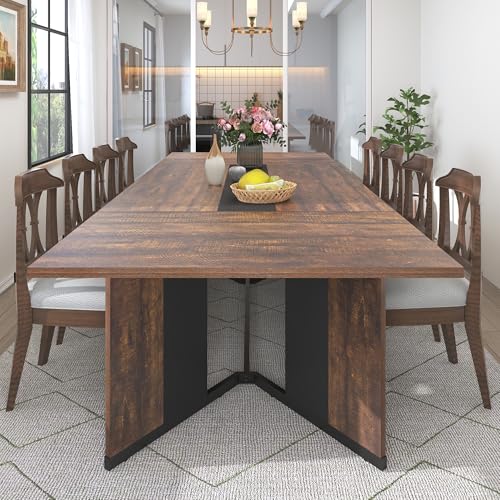
Hlivelood 94Inch Large Dining Table for 8 10 People,Wooden Rectangular Kitchen Table W/Waterproof Tabletop,Large Rectangle Furniture W/Adjustable Legs,Brown Dinner Table for Kitchen Dining Room(94IN)
Check price on Amazon
Hlivelood 94Inch Large Dining Table for 8 10 People,Wooden Rectangular Kitchen Table W/Waterproof Tabletop,Large Rectangle Furniture W/Adjustable Legs,White Dinner Table for Kitchen Dining Room(94IN)
Check price on Amazon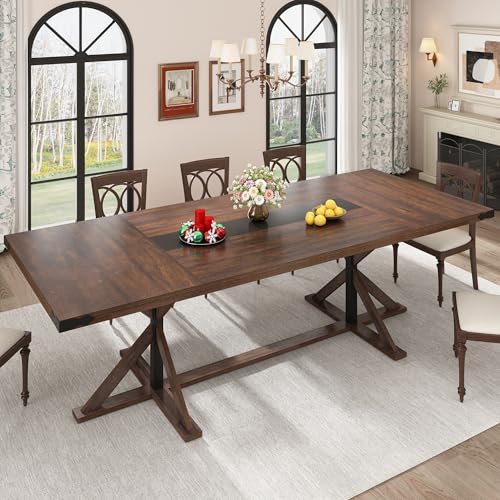
Hlivelood 94" Large Dining Table for 10 People, Rectangular Kitchen Farmhouse Table W/Thickness Waterproof Wood Tabletop,Long Dining Room Tables W/Wood Strip Base for Kitchen Living Room(238CM Brown)
Check price on Amazon
Hlivelood Dining Table for 8 10 People,Rectangular Kitchen Farmhouse Table W/Waterproof Wood Tabletop,Long Dining Room Tables W/Wood Strip Base for Kitchen Living Room(94IN BR&BK)
Check price on Amazon
70-93IN Extendable Rectangular Dining Table with Storage for 8 10 12,93''Modern Farmhouse Expandable Kitchen Table,Fluted Wood Door Long Wooden Tables,Double Pedestal Base for Kitchen,Dinner,Walnut
Check price on Amazon
94" Farmhouse Dining Table for 8 10 People, Rectangular Wood Kitchen Dinner Table with Thick Waterproof Tabletop & Heavy Duty Trestle Metal Base, Long Dining Room Table for Living Room, Brown&Black
Check price on Amazon
Honyee Sintered Stone Dining Table, Extendable Dining Table with Leaf, 65"-95" Rectangular Marble-Look Top, Seats 6-12, Metal Base, Easy-Clean, Heat & Scratch Resistant for Dining Room/Kitchen
Check price on AmazonBuying Checklist for a 94 Inch Dining Table
Before you commit to a table this size, run through the following checks. Each one addresses a common source of regret among buyers of large dining tables.
- Measure the room twice: Confirm the room is at least 13 feet 10 inches long and 9 feet 4 inches wide, or adjust your expectations for clearance.
- Measure the delivery path: A 94 inch table may not fit through stairwells, tight hallways, or around corners. Check box dimensions and consider whether the table ships in sections.
- Confirm the base type: Trestle or double pedestal bases are better for end seating than four-leg bases.
- Check the frame construction: Look for reinforced aprons, center supports, and solid joinery. A long table needs more structural support than a short one.
- Plan for chair clearance: Allow 36 inches per side and 24 to 30 inches of edge space per person.
- Verify the finish: Matte finishes hide scratches better on a busy table, while glossy finishes show wear more readily.
- Think about weight: Solid wood and stone tables at this size are heavy. Confirm the floor can support the load and that you have help for assembly.
Related Dining Table Guides
Frequently Asked Questions
How many people can a 94 inch dining table seat?
A 94 inch dining table comfortably seats 8 people with generous spacing, seats 10 with standard comfortable spacing, and can host 12 in a tighter banquet-style arrangement. The exact number depends on chair width and how much elbow room you want to give each guest.
What size room does a 94 inch dining table need?
You need a room at least 13 feet 10 inches long to allow 36 inches of clearance on both ends for chair pull-out and walkway traffic. For a more comfortable layout that allows sideboards or a serving path, aim for a room 15 feet long or more. The room width should be at least 9 feet 4 inches for a 40 inch wide table.
Is a 94 inch dining table too big for a normal dining room?
For a standard 10 by 12 foot dining room, a 94 inch table will feel cramped and leave insufficient clearance. It is best suited to dedicated dining rooms of 13 feet or longer, open-concept spaces, or homes that regularly host large gatherings.
What materials are best for a 94 inch dining table?
Solid wood — particularly oak, walnut, and teak — offers the structural strength needed across a long span. Stone tops such as quartz and marble work well when paired with a sturdy pedestal or trestle base. Engineered wood with a reinforced frame suits mid-tier options but should be checked carefully for internal construction quality.