
Wall Table Dining: The Complete Guide to Space-Saving Dining Solutions
Discover how wall-mounted and folding dining tables transform compact apartments, studio flats, and small kitchens into functional dining spaces. Learn about mounting systems, materials, sizing, and installation essentials before you choose your wall table dining setup.
Explore Wall Table Dining OptionsWhy wall table dining matters: In urban homes where every square foot counts, a wall table dining setup lets you enjoy a proper sit-down meal without sacrificing permanent floor space. These tables fold flat when not in use, making them ideal for studio apartments, dorm rooms, RV interiors, and narrow kitchens. This guide walks you through everything you need to know before committing to a wall-mounted dining solution.
What Is Wall Table Dining?
Wall table dining refers to dining tables that attach directly to a wall rather than resting on four floor-standing legs. Most models use a hinged bracket system: the tabletop folds down when needed for meals and folds back up flat against the wall when not in use. This design eliminates the permanent footprint of a traditional dining table, freeing up floor space for walking, storage, or multi-purpose living.
A wall table dining setup is especially practical in homes where the dining area doubles as a workspace, kitchen prep zone, or living area. Because the table collapses vertically, you reclaim the entire floor area underneath it. Many designs also incorporate storage shelves, chalkboards, or drop-leaf extensions that fold out further when guests arrive.
Unlike a standard folding table that still occupies floor space when stored, a wall-mounted dining table essentially disappears when closed. This makes it one of the most efficient space-saving furniture categories available for compact living. If you are exploring other compact options, our guide to space-saving folding dining tables covers additional configurations worth comparing.
Types of Wall Dining Tables
Wall table dining designs fall into several distinct categories, each suited to different room layouts and usage patterns.
1. Hinged Drop-Down Tables
The most common wall table dining style. A single tabletop panel is attached to a wall-mounted frame with heavy-duty hinges. When deployed, it extends horizontally to create a dining surface. When stowed, it folds vertically against the wall, often locking into place with a latch. These are ideal for narrow kitchens and corridors where lateral space is limited.
2. Drop-Leaf Wall Tables
These combine a fixed wall-mounted shelf or narrow surface with one or two hinged leaves that fold out to enlarge the dining area. A drop-leaf wall table is a good middle ground: it offers a small permanent surface for keys or a plant, then expands into a full dining table when needed. Explore our guide to oak drop-leaf dining tables for a closer look at this format.
3. Wall-Mounted Folding Tables with Storage
Some wall table dining units integrate shelving, drawers, or cubbies into the wall-mounted frame. The tabletop folds down over or beside the storage section, combining a dining surface with organization. These work well in studio apartments where a single wall zone serves multiple purposes.
4. Wall-Mounted Bar or Bistro Tables
Compact wall-mounted tables designed for standing height or counter height. These suit quick meals, coffee breaks, or a casual bistro setup. A wall-mounted dining table for two in this style is a popular choice for small balconies and kitchen corners. See our dedicated page on wall-mounted dining tables for two for size and placement guidance.
5. Convertible Wall Desks That Become Dining Tables
Multi-purpose designs that function as a workspace during the day and fold out into a dining surface at mealtime. These are especially useful in studio apartments where a dedicated dining room is not feasible. Our guide to a desk that turns into a dining table explores this category in detail.
Benefits & Limitations of Wall Table Dining
✔ Advantages
- Zero permanent footprint — folds flat when not in use
- Ideal for compact homes — studios, dorms, RVs, narrow kitchens
- Multi-purpose wall zone — dining, workspace, and storage in one
- Easy cleaning — floor stays clear for sweeping and mopping
- Flexible deployment — open only when you need it
- Modern, minimalist look — suits contemporary interiors
✖ Limitations
- Requires solid wall anchoring — must hit studs or use appropriate anchors
- Limited seating — most models seat two to four people
- Not freestanding — cannot be repositioned like a regular table
- Installation effort — drilling and leveling required
- Weight limits — heavy tableware should be checked against bracket ratings
- Wall damage on removal — patching may be needed if relocated
Sizing & Seating Guide for Wall Dining Tables
Choosing the right dimensions is the most important decision in a wall table dining project. Because the table is fixed to a wall, you cannot shift it later to accommodate a different chair arrangement. Plan the footprint carefully before purchasing.
Typical Dimensions
- Two-person wall table: roughly 24–32 inches deep and 30–40 inches wide when deployed
- Four-person wall table: roughly 30–36 inches deep and 48–60 inches wide
- Bar-height wall table: 24–30 inches deep and 30–36 inches wide, paired with bar stools
- Drop-leaf wall table: 18–24 inches fixed depth, expanding to 36–48 inches with leaves open
Clearance Rules
Leave at least 30 inches of clearance between the deployed table edge and any opposing wall, cabinet, or appliance. This allows a person to pull out a chair and sit comfortably without bumping into nearby surfaces. For walkways behind seated diners, aim for 36 inches or more. If your room is especially tight, review our narrow dining table for two guide for additional layouts that maximize limited depth.
Seating Compatibility
Wall tables pair best with lightweight, stackable, or folding chairs that can be tucked away when the table is closed. Folding chairs for dining tables are an excellent match because they can be stored in a closet or hung on wall hooks. Our guide to foldable chairs for dining tables covers compatibility and comfort considerations.
Materials & Finishes
The material of your wall table dining surface affects durability, weight, and visual style. Since the table is wall-mounted, lighter materials reduce strain on the mounting hardware.
Wood and Wood Composites
Solid wood, bamboo, and engineered wood are popular for wall dining tables. Wood offers a warm, natural look that suits both modern and rustic interiors. Bamboo is lightweight yet durable, making it a strong choice for wall-mounted designs where weight matters. Engineered wood with a veneer finish delivers a consistent appearance and is generally more stable across humidity changes than solid timber.
Metal Frames and Tabletops
Steel and aluminum frames provide the structural rigidity needed for wall-mounted brackets. Metal tabletops — often powder-coated — are durable and easy to wipe clean. A metal wall table dining unit is a practical option for high-traffic kitchens and outdoor-adjacent spaces. Look for rust-proof finishes if the table sits near a window or balcony door.
Glass Tops
Glass tabletops create a visually light appearance that helps small rooms feel more open. Tempered glass is required for safety. Glass is easy to clean but shows smudges and requires careful handling. A glass wall dining table is best paired with a robust metal frame to ensure stability.
Finishes to Consider
- Matte laminate: hides fingerprints, easy to maintain
- Powder-coated metal: resistant to scratches and moisture
- Natural oil or wax on wood: repairable but requires periodic reapplication
- Lacquered finish: glossy and protective, but can show scratches over time
Installation Essentials for Wall Table Dining
Proper installation is critical for safety and usability. A wall-mounted dining table experiences downward and outward forces when loaded, so the mounting system must be rated for the task.
Step-by-Step Overview
- Choose the location: Select a wall with adequate clearance and easy access from the kitchen. Avoid walls with hidden plumbing or electrical runs.
- Locate the studs: Use a stud finder to identify wooden studs or solid masonry. Most wall dining tables require at least two anchor points into structural material.
- Check the hardware: Confirm that the supplied brackets, bolts, and anchors match your wall type. Replace drywall anchors with stud-mounted lag bolts whenever possible.
- Level and mark: Hold the mounting frame against the wall, level it, and mark drill points precisely.
- Drill and anchor: Drill pilot holes and secure the frame with the appropriate fasteners. For masonry, use sleeve anchors; for studs, use lag screws.
- Attach the tabletop: Mount the hinged tabletop to the frame according to the instructions, then test the folding mechanism.
- Load test: Before daily use, apply gentle downward pressure to confirm stability. Check for wobble and tighten any loose fasteners.
For broader guidance on safe assembly and placement, our dining table setup guide and dining table moving safely guide offer additional checklists you can adapt to wall-mounted units.
Comparison: Wall Table Dining vs. Other Compact Options
The table below compares wall table dining with other space-saving dining formats using neutral tier descriptors rather than numeric figures. Use it to understand the relative positioning of each category.
| Format | Space Efficiency | Seating Range | Installation Complexity | Best For |
|---|---|---|---|---|
| Wall Table Dining (hinged) | Highest — folds flat to wall | 2–4 people | Moderate — requires wall anchoring | Studio apartments, narrow kitchens, dorms |
| Drop-Leaf Table | High — leaves fold down | 2–4 people | Low — freestanding | Small dining nooks, multi-use rooms |
| Folding Table (freestanding) | Medium — stores against wall | 2–6 people | None — ready to use | Temporary setups, occasional hosting |
| Small Bistro Table | Medium — fixed footprint | 2 people | Low — assemble legs | Kitchen corners, breakfast nooks |
| Counter-Height Compact Table | Medium — fixed footprint | 2–4 people | Low to moderate | Open-plan kitchens, casual dining |
If you are comparing freestanding compact formats, our guides to a small dining bistro table and a small folding dining table for two provide additional context on their trade-offs.
Related Wall & Compact Dining Guides
Wall table dining sits within a broader family of space-saving furniture. These related guides can help you round out your research:
- Wall dining table overview — broader context on wall-mounted formats
- Wall-mounted dining table for two — sizing and placement for couples
- Small two-seater dining table — freestanding alternative for tight spaces
- Small dining table with four chairs — when you need to seat more people
- Studio apartment dining table ideas — layout inspiration for compact living
- Dorm room dining table — solutions for student housing
- RV dining table — mobile and convertible formats
- Fold-up dining table — mechanical folding options
- Space-saving folding dining table — the widest category overview
- Foldable chairs for dining tables — pairing seating with compact tables
Recommended Wall Table Dining Products
⚠️ AFFILIATE DISCLOSURE: This website contains affiliate links. As an affiliate Associate, we earn from qualifying purchases. If you make a purchase through these links, we may receive a small commission at no additional cost to you. Read our full affiliate policy.

YHKJLYH Wall-Mounted Folding Dining Table & Floating Desk - Multi-Functional Space-Saving Home Office DeskModern Beige Design for Dining Room & Living Room (120x60cm)
Check price on Amazon
allamazing 4-Piece Counter High Bar Table Set with Socket and 3 Fabric Padded Bar Stools, Tall Kitchen Breakfast Nook with Stool (1+3 Natural)
Check price on Amazon
IDEALHOUSE FoldingTable, Drop Leaf Dining Table with 6 Wheels and 2-Layer Storage Shelf, Space Saving Table for Small Spaces (Slate Oak, 50.1" D x 31.4" W x 29.5" H)
Check price on Amazon
Winsome Suzanne Kitchen Table Set with Stools, Coffee, 33" | Convenient Sturdy Mobile Kitchen & Dining Room Table & Chairs with Storage for Small Spaces, Dorms, Apartments
Check price on Amazon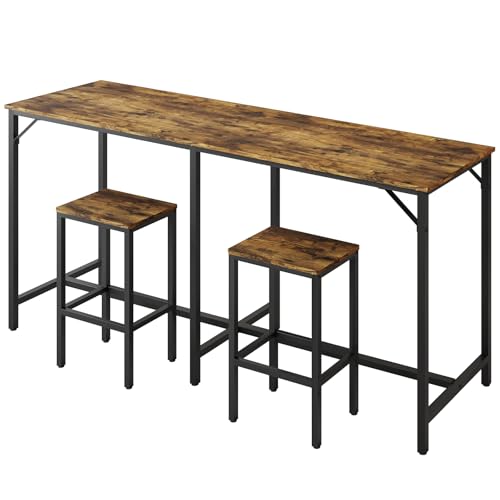
YATINEY 70.9" Bar Table and Chairs Set, Dining Table and Chair Sets, 3 Piece Counter Height Table and 2 Stools, Kitchen Table for Home Restaurant, Bar, Rustic Brown BT09BR
Check price on Amazon
IAE Floating Wall Mounted Folding Table Desk with Pine Wood,72x22in, Teak | Foldable Workbench,Fold Down Wall Mounted Foldable Desk with Shelf Brackets,Laundry Folding Table for Home,Dining,Kitchen
Check price on Amazon
5 PCS Farmhouse Dining Table Set for 4,60" Large Folding Dining Table Set w/ 4 Leather Chairs, Drop Leaf Foldable Kitchen Table for Small Spaces,Barn Door Design,6 Wheels,2-Layer Storage Shelf,Black
Check price on AmazonFrequently Asked Questions About Wall Table Dining
What is a wall table dining setup?
A wall table dining setup is a dining table that mounts directly to a wall, often with a hinged or folding mechanism. When not in use, it folds flat against the wall, freeing up floor space. It is one of the most space-efficient dining solutions for compact homes.
How much weight can a wall-mounted dining table hold?
Weight capacity depends on the bracket system and wall structure. A properly installed unit anchored into wall studs or masonry with heavy-duty hardware can typically support the weight of tableware and meals for two to four people. Always follow the manufacturer's stated weight guidance and installation instructions, and never rely on drywall anchors alone for a loaded dining table.
Is a wall table dining suitable for small apartments?
Yes. Wall table dining is one of the most effective space-saving solutions for studio apartments, dorm rooms, and compact kitchens. Because the table folds flat against the wall, it eliminates a permanent floor footprint, leaving the area open for circulation or other furniture when meals are finished.
Can I install a wall dining table on drywall?
Drywall alone is usually not strong enough to support a loaded dining table. You should anchor the mounting frame into wooden studs, concrete, or masonry. If studs are not accessible, consult a professional installer about appropriate structural reinforcement before mounting any wall table dining unit.
What chairs work best with a wall-mounted dining table?
Lightweight, foldable, or stackable chairs work best because they can be stored away when the table is folded up. Folding chairs are an especially practical match: they take up minimal storage space and can be hung on wall hooks or tucked into a closet. Confirm the chair seat height matches the table height for comfortable dining posture.
How much clearance do I need around a wall table dining setup?
Aim for at least 30 inches of clearance between the deployed table edge and any opposing wall, cabinet, or appliance so a person can pull out a chair comfortably. For walkways behind seated diners, 36 inches or more is recommended. Measure carefully before choosing the table's deployed dimensions.
Final Thoughts: Choosing the Right Wall Table Dining Solution
A wall table dining setup is a practical, space-efficient choice for anyone who wants a proper dining surface without committing permanent floor area. The key decisions come down to your wall type, the number of people you need to seat, and how often the table will be deployed versus stowed. Prioritize solid wall anchoring, choose a size that leaves adequate chair clearance, and pair the table with lightweight folding seating for the most flexible result.
Whether you are furnishing a studio apartment, a dorm room, an RV, or a narrow kitchen, a wall-mounted dining table can turn an underused wall into a functional mealtime zone. Browse the recommended products above, and explore our related compact dining guides to compare alternative formats before making your final choice.