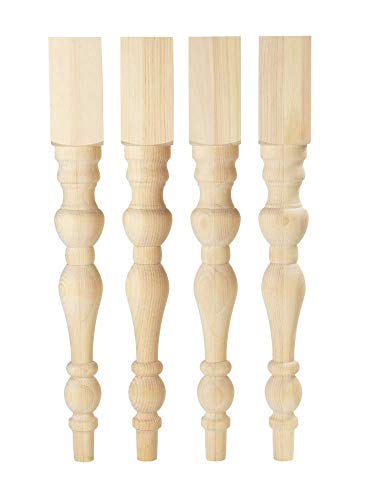
Turned Dining Table Legs: The Complete Guide
Explore profiles, wood species, proportions, and installation considerations for turned dining table legs — so you can choose a base that is beautiful, stable, and built to last.
Explore Leg ProfilesWhy turned legs matter: Turned dining table legs are more than decoration — they influence the visual weight, perceived style, and even the structural stability of your table. A well-chosen turned leg can make a table feel heirloom-quality, while a poorly proportioned one can make even a great top look off-balance. This guide walks you through every decision point before you buy.
What Are Turned Dining Table Legs?
Turned dining table legs are created on a lathe, a machine that spins a wooden blank while a cutting tool shapes it into a symmetrical profile. The result is a leg with repeating curves, beads, coves, and spindles that run along its length. Unlike straight, square, or tapered legs, turned legs carry a decorative rhythm that reads as traditional craftsmanship.
You will commonly find turned legs on farmhouse tables, vintage and antique reproductions, French country designs, and classic pedestal bases. They also appear on modern tables in simplified spindle forms, where the turnings are subtle rather than ornate. If you are comparing leg options across styles, our broader guide to the dining table leg covers square, tapered, metal, and turned profiles side by side.
Because turned legs are shaped from a single piece of wood (or assembled from matched pieces), the quality of the turning depends on both the wood species and the skill of the maker. A crisp, well-sanded turning with consistent symmetry is a strong signal of a well-built table.
Why Choose Turned Legs for Your Dining Table
Turned legs bring a distinct set of advantages to a dining table, but they also come with trade-offs worth understanding before you commit.
- Strong style identity: Turned legs immediately signal traditional, farmhouse, cottage, or vintage character. They anchor a room's aesthetic in a way that straight legs often cannot.
- Visual lightness: A turned profile removes material along the length of the leg, which can make a heavy tabletop feel less blocky and more graceful.
- Proven structural pattern: Classic turned legs are typically paired with aprons and corner blocks, a time-tested construction method that distributes weight well when properly built.
- Repairability: Solid wood turned legs can be sanded, refinished, or replaced individually, unlike integrated metal or molded bases.
- Trade-off — cleaning: The grooves and beads collect dust more readily than flat surfaces, so turned legs need slightly more routine attention.
- Trade-off — floor protection: Turned legs often end in a smaller foot, so felt pads or glides are important to protect hardwood floors.
If your priority is a sleek contemporary look, a turned leg may fight the design. But if you want warmth, character, and a sense of heritage, turned legs are hard to beat. Pair them with the right top — for example, an oak butcher block dining table top and turned base is a classic farmhouse combination.
Common Turned Leg Profiles
The profile of a turned leg is defined by the sequence of shapes cut into it. Understanding the vocabulary helps you describe what you want and evaluate what you are buying.
Spindle Leg
A slender, repetitive profile with multiple narrow turnings. Spindle legs feel light and airy and suit cottage, shaker-inspired, and country tables.
Ball & Claw / Ball Foot
A rounded ball foot at the base, often combined with a tapered or turned shaft. Classic in traditional and antique-style dining tables.
Reeded / Fluted Turn
Vertical grooves cut into a turned form. Adds texture and a formal, architectural feel without heavy ornamentation.
Barley Twist
A spiraling, rope-like turning. Highly decorative and best used on statement tables where the base is meant to be noticed.
Vase & Ring
A bulged vase shape separated by rings or beads. A balanced profile that reads traditional without being fussy.
Simplified Modern Turn
Subtle coves and gentle curves with minimal ornamentation. Bridges traditional turning and contemporary restraint.
When evaluating a profile, look at continuity: the transition between shapes should be smooth and deliberate, not abrupt. On a quality turned leg, the beads and coves flow into one another and the sanding is consistent from top to foot.
Best Wood Species for Turned Legs
Turned legs demand wood that holds fine detail without tearing or crumbling. Hardwoods with tight grain are generally the best choice, while softer woods can work for rustic aesthetics if you accept more maintenance.
| Wood Species | Turning Quality | Durability | Best For |
|---|---|---|---|
| Oak | Excellent — holds crisp detail | High | Farmhouse and traditional tables |
| Maple | Excellent — fine, smooth turnings | High | Painted or natural classic tables |
| Walnut | Very good — rich grain, elegant | High | Premium traditional and transitional tables |
| Cherry | Very good — ages beautifully | Medium-high | Heirloom-style dining tables |
| Rubberwood | Good — consistent and workable | Medium | Entry-level and mid-range painted tables |
| Pine | Moderate — softer grain | Medium-low | Rustic and cottage-style tables |
If your table top is a specific species, matching or deliberately contrasting the legs is an aesthetic decision. For example, a round country dining table often pairs painted turned legs with a natural wood top for a two-tone effect. If you are drawn to warmer tones, explore how a rustic wood dining table with metal legs compares — it shows the opposite approach, where the base is deliberately non-traditional.
Proportions and Sizing That Work
Turned legs look best when their scale is in harmony with the tabletop and the seating. Oversized turnings on a small top feel clumsy, while delicate turnings under a heavy slab can look fragile.
- Thickness: Standard dining tables typically use turned legs around 3 to 4 inches at their widest point. Larger tables and thicker tops call for thicker legs.
- Height: Standard dining table height is about 30 inches, so leg length is usually in the 28 to 29 inch range once the top thickness is accounted for. Our guide to the ideal height of a dining table explains how to confirm comfort before you commit.
- Taper: Many turned legs are fuller at the top and narrower at the foot. This visual taper keeps the base from feeling bottom-heavy.
- Top overhang: Turned legs are often set in from the table edge. A modest overhang protects knees and gives the top a floating feel.
If you are working with a compact footprint, a small pedestal dining table may solve the leg-clearance problem better than four turned corner legs, because a pedestal keeps the floor area open.
Construction and Installation Basics
How turned legs attach to the table matters as much as how they look. There are three common mounting methods you will encounter:
- Apron mounting: The legs are joined to a wooden apron frame with mortise-and-tenon or dowel joints, often reinforced with corner blocks. This is the most traditional and generally the most stable method.
- Threaded insert (hanger bolt): A metal bolt is embedded in the top of the leg and threads into a mounting plate under the tabletop. Common in tables that ship flat and assemble at home.
- Corner block / bracket: The legs attach to pre-installed corner blocks, sometimes with screws and sometimes with a combination of glue and fasteners.
When replacing legs, verify the mounting type, the bolt thread size, and the exact height before ordering. A mismatch of even a fraction of an inch can throw off table height and comfort. For a broader look at leg construction and replacement options, see the dining table leg guide.
Pairing Turned Legs With Table Styles
Turned legs are versatile, but they shine brightest in certain contexts. Here is how they pair with popular table styles:
- Farmhouse: Chunky turned legs with a natural or distressed wood top. A vintage farmhouse dining table is a textbook example of turned-leg styling.
- French country: Slender, elegant turnings with soft curves and painted finishes. See how a French country style dining table and chairs uses turned legs as part of a cohesive set.
- Traditional formal: Reeded or fluted turnings with a dark stain and a polished top. A white formal dining table can pair with turned legs for a crisp, classic look.
- Retro and eclectic: Simplified turnings can read as mid-century when paired with the right top. A retro dining table set shows how leg shape shifts the era of a piece.
If your room leans modern, a turned leg with a very restrained profile — a single gentle cove rather than a stack of beads — can bridge the gap. For a broader palette of compact options, browse small dining table ideas that include turned-leg designs.
Quality Tiers for Turned Leg Tables
Turned-leg dining tables span a wide range of construction quality. Instead of focusing on numbers, use these tier descriptors to set expectations for what you are evaluating.
Entry-Level Tier
- Softer or composite woods with veneer
- Simplified turning profiles
- Basic threaded insert mounting
- Good for occasional use and starter homes
Mid-Range Tier
- Solid hardwood legs with consistent turning
- Apron and corner block construction
- Better sanding and finish consistency
- Balanced choice for daily family use
Premium / High-End Tier
- Hand-turned or precision-CNC hardwood legs
- Mortise-and-tenon joinery with corner blocks
- Matched grain and meticulous finishing
- Long-term investment for heirloom use
Turned Dining Table Leg Checklist
- Confirm the leg height works with your seating and the finished table height.
- Check that the profile scale matches the tabletop size and thickness.
- Verify the wood species and whether the legs are solid or veneered.
- Ask about the mounting method (apron, threaded insert, or corner block).
- Inspect the sanding quality — beads and coves should feel smooth, not sharp.
- Confirm the finish type and whether it is suitable for your household's use.
- Plan floor protection: felt pads or glides under each foot.
- If replacing legs, measure the existing bolt thread and mounting plate before ordering.
Frequently Asked Questions
What are turned dining table legs?
Turned dining table legs are shaped on a lathe to create symmetrical curves, beads, coves, and spindles along the length of the leg. They are a signature of traditional, farmhouse, and vintage furniture styles.
What wood is best for turned table legs?
Hardwoods such as oak, maple, walnut, and cherry hold fine detail well and resist wear. Softer woods like pine can suit rustic looks but are more prone to dents and require more care.
How thick should turned table legs be?
For a standard dining table, turned legs commonly measure around 3 to 4 inches at their thickest point. Larger tables and heavier tops call for thicker legs, while small tables can use slimmer profiles.
Can I replace my table legs with turned legs?
In many cases, yes. Check that the mounting method matches your table frame, verify the height, and confirm the bolt thread size if your table uses threaded inserts. Measure twice before ordering.
Are turned legs hard to clean?
The grooves and beads can collect dust, so they need slightly more routine attention than flat legs. A soft brush or vacuum attachment makes the job quick and protects the finish.
Ready to Choose Your Turned Leg Table?
Use the checklist and profile guide above to narrow your options. Then browse our curated recommendations below to compare turned-leg dining tables that match your style and space.
View Recommended TablesRecommended Turned Leg Dining Tables
⚠️ AFFILIATE DISCLOSURE: This website contains affiliate links. As an affiliate Associate, we earn from qualifying purchases. If you make a purchase through these links, we may receive a small commission at no additional cost to you. Read our full affiliate policy.

CAROLINA LEG CO. Chunky Farmhouse Table Legs - Handmade in USA - Unfinished - DIY Furniture - Turned - Set of 4 Wood Table Legs- Dimensions: 3.5" x 29"
Check price on Amazon
CAROLINA LEG CO. Chunky Farmhouse Dining Table Legs - Handmade in USA - Unfinished - DIY Furniture - Widely Compatible Turned Wooden Legs - Dimensions: 5" x 29"
Check price on Amazon
CAROLINA LEG CO. Modern Farmhouse Dining Table Legs - Handmade in USA - Unfinished - DIY Furniture - Turned Wooden Legs - Set of 4 - Dimensions: 5" x 29"
Check price on Amazon
decorluxes Unfinished Farmhouse Table Legs Dining Table 3.7" X 29" Set of 4 DIY Coffee Table Rustic Turned Style Leg | Easy to Paint Any Color You Want (29 inch)
Check price on Amazon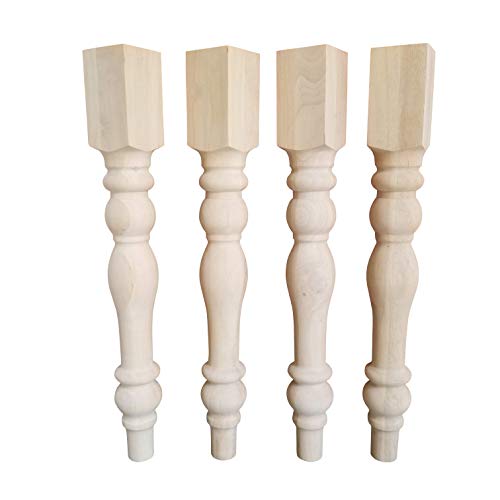
DESIGN 59 Unfinished Cottage Farmhouse Dining Table Legs- Set of 4 Turned Legs inc
Check price on Amazon
decorluxes Unfinished Farmhouse Bench Legs Dining Table, Coffee Table Rustic Turned Style Leg - Set of 4 - Dimensions: 2.16" x 14"- Easy to Paint (14 inch)
Check price on Amazon