
Traditional Dining Table and Chairs: A Complete Buyer Guide
Classic silhouettes, warm wood tones, and timeless craftsmanship. Learn how to choose a traditional dining table and chairs set that fits your room, your family, and your long-term lifestyle.
Explore Recommended SetsWhy traditional dining sets still matter: A traditional dining table and chairs set is one of the few furniture investments that can stay in a home for decades. Turned legs, decorative aprons, and rich wood finishes rarely go out of style, and the classic proportions work in both formal dining rooms and open-plan family spaces. This guide walks you through the styles, materials, chair pairings, and sizing rules you need to make a confident decision.
What Defines a Traditional Dining Table and Chairs Set
Traditional dining furniture is rooted in European and early American design traditions. The defining traits are ornamental detail, warm wood tones, and a sense of visual weight. If you are comparing a traditional set against a modern or industrial option, these are the features that separate them.
- Turned or carved legs: Spindles, fluting, and ball-and-claw feet are common. Legs are usually thicker than modern tapered designs.
- Decorative aprons and stretchers: The frame under the tabletop often carries molding, dentil detail, or curved stretchers between legs.
- Rich wood finishes: Cherry, mahogany, walnut, and oak stained in warm browns, honey, or deep espresso tones.
- Pedestal or trestle bases: Many traditional tables use a central pedestal with splayed feet, or a trestle base with a visible beam.
- Matching chair styles: Ladder-back, slat-back, spindle-back, and upholstered dining chairs with high backs and rolled arms.
Popular Traditional Styles to Consider
Traditional covers a wide range of regional and historical styles. Understanding the differences helps you match the set to your home's architecture and existing decor.
American Colonial
Clean turned legs, simple stretchers, and warm cherry or maple finishes. A versatile choice that pairs well with both formal and casual rooms.
English Country
Heavier proportions, carved details, and oak or mahogany construction. Often paired with upholstered ladder-back chairs.
French Provincial
Curved legs, painted or distressed finishes, and softer edges. A good match for light, airy dining rooms.
Victorian
Ornate carving, pedestal bases, and dark wood tones. These sets make a strong statement in larger formal dining spaces.
Farmhouse Traditional
Thick plank tops, trestle bases, and painted or natural wood finishes. A relaxed take on traditional design that suits family homes.
Formal Mahogany
Deep reddish-brown wood, inlay work, and banded edges. Often paired with high-back upholstered chairs for a formal dining room.
Choosing the Right Wood Material
The wood species affects how the table ages, how much maintenance it needs, and how well it handles daily use. Below is a general comparison of the most common traditional dining table woods.
| Wood Type | Character | Best For | Maintenance Level |
|---|---|---|---|
| Oak | Strong open grain, light to medium brown | Family homes, high-traffic dining rooms | Low to moderate |
| Cherry | Fine grain, deepens in color over time | Formal dining rooms, heirloom pieces | Moderate |
| Mahogany | Rich reddish-brown, dense and stable | Formal traditional sets, inlay work | Moderate |
| Walnut | Dark chocolate tones, elegant grain | Premium traditional and transitional sets | Moderate |
| Maple | Light and even grain, very hard | Painted or stained traditional sets | Low |
For a deeper look at how different woods perform in dining furniture, our materials and finishes guide covers durability, grain patterns, and finish options in more detail. If you are drawn to the warmth of natural wood, the guide on reclaimed wood extending dining tables explores how reclaimed timber brings character to a traditional silhouette.
Matching Chairs to Your Traditional Table
The chairs are just as important as the table. Traditional dining chairs come in several distinct styles, and the right pairing depends on how formal your space is and how much comfort you need for long dinners.
Chair Style Options
- Ladder-back chairs: Horizontal slats across the back. A classic American look that works with almost any traditional table.
- Spindle-back chairs: Vertical spindles with a curved top rail. A relaxed, Windsor-inspired option.
- Upholstered high-back chairs: Fabric or leather seats and backs. The most formal option and the most comfortable for long meals.
- Slat-back with rolled arms: Often used at the head of the table as host chairs.
- Rush-seat chairs: Woven natural seats that add texture and a country feel.
Chair-to-Table Proportion Rules
- Chair seat height should sit about 10 to 12 inches below the tabletop for comfortable legroom.
- Leave at least 24 inches of tabletop width per person for comfortable elbow room.
- Allow 30 to 36 inches of clearance around the table for pulling chairs in and out.
- Match the visual weight of the chairs to the table. A heavy pedestal table looks best with substantial chairs, not slim modern ones.
If you plan to mix chair styles, our dining chair selection guide explains how to combine host chairs, side chairs, and benches without breaking the traditional look.
Sizing a Traditional Dining Set for Your Room
Traditional tables tend to be larger than modern ones, so measuring the room carefully is essential. A set that looks right in a showroom can overwhelm a small dining room if the proportions are off.
| Seating Capacity | Typical Table Length | Typical Table Width | Minimum Room Size |
|---|---|---|---|
| 4 seats | 48 to 60 inches | 36 to 40 inches | 10 x 10 feet |
| 6 seats | 60 to 72 inches | 36 to 42 inches | 11 x 12 feet |
| 8 seats | 72 to 96 inches | 40 to 44 inches | 12 x 14 feet |
| 10 to 12 seats | 96 to 120 inches | 42 to 48 inches | 14 x 16 feet |
If your dining room is on the smaller side but you still want a traditional look, an apartment-style dining table can deliver classic details in a more compact footprint. For grand spaces, an extra-large dining table that seats twelve keeps the traditional proportions intact at full scale.
Extendable vs Fixed Traditional Tables
Many traditional dining tables are extendable, using either a butterfly leaf stored inside the table or separate extension leaves stored elsewhere. This is a major advantage for households that host holidays and large gatherings but want a tighter everyday footprint.
- Butterfly leaf tables: The leaf folds and stores inside the table. Convenient, but the mechanism needs occasional lubrication.
- Separate leaf tables: More common on formal traditional sets. Requires storage space but usually offers a more rigid joint.
- Fixed tables: Simpler construction and often more stable, but less flexible for changing guest counts.
If flexibility matters, our guide to the glass-top extendable dining table shows how extension mechanisms work in a different material context, while the table types section covers the full range of shapes and configurations.
Room Layout and Placement Tips
A traditional dining set anchors the room, so placement matters. These are the practical rules that keep the space functional and visually balanced.
- Center the table under the chandelier or ceiling fixture, or install a dimmer so the light can shift from task to ambient.
- Keep at least 36 inches between the table edge and any wall or large furniture piece for walking clearance.
- Leave 42 to 48 inches of clearance on the side where buffet or sideboard access is needed.
- Allow the table to breathe. Traditional sets look best when they are not pushed against a wall.
- Use a rug that extends at least 24 inches beyond the table edge on all sides so chairs stay on the rug when pulled out.
A dining table space planning guide can help you map out walkways and sightlines before you commit to a specific size.
Care and Long-Term Maintenance
Traditional wood dining sets are built to last, but they still need consistent care to stay beautiful. A few simple habits protect the finish and extend the life of the set.
- Dust with a soft, slightly damp cloth weekly to remove grit that can scratch the finish.
- Use coasters and trivets. Heat and moisture are the two most common causes of finish damage.
- Reapply a furniture wax or polish every three to six months depending on use.
- Keep the table out of direct sunlight to prevent uneven fading.
- Tighten chair bolts and table leg hardware every few months to prevent wobble.
For a full routine, see our care and maintenance hub. If you are restoring an older set, the guide on antique wood dining table revival covers refinishing and repair in detail.
Tier Guide: What to Expect at Each Level
Traditional dining sets range from entry-level to luxury. The table below uses neutral tier descriptors to help you understand what changes as you move up the market.
| Tier | Construction | Best For |
|---|---|---|
| Entry-level | Veneered panels, simpler joinery, lighter hardware | First homes, short-term rentals, casual dining rooms |
| Mid-range | Solid wood top with veneered sides, reinforced joints | Family homes, everyday use, moderate hosting |
| Premium | Solid hardwood throughout, dovetail joinery, quality finish | Long-term family use, frequent entertaining |
| Luxury | Hand-finished hardwood, inlay work, custom upholstery | Formal dining rooms, heirloom-quality sets |
A mid-range set is usually the sweet spot for most households. It offers solid construction and a durable finish without the complexity of custom upholstery or hand-carved detailing. A small luxury dining table can still deliver premium craftsmanship if your room is compact, and our small luxury dining table guide covers how to get that balance right.
Recommended Traditional Dining Table and Chairs Sets
⚠️ AFFILIATE DISCLOSURE: This website contains affiliate links. As an affiliate Associate, we earn from qualifying purchases. If you make a purchase through these links, we may receive a small commission at no additional cost to you. Read our full affiliate policy.
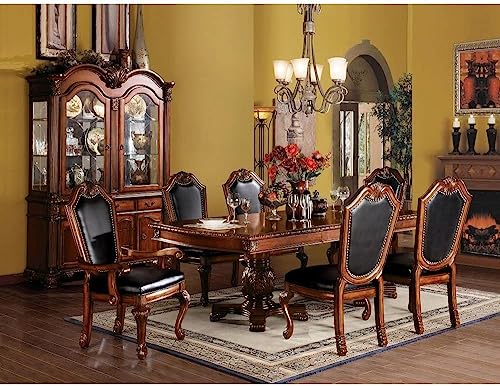
Traditional 7-Piece Dining Room Set with Dining Extendable Table, 4 Side Chairs and 2 Arm Chairs, Set for 6 Persons (Cherry Black)
Check price on Amazon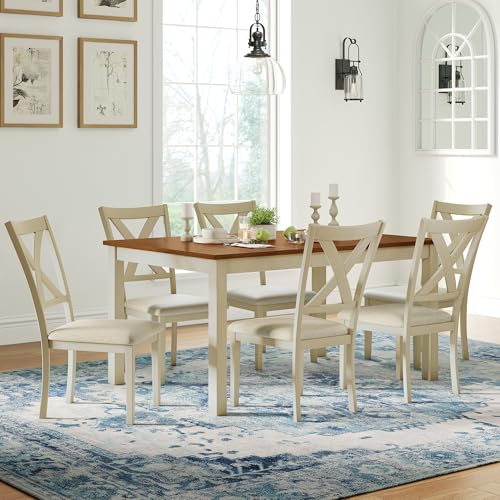
AMERLIFE 7-Piece Farmhouse Solid Wood Dining Table Set for 6, Rustic Cream | 60" Solid Wood Table, 6 Upholstered Chairs, Space-Saving Design, Rustic Dining Set, Dining Room and Kitchen
Check price on Amazon
7-Piece Dining Kitchen Set with Dining Extendable Table, 4 Side Chairs and 2 Arm Chairs, Set for 6 Persons, Cherry (A)
Check price on Amazon
7-Piece Extendable Dining Table Set, 70" Walnut Table with 6 Fabric Chairs | 39.3-70.8 In Extendable Table, Dual Slatted Pedestals with 6 Walnut Metal Frame Chairs, Farmhouse Dining Set for Kitchen
Check price on Amazon
24/7 Shop at Home Hinchcombe Traditional 5-Piece Dining Set, Brown Cherry | Wood 48-inch Round Table and 4 Fabric Padded Side Chair with Pedestal Base, Claw Feet for Home Dining Room, Living Room
Check price on Amazon
Crosley Furniture Shelby 5-Piece Round Dining Set | Traditional Wood Style, Distressed White
Check price on Amazon
Signature Design by Ashley Berringer Dining Chairs Set of 2, Rustic Brown | Wood Dining Chairs, Kitchen Chairs Set of 2, Cushioned Microfiber Seat, Spindle Back, Saber Legs
Check price on AmazonFrequently Asked Questions
What is the difference between traditional and transitional dining sets?
Traditional sets lean heavily on ornamentation, turned legs, and warm wood tones. Transitional sets blend traditional warmth with cleaner modern lines, often using simpler legs and lighter finishes. If you want a set that feels timeless without being ornate, a transitional option may suit you better.
How many chairs should a traditional dining table have?
Most traditional dining tables seat four to eight people comfortably. A 60-inch table typically seats four to six, while a 72-inch table seats six to eight. Leave at least 24 inches of table width per person for comfortable elbow room.
Can I mix traditional chairs with a modern table?
Yes, but the result is usually a transitional look rather than a strictly traditional one. To keep the traditional feel, choose chairs with classic details such as turned legs, ladder backs, or upholstered backs, and keep the table's wood tone and finish consistent with the chairs.
How do I protect a traditional wood dining table?
Use coasters and trivets, dust weekly with a soft cloth, reapply furniture wax every few months, and keep the table out of direct sunlight. Avoid placing hot dishes directly on the surface and wipe up spills quickly to prevent moisture damage.
Is a round or rectangular traditional table better?
Rectangular tables suit larger rooms and formal dining spaces, while round tables work well in square rooms and encourage conversation. For traditional sets, both shapes are common. A round dining table guide can help you decide if a round silhouette fits your space.
How long should a traditional dining set last?
A solid hardwood traditional set with a quality finish can last twenty years or more with proper care. Veneered sets generally have a shorter lifespan, especially in high-moisture or high-traffic environments. Long-term durability depends more on construction quality than on the style itself.
Final Checklist Before You Buy
- Measure your dining room and confirm the table plus chair clearance fits.
- Decide between fixed and extendable based on how often you host.
- Choose a wood species that matches your maintenance comfort level.
- Confirm chair seat height and table height compatibility.
- Check that the chair style matches the visual weight of the table.
- Plan for a rug, lighting, and walkway clearance before delivery.
- Review the warranty and assembly requirements.
A traditional dining table and chairs set is a long-term investment in your home. Take the time to match the style, material, and proportions to your space, and the set will serve your family for years. For more buying frameworks, see our shopping and reviews hub and the first dining table checklist.