
Reclaimed Wood Extending Dining Table: A Complete Buyer Guide
Blend rustic character with real flexibility. Learn how reclaimed timber and a well-engineered extension mechanism come together to create a table that adapts to everyday meals and full-house gatherings.
Why this guide matters: A reclaimed wood extending dining table is one of the smartest choices for households that value character and adaptability. The aged timber brings a story and warmth no new board can replicate, while the extension system lets you seat extra guests without committing to a permanently oversized footprint. This guide walks you through the materials, mechanisms, sizing, styling, and care so you can choose with confidence.
What Makes a Reclaimed Wood Extending Table Different
Reclaimed wood comes from old barns, factories, ships, and demolished buildings. Because it has already weathered decades of temperature shifts and humidity, it behaves differently from freshly milled lumber. It is typically denser, more dimensionally stable, and rich with patina, nail holes, and grain variation that give each tabletop a one-of-a-kind identity.
Pairing that aged timber with an extending mechanism adds a layer of engineering. The table must handle the weight of a heavy top while keeping the leaves flush and the frame rigid. That is why the best examples combine a solid timber top with a reinforced steel or hardwood rail system. If you are still weighing shapes and layouts, our round dining room table with four chairs guide offers a useful contrast for compact spaces.
Reclaimed Wood Species and Character
Not all reclaimed timber is the same. The species and original use of the wood strongly influence grain, color, and hardness. Here is how the most common options compare.
| Wood Type | Typical Character | Best For |
|---|---|---|
| Reclaimed Oak | Dense, pronounced grain, warm honey to grey tones | High-traffic family dining, long-term investment |
| Reclaimed Pine | Softer grain, knots, distressed knots and nail marks | Farmhouse and country interiors, entry-level tier |
| Reclaimed Elm | Swirling grain, rich brown color, striking figure | Statement pieces, premium and luxury tiers |
| Reclaimed Teak | Oily, weather-resistant, golden-brown patina | Humid climates, high-end tier dining rooms |
| Reclaimed Mixed Hardwood | Patchwork of tones and species, highly rustic | Eclectic and industrial styling |
Mixed hardwood tops are visually dramatic but can vary in hardness across the surface. If you plan to seat many guests and want consistent wear, a single-species oak or teak top is usually the more predictable choice.
Extension Mechanisms Explained
The extension system is what separates a good reclaimed wood table from a frustrating one. Heavy timber tops demand robust hardware, so pay close attention to how the leaves store and how the rails travel.
Butterfly Leaf
A butterfly leaf folds and self-stores inside the table, then unfolds when needed. It is convenient for frequent transitions and keeps leaves out of storage. Entry-level tier models may have stiffer hinges, while mid-range and premium builds offer smoother, reinforced folding hardware.
Drop-In Leaf
Drop-in leaves are separate panels you insert into the middle of the table. They offer strong support for heavy reclaimed timber and are common on traditional rustic designs. The trade-off is that you need a place to store the leaves when not in use.
Self-Storing Leaf
Self-storing leaves slide or fold under the tabletop, so nothing needs to be stored elsewhere. This is the most convenient option for households that host regularly, though the mechanism adds complexity and is usually found on mid-range and high-end tier tables.
Sizing and Seating Capacity
Because an extending table changes length, plan for both its closed and open footprint. A table that seats four comfortably when closed can typically seat six to eight when fully extended, depending on leaf size.
- Closed length: Match this to your everyday dining room or kitchen footprint, leaving at least 36 inches of walkway clearance around the table.
- Open length: Measure the extended length plus chair pull-out space to confirm the room can handle a full-house setup.
- Seating math: Allow roughly 24 inches of table edge per person for comfortable dining.
If your room is generously proportioned and you want a dramatic centerpiece, an extra large dining table that seats 12 can serve as an alternative to an extending model. For apartment-sized spaces, an apartment style dining table may be the better fit. And if you love the rustic look but prefer a fixed top, a rustic dining table and chairs set is worth comparing.
Finishes and Surface Protection
Reclaimed wood needs a finish that respects its character while protecting it from daily use. The most common options are:
- Hardwax oil: Penetrates the grain, keeps a natural matte feel, and can be spot-repaired. Ideal for rustic character.
- Polyurethane: Forms a protective film that resists spills and stains. Choose a matte or satin sheen to avoid a plastic look on aged timber.
- Lacquer: Offers a smooth, durable surface with a range of sheens. Common on premium and commercial-grade builds.
Whatever the finish, use coasters and trivets. Reclaimed timber can still be marked by heat and moisture, and a few simple habits keep the patina intact for years. For a deeper dive into surface options, see our materials and finishes references in the navigation menu.
Styling a Reclaimed Wood Extending Table
The rustic texture of reclaimed timber pairs beautifully with a range of interior styles. Consider these directions:
- Farmhouse: Pair with painted or ladder-back chairs, linen runners, and enamelware centerpieces.
- Industrial: Combine with black metal chairs, exposed filament lighting, and concrete or brick surroundings.
- Modern rustic: Use sleek upholstered chairs and a minimal centerpiece to let the timber grain be the statement.
- Scandinavian: Choose lighter reclaimed pine and pair with pale wood or white chairs for an airy feel.
Keep the palette grounded. Reclaimed wood already carries strong color variation, so a neutral table runner and a few natural elements such as greenery or ceramic vessels tend to work best.
Care and Maintenance
Reclaimed wood is durable but not indestructible. A simple routine keeps it looking its best:
- Dust weekly with a soft, slightly damp cloth. Avoid soaking the surface.
- Wipe spills immediately, especially on oiled finishes.
- Re-oil hardwax-finished tables once or twice a year, depending on use.
- Keep the table away from radiators, direct sun, and air-conditioning vents to reduce movement.
- Maintain indoor humidity in a moderate range to prevent seasonal gaps or swelling.
If the table develops minor scratches, a matching touch-up wax or oil usually blends them into the natural character. Deep damage on a film finish may require localized sanding and refinishing.
Quality Tiers at a Glance
Reclaimed wood extending tables span a wide range of build quality. Use this tier framework to compare options on features rather than numbers.
| Tier | Typical Build | Best For |
|---|---|---|
| Entry-level | Thinner reclaimed top, simpler leaf mechanism, basic finish | Occasional hosting, first reclaimed purchase |
| Mid-range | Solid reclaimed top, smoother butterfly or self-storing leaf, reinforced rails | Regular family dining and frequent guests |
| Premium | Thick single-species top, precision hardware, hardwax or lacquer finish | Long-term investment, design-led interiors |
| Luxury | Hand-selected aged timber, custom sizing, artisan finishing, commercial-grade hardware | Statement dining rooms, heritage-style homes |
Each tier is a solid choice for its intended use. A mid-range model typically offers the best balance of durability and mechanism smoothness for most households, while luxury builds suit buyers who want a bespoke centerpiece.
Common Buying Mistakes to Avoid
- Ignoring the open footprint: Measure the extended length plus chair clearance before committing.
- Overlooking leaf storage: Drop-in leaves need a safe place to live when not in use.
- Skipping the hardware check: Heavy timber demands strong rails; weak hardware is the most common failure point.
- Mismatching finish to lifestyle: Busy households with young children often do better with a protective film finish.
- Forgetting humidity: Reclaimed wood still moves with seasonal moisture changes.
Frequently Asked Questions
Is a reclaimed wood extending dining table durable?
Yes. Reclaimed timber is often denser and more seasoned than new wood because it has aged for decades. With proper sealing and a solid extension mechanism, these tables are built for long-term use.
How much seating space does an extension add?
Most leaf extensions add enough length for two to four extra place settings. A butterfly or drop-in leaf can turn a six-seater into an eight- or ten-seater for hosting.
Can reclaimed wood tables warp over time?
Aged reclaimed timber is generally stable, but humidity swings can still affect it. Keep the table away from direct heat and maintain consistent indoor humidity to reduce movement.
What extension mechanism is best for reclaimed wood?
Butterfly and self-storing leaf mechanisms are convenient for frequent use. Traditional drop-in leaves offer more strength for heavy timber tops. Mid-range and premium models usually feature smoother, reinforced hardware.
Related Guides
Explore more dining table styles and setups to complete your research:
- Small luxury dining table for compact, high-end spaces
- Retro square dining table for a vintage-inspired look
- Round dark brown dining table for warm, sociable layouts
- Solid top outdoor dining table for patio and garden dining
- 6 foot outdoor dining table for larger alfresco gatherings
- 72 inch diameter dining table for round-table hosting
Recommended Reclaimed Wood Extending Dining Tables
⚠️ AFFILIATE DISCLOSURE: This website contains affiliate links. As an affiliate Associate, we earn from qualifying purchases. If you make a purchase through these links, we may receive a small commission at no additional cost to you. Read our full affiliate policy.

DM Furniture 55-71'' Extendable Dining Table for 4-8 People, Reclaimed Pine Wood Extending Dining Table w/Removable Leaves for Dining Room/Kitchen/Office, Space Saving, Brown
Check price on Amazon
DM Furniture 55-71" Extendable Dining Table for 4-8, Reclaimed Pine Wood Kitchen Table with U-Shaped Leg, Rectangular Dining Room Table for Kitchen, Home Office, Living Room, Space Saving, Walnut
Check price on Amazon
chairus 55"-71" Extendable Pine Wood Dining Table for 4-8 People, Brown | Hidden removable Leaf Extends from 55" to 71", Reclaimed Pine Table, Seats 4-8, Sturdy U-shaped Wood Legs, Farmhouse Style
Check price on Amazon
DM Furniture 59"-71" Reclaimed Solid Wood Extendable Kitchen Table, Oak | FSC Certificated, Farmhouse Rectangular Expandable Dinner Table with Leaf Extension for 6-8 | Dining Room/Gathering/Party
Check price on Amazon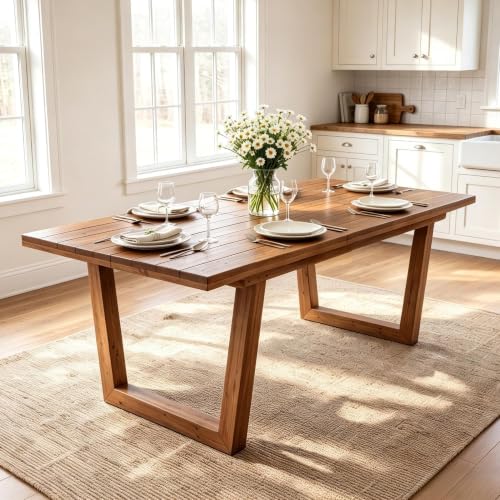
chairus 55"-71" Extendable Pine Wood Dining Table for 4-8 People, Walnut | Hidden Removable Leaf Extends from 55" to 71", Reclaimed Pine Table, Seats 4-8, Sturdy U-shaped Wood Legs, Farmhouse Style
Check price on Amazon
GarveeHome 63-83" Extendable Dining Table, Industrial Rectangular Dining Room Table for 6-8 People, Expandable Kitchen Table with Heavy Duty Metal Frame for Dining Room, Kitchen & Parties, Brown
Check price on Amazon
Signature Design by Ashley Burkhaus Extendable Dining Table, Dark Brown | Seats Up to 8, Removable 18-In Leaf, Wood, Oak Veneer and Engineered Wood, Large Pedestal Dining Table
Check price on Amazon