
Solid Wood Dining Table with Drawers: The Complete Buying Guide
A solid wood dining table with drawers combines lasting craftsmanship with smart, concealed storage. This guide explains drawer types, wood species, sizing, and structural details so you can choose a table that stays functional and beautiful for years.
Why this guide matters: A dining table is one of the most-used pieces of furniture in the home, yet storage is often overlooked. Drawers turn the apron space into a practical organizer for cutlery, placemats, and linens, keeping the surface clear for actual dining. Below, we break down what separates a well-engineered table from a decorative one.
What Makes a Solid Wood Dining Table with Drawers Worth Considering
Solid wood construction means the tabletop and frame are cut from a single wood species rather than layered veneer over particleboard. This distinction affects durability, repairability, and how the table ages. When drawers are integrated into the apron, the table becomes a dual-purpose piece: a dining surface and a discreet storage unit.
The storage benefit is practical in smaller homes where sideboards may not fit. A drawer near each seat keeps everyday items within reach, while deeper central drawers hold seasonal linens. For households that entertain often, this convenience reduces trips to the kitchen and keeps the dining area uncluttered.
Concealed Everyday Storage
Keep cutlery, napkins, and coasters out of sight so the tabletop stays clear and ready for meals.
Durable Solid Construction
Solid wood resists wear, can be sanded and refinished, and holds joints better than composite cores.
Space-Efficient Design
Replaces the need for a separate sideboard in compact dining rooms and open-plan kitchens.
Timeless Appearance
Natural grain and warm tones suit rustic, farmhouse, and modern interiors alike.
Types of Drawers Found on Dining Tables
Not all drawers serve the same purpose. The configuration you choose should match how you use the dining room.
Apron Drawers
These are shallow drawers built into the table apron, usually one per side or one per seat. They are ideal for flatware, placemats, and small serving tools. Apron drawers add minimal bulk, so they suit tables where visual lightness matters. A well-made apron drawer uses a solid wood box with dovetail or box joints and smooth metal runners.
End Drawers with Deeper Capacity
Some designs place deeper drawers at the table ends, where the apron can accommodate more depth without interfering with legroom. These are useful for table linens, board games, or craft supplies. If you choose this layout, confirm that the drawer does not reduce knee clearance for end seating.
Integrated Cabinets and Side Storage
A few premium designs extend storage below the apron, adding small cabinet doors or a lower shelf. This is closer to a sideboard built into the table. These models tend to be heavier and better suited to larger dining rooms. For a lighter footprint, a space-saving modern dining table with a single slim drawer may be the more practical choice.
Wood Species: Matching Material to Your Household
The species you choose affects hardness, grain character, and how the table responds to humidity changes. The table below summarizes how common options behave in a dining context.
| Wood Species | Character | Best For | Typical Tier |
|---|---|---|---|
| Oak | Hard, open grain, highly durable | Busy family dining rooms | Mid-range to premium |
| Walnut | Rich dark grain, dense, refined | Formal and modern interiors | Premium to luxury |
| Teak | Naturally oily, moisture-resistant | Humid climates and heavy use | Premium |
| Cherry | Warm tone that deepens with age | Traditional and transitional rooms | Mid-range to premium |
| Pine | Soft, knotty, casual character | Light use and rustic styling | Entry-level to mid-range |
If you want a rugged, textured surface, a rustic wood dining table with bench often pairs oak or pine with a bench for a cohesive farmhouse look. Buyers seeking warmth with a more refined grain sometimes prefer a rustic cherry dining table, whose color deepens over time.
How to Evaluate Drawer Quality Before Buying
Drawers are the most failure-prone component of a storage dining table. Check these details in product specifications or in person:
- Drawer box material: Solid wood boxes with dovetail or box joints last far longer than stapled particleboard boxes.
- Runner type: Metal ball-bearing slides glide smoothly and hold up under frequent use; wooden runners are traditional but require waxing.
- Stops and soft-close: Drawer stops prevent pull-out accidents, while soft-close mechanisms reduce slam noise in family homes.
- Apron depth: The apron must be deep enough to house the drawer without weakening the frame. Shallow aprons force very thin drawers.
- Interior finish: A sanded, sealed interior prevents splinters and protects stored linens from rough surfaces.
Sizing and Placement Considerations
Drawers add a few centimeters to the apron depth, which can affect chair tuck-in and knee clearance. Before committing, measure the following:
- Apron depth: Standard aprons of roughly 8 to 12 centimeters accommodate slim drawers; deeper aprons support larger drawers.
- Seat clearance: Confirm that chairs slide fully under the table when drawers are closed.
- Drawer pull-out space: Leave enough room behind the chair position so drawers open without hitting seating.
- Table length: Longer tables allow more drawers without crowding the apron with hardware.
For compact rooms, a small dining table with a marble top paired with a slim apron drawer can deliver storage without bulk. If you need flexibility for guests, a rotating expandable round dining table offers a different approach to adaptable dining, though drawer integration is less common on expandable mechanisms.
Storage Planning: What Belongs in Dining Table Drawers
Drawers work best when they have a defined purpose. Use this practical division to keep them organized:
| Drawer Location | Ideal Contents | Notes |
|---|---|---|
| Side apron drawers | Flatware, coasters, napkins | Keep items within reach of each seat |
| End drawers | Placemats, table runners, candles | Deeper capacity suits rolled linens |
| Central drawer | Serving utensils, trivets, small tools | Shared access for hosting |
| Lower cabinet section | Seasonal linens, board games | Only on larger integrated designs |
Care and Maintenance for Wood Tables with Drawers
Solid wood responds to humidity, and drawers are particularly sensitive because they sit in a confined space. Keep indoor humidity reasonably stable, avoid placing the table near direct heat sources, and dust drawer interiors periodically. Lubricate metal runners lightly once or twice a year, and apply a wood conditioner or wax to the tabletop according to the finish manufacturer's guidance. For routine surface care and stain prevention, follow a consistent cleaning routine suited to the specific finish.
Common Mistakes to Avoid
- Choosing drawers purely for aesthetics without checking runner quality and joint construction.
- Overloading slim apron drawers with heavy items, which strains runners and joints.
- Ignoring apron depth, which can leave too little knee clearance for taller diners.
- Placing the table against a wall where drawers cannot open fully.
- Assuming all solid wood is equal; species hardness and grain stability vary significantly.
Matching the Table to Your Interior Style
A storage table should feel intentional in the room. A modern teak dining table suits contemporary interiors with its warm tone and clean lines, while an Amish live edge dining table brings organic character to rustic and transitional spaces. If you are exploring broader options, our guide on how to buy a wooden dining table covers selection criteria in more depth. For specific footprint needs, a 72-inch dining table or a 96-inch dining table guide can help you match length to room size and seating count.
Ready to Compare Solid Wood Tables with Storage?
Browse curated options that combine solid wood construction with practical drawer storage, then compare features that matter for your dining room.
Explore OptionsRecommended Solid Wood Dining Tables with Drawers
⚠️ AFFILIATE DISCLOSURE: This website contains affiliate links. As an affiliate Associate, we earn from qualifying purchases. If you make a purchase through these links, we may receive a small commission at no additional cost to you. Read our full affiliate policy.

Farmhouse Dining Table with 2 Storage Drawers, 71" Walnut Table for 6-8 | Rectangle Kitchen Table with Charging Station, Wooden Kitchen Dining Room Table
Check price on Amazon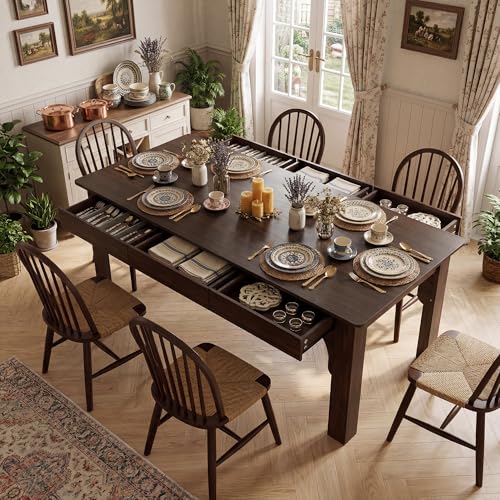
HOMSETTIE Farmhouse Dining Table for 6-8 People, 68.9" Rustic Kitchen Table with 6 Drawers, Long Rectangle Dinner Table with Wood Grain for Dining Room, Brown
Check price on Amazon
ModernMate 63"-78" Extendable Dining Table for 6-8 with Drawer, Walnut | Rectangular Kitchen Table, Double Pedestal Hidden Storage Legs, 3-Tier Pull-Out Drawers, Dining Room, Office, (Table Only)
Check price on Amazon
Squireewo 71 Inch Solid Wood Dining Room Table, Walnut | Rustic Kitchen Table, Large Wooden Rectangular Dinner Table for Dining Room, Home Office, Living Room
Check price on Amazon
Winsome Wood Suzanne Kitchen, Square, Natural, Beech | Convenient Sturdy Mobile Kitchen & Dining Room Table & Chairs with Storage for Small Spaces, Dorms, Apartments
Check price on Amazon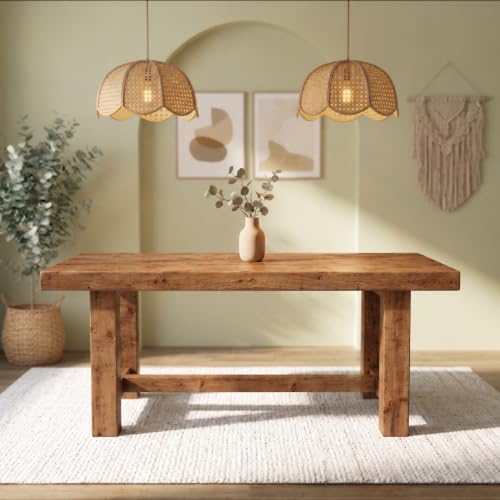
TRIBEWOOD 63-Inch Solid Wood Rectangular Dining Table for 4-6 People | Farmhouse Kitchen Table with Trestle Base, Real Wood Dining Tables for Dining Room,Apartment ,Elegant Details, Easy Assembly
Check price on Amazon
Christopher Knight Home Ace 70.28'L Solid Wood Dining Table for 6-8 People, Rubber Wood Dining Room Table, Minimalist Modern Rectangular Kitchen Table, Easy Assembly Dining Room Furniture, Natural
Check price on AmazonFrequently Asked Questions
What are the benefits of a solid wood dining table with drawers?
Drawers add concealed storage for cutlery, placemats, napkins, and table linens, keeping the tabletop clear. Solid wood construction provides durability, refinishability, and long-term structural integrity compared with veneered or composite options.
How much storage do dining table drawers actually provide?
A typical drawer is shallow, often 10 to 15 centimeters deep, and suits flat items such as silverware, coasters, and placemats. Deeper apron drawers or side cabinets hold bulkier linens. Drawers are best treated as convenient organizers rather than full storage units.
Do drawers weaken the structure of a solid wood dining table?
Not when properly engineered. A well-built table reinforces the apron with internal framing and uses solid wood drawer boxes with dovetail or box joints. Mid-range and premium tables usually handle drawer integration without compromising rigidity.
Which wood species work best for a table with drawers?
Oak, walnut, teak, and cherry are strong choices. Oak and teak resist wear well in busy dining rooms, while walnut and cherry offer refined grain and warmth. Softer woods such as pine suit lighter use and casual interiors.
Can I add drawers to an existing dining table?
Retrofitting drawers is possible only if the apron is deep enough and structurally sound. It typically requires professional woodworking, since cutting into the apron can affect the table's rigidity. For most buyers, selecting a table that already includes drawers is the more reliable approach.
Final takeaway: A solid wood dining table with drawers is a practical, long-term investment when the drawer construction is sound and the wood species matches your household's use. Prioritize drawer joints, runner quality, and apron depth over decorative details, and the table will serve both dining and storage needs for years.