
Small Real Wood Dining Table: The Complete Buying Guide
A compact solid wood table can transform a small kitchen, breakfast nook, or apartment corner into a warm gathering spot. This guide explains how to choose the right size, wood species, shape, and finish for your space.
Start the GuideWhy real wood matters in a small space: When a table occupies a large share of a compact room, its material becomes the visual anchor of the whole area. Solid wood brings natural grain, a tactile surface, and long-term refinishing potential that engineered alternatives struggle to match. The right small real wood dining table can seat a household comfortably without overwhelming the floor plan.
What Counts as a Small Real Wood Dining Table?
A small real wood dining table is typically a solid or largely solid timber table sized to seat two to four people within a footprint of roughly 30 to 48 inches in length or diameter. These tables are purpose-built for apartments, breakfast nooks, open-plan kitchens, and dining corners where a full-size table would block circulation.
The key distinction is the material: the tabletop and frame should be constructed from genuine timber such as oak, maple, walnut, teak, pine, or mango rather than particleboard wrapped in a printed foil. Real wood offers a surface that can be sanded, re-oiled, and refinished over the years, which is important in a compact room where the table is used daily.
Typical dimensions to look for
| Table Shape | Common Compact Size | Seating | Best For |
|---|---|---|---|
| Rectangular | 36–48 in long × 24–30 in wide | 2–4 | Against a wall or in a narrow kitchen |
| Square | 30–36 in square | 2–4 | Corners and symmetrical nooks |
| Round | 30–42 in diameter | 2–4 | Small rooms with tight walkways |
| Drop-leaf | 24–36 in closed, 48+ in open | 2–4 | Multi-purpose and micro apartments |
If you are unsure how a table will sit in your room, our square dining table with drawers walkthrough illustrates how compact footprints and built-in storage can work together in tight layouts.
Choosing the Right Wood Species
Not all real wood behaves the same way. Species differ in hardness, grain character, color, weight, and how they respond to humidity. In a small room, where the table is close to the eye, the grain pattern and tone have an outsized effect on the overall feel of the space.
Oak
Dense and hard-wearing with a prominent grain. Excellent for busy households and everyday use. Responds well to oil and lacquer finishes.
Maple
Fine, even grain and a light, clean appearance. Very hard surface that resists dents. Ideal for modern and Scandinavian interiors.
Walnut
Rich chocolate tones and flowing grain. Softer than oak but visually luxurious. Works beautifully in warm, moody dining spaces.
Teak
Naturally oily and resistant to humidity. A strong candidate for kitchens and coastal climates where moisture swings are common.
Pine
Soft, lighter in weight, and casual in character. Easier to move around a compact room, though it dents more easily than hardwood.
Mango Wood
Fast-growing and often sustainably sourced. Warm honey tones with lively grain. A strong mid-tier option for relaxed, rustic interiors.
Shape and Layout: Fitting Real Wood Into a Small Room
The shape of the table often matters more than the material when floor space is limited. A round table has no corners, so it can sit closer to walls and doorways while still allowing easy circulation. Rectangular tables work best pushed against a wall or aligned with the room's long axis. Square tables are a natural fit for corners and symmetrical breakfast nooks.
For a more design-led approach, explore how a black oval pedestal dining table uses a single central support to free up legroom underneath, which is a significant advantage in compact rooms where chairs are pushed in and out constantly.
Clearance rules that prevent a cramped feel
- 36 inches of clearance between the table edge and walls or furniture is the comfortable standard for chairs and walkways.
- 30 inches is a workable minimum for occasional use or when one side sits against a wall.
- Allow at least 24 inches of table width per seated person so diners do not bump elbows.
- Leave 12–15 inches of knee space between the tabletop underside and the seat height.
Construction Details That Determine Longevity
A small table is often used daily, so construction quality matters as much as the species itself. Look for the following markers of solid build quality.
Top construction
Solid wood planks joined edge to edge are the most durable option. Wide single slabs are striking but can be more prone to seasonal movement. Planks with visible grain continuity are a good sign of genuine timber. Avoid tops made of thin veneer over particleboard if you plan to keep the table for many years, because they cannot be sanded down.
Base and legs
In compact rooms, a pedestal base or splayed legs free up foot space and make it easier to seat people around a smaller top. A well-built frame uses mortise-and-tenon or bolted joinery rather than staples. If you like a mixed-material look, see how a dining table with metal legs and wood top combines a solid timber surface with a slim steel frame for extra visual lightness.
Finish and surface protection
- Oil finish: Natural feel, easy to spot-repair, requires periodic re-oiling.
- Lacquer or polyurethane: Harder barrier against spills and stains, less tactile but lower maintenance.
- Matte vs gloss: Matte hides scratches better; gloss reflects light and can make a small room feel brighter.
Style Directions for Compact Real Wood Tables
Style is where a small table can really shine, because a single well-chosen piece can carry the whole room's aesthetic. Consider these common directions.
Farmhouse and Reclaimed
Chunky legs, visible knots, and distressed finishes. Pairs well with bench seating. See our 84-inch farmhouse dining table guide for the full look.
Clean Lines and Slim Profiles
Straight edges, tapered legs, and restrained detailing. A modern extendable dining table keeps the footprint small while allowing expansion.
Colonial and Traditional
Turned legs, warmer stains, and formal silhouettes. Our colonial style dining table overview explains the proportions that work in smaller rooms.
Wood Top With Dark Seating
A natural wood surface paired with black or dark chairs creates strong visual definition. See our wood dining table with black chairs styling guide.
Buying Checklist for a Small Real Wood Dining Table
Use this checklist before you commit to a purchase. It covers the details that are easy to overlook when shopping online.
| Checkpoint | What to Verify | Why It Matters |
|---|---|---|
| Material honesty | Solid wood vs veneer vs engineered core | Determines refinishing potential and long-term durability |
| Dimensions | Length, width, height, and leg clearance | Ensures chairs and walkways fit comfortably |
| Seating capacity | Recommended number of diners | Prevents a crowded dining experience |
| Joinery | Mortise-and-tenon, bolted, or stapled | Better joinery resists wobble over time |
| Finish type | Oil, lacquer, or water-based poly | Affects maintenance routine and stain resistance |
| Assembly | Flat-pack vs pre-assembled | Impacts setup effort and long-term stability |
| Weight and mobility | Total weight and leg design | Important if you rearrange the room often |
Tier guidance without the guesswork
Furniture in this category generally falls into three broad market positions. Entry-level small wood tables often use thinner planks and simpler joinery, which is fine for light use. Mid-range models typically add better species selection, more refined finishing, and sturdier frames. High-end and top-tier pieces emphasize premium hardwoods, hand-finished surfaces, and long-term refinishing potential. If you want a table that will stay in the family, aim for the mid-range or above.
Caring for a Small Real Wood Table
Real wood responds to its environment. In a compact room, temperature and humidity swings tend to be more pronounced because the table sits closer to heaters, windows, and kitchen appliances. A few simple habits will keep the surface healthy for years.
- Wipe spills promptly with a soft, slightly damp cloth and dry immediately.
- Avoid harsh cleaners such as ammonia or abrasive pads, which strip the finish.
- Use coasters and placemats to prevent heat marks and water rings.
- Re-oil oiled finishes once or twice a year depending on use.
- Keep the table away from direct heat and prolonged direct sunlight to reduce cracking and fading.
- Maintain indoor humidity between roughly 40% and 60% to limit seasonal movement.
If you want a coordinated look, a rustic dining table and bench set can add matching wood tones while saving space, since benches tuck neatly under the tabletop.
When Real Wood May Not Be the Only Option
Real wood is not always the ideal choice for every compact room. If your space is very humid, subject to heavy daily spills, or used as a multi-purpose work surface, consider these alternatives alongside a wood table.
- Wood with a stone top: A marble dining table or similar stone surface offers unmatched stain resistance and a crisp, reflective look that can brighten small rooms.
- Wood with a glass top: A black glass oval dining table visually lightens a compact space and is easy to wipe clean.
- Wood with metal accents: Metal legs and frames reduce visual bulk and add an industrial or contemporary edge.
Each option trades some of the warmth and refinishability of solid wood for other practical benefits. The best choice depends on how you actually use the table day to day.
Recommended Small Real Wood Dining Tables
⚠️ AFFILIATE DISCLOSURE: This website contains affiliate links. As an affiliate Associate, we earn from qualifying purchases. If you make a purchase through these links, we may receive a small commission at no additional cost to you. Read our full affiliate policy.

ARROWSTONE Nakina Solid Wood Round Dining Table 31 Inch, Acacia Wood Space Saving Kitchen Table for 2-4 People, Small Circular Dining Table for Small Spaces, Apartment, Breakfast Nook, Dining Room
Check price on Amazon
DONGMUWUJEE Solid Wood Small Dining Table for 2-6, 23.6"L-47.2"L Expandable Kitchen Table, Designed for Small Spaces, Easy Assembly, Suitable for Kitchen, Dining Room, Living Room, Apartment (Walnut)
Check price on Amazon
Orweiin Solid Wood Dining Table Set for 4, 43.3" Dining Table with Chairs Set, Kitchen Dining Table Set with Woven Rattan Backs, Farmhouse Solid Wood Table and Chairs, Natural
Check price on Amazon
IC International Concepts Pedestal Dining Table, 30" Round, Unfinished | Solid parawood, pedestal base with four feet, 30"W x 30"D x 29.1"H, residential use
Check price on Amazon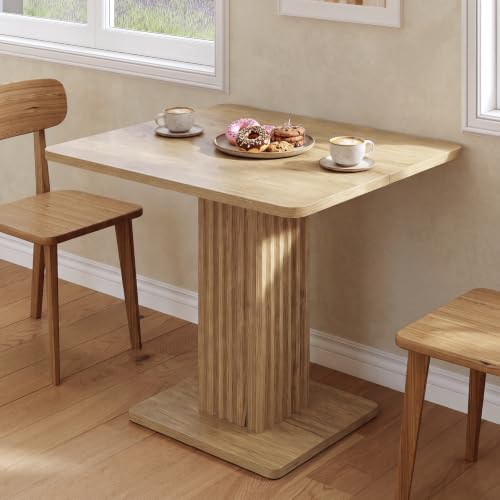
LITTLE TREE Dining Table, 35.43" L x 31.5" W Small Kitchen Table | Wood Dining Table for 2-4 People with Fluted Base, Modern Farmhouse Dinner Table for Dining Room Kitchen Living Room
Check price on Amazon
Furniture Dash Wood Dining Table Corona
Check price on Amazon
Garvee 71" Wood Dining Table for 2/4/6/8, Large Rectangular Kitchen Table | Anti-Collision Curved Corner Dinner Table with Recessed Footrest for Dining Room, Study & Home Office, Walnut Brown & Black
Check price on AmazonFrequently Asked Questions
What size is considered a small real wood dining table?
A small real wood dining table typically ranges from about 30 to 48 inches in length or diameter and seats two to four people. Rectangular models around 36 to 48 inches long and round models around 30 to 42 inches in diameter are the most common compact sizes for apartments, breakfast nooks, and open-plan kitchens.
Is solid wood better than veneer for a small dining table?
Solid wood offers greater durability, refinishing potential, and a natural grain that ages gracefully. High-quality veneer over engineered wood can look similar and resist warping in humid rooms, but it cannot be sanded and refinished as many times. For a long-term investment in a compact space, solid wood is generally the more resilient choice.
Which wood species works best for a small dining table?
Oak and maple are excellent for high-traffic homes thanks to their hardness. Walnut and teak add warmth and natural moisture resistance, while pine and mango offer a softer, more relaxed look at a lighter weight. Choose based on your durability needs, desired grain character, and the room's color palette.
How much clearance do I need around a small dining table?
Allow at least 36 inches of clearance between the table edge and walls or other furniture so chairs can pull out and people can walk behind them. If space is tight, 30 inches is a workable minimum for occasional use. Round tables can be placed slightly closer to walls because they have no corners.
Can a small real wood dining table be extended or expanded?
Yes. Many compact tables use butterfly leaves, drop-leaf sections, or removable extension panels to seat extra guests when needed. Extendable designs are ideal for small spaces because they stay compact day to day and expand for holidays or entertaining.
Ready to Choose Your Small Real Wood Dining Table?
You now have the material knowledge, sizing rules, and style cues to pick a compact solid wood table that fits your room and your daily life. Explore our curated recommendations to compare options side by side.
Explore Recommended Tables