
Small Dining Room Table for 6: Compact Seating Guide
Everything you need to choose a six-seater table that fits a tight dining room without sacrificing comfort, function, or style. Compare compact shapes, seating layouts, and smart space-saving features.
Explore Compact OptionsWhy a small dining room table for 6 deserves careful planning: Seating six people in a compact room is entirely achievable, but it requires balancing table dimensions, chair clearance, and room flow. This guide walks you through the practical decisions so you can select a six-seater that feels spacious in use and unobtrusive day to day.
What Counts as a Small Dining Room Table for 6?
A six-seater table generally needs to accommodate six place settings with enough elbow room for comfortable dining. In compact rooms, that means prioritizing efficient shapes and smart seating arrangements over oversized surfaces. The smallest practical rectangular six-seater designs usually start around 60 inches long, while round tables begin near 54 inches in diameter.
What makes a table feel "small" is not only its footprint but also how it interacts with the room. Chairs that tuck fully under the table, pedestal bases that free up legroom at the corners, and extendable mechanisms that keep the everyday footprint reduced all contribute to a more usable compact dining space. If you are still comparing overall room layouts, the dining table space planning guide provides a helpful foundation for measuring clearance and traffic flow.
Buyers researching a compact six-seater are typically past the discovery stage and now comparing specific configurations. This guide focuses on the decisions that matter most: shape, base type, seating arrangement, and how each choice performs in a smaller dining room.
Recommended Small Dining Tables for 6
⚠️ AFFILIATE DISCLOSURE: This website contains affiliate links. As an affiliate Associate, we earn from qualifying purchases. If you make a purchase through these links, we may receive a small commission at no additional cost to you. Read our full affiliate policy.

Feonase 5-Piece Dining Table Set for 4-8 People, 63" Large Extendable Kitchen Table Set with 2 Benches and 2 Square Stools, Dining Room Table with MDF Wood Board, Easy Assembly, Black
Check price on Amazon
DUMOS Dining Chairs Set of 6, PU Leather Kitchen Chairs for Living Room | Upholstered, Wooden Legs, Padded Seat, High Back, Armless, Modern Accent, Dining Room, Restaurant, Brown
Check price on Amazon
Zevemomo 6-Piece Solid Wood Dining Table Set, Wooden Legs Table Set, Brown | Including 1 Dining Table, 4 Upholstered Chairs and 1 Bench, Dining Table Sets for 6, Table Set for Dining Room, Kitchen
Check price on Amazon
DUMOS Dining Chairs Set of 6, Fabric High Back Upholstered Kitchen Chair | Farmhouse Wooden Legs, Armless Modern Accent Side Parsons Chair, Padded Seat, Living Room, Dining Room, Restaurant, Beige
Check price on Amazon
Tribesigns 63" Dining Table for 4 to 6, White and Gold Kitchen Table | Modern Large Rectangular Dinner Table Kitchen & Dining Room Furniture with Faux Marble Tabletop and Geometric Legs
Check price on Amazon
Garvee Large Dining Table for 6-8 People, 71" Wooden Kitchen Table | Kitchen Table with Sturdy Metal Frame, Dining Room Table for Dining Room, Kitchen, Black Leg & Grey
Check price on Amazon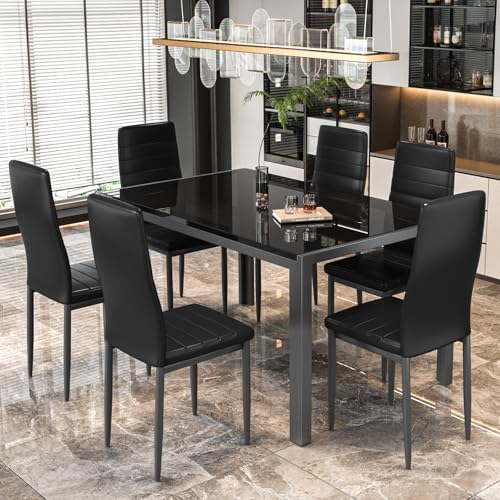
DKLGG Glass Dining Table Set for 6, Modern Kitchen Table with 6 PU Leather Chairs, 7-Piece Space Saving Dining Room Table Set for Kitchen, Living Room, Black
Check price on AmazonBest Table Shapes for a Small Six-Seater Dining Room
The shape you choose has a direct impact on how cramped or open the room feels. Each shape solves a different spatial challenge, so match the table geometry to the room's dimensions and traffic patterns.
Rectangular Tables
Rectangular six-seaters are the most space-efficient for seating density. A compact rectangle places three chairs per long side or two per side plus one at each end, and it slides neatly against a wall when not fully in use. Narrow dining rooms benefit most from this shape because the table can align with the room's length. For rooms where width is the constraint, a slim dining table for 6 keeps the profile lean while still seating everyone.
Round Tables
Round tables soften tight rooms because they remove sharp corners and let people circulate around the perimeter more naturally. A six-seater round table generally needs at least a 54-inch diameter, though some designs squeeze six around a slightly smaller top with careful chair selection. Round shapes work best in square rooms or areas with a central focal point. If you are weighing the trade-offs, the round vs rectangular dining table comparison breaks down the practical differences.
Square and Oval Tables
Square tables offer a balanced footprint that suits compact corners, though seating six around a square top can feel tight unless the table is generously proportioned. Oval tables split the difference: they retain the length of a rectangle while softening the corners for easier movement. Both shapes are worth considering when the room has an unusual layout.
Shape Comparison for Compact Six-Seater Tables
| Shape | Best For | Seating Layout | Footprint Efficiency |
|---|---|---|---|
| Rectangular | Narrow or long rooms | Three per side, or two per side plus ends | High |
| Round | Square rooms and central layouts | Evenly spaced around the perimeter | Moderate |
| Square | Corner placements and balanced rooms | Two per side with corner seating | Moderate |
| Oval | Rooms needing softened traffic flow | Three per side with rounded ends | Moderate to high |
Key Dimensions and Clearance for Six-Seater Tables
Getting the numbers right prevents the most common frustration with compact dining rooms: buying a table that technically seats six but leaves no room to pull chairs out. Use these guidelines as a starting point, then adjust for your specific chair sizes and room layout.
Practical Dimension Guidelines
- Table length: 60 to 72 inches for a rectangular six-seater, depending on seat width.
- Table width: 32 to 36 inches minimum for comfortable place settings across the table.
- Round diameter: 54 to 60 inches for six diners.
- Wall clearance: 36 inches recommended for chairs to pull out; 30 inches is a workable minimum with tuck-under chairs.
- Seat width: 24 inches per person is a comfortable target; 22 inches is acceptable in tight setups.
Clearance matters as much as the table itself. A table that fits the room but leaves only 18 inches behind each chair will feel unusable for everyday dining. Measure the room, then subtract the table depth and the required clearance on both sides before deciding on length. If the space is especially constrained, a 44-inch round pedestal dining table shows how a pedestal base can maximize legroom and chair tuck-in.
Base Types and Smart Features for Compact Rooms
The table base often makes the difference between a six-seater that feels tight and one that feels surprisingly generous. Leg placement determines where chairs can tuck, and the right base can free up several inches of usable space at each end.
Pedestal and Trestle Bases
Pedestal bases eliminate corner legs, which means diners at the ends of the table have unobstructed legroom and chairs can push in further. Trestle bases achieve a similar effect with a central support structure and are especially common in farmhouse and rustic designs. For a compact six-seater, a pedestal table or a trestle-style rectangle can make the seating arrangement noticeably more comfortable.
Extendable Tables
An extendable table is often the smartest choice for a small dining room that occasionally hosts six or more. Day to day, the table stays in its reduced footprint; when guests arrive, leaves or a butterfly mechanism expand the surface. Check whether leaves store inside the table or need separate storage, and confirm the extension mechanism is smooth enough for regular use. The six-seater extendable to eight guide explores how this flexibility works in practice.
Storage-Integrated Designs
Storage features help compact dining rooms stay organized. Benches with built-in storage, tables with drawers, and drop-leaf designs that fold down when not in use all reduce the need for separate furniture. A small dining table with storage can be a practical anchor for a room where every square foot counts.
Seating Arrangements That Work in Tight Spaces
How six people are distributed around the table affects comfort far more than raw dimensions. A few arrangement strategies can make a compact table feel more spacious than its measurements suggest.
- Mix chairs and benches: A bench on one side keeps chairs from needing pull-out clearance and seats multiple people in less depth. Explore dining benches with storage for added utility.
- Use armless chairs: Armless chairs tuck in more completely and allow closer spacing between seats.
- Stagger end seats: Placing the end seats slightly offset can improve elbow room on compact rectangles.
- Choose narrow-profile chairs: Slimmer chair backs and seats reduce the overall seating envelope without sacrificing comfort.
Combining seating types is also an opportunity to add visual interest and flexibility. A mixed chairs dining table setup can balance a bench, upholstered chairs, and lightweight side chairs to suit both everyday use and hosting.
Materials and Finishes for Small Dining Rooms
In a compact room, the table's visual weight matters. Lighter finishes, glass tops, and open bases make a six-seater feel less dominant, while dark wood and heavy stone create a stronger anchor but can crowd the eye.
- Light wood tones: Oak, ash, and pale mango woods keep the room feeling open.
- Glass and faux stone: A glass or faux marble top reflects light and reduces visual bulk. See the faux marble dining table set for an example of this approach.
- Matte finishes: Matte surfaces hide fingerprints and daily wear better than high-gloss finishes in a frequently used compact space.
- Metal frames: Slender metal legs and frames contribute to an airy footprint.
Durability also matters in a table that will see daily use from six people. Solid wood tops and sealed stone surfaces handle regular wear well, while veneered surfaces require more careful maintenance. The dining table materials and finishes hub covers the trade-offs in detail.
Buying Checklist for a Compact Six-Seater
Before finalizing a selection, run through this checklist to confirm the table will work in your specific room and daily routine.
Verify Before You Buy
- Measure the room and subtract required wall clearance on all sides.
- Confirm the table seats six with your chosen chair widths.
- Check that chairs tuck under the table when not in use.
- Decide whether an extendable mechanism is needed for hosting.
- Confirm the base type leaves enough legroom at the ends.
- Match the finish and visual weight to the room's light and size.
- Review assembly requirements and whether the table fits through doorways.
For a broader pre-purchase checklist, the first dining table checklist covers the foundational decisions that apply to any table size.
Related Compact Dining Table Guides
Frequently Asked Questions
What is the smallest dining table that seats 6?
The smallest practical six-seater designs typically measure around 60 to 64 inches long and 32 to 36 inches wide. Round tables starting at roughly 54 inches in diameter can also seat six when chairs are tucked in carefully. Actual requirements depend on seat width and clearance needed for movement.
Is a round or rectangular table better for a small dining room for 6?
Round tables improve flow in compact rooms because they lack sharp corners and allow easier circulation. Rectangular tables typically offer more usable surface per seat and fit neatly against a wall or in narrow spaces. The better choice depends on room shape and traffic patterns.
How much clearance do I need around a small dining table for six?
Plan for at least 36 inches of clearance between the table edge and walls or nearby furniture to allow chairs to pull out comfortably. In very tight rooms, 30 inches can work if chairs slide under the table, but 36 inches remains the recommended standard.
Can an extendable table work in a small dining room?
Yes. An extendable table is often the best solution for compact spaces because it remains a smaller footprint day to day and expands only when hosting six or more guests. Consider leaf storage and extension mechanism quality before selecting a model.