
Small Area Dining Table Set: Compact Solutions for Tight Spaces
Everything you need to choose a space-saving dining table set for apartments, small kitchens, and cozy dining nooks — from sizing and layout to smart folding features and material durability.
Explore Recommended SetsWhy a small area dining table set deserves careful planning: In compact homes, the dining table is often the hardest-working piece of furniture. It needs to seat your household comfortably, leave clear walkways, and adapt when guests arrive — all without overwhelming the room. This guide walks you through the decisions that matter most so you can choose a compact dining set with confidence, rather than guessing and living with the consequences.
Recommended Small Area Dining Table Sets
⚠️ AFFILIATE DISCLOSURE: This website contains affiliate links. As an affiliate Associate, we earn from qualifying purchases. If you make a purchase through these links, we may receive a small commission at no additional cost to you. Read our full affiliate policy.

Dining Table Set for 4,Kitchen Table and Chairs for 4, Round Dining Room Table with Upholstered Chairs, 5 Piece Space Saving Circle Wood Kitchen & Dining Room Dinner Dinette Table Set (Vintage, 42In)
Check price on Amazon
LUXOAK 3-Piece Corner Dining Set with Hidden Storage, Black Oak | Breakfast Nook, L-Shaped Corner Bench, Hidden Storage, Space Saving Design for Small Space, Kitchen Dining Room Furniture
Check price on Amazon
FAVSH Dining Table Set for 4, Kitchen Table with 2 Benchs, Grey | Modern Functional 3 Piece Space-Saving Dining Room Table Set for Apartment, Breakfast Nook, Small Space
Check price on Amazon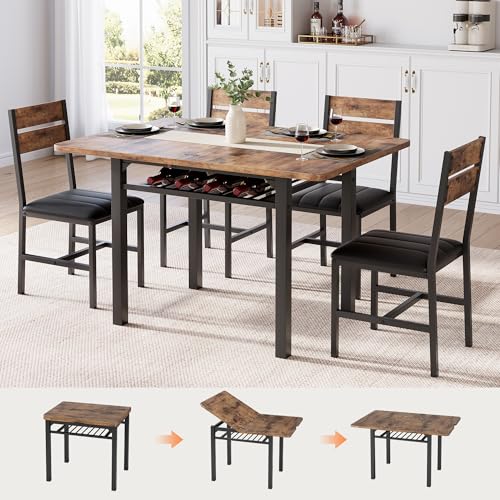
MapleGrace Extendable Dining Table Set for 4 with Built-in Shelf Rack Brown | Kitchen Table Set with 4 PU Leather Upholstered, Wood Dining Room Chairs for Dining & Small Spaces
Check price on Amazon
IRONCK Dining Table Set for 4, Kitchen Table with Upholstered Bench and 2 Chairs, Kitchen Table and Chairs Set for Small Space, Apartment, Grey
Check price on Amazon
34.6" Round Dining Table Set for 3, Modern Kitchen Coffee Table Set, Walnut | Space-saving MDF Top, 3 Beige Fabric Metal Frame Chairs, Small Dining Set, Great for Dining Room, Office, Sturdy & Seamless
Check price on Amazon
Best Choice Products 3-Piece Modern Dining Set, Space Saving Dinette for Kitchen, Dining Room, Small Space w/Steel Frame, Built-in Storage Rack - Medium Brown/Black
Check price on Amazon
IRONCK Dining Table Set for 4, Extendable Kitchen Table Chairs Set of 4 | Dining Room Table with 4 Upholstered Chairs, Folding for Small Space, Apartment, Walnut
Check price on AmazonStart With the Room, Not the Table
Most small-space dining mistakes happen before a single item is purchased. The table is chosen first, and the room is forced to accommodate it. Reversing that order — measuring the space, mapping the walkways, and then selecting a set — is the single most effective way to avoid regret. A compact dining set only works when it fits the room's geometry, not just its floor area.
The Clearance Rule That Prevents Claustrophobia
The most cited guideline in dining room planning is to leave roughly 30 to 36 inches of clearance between the table edge and the nearest wall or furniture piece. This allows a chair to pull out and a person to walk behind it. In genuinely tight rooms, some designers accept 24 inches as a compromise — but that only works if the chairs tuck fully under the table when not in use. If your space cannot accommodate even that reduced clearance, a folding or drop-leaf design becomes essential rather than optional.
Measure the Path, Not Just the Footprint
A table can fit the floor and still ruin the room if it blocks the natural walking path between the kitchen, hallway, and living area. Before buying, trace the route people actually take through the space. If the dining set interrupts that route, the room will feel smaller every day, regardless of the table's dimensions. For a deeper walkthrough of this process, see the guide on dining table options for small spaces.
Choosing the Right Shape for a Small Area
Shape determines how efficiently a table uses a compact room. Two tables with identical seating capacity can feel dramatically different depending on their outline, corner behavior, and how chairs relate to the table edge.
Round Tables
No corners to navigate around, and seating is evenly distributed. A round table often feels more social and can squeeze into awkward corners where a rectangle would leave dead space.
Square Tables
Efficient for two to four people and easy to push against a wall. A square set works especially well in breakfast nooks and open-plan corners.
Rectangular Tables
Best when the room is longer than it is wide. A narrow rectangle can run parallel to a wall and preserve a walking lane better than a wider shape.
For households of two, a compact square or small round set is usually the most space-efficient choice. For four, a small rectangle or a 4-seater round set balances seating and circulation. The guide to a small 4-person dining table covers the trade-offs in more detail, and a circle 4-seater dining table is worth considering if corners are a constraint.
Quick Reference: Seating and Footprint
| Seating | Typical Shape | Best For | Space Consideration |
|---|---|---|---|
| 2 people | Square or small round | Apartments, kitchen corners, couples | Can tuck against a wall; minimal clearance needed |
| 4 people | Small rectangle or round | Small families, regular guests | Needs a clear pull-out zone on at least two sides |
| 4–6 people | Drop-leaf or extendable | Mixed daily and occasional hosting | Requires flexible footprint; check leaf storage |
Smart Features That Earn Their Space
In a small area, flexibility is worth more than any single fixed dimension. A set that can change shape or shrink its footprint lets the same room serve daily meals and occasional gatherings without feeling cramped in between.
- Drop-leaf tables: One or both sides fold down, turning a four-seater into a narrow console against the wall. Ideal when the dining area doubles as a walkway.
- Extendable tables: A central leaf or butterfly mechanism adds seating for guests, then collapses back to a compact daily size. Check whether the leaf stores inside the table or separately.
- Folding tables: The most space-efficient option when the table is only needed occasionally. Less rigid than fixed tables, but excellent for very tight rooms.
- Tuck-under chairs: Chairs that slide fully beneath the tabletop free up floor space when the set is not in use — a small detail with a large practical effect.
- Storage-integrated designs: A narrow table with shelves or drawers can replace a separate sideboard, reducing the number of pieces competing for floor space.
Editorial note: Flexible mechanisms vary considerably by tier. Entry-level folding sets often use simpler hinges and thinner tops, while mid-range and premium models tend to offer smoother mechanisms, tighter tolerances, and sturdier joints. If the table will be folded and unfolded daily, a balanced-tier or higher model is usually the more durable long-term investment.
Drop-leaf designs are particularly popular in compact homes. A small drop-leaf dining table and chairs set can sit flush against a wall for most of the day, then open up for meals. For two-person households, a small drop-leaf dining table for 2 is often the most space-efficient configuration available. If you prefer a solid build with the same flexibility, a solid wood drop-leaf dining table balances durability with a foldable footprint.
Materials and Durability in Compact Sets
Small dining sets are used intensively — they are often the only table in the home, serving meals, work, and occasional hosting. That makes material choice more consequential than it might seem. A table that wobbles, scratches, or stains quickly becomes a daily irritation in a room where it dominates the visual field.
Wood and Wood-Composite Tops
Solid wood remains the most durable choice for a long-term investment, with oak, walnut, and teak offering strong grain character and repairability. Veneered and composite tops are lighter and more consistent in appearance, but they are less forgiving of moisture and impact. In a compact set, where the table is frequently folded or moved, solid construction generally holds up better over time.
Glass and Stone Tops
Glass tops visually lighten a small room because they let light and sightlines pass through, which can make a tight dining area feel less enclosed. The trade-off is care and perceived fragility. Stone tops — marble, granite, and quartz — are heavy-duty and scratch-resistant, but they add visual weight and require sealing or careful cleaning depending on the material. A small white round dining table in a painted or composite finish is a common middle path that keeps the room bright without the maintenance of natural stone.
Metal Frames and Legs
Metal frames are common in compact and folding sets because they allow slimmer profiles and stronger joints at small dimensions. Hairpin and slim round-leg designs are especially popular in tight spaces because they open up floor visibility. A hair pin leg dining table and a round leg dining table are both worth considering if you want the room to feel less crowded at floor level.
Layout Ideas for Compact Dining Areas
The same small dining set can feel generous or cramped depending on how it is placed. A few layout patterns recur in successful compact rooms.
- Wall-anchored set: Push a square or drop-leaf table against a wall and use the open side for seating. This works best when the room is a pass-through or doubles as a kitchen.
- Corner nook: A round or small square table in a corner, paired with a bench on one side, maximizes seating while keeping the center of the room clear.
- Bench-and-chair pairing: A bench along the wall side of the table reduces the pull-out clearance needed, because people slide in rather than pulling chairs back. A small dining table and bench set is a practical choice for narrow rooms.
- Open-plan divider: In a studio or open-plan layout, a narrow rectangular table can act as a soft divider between the kitchen and living zone without fully closing off either area.
- Window-side placement: Positioning the table near a window borrows natural light and makes a compact dining area feel larger and more intentional.
For rooms that are long and narrow, a narrow dining table with storage can replace a separate shelving unit and reduce clutter. A small rectangle dining table with chairs running parallel to the long wall often preserves the best walking lane. If the room has an awkward corner, a triangle dining table set is a niche but genuinely space-efficient solution.
Seating That Cooperates With a Small Room
Chairs are half the footprint of any dining set, yet they are often chosen last. In a compact area, chair design matters as much as the table itself.
- Armless chairs tuck under the table more completely and reduce the effective footprint of the set.
- Backless stools or benches are the most space-efficient seating and work well on the wall side of a table.
- Stackable chairs can be moved out of the way when the table is not in use, freeing floor space in a multipurpose room.
- Light-colored or open-frame chairs visually recede, making the dining area feel less dense.
A 2-person square dining table paired with two armless chairs is one of the most efficient everyday configurations for a single person or couple. For slightly larger households, a small circle dining table set for 4 keeps the seating arrangement compact while still allowing four people to eat together. If you need occasional extra seating without a larger table, a small dining table with leaf adds capacity only when required.
When the Small Dining Area Extends Outdoors
In apartments and homes with patios or balconies, the outdoor space can serve as an overflow dining area, which takes pressure off the indoor set. A small dining table for patio or a small folding outdoor dining table can host guests while the indoor table stays compact. This is especially useful in warm climates where outdoor dining is comfortable for much of the year, and it lets the indoor set remain genuinely small rather than being oversized for occasional hosting.
For homes where the dining table must double as a workspace or craft surface, a adjustable height dining table or a pull-out dining table can add flexibility without adding furniture. A folding design is also useful in multipurpose rooms where the table needs to disappear entirely between uses.
A Practical Buying Checklist
Before committing to a small area dining table set, run through these checks. They catch the most common sources of dissatisfaction in compact dining rooms.
- Measure the room's usable floor area, not just the wall length.
- Confirm the clearance between the table edge and walls or furniture — aim for 30 inches where possible, 24 inches as a minimum.
- Check that chairs tuck fully under the table when not in use.
- If choosing a folding or extendable set, verify how the mechanism operates and where any leaf is stored.
- Consider the table's visual weight: glass and light finishes recede, dark stone and heavy wood dominate.
- Match the set to how often it will be folded, moved, or extended — frequent use justifies a sturdier tier.
- Confirm that the chair height matches the table height for comfortable seating.
Frequently Asked Questions
What is the smallest dining table that still seats four people?
A compact square or round table around 36 inches across can seat four, provided the chairs are armless and tuck under the table. Rectangular tables can seat four at slightly smaller widths if the length is sufficient, but the seating becomes tighter. The key constraint is not the tabletop alone but the clearance needed to pull chairs out.
Is a round or square table better for a small room?
Round tables generally handle corners and tight circulation better because there are no sharp edges to walk around. Square tables are more efficient when pushed against a wall. If the room has a clear walking path on multiple sides, round is usually more forgiving; if the table sits against a wall, square often uses the space more effectively.
How much clearance do I need around a small dining table?
Aim for about 30 inches between the table edge and the nearest wall or furniture to allow comfortable chair pull-out and walking space. In very tight rooms, 24 inches can work if chairs tuck under the table when not in use. Below that, a drop-leaf or folding design is usually the better solution.
Are drop-leaf tables sturdy enough for daily use?
Well-built drop-leaf tables are sturdy enough for daily use, but mechanism quality varies by tier. Entry-level models often use simpler hinges, while mid-range and premium sets tend to have smoother, more durable folding hardware. If the table will be folded daily, a balanced-tier or higher model is the safer long-term choice.
Can a small dining set work in an open-plan apartment?
Yes. In open-plan spaces, a narrow rectangular or round table can act as a soft divider between the kitchen and living area without closing off either zone. Keeping the table visually light — glass, light wood, or slim legs — helps it blend into the broader room rather than reading as an obstacle.
Should I choose a bench instead of chairs to save space?
A bench along the wall side of the table reduces the pull-out clearance needed, because people slide in rather than pulling a chair back. This can make a meaningful difference in narrow rooms. The trade-off is that benches are less flexible for individual seating preferences, so many compact setups pair one bench with two chairs.
Final thought: A small area dining table set succeeds when it is chosen for the room's real constraints — clearance, circulation, and daily use — rather than for how it looks in a showroom. Measure carefully, prioritize flexibility where the room demands it, and choose a tier that matches how hard the table will work. Done well, a compact dining set becomes the most-used and most-loved piece in the home.