
Size of a 6 Person Dining Table: The Complete Sizing Guide
Choosing the right size for a six-seat dining table is one of the most important decisions in planning a dining room or kitchen. This guide breaks down the exact dimensions, clearance requirements, and layout considerations so you can select a table that seats six comfortably without overwhelming your space.
Quick answer: A standard rectangular 6 person dining table measures about 72 inches long by 36 to 40 inches wide. Round versions run 54 to 60 inches in diameter, and square versions measure approximately 60 inches per side. Always add at least 36 inches of clearance on all sides for chairs and walkways.
Recommended 6 Person Dining Tables
⚠️ AFFILIATE DISCLOSURE: This website contains affiliate links. As an affiliate Associate, we earn from qualifying purchases. If you make a purchase through these links, we may receive a small commission at no additional cost to you. Read our full affiliate policy.
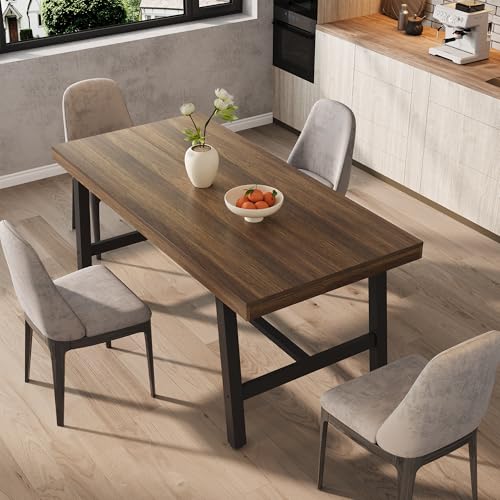
Garvee 63" 6 Person Dining Table, Industrial Kitchen Table, Brown | 6 Person Dining Table 63", Industrial Kitchen Table, Sturdy Farmhouse Style, Reinforced Base, Adjustable
Check price on Amazon
Feonase 5-Piece Dining Table Set for 4-8 People, 63" Large Extendable Kitchen Table Set with 2 Benches and 2 Square Stools, Dining Room Table with MDF Wood Board, Easy Assembly, Black
Check price on Amazon
Garvee 78.7″ Dining Table for 8-10 People, Large Kitchen Table (Only Table) | Brown Industrial Dinner Table with Heavy-Duty Steel Frame and High-Density MDF Thick Tabletop for Kitchen, Dining Room
Check price on Amazon
Feonase 5-Piece Dining Table Set for 4-8 People, 63" Extendable Kitchen Table with 2 Benches and 2 Square Stools, Mid-Century Modern Wooden Dining Room Table, Space-Saving, Walnut
Check price on Amazon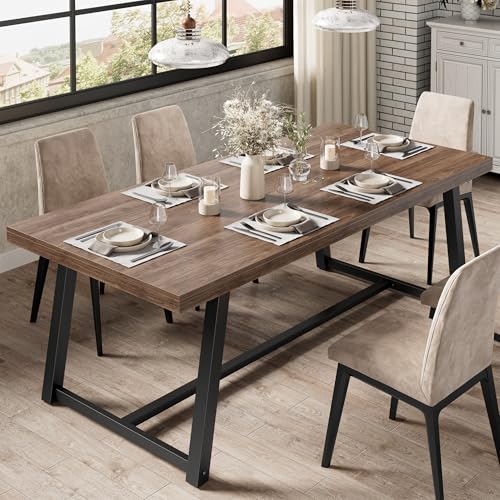
IRONCK 71" Dining Table for 6-8 People, Industrial Kitchen Table with Sturdy Metal Frame, Rectangular Brown Wood Dinner Table for Dining Room
Check price on Amazon
GarveeHome 5-Piece Dining Table Set for 4-8 People, 63 in Large Extendable Kitchen Table Set with 2 Benches and 2 Square Stools, Modern Dining Room Furniture Sets, Easy Assembly, Espresso
Check price on Amazon
Rectangle Dining Table for 4-6 People,Wooden Table with Heavy Duty Legs
Check price on Amazon
Tribesigns Modern Dining Table for 6 to 8 People, 71" Large Kitchen Dining Table with Wood Pedestal Base, Rectangular Long Dinner Table for Kitchen, Dining Room, Living Room, Rustic Brown
Check price on AmazonWhy the Size of a 6 Person Dining Table Matters
The dimensions of your dining table affect far more than aesthetics. A table that is too small forces guests to bump elbows and leaves no room for serving dishes. A table that is too large crowds the room, blocks walkways, and makes everyday movement awkward. Getting the size right is the foundation of a functional dining space that works for both weeknight dinners and holiday gatherings.
Six-seat tables sit in a sweet spot for many households. They comfortably accommodate a family of four with room for guests, and they scale well from compact apartments to dedicated dining rooms. Understanding the standard measurements helps you match a table to your room, your chairs, and your lifestyle.
If you are still comparing shapes and layouts, our broader guide to dining table size charts and the dining table space planning guide provide useful context before you settle on a specific design.
Standard Dimensions of a 6 Person Dining Table
The exact measurements vary by shape, but the industry has well-established standards that balance comfort and efficiency. The table below summarizes the typical dimensions you should expect across common configurations.
| Table Shape | Typical Length / Diameter | Typical Width | Best For |
|---|---|---|---|
| Rectangular | 72 inches | 36 to 40 inches | Formal dining rooms, hosting |
| Round | 54 to 60 inches diameter | Equal to diameter | Conversation-focused, compact rooms |
| Square | 60 inches | 60 inches | Open-plan and square dining areas |
| Oval | 72 to 78 inches | 36 to 42 inches | Soft-edged formal spaces |
| Extendable | 48 to 60 inches closed | 36 to 40 inches | Flexible everyday and hosting use |
These figures assume standard dining chairs with a seat height of 17 to 19 inches and a table height of 28 to 30 inches. If you use benches or oversized upholstered chairs, you may need slightly more space. For a deeper look at height coordination, see our dining table chair height guide.
How Much Space Each Person Needs
The single most useful rule in dining table sizing is this: allow 24 inches of table edge per person. That number refers to the linear width of the table edge each diner occupies. It gives enough room for a standard place setting, including a dinner plate, glass, and cutlery, without crowding neighbors.
For six people seated along a rectangular table, the math works out neatly. Three people per long side at 24 inches each equals 72 inches of length. That is why 72 inches is the benchmark for a six-seat rectangular table. If you prefer more generous elbow room, plan for 28 to 30 inches per person, which pushes the ideal length toward 84 inches.
Depth matters too. A table width of 36 inches gives each diner 18 inches of personal depth, which is comfortable for a full place setting. Narrower tables around 30 to 32 inches can work for casual dining but feel tight when serving multiple dishes.
Clearance and Walkway Requirements
The table itself is only half the equation. The space around it determines whether the room feels comfortable or cramped. As a baseline, allow 36 inches of clearance from the table edge to any wall or large furniture piece. This gives diners enough room to pull out chairs and sit down without bumping into obstacles.
For walkways where people pass behind seated diners, increase the clearance to 42 to 48 inches. In busy households or rooms with traffic flowing through, the larger number prevents constant chair-shuffling. If your room is tight, consider a round table, which eliminates corners and reduces the effective footprint.
Our detailed dining table walkway clearance guide explains how to measure these zones precisely and how to plan traffic flow in open-plan spaces.
Measuring Your Room Before You Choose
Before committing to a table size, measure your room in three steps. First, measure the available floor area in both directions. Second, subtract 36 inches from each side for chair clearance. What remains is your maximum table footprint. Third, compare that footprint against the standard dimensions above.
For example, a room that is 12 feet by 10 feet offers 144 inches by 120 inches of floor space. Subtracting 36 inches on each side leaves a maximum table footprint of 72 inches by 48 inches. That comfortably fits a 72-inch rectangular table with room for chairs on all sides.
If your measurements come up short, consider an extendable table that stays compact for daily use and expands for guests. Our guide to extendable dining tables explains how these designs balance everyday efficiency with hosting flexibility.
Choosing the Right Shape for Six Seats
Shape influences both seating comfort and room flow. Each configuration has distinct strengths, and the best choice depends on your space and how you use the table.
Rectangular Tables
Rectangular tables are the most common choice for six seats. They use room length efficiently, accommodate serving platters easily, and suit formal dining rooms. A 72-inch by 36-inch model is the classic configuration. For larger gatherings, explore walnut 8 seater dining table options that scale up gracefully.
Round Tables
Round tables encourage conversation because every diner can see everyone else. A 54 to 60 inch diameter seats six comfortably. They work especially well in compact rooms and square spaces. For a deeper comparison, see our round dining table guide.
Square Tables
Square tables offer a balanced look in open-plan layouts. A 60-inch square seats six with two diners per side and two on the ends. They suit rooms where symmetry matters. If you need more capacity, an extra large square dining table can seat larger groups.
Oval Tables
Oval tables soften the visual weight of a long rectangular design while preserving similar seating capacity. A 72 to 78 inch oval seats six comfortably and suits traditional interiors. Stone-top versions like a sintered stone oval dining table combine durability with elegance.
Material and Design Considerations
Once you have settled on dimensions, the material and construction of the table affect both durability and how the table feels in the room. Solid wood tables, such as a solid oak or teak design, offer warmth and longevity. A teak outdoor dining table with bench extends that durability to patios and sunrooms.
Stone and composite tops bring a different character. A concrete top dining table delivers a modern industrial feel, while a concrete top round dining table softens that aesthetic with a circular profile. For a lighter, airier look, an extendable dining table in light wood keeps the room visually open.
Consider the weight and footprint of these materials too. Stone tops are heavy and require sturdy frames, while wood tables are easier to move and rearrange. Our materials and finishes hub covers the trade-offs in detail.
Special Layout Situations
Not every room follows the standard rectangular footprint. Some spaces are long and narrow, others are perfectly square, and some are outdoor patios. Each requires a tailored approach.
For long, narrow rooms, a table measuring 120 inches by 48 inches can stretch along the length of the space while maintaining adequate clearance on the shorter sides. Our 120 x 48 dining room table guide explores this configuration in depth.
Outdoor spaces benefit from weather-resistant materials. A square outdoor dining table set provides a coordinated solution for patios and decks, while a 54 inch round dining table with extension adapts from everyday meals to larger gatherings.
For compact dining nooks, our compact dining nook arrangement guide shows how to fit a six-seat table into tighter footprints without sacrificing comfort.
Common Sizing Mistakes to Avoid
Even careful planners run into the same pitfalls. Avoiding these mistakes saves time, effort, and the hassle of returns.
- Ignoring chair clearance: Measuring only the table footprint and forgetting the space chairs need is the most common error. Always add clearance on all four sides.
- Choosing by seat count alone: A table labeled for six seats may be too wide or too long for your room. Check the actual dimensions, not just the seating capacity.
- Overlooking chair dimensions: Oversized upholstered chairs need more space than slim wooden ones. Measure your chairs before finalizing the table size.
- Forgetting traffic flow: A table that fits the room may still block a doorway or main walkway. Map the room's traffic patterns before you commit.
- Underestimating serving space: A table sized tightly for six leaves no room for serving dishes in the center. Add a few inches of buffer for platters and centerpieces.
Our dining table buying mistakes guide covers additional pitfalls that trip up first-time buyers.
Frequently Asked Questions
What is the standard size of a 6 person dining table?
A standard rectangular 6 person dining table measures roughly 72 inches long by 36 to 40 inches wide. Round versions typically measure 54 to 60 inches in diameter, while square versions measure around 60 inches per side.
How much clearance do I need around a 6 person dining table?
Allow at least 36 inches of clearance from the table edge to walls or furniture for comfortable chair use and walkway traffic. A minimum of 42 to 48 inches is preferable for busy households.
How much room does each person need at a dining table?
Plan for 24 inches of table edge width per person for comfortable dining. Allow 28 to 30 inches for more generous elbow room and formal settings.
Can a 6 person dining table fit in a small room?
Yes. Round tables and extendable or drop-leaf designs are the most space-efficient choices for compact rooms. Measure the room carefully and account for chair clearance before finalizing your layout.
Final Thoughts on Sizing a Six-Seat Table
The right size of a 6 person dining table balances seating comfort, room proportions, and everyday practicality. Start with the 72-inch by 36-inch benchmark for rectangular tables, adjust for shape and material, and always measure clearance before you buy. With these guidelines, you can choose a table that serves your household for years to come.
For further reading, explore our dining table size chart and space planning guide to refine your layout, and review our care and maintenance hub to keep your new table in top condition.