
Extendable Dining Table in Light Wood: The Complete Buying Guide
Flexible seating, bright natural tones, and a table that adapts to everyday meals and special gatherings. Here is everything you need to know before choosing a light wood extendable dining table.
Explore MechanismsWhy light wood extendable tables stand out: Light wood finishes reflect more natural light, making compact dining rooms and open-plan kitchens feel larger and airier. Combined with an extension mechanism, a light wood table delivers both visual openness and practical seating flexibility, which is why it remains one of the most requested dining table configurations for modern homes.
What Makes an Extendable Light Wood Table a Smart Choice
An extendable dining table in light wood solves a common household problem: you need a compact table most days but extra seating when guests arrive. Instead of owning two tables, a single piece expands on demand. Light wood tones such as oak, ash, beech, and birch amplify this practicality by keeping the room visually bright even when the table is fully extended.
This combination works especially well in smaller dining areas, apartments, and open-concept layouts where a dark, bulky table would dominate the space. The pale surface also pairs easily with almost any chair style, from upholstered fabric seats to simple wooden benches. If you are still deciding between fixed and expanding designs, our guide on extendable versus fixed dining tables breaks down the trade-offs in detail.
For buyers who prefer a warm but still relatively light tone, a light natural wood dining table offers a balanced middle ground between bright blond finishes and deeper browns. Understanding where your preferences fall on that spectrum is the first step toward a confident purchase.
Extension Mechanisms Explained
The mechanism is the heart of any extendable table. It determines how easy the table is to expand, how stable it feels when open, and how much storage the extra leaf requires. There are three main types you will encounter.
Butterfly Leaf (Self-Storing)
A butterfly leaf folds in half and stores inside the table when not in use. You pull the two halves apart, flip the leaf up, and push the sections back together. This is the most convenient option for everyday use because no separate storage is needed. Mid-range and premium models typically use smoother glides and locking latches than entry-level versions.
Separate Leaf
A separate leaf is a full panel stored elsewhere, often in a closet or a dedicated slot. It is common on traditional and farmhouse designs. The advantage is a simpler, often sturdier frame, but the disadvantage is that you must find storage space and handle a heavier panel when extending the table.
Drop-Leaf
Drop-leaf tables have hinged sections on one or both sides that fold down when not needed. They are excellent for very tight spaces because the table can shrink to a narrow console. However, drop-leaf designs usually offer less total extension length than butterfly or separate-leaf tables. Our dedicated drop-leaf dining table guide covers the nuances of this style.
| Mechanism | Best For | Storage Needed | Typical Tier |
|---|---|---|---|
| Butterfly leaf | Frequent expanding and everyday flexibility | None (self-storing) | Mid-range to premium |
| Separate leaf | Occasional hosting, traditional styles | Closet or storage slot | Entry-level to high-end tier |
| Drop-leaf | Very compact rooms and dual-purpose tables | None | Entry-level to mid-range |
Choosing the Right Light Wood Species
Not all light woods behave the same way. The species affects hardness, grain pattern, color stability, and how well the table resists daily wear. Here is how the most common options compare.
Oak
Oak is the most popular choice for extendable tables because of its hardness and pronounced grain. White oak in particular has a warm pale tone that ages gracefully. It takes clear finishes well, keeping the light character visible. For a deeper look at this material, see our solid oak dining table guide.
Ash
Ash is slightly lighter in color than oak and has a straighter, more subtle grain. It is a favorite for Scandinavian and minimalist interiors because it keeps the room feeling bright and uncluttered. Ash is also relatively hard, making it a solid choice for family use.
Beech
Beech is dense and uniform with a fine, tight grain. It takes paint and stain evenly, which makes it popular for factory-finished light wood tables. Beech is durable but can be more prone to movement with humidity changes, so a stable indoor environment matters.
Birch and Pine
Birch and pine are softer woods. They look very light and clean, but they dent and scratch more easily than oak or ash. Pine is often used in farmhouse-style extendable tables, while birch appears in modern designs. These species suit entry-level and mid-tier tables well, provided you accept that they need more careful handling.
If you want to compare how a light wood table fits into a broader material strategy, our materials and finishes hub covers stone, glass, metal, and composite alternatives side by side.
Sizing Your Extendable Light Wood Table
Extension tables are measured in two states: closed and fully open. You need to plan for both. A table that fits beautifully when closed can become cramped when extended if you have not accounted for the extra length plus clearance for chairs.
Seating Capacity by Length
As a general rule, allow about 24 inches of table length per person along each side. A closed table of around 48 to 60 inches seats four comfortably. With a leaf added, many designs reach 72 to 84 inches, which seats six. Larger models that extend to 96 inches or more can seat eight. For a full breakdown, see our dining table size chart and the 6-seater dining table guide.
Clearance Rules
Leave at least 36 inches between the table edge and any wall or furniture when chairs are pulled out. For walkways behind seated diners, 44 to 48 inches is more comfortable. If your room is narrow, consider a round or oval extension table, which uses corner space more efficiently. Our walkway clearance guide explains the measurements in more depth.
Height and Chair Matching
Standard dining tables are about 30 inches high, matching chairs with an 18-inch seat height. Extendable tables are also available in counter height and bar height, but these require matching taller stools. Check our dining table chair height guide before you commit to a height category.
Finishes That Keep Light Wood Looking Light
The finish has as much influence on the final look as the wood species itself. A heavy amber varnish can turn pale oak into a medium brown, while a clear matte finish preserves the bright, airy quality that drew you to light wood in the first place.
Matte and Satin Clear Finishes
Matte finishes hide minor scratches and keep the surface looking natural. Satin adds a subtle sheen that is easier to wipe clean. Both are excellent for light wood because they do not add strong color. Our matte dining table finish guide covers durability and care for this option.
Whitewashed and Limed Finishes
Whitewash and limed finishes push the wood even lighter by filling the grain with pale pigment. They suit coastal, farmhouse, and Scandinavian interiors. Keep in mind that whitewashed surfaces can show wear along edges over time, so touch-up products are useful.
Oiled Surfaces
Oil finishes penetrate the wood rather than coating it, leaving a natural, tactile surface. They are easy to spot-repair but require periodic re-oiling. Our oiled dining table guide explains the maintenance rhythm.
Quality Tiers: What to Expect at Each Level
Extendable light wood tables span a wide range of construction quality. Rather than focusing on figures, it helps to understand what each tier typically delivers in mechanism smoothness, frame solidity, and finish durability.
Entry-Level
Simpler glides, lighter frames, and finishes that may need more careful handling. Suitable for occasional extension and lighter use.
Mid-Range
Smoother butterfly mechanisms, reinforced aprons, and more consistent finishes. A solid choice for daily family use with regular expanding.
Premium
Heavy-duty hardware, precision joinery, and durable surface treatments. Designed for frequent extension and long-term daily use.
Luxury
Flagship materials, hand-finished surfaces, and refined mechanism design. Built as a long-term investment piece for a primary dining room.
Across all tiers, the most important check is the mechanism itself. A mid-range table with well-engineered glides often feels more secure than a premium-looking table with loose hardware. When comparing options, look for reinforced aprons, metal rather than plastic glides, and locking latches that hold the leaf firmly in place.
Stability and Construction Checks
An extendable table has more moving parts than a fixed one, so construction quality matters more. Use this checklist when evaluating any model.
- Apron reinforcement: Look for a solid wood or metal apron that spans the extension joint.
- Glide quality: Metal glides with smooth travel and minimal wobble outperform plastic tracks.
- Locking mechanism: The leaf should lock firmly with no gap or flex at the seam.
- Leg placement: Legs should sit at the corners, not in the middle, so no diner straddles a leg.
- Seam alignment: The leaf surface should sit flush with the main top, not proud or recessed.
- Weight distribution: A fully extended table should not tip when weight is placed on the far end.
If you are comparing a light wood extension table with a pedestal design, our dining table pedestal guide explains how pedestal bases handle extension loads differently from four-leg frames.
Matching Chairs, Benches, and Decor
Light wood is a forgiving backdrop for almost any seating style. Upholstered chairs in neutral linen or bouclé add softness, while wooden benches keep the look casual and family-friendly. Mixed seating, such as chairs on one side and a bench on the other, works especially well with extendable tables because the bench can slide along the extended length.
For bench seating ideas, see our dining bench seating guide. For chair selection, the dining chair selection guide covers proportions and comfort. On the decor side, a light wood table benefits from a simple table runner, a low centerpiece, and warm-toned linens that echo the wood's natural warmth. Our table runner guide and centerpiece guide offer practical styling directions.
If your dining area is compact, the compact dining nook arrangement guide shows how an extendable table can serve as the anchor of a small, functional dining zone.
Care and Maintenance for Light Wood Extendable Tables
Light wood shows dust and water marks more readily than dark finishes, but it is also easier to spot and address small issues before they spread. A consistent routine keeps the surface looking fresh and the mechanism gliding smoothly.
Daily and Weekly Care
Dust with a soft microfiber cloth and wipe spills immediately with a slightly damp cloth, then dry. Avoid abrasive sponges and harsh chemical cleaners, which can dull the finish or strip oil. Use coasters and placemats under hot dishes and glasses.
Seasonal Maintenance
Re-oil or re-wax sealed surfaces according to the manufacturer's guidance, typically once or twice a year. Check the extension mechanism for debris and lubricate metal glides lightly. Keep the table away from direct sunlight and heating vents to reduce color shift and wood movement. Our seasonal deep cleaning guide and humidity care guide cover these routines in detail.
Repairing Common Issues
Light scratches on light wood can often be minimized with a matching touch-up wax or a light sanding and re-oil. Water rings respond well to gentle heat or oil treatments. For step-by-step methods, see our scratch touch-up guide and water ring removal guide.
Common Buying Mistakes to Avoid
Most regrets with extendable tables come from overlooking one of a few details. Watch for these pitfalls.
- Ignoring the extended footprint: Measure the full extended length plus clearance before buying.
- Assuming all leaves are self-storing: Confirm whether the leaf folds inside or needs separate storage.
- Overlooking mechanism quality: Test the glides and locks in person or read detailed reviews.
- Choosing a finish that darkens: Heavy amber varnish can turn pale wood into medium brown.
- Mismatched chair height: Verify seat height against table height before pairing.
- Skipping humidity planning: Wood expands and contracts, so stable indoor conditions matter.
Our full dining table buying mistakes guide covers additional pitfalls, and the first dining table checklist is a useful companion for new buyers.
Frequently Asked Questions
What is the best light wood for an extendable dining table?
Oak, ash, and beech are the most durable light woods for an extendable table. Oak offers strong grain and hardness, ash provides a clean pale look, and beech is dense and consistent. All three accept clear finishes that keep the natural light tone visible.
How much space do I need to extend a dining table?
Plan for the full extended length plus at least 36 inches of clearance on all sides for chair pull-out and walking space. A butterfly or self-storing leaf extends the table in place, while a separate leaf may need storage space nearby.
Are extendable dining tables stable when fully extended?
A well-built extendable table with a reinforced apron, solid metal glides, and locking mechanisms stays stable when extended. Mid-range and premium models generally offer smoother, more secure mechanisms than entry-level designs.
How do I care for a light wood extendable table?
Dust regularly, wipe spills promptly, and avoid harsh cleaners. Re-oil or re-wax sealed surfaces periodically, keep the table away from direct sunlight and heat sources, and lubricate the extension mechanism occasionally to keep it gliding smoothly.
Recommended Extendable Dining Tables in Light Wood
⚠️ AFFILIATE DISCLOSURE: This website contains affiliate links. As an affiliate Associate, we earn from qualifying purchases. If you make a purchase through these links, we may receive a small commission at no additional cost to you. Read our full affiliate policy.

PAPROOS 62"-78" Extendable Dining Room Table for 4-8, Light Wood | Modern Expandable Dining Table with Fluted Base, Farmhouse Wood Dinner Table for Dining Room Kitchen Living Room, Rectangular
Check price on Amazon
Epecoya Extendable Dining Tables for 4-10, Modern Farmhouse Kitchen Table | 55"-87" Expandable Rectangular Dining Table with 2 Leaves, Dinner Tables for Living Room, Natural Oak Brown
Check price on Amazon
63"-83" Farmhouse Extendable Dining Table for 6-8 People, Natural | Rustic Kitchen Table with Sturdy Wooden Legs, Rectangular Dining Room Table for Dining Room, Kitchen
Check price on Amazon
Muwuele 47"-63" Solid Wood Extendable Dining Tables for 4-8, Natural | Compact Expandable Kitchen Table, Easy Assembly, Mid Century Modern, Dinner Table for Small Space, Dining Room, Apartment
Check price on Amazon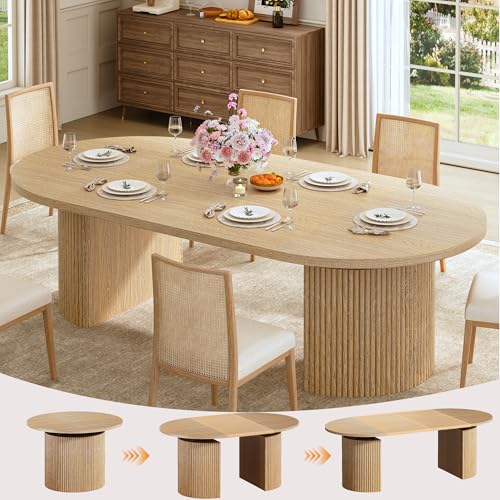
HUAHUU Extendable Round Dining Table for 4-8, 39in-77in Long Large Kitchen Table with Fluted Base, Space Saving Modern Farmhouse Oval Dinner Tables for Dining Room, Kitchen, Living Room, Natural
Check price on Amazon
Tviorst 40"-71" Expandable Dining Table for 4 6 8 with Slatted Table Legs | Farmhouse Oval Dining Table with Heavy Duty Base, Extendable Wood Round Kitchen Table for Dining Room Living Room (Natural)
Check price on Amazon
63"-79" Extendable Dining Table for 6-8, Rectangle Wood Dining Room Table | STHOUYN Farmhouse Expandable Dinner Table for 6-8, Dining Room & Kitchen, Seats 6-10, Easy Assembly, Blonde Oak
Check price on AmazonReady to Choose Your Extendable Light Wood Table?
Review the mechanisms, confirm your extended footprint, and match your chairs with confidence. Explore our curated selection above to find the right fit for your dining space.
Explore Options