
Rustic Cabin Dining Table: The Complete Buyer's Guide
Bring warmth, character, and natural texture to your cabin or rustic home with a dining table that tells a story. Learn how to choose the right wood, size, finish, and style for your space.
START YOUR RESEARCHWhat You'll Learn
- What Makes a Dining Table "Rustic Cabin"?
- Best Wood Species for Cabin Tables
- Popular Design Styles & Edge Profiles
- Sizing Your Cabin Dining Table
- Finishes That Protect & Age Beautifully
- Quality Tier Overview
- Styling a Rustic Cabin Dining Space
- Care & Maintenance Essentials
- Buying Checklist & Final Tips
- Frequently Asked Questions
What Makes a Dining Table "Rustic Cabin"?
A rustic cabin dining table is more than furniture—it's a centerpiece that anchors the entire room. These tables typically share several defining characteristics: natural wood with visible grain, knots, and often live edges; a substantial, grounded presence; and a finish that celebrates the material's raw beauty rather than masking it.
Unlike polished modern or formal dining tables, cabin-style tables embrace imperfection. You'll often see reclaimed lumber, hand-hewn surfaces, thick aprons, and legs or trestles that feel sturdy and handcrafted. The goal is to evoke the feeling of a mountain retreat, a lakeside lodge, or a cozy woodland hideaway.
When browsing options, you'll notice a wide range of interpretations—from refined live-edge designs that blend rustic and contemporary to heavy log-style tables that lean fully into traditional cabin aesthetics. If you appreciate industrial textures mixed with wood, you might also explore a steampunk dining table for a different twist on characterful furniture.
Key takeaway: A true cabin table prioritizes material honesty, structural solidity, and a visual warmth that invites long gatherings and everyday use.
Best Wood Species for Rustic Cabin Tables
The wood you choose affects durability, color, grain pattern, and how the table ages. Here are the most common species used in cabin dining tables:
Pine
A classic cabin choice. Pine is softer than hardwoods, so it dents and patinas more readily—which many cabin owners actually love. It takes stains and paints well, making it versatile for distressed finishes. Entry-level and mid-range tables frequently use pine.
Oak
Solid oak offers excellent durability and prominent grain. It's heavier and harder than pine, making it ideal for high-traffic cabins and family use. White oak is particularly popular for its tight grain and water resistance. You can learn more in our solid oak dining table guide.
Walnut
Dark, rich, and luxurious, walnut brings an upscale rustic feel. It's dense and stable, with beautiful chocolate tones that pair well with leather and metal accents. Walnut tables sit in the premium tier and are a long-term investment.
Reclaimed and Barn Wood
Salvaged lumber from old barns, factories, or bridges gives a table instant history. Reclaimed wood often shows nail holes, weathering, and unique color variation. Because sourcing varies, reclaimed tables are typically mid-range to premium depending on the wood's origin and the maker's process.
Hickory and Maple
Hickory is exceptionally hard and shock-resistant—great for busy households. Maple offers a clean, light grain that works well if you want a more subtle rustic look. Both fall into the mid-range to premium tiers for solid construction.
Pro tip: For a cabin that experiences humidity swings, choose quartersawn or rift-sawn lumber where available—it's more dimensionally stable and less prone to warping.
Popular Design Styles & Edge Profiles
The design language of your table should match your cabin's architecture and your personal taste. Here are the main styles to consider:
Live-Edge Tables
Live-edge tables preserve the natural contour of the tree's outer edge. The result is a one-of-a-kind silhouette that highlights the wood's organic form. These tables pair beautifully with modern-rustic and transitional cabin interiors. They can be slab-style (single thick slab) or book-matched (two slabs joined for symmetry).
Trestle and Pedestal Bases
Trestle bases—often made of thick timber or metal—provide excellent legroom and a grounded, architectural look. Pedestal bases offer a similar benefit and work well in smaller cabins where you want to maximize seating without corner legs getting in the way. Browse our dining table pedestal guide for more detail.
Farmhouse and X-Brace Styles
X-brace legs and farmhouse-inspired aprons are mainstays of cabin decor. They feel familiar, sturdy, and unfussy. If you lean toward this look, you might also enjoy our farmhouse dining table collection.
Log and Half-Log Construction
For a fully traditional cabin aesthetic, log-style tables use whole or half logs for legs and stretchers. These are heavy-duty pieces, often custom-built, and sit in the premium to luxury tiers. They're ideal for large rooms with high ceilings and exposed beams.
Mixed Materials
Combining wood with powder-coated steel, iron, or stone creates a balanced rustic-modern look. Metal bases can be more resistant to seasonal movement and add an industrial edge. If you like mixing seating styles, see our mixed chairs dining table ideas.
Sizing Your Cabin Dining Table
Cabin dining rooms vary widely—from compact nooks to expansive great rooms. Getting the size right is critical for comfort and flow. Use these guidelines:
- Seating capacity: Allow 24 inches of table width per person for comfortable dining. For length, plan 24–30 inches per person along the table's length.
- Walkway clearance: Leave at least 36 inches between the table edge and walls or other furniture to allow chairs to pull out and people to pass. If the table is in a thoroughfare, aim for 42–48 inches.
- Room proportions: A table that's too small will feel lost; too large and the room feels cramped. As a rule of thumb, the table should occupy roughly one-third to one-half of the room's floor area in a dedicated dining room.
- Shape considerations: Rectangular tables suit long rooms; round tables improve conversation flow and work well in square or compact spaces. For narrow cabins, consider a slim dining table for 6 or a narrow dining table for 10.
If you're outfitting a small cabin or a secondary dining area, you might find our guides on small dining table for 4 and dining table for 2 people useful. For larger gatherings, explore large dining table sizing or an extendable dining table set with 8 chairs.
Measure twice: Use painter's tape to outline your intended table footprint on the floor. Then place chairs around it (or tape their footprint) to visualize the real clearance before you commit.
Finishes That Protect & Age Beautifully
A cabin table endures spills, sunlight, and seasonal humidity changes. The right finish protects the wood while preserving its character:
Oil and Wax Finishes
Penetrating oils (like linseed or tung oil) soak into the wood and leave a natural, matte look. They're easy to spot-repair but require periodic reapplication. Wax can be layered on top for added water resistance and a soft sheen. This finish is popular for live-edge and reclaimed tables.
Lacquer and Polyurethane
These film-forming finishes create a protective layer on top of the wood. They're more water- and scratch-resistant than oil, making them a good choice for families. Matte and satin sheens keep the look natural, while glossier options reflect more light. Our matte dining table finish guide explains the trade-offs.
Distressed and Whitewashed
For a lighter, breezy cabin feel, whitewashed or distressed finishes soften the wood's appearance. These treatments can make a pine or oak table feel more coastal or cottage-like. See our distressed dining table guide for techniques and examples.
Natural / Unfinished
Some owners prefer to leave the wood raw and simply seal it with a clear, breathable product. This works best in climate-controlled cabins; in very dry or humid environments, an unfinished table may move more. If you go this route, plan to maintain it regularly.
Quality Tier Overview
To help you compare options without focusing on numbers, here's a relative overview of what to expect at different market positions:
| Tier | Typical Materials & Construction | Best For |
|---|---|---|
| Entry-level | Pine or mixed wood, simpler joinery, factory finishes. May use veneers on some surfaces. | Seasonal cabins, first-time buyers, casual weekend use. |
| Mid-range | Solid oak, maple, or reclaimed wood. Better joinery, thicker tops, more finish options. | Year-round cabins, families, buyers who want durability and character. |
| Premium | Wide-plank walnut, thick live-edge slabs, handcrafted joinery, premium hardware. | Design-focused cabins, long-term investments, statement pieces. |
| Luxury / Custom | Book-matched slabs, rare species, fully custom dimensions and details, artisan-built. | High-end lodges, bespoke interiors, heirloom-quality furniture. |
When comparing within a tier, prioritize solid wood content, joinery quality (dovetails, mortise-and-tenon, or heavy-duty bolts), and the reputation of the maker. A well-built mid-range table often outperforms a poorly constructed premium one.
Styling a Rustic Cabin Dining Space
Once your table is in place, the surrounding elements bring the cabin mood to life. Here are styling ideas that complement rustic dining tables:
Seating
Mix and match chairs and benches for an relaxed, collected look. A wooden bench on one side and upholstered chairs on the other adds comfort and visual interest. Our dining table bench with storage guide covers practical options, while dining bench seating explains ergonomics.
For a cohesive cabin feel, consider cane dining table and chairs for texture, or barrel chairs for a cozy, rounded silhouette. Leather seating, like a dining table with brown leather chairs, pairs exceptionally well with dark wood.
Table Decor
Keep it simple and natural: a linen runner, a wooden bowl, candles, or a small arrangement of greenery. Avoid overly formal centerpieces. Our dining table centerpiece guide offers seasonal inspiration.
Rugs and Lighting
A textured rug under the table defines the dining zone and adds warmth. Choose a rug large enough to accommodate chairs when pulled out. A large rug under the dining table can unify the space. For lighting, a linear chandelier or pendant cluster with warm bulbs creates a welcoming glow.
Wall and Floor Elements
Exposed beams, shiplap, or stone accent walls reinforce the cabin aesthetic. If you want to add character without major renovations, consider a gallery wall of vintage prints or a large mirror. Explore dining table wall decor ideas for more.
Care & Maintenance Essentials
Rustic tables are built to last, but a little care keeps them looking their best:
- Control humidity: Aim for 35–55% relative humidity. Use a humidifier in winter and a dehumidifier in damp summer months if needed. Our humidity care guide has detailed recommendations.
- Clean gently: Wipe spills promptly with a soft, damp cloth. Avoid harsh chemical cleaners, especially on oiled or waxed finishes.
- Protect from heat: Use trivets and coasters under hot dishes and drinks. Heat marks are easier to prevent than to remove. See our heat mark repair guide if accidents happen.
- Refresh finishes: Oiled tables may need re-oiling every 6–12 months depending on use. Follow the manufacturer's recommendations.
- Address scratches early: Small scratches can often be touched up with matching wax or stain. Our scratch touch-up guide walks you through it.
Cabin-specific tip: If your cabin is unheated during winter, avoid placing the table directly against an exterior wall or near a wood stove. Rapid temperature swings stress the wood and finish.
Recommended Rustic Cabin Dining Tables
⚠️ AFFILIATE DISCLOSURE: This website contains affiliate links. As an affiliate Associate, we earn from qualifying purchases. If you make a purchase through these links, we may receive a small commission at no additional cost to you. Read our full affiliate policy.
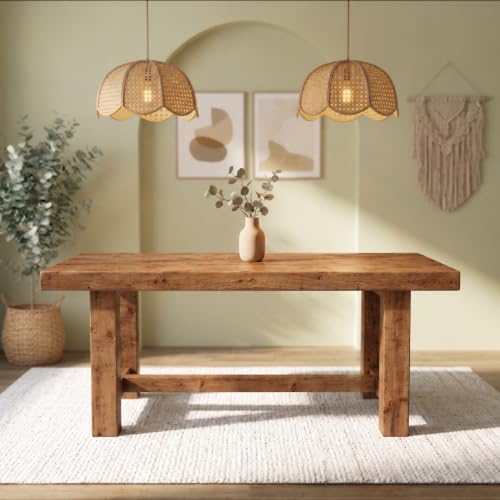
TRIBEWOOD 63-Inch Solid Wood Rectangular Dining Table for 4-6 People | Farmhouse Kitchen Table with Trestle Base, Real Wood Dining Tables for Dining Room,Apartment ,Elegant Details, Easy Assembly
Check price on Amazon
Garvee Wood Farmhouse Dining Table for 4-6, Heavy Duty Large Kitchen Table, 63 Inches Long Rectangular Dining Room Tables with Strong Legs, Thickness Tabletop, for Big Family, Dinette, Rustic Brown
Check price on Amazon
TRIBEWOOD Solid Wood Dining Table for 4-6 People, 63 Inches Wooden Farmhouse Rectangular Kitchen Dinner Table with Heavy-Duty Legs for Home, Living Room, Dining Room, Rustic Brown
Check price on Amazon
LITTLE TREE Round Dining Table for 4-6 People, 47 Inches Dining Room Table with Wooden Pedestal Base, Circle Kitchen Tables for Dining Room, Kitchen, Living Room, Rustic Brown
Check price on Amazon
MAHANCRIS 31.5" Round Dining Table for 2-4, Farmhouse Kitchen Table with Storage Shelf, Small Circle Dining Table Space Saving, for Dining Room, Kitchen, Living Room, Rustic Brown and Black DTHR8201
Check price on AmazonBuying Checklist & Final Tips
Before you finalize your choice, run through this checklist to make sure you've covered the essentials:
- Measure your space—including doorways and stairwells for delivery access.
- Confirm the wood species and construction—solid wood vs. veneer, joinery type, and finish.
- Decide on seating—how many people regularly, and how many occasionally?
- Consider seasonal movement—if your cabin is unheated part of the year, choose a design with breadboard ends or floating tops that accommodate wood movement.
- Ask about care requirements—especially if you want a low-maintenance finish.
- Plan the delivery path—large tables may require professional delivery and assembly.
- Review the return and warranty policy—especially for custom or handmade pieces.
If you're still exploring styles, you might also like our guides on vintage wood round dining table and walnut drop-leaf dining table for alternative cabin-friendly designs.
Final thought: The best rustic cabin dining table is the one that fits your space, suits your lifestyle, and makes you smile every time you walk into the room. Prioritize quality construction and materials you love—the rest will follow.
Frequently Asked Questions
How do I prevent my rustic table from cracking?
Wood cracks when it dries unevenly. Maintain stable humidity, avoid direct heat sources, and choose tables with breadboard ends or floating tops that allow natural movement. Oiling the surface can also slow moisture loss.
Is live-edge furniture practical for families with kids?
Yes, with the right finish. A hardwax oil or polyurethane finish makes the table more resistant to spills and stains. Live-edge tables are generally sturdy; the natural edge is on the sides, not where kids sit. Just be mindful of sharp corners on some designs.
Can I use a rustic cabin table outdoors?
Most indoor cabin tables are not designed for full outdoor exposure. If you want an outdoor table, look for weather-resistant woods like teak or cedar and outdoor-specific finishes. Our outdoor dining table guides cover suitable options.
What's the difference between reclaimed wood and new wood?
Reclaimed wood comes from older structures and often has tighter grain, unique coloration, and historical character. New wood is more uniform and may be easier to match with existing furniture. Both can be excellent—choose based on the look you want.
How many chairs fit around a 72-inch table?
A 72-inch rectangular table typically seats 6 comfortably (three per side) or 8 if you include the ends. For round tables, a 60-inch diameter seats 6–8 depending on chair size. Always test with your actual chairs if possible.
Ready to Find Your Cabin Table?
Explore our curated selection of rustic cabin dining tables above, or dive deeper into related guides on materials, sizing, and styling to make a confident decision.
VIEW RECOMMENDED TABLES