

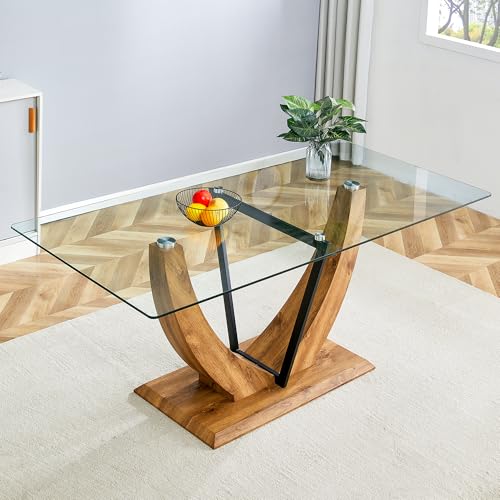


Why Choose a Rectangular Glass Top with a Wood Base?
A rectangular glass dining table with a wood base is one of the most practical shapes in modern dining rooms. The rectangular footprint fits naturally against walls, in open-plan kitchens, and in dedicated dining rooms, while the glass surface reflects light and makes even compact spaces feel larger. The wood base counterbalances the transparency of the glass, adding visual weight and a natural texture that keeps the table from feeling cold or clinical.
Compared with an all-glass table, the wood base provides a more forgiving structure for everyday use. Solid wood legs and aprons absorb minor movement and vibration, and the joints are easier to reinforce over time. For households that want the openness of glass without sacrificing stability, this pairing is a balanced tier option that suits both contemporary and transitional interiors. If you are still comparing silhouettes, our guide to the rectangular glass top dining table with wood base breaks down the structural differences in more detail.
Glass Top Essentials: Thickness, Tempering, and Edge Finish
Not all glass tops are equal. The top is the most visible and most frequently used surface of the table, so it deserves the closest scrutiny before purchase.
Tempered Glass Is Non-Negotiable
Every quality glass dining table uses tempered glass. Tempered glass is heat-treated to increase impact resistance, and when it does break, it shatters into small, blunt fragments rather than sharp shards. Entry-level glass tables sometimes use annealed glass, which is far less resistant to impact and thermal stress. Always confirm the top is tempered before you commit.
Choose the Right Thickness
Glass thickness directly affects how the table feels and performs:
- 10mm tempered glass — suitable for smaller rectangular tables and lighter use, but more prone to visible flex on wider spans.
- 12mm tempered glass — the standard for mid-range and premium rectangular tables. It offers a solid, confidence-inspiring feel and resists flex across typical dining table widths.
- 15mm and above — used in luxury and commercial-grade tables, especially on longer rectangular spans where rigidity matters most.
On a rectangular table wider than 36 inches, a 12mm or thicker top is strongly recommended. Thinner glass can flex under weight and may develop stress points around the base connection over time.
Edge Profiles Matter for Safety and Style
Flat-polished edges are the most common and give a clean, modern look. Beveled edges add a subtle decorative line and soften the transition from top to side. Bullnose edges are rounded for a softer feel and are a good choice in households with young children. Whatever profile you choose, verify the edge has been polished — raw cut glass edges are a safety risk and a sign of low-grade manufacturing.
Wood Base Options: Species, Style, and Stability
The base carries the entire load of the glass top and defines the visual character of the table. Wood bases for glass tops generally fall into three style families:
Trestle Bases
A trestle base uses two A-frame or H-frame supports connected by a stretcher beam. This style is especially well suited to rectangular glass tops because it leaves the long sides of the table open, maximizing legroom and preserving the airy look of the glass. Trestle bases in solid oak or walnut are a hallmark of mid-tier and premium designs.
Pedestal Bases
Pedestal bases concentrate support in a central column, often with a wide foot. They create a sculptural focal point and eliminate corner legs entirely, which is useful in tight dining rooms. For a deeper look at this structure, see our guide to the pedestal leg dining table.
Four-Leg and Frame Bases
Traditional four-leg bases with aprons are the most familiar configuration. They work well with rectangular glass tops in transitional and traditional interiors. The apron provides racking resistance, and the open corners make the table easy to move.
Which Wood Species Performs Best?
Solid hardwood bases — oak, walnut, maple, and teak — offer the best long-term stability and resistance to wear. Oak is the most common choice for its hardness and grain character. Walnut brings a darker, richer tone that pairs beautifully with clear or tinted glass. Avoid bases made from particleboard with veneer if you plan to move the table frequently; solid wood and high-grade engineered hardwood are far more durable at the joint level.
Size and Proportion: Matching the Top to the Base
A rectangular glass table looks best when the base is visually proportional to the top. A common rule of thumb is that the base footprint should be at least two-thirds of the tabletop length and width. Oversized glass on an undersized base creates instability and a top-heavy silhouette; an oversized base under a small top looks clumsy.
For seating, plan for roughly 24 inches of table width per person on the long sides. A 60-inch rectangular table comfortably seats four to six, while a 72-inch table seats six to eight. If your room is on the narrow side, our guide to the 2-foot wide dining table explores how slim rectangular profiles can work in tight footprints.
| Tier | Glass Top | Wood Base | Best For |
|---|---|---|---|
| Entry-level | 10mm tempered glass, flat-polished edge | Rubberwood or engineered hardwood, four-leg frame | Light daily use, starter homes, compact dining areas |
| Mid-range | 12mm tempered glass, beveled or polished edge | Solid oak or maple, trestle or pedestal base | Family dining, open-plan kitchens, everyday entertaining |
| Premium | 12–15mm tempered glass, precision-polished edge | Solid walnut or teak, reinforced trestle base | Design-focused dining rooms, frequent hosting, long-term investment |
| Luxury / commercial-grade | 15mm+ tempered or laminated glass, custom edge | Kiln-dried hardwood with steel-reinforced joinery | High-traffic households, luxury interiors, hospitality settings |
Durability and Daily Performance
A glass-and-wood table is durable when both components are well made. The glass itself resists scratches, stains, and moisture far better than wood alone — spills wipe away cleanly and there is no grain to absorb liquid. The wood base, meanwhile, absorbs the structural demands of daily use.
Two factors determine long-term performance:
- The connection between glass and base. Quality tables use rubber or felt pads, suction cups, or precisely machined channels to seat the glass without point-loading it. Poorly seated glass can develop stress cracks around the contact points.
- Joint construction in the wood base. Mortise-and-tenon and doweled joints outperform simple screw-and-bracket assembly. Reinforced corner blocks add racking resistance on four-leg designs.
Glass is also heat-resistant to a point, but sudden temperature changes — such as placing a hot pan directly from the stove onto the surface — can cause thermal shock. Always use trivets and heat pads. For a broader look at protecting glass surfaces, see our glass dining table guide.
Styling a Glass-and-Wood Dining Table
The glass top is a neutral canvas, and the wood base sets the tone. In a modern interior, pair a clear glass top with a light oak trestle base and minimal ceramic tableware. In a warmer, more rustic setting, a walnut or teak base with a tinted glass top pairs well with linen runners and natural fiber placemats.
Because the glass reflects the room, the ceiling light and window placement matter more than usual. A pendant fixture centered over the table will double in the reflection and create a striking focal point. Keep centerpieces low and wide so the reflection stays balanced and conversation across the table remains unobstructed.
For tables that lean toward a gold or metallic accent, our guide to the glass gold dining table shows how metallic bases and trim change the character of a glass top. If you prefer a warmer, tinted surface, the tinted glass dining table guide covers how tint affects light and perceived room size.
Care and Maintenance for Glass and Wood
Maintaining a rectangular glass dining table with a wood base is straightforward when you treat each material appropriately.
Cleaning the Glass Top
- Use a non-ammonia glass cleaner or a 50/50 mix of water and white vinegar.
- Wipe with a microfiber cloth to avoid streaks and lint.
- Avoid abrasive pads and scouring powders, which can dull the surface over time.
- Wipe up spills promptly, especially acidic liquids like citrus juice or wine.
Caring for the Wood Base
- Dust weekly with a soft, dry cloth.
- Wipe with a slightly damp cloth for deeper cleaning, then dry immediately.
- Apply a wood conditioner or furniture wax every six to twelve months to maintain the finish.
- Keep the table away from direct heat sources and prolonged direct sunlight to prevent drying and fading.
- Use felt pads under chairs to prevent scuffs on the base legs.
For a full seasonal routine, our seasonal deep cleaning guide covers the step-by-step process for both glass and wood surfaces.
Common Mistakes to Avoid
- Buying untempered glass. Always confirm tempering; it is the single most important safety specification.
- Ignoring the base footprint. An undersized base on a long rectangular top is a stability risk, not just an aesthetic flaw.
- Overlooking edge polishing. Rough or unpolished edges are a safety hazard and a sign of poor manufacturing.
- Placing hot items directly on glass. Thermal shock can crack even tempered glass; use trivets every time.
- Skipping the wood care routine. The base will dry and crack without periodic conditioning, especially in heated or air-conditioned rooms.
Frequently Asked Questions
Related Guides and Table Ideas
If you are narrowing down your options, these related guides cover adjacent styles and configurations that pair well with a rectangular glass top and wood base: