
Rectangle Tray for Dining Table: The Complete Buying & Styling Guide
A well-chosen rectangle tray for your dining table brings order, texture, and visual focus to the heart of your home. Learn how to choose the right size, material, and finish — and how to style it like a designer.
Why a rectangle tray belongs on every dining table: A rectangular tray is one of the most versatile tabletop organizers you can own. It corrals centerpieces, condiments, candles, and serveware into a single intentional focal point, protects the table surface from scratches and spills, and makes it easy to clear the table in seconds when guests arrive. Because its elongated shape follows the natural proportions of most dining tables, a rectangle tray often looks more balanced than a round one — especially on longer surfaces.
What a Rectangle Tray Actually Does for Your Dining Table
Before choosing a tray, it helps to understand the four jobs it performs. Each job influences the size, material, and finish you should look for.
1. Organization & Focus
It gathers scattered items — salt and pepper shakers, napkins, a candle, small plants — into one composed arrangement so the tabletop reads as intentional rather than cluttered.
2. Surface Protection
A tray creates a physical barrier between hot serveware, drippy condiments, and your table finish. This matters most on solid wood and marble surfaces that are sensitive to heat and moisture.
3. Easy Entertaining
When guests arrive, the entire centerpiece lifts away in one motion. The tray becomes a portable serving station for drinks, bread, or appetizers.
4. Visual Layer
Its shape, texture, and color add a deliberate design layer. A tray can echo your table's wood tone, introduce contrast, or tie together mixed decor.
Choosing the Right Size and Proportion
A rectangle tray should feel like it belongs to the table — neither lost in the middle nor crowding the place settings. Use these proportion guidelines as a starting point:
- Length: Roughly one-third to one-half of the table's total length. On a 72-inch table, a tray between 24 and 36 inches long feels proportionate.
- Width: About one-third of the table's width, leaving clear elbow room for every diner.
- Clearance rule: Keep at least 12 inches of free tabletop in front of each place setting. If the tray intrudes into that zone, it is too wide.
- Height: Low-profile trays (under 2 inches of rim) keep sightlines open across the table. Taller trays suit buffet-style serving rather than everyday centerpieces.
If you are working with a compact table, review our guide to dining table options for small spaces before settling on a tray size — proportion matters more than absolute dimensions. For a narrow dining surface, a slim tray paired with a narrow dining table with storage keeps the tabletop functional.
Material Guide: What Rectangle Trays Are Made Of
The material determines durability, care routine, and the mood the tray creates. Here is how the main categories compare, described by quality tier rather than by any specific figure.
| Material | Tier | Best For | Care Notes |
|---|---|---|---|
| Solid hardwood (oak, walnut, acacia) | Mid-range to premium | Warm, natural dining rooms; everyday centerpieces | Oil occasionally; wipe spills promptly; avoid soaking |
| Metal (steel, aluminum, brass) | Entry-level to premium | Modern, industrial, and minimalist tables | Wipe with a damp cloth; choose rust-proof finishes for humid rooms |
| Stone or marble | Premium to luxury | Formal dining rooms and marble tabletops | Seal periodically; lift rather than slide to avoid scratches |
| Rattan, seagrass, or woven fiber | Entry-level to mid-range | Coastal, boho, and farmhouse styles | Dust regularly; keep away from prolonged moisture |
| Glass | Mid-range | Contemporary and reflective tablescapes | Clean with glass-safe products; avoid hard impacts |
| Ceramic or porcelain | Mid-range to premium | Patterned, decorative centerpieces | Dishwasher-safe on some models; check rim durability |
| Resin or acrylic | Entry-level | Outdoor and casual dining | Weather-resistant; wipe clean; avoid high heat |
For a wood-led scheme, a hardwood tray echoes a wooden dining table and 4 chairs beautifully. If your tabletop is stone, a marble or stone tray continues the theme — see our stone dining table and chairs guide for surface-care context.
Matching the Tray to Your Dining Style
The tray should feel like a deliberate extension of the room, not an afterthought. Here is how to align it with common dining styles:
Modern & Minimalist
Choose a sleek metal or matte-lacquer tray with clean lines and a single muted color. Keep the contents sparse — one candle, one small vase.
Rustic & Farmhouse
Weathered wood, galvanized metal, or woven trays with visible grain. Pair with a farmhouse dining room table in a light finish for a cohesive look.
Coastal & Boho
Rattan, seagrass, and light-toned wood trays. Natural fibers add texture against a boho round dining table or a coastal oval dining table.
Traditional & Formal
Dark walnut, brass, or marble trays with subtle detailing. They suit a dark wood dining table with upholstered chairs and formal table settings.
Styling Ideas: What to Place on a Rectangle Tray
The most effective tray arrangements follow a simple rule: one tall anchor, one or two low fillers, and breathing room. Here are proven combinations that work year-round:
Everyday Centerpiece
- A small ceramic vase with seasonal stems, one pillar candle, and a shallow dish for keys or napkins.
- A pair of salt and pepper mills, a small olive-oil cruet, and a folded linen napkin.
- A trailing plant in a low pot plus a bowl for fruit — practical and full of life.
Hosting & Entertaining
- Convert the tray into a drink station: glasses, a decanter, and a small ice bucket.
- Use it as a bread and butter station with a cutting board, spread, and linen wrap.
- Stage appetizers on the tray, then lift it away before the main course arrives.
Holiday & Seasonal
- Autumn: small gourds, dried leaves, and a taper candle pair.
- Winter: evergreen sprigs, a metallic candle holder, and frosted glass votives.
- Spring and summer: fresh flowers in a low bowl, citrus fruit, and a linen runner.
If your table setup includes a rotating centerpiece, a black lazy Susan for dining table pairs well with a tray — the tray anchors, the lazy Susan moves. For tables with expandable leaves, keep the tray removable so the table can extend freely; see our notes on an dining table extender.
Practical Buying Tips Before You Decide
- Check the rim height: A rim of 1 to 2 inches is enough to contain items without hiding them.
- Look for handles or cutouts: Side handles make lifting a loaded tray safe and comfortable.
- Confirm the base: Felt or cork pads underneath protect wood and stone tabletops from scratches.
- Think about weight: A heavy stone tray is stable but hard to lift when full; a light metal tray is easier to move but can slide.
- Plan for cleaning: Removable liners or wipe-clean finishes simplify routine care.
- Consider storage: A tray that fits inside a sideboard or drawer is easier to rotate seasonally.
If your dining area doubles as a workspace or study, a tray also helps contain supplies — a natural fit for a small 4-person dining table or a small rectangle dining table with chairs.
Common Mistakes to Avoid
- Choosing a tray that is too large: It crowds place settings and makes the table feel smaller than it is.
- Overloading the tray: More than three or four items reads as clutter, not composition.
- Ignoring table finish compatibility: Rough or unsealed tray bases can scratch delicate surfaces.
- Skipping the height check: A tall tray blocks conversation sightlines across the table.
- Mismatched scale: A tiny tray on a long table looks lost; a huge tray on a compact table feels heavy.
Ready to Find Your Rectangle Tray?
Browse our curated selection of dining table trays chosen for durability, proportion, and style.
View Recommended TraysRecommended Rectangle Trays for Dining Tables
⚠️ AFFILIATE DISCLOSURE: This website contains affiliate links. As an affiliate Associate, we earn from qualifying purchases. If you make a purchase through these links, we may receive a small commission at no additional cost to you. Read our full affiliate policy.

Solid Acacia Wood Serving Trays - 14" x 5.5" Rectangular Wooden Platters for Food, Charcuterie Boards, Cheese, and Appetizers - Perfect for Home Decor, Parties
Check price on Amazon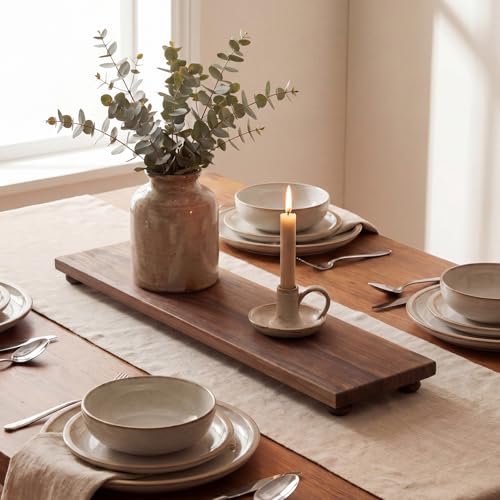
Novabright Large Rustic Pine Wood Long Tray for Table Centerpiece, 30 Inch | Farmhouse Pedestal Stand, Rustic Wooden Display for Table Kitchen and Bathroom Decor Plant Candle Vases Counter Display
Check price on Amazon
Hrastany Wood Rustic Serving Tray with Beads, Farmhouse Brown Decorative Tray for Table Centerpiece, Christmas Wedding Halloween Home Decor
Check price on Amazon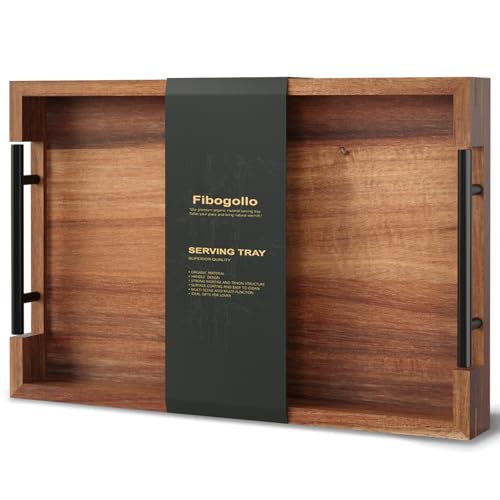
Fibogollo Acacia Wood Serving Tray with Metal Handles,15x10in Ottoman Decorative Trays Platter for Coffee Table,Living Room,Bar,Party(Medium)
Check price on Amazon
Rustic Wooden Serving Trays Rectangular with Handle,Ottoman Tray for Living Room 16 Inch Long for Serving Wine(whitewashed)
Check price on Amazon
Romadedi Wooden Decorative Tray Candle Holder | Wood Long Narrow Tray, Home Decor, Small Rustic Centerpieces, For Coffee Table Dining Room Kitchen
Check price on AmazonFrequently Asked Questions
What size rectangle tray fits a standard dining table?
For most six-seat dining tables, a tray between 20 and 30 inches long and 12 to 16 inches wide works well. As a rule, aim for one-third to one-half of the table length and about one-third of the width, keeping 12 inches of clear space in front of each place setting.
Is a rectangle tray better than a round tray for a dining table?
Neither is universally better — the shape should follow the table. Rectangle trays suit long rectangular and oval tables because they echo the table's proportions. Round trays suit round and square tables and work well when the centerpiece is circular.
What material is best for everyday use?
Solid hardwood and powder-coated metal are the most practical for daily use. Wood adds warmth and ages gracefully; metal is easy to wipe clean and holds up to frequent handling. Stone and glass are better suited to more formal or occasional settings.
How do I protect my table from the tray?
Choose a tray with felt, cork, or rubber pads on the underside, and lift rather than slide it when moving. On heat-sensitive wood or marble, avoid placing hot dishes directly on the tray without a trivet.
Can a rectangle tray be used outdoors?
Yes, if it is made from weather-resistant materials such as powder-coated metal, resin, or treated hardwood. Avoid untreated wood and woven natural fibers for uncovered outdoor use.
How do I style a rectangle tray without it looking cluttered?
Follow the anchor-plus-filler rule: start with one tall or dominant object, add one or two low complementary pieces, and leave visible empty space on the tray. Odd numbers of items generally look more balanced than even numbers.
A rectangle tray for your dining table is a small investment that pays off in daily tidiness and visual polish. When the size, material, and styling match your table and room, it becomes the quiet anchor of the tabletop — ready for everyday meals and easy to transform for guests. Whether your table is a compact 2-person square dining table or a large big dining table set, the right tray brings order and warmth to the space you gather around.