
Natural Teak Dining Table: The Complete Buyer's Guide
Everything you need to know about choosing, caring for, and styling a natural teak dining table — from grain selection to long-term protection.
Why natural teak? Teak has been prized for centuries in shipbuilding and fine furniture for one reason: it endures. A natural teak dining table brings warm golden-brown tones, distinctive grain, and natural oils that resist moisture and wear. This guide walks you through what makes teak different, how to evaluate quality, and how to keep your table looking remarkable for decades.
Recommended Natural Teak Dining Tables
⚠️ AFFILIATE DISCLOSURE: This website contains affiliate links. As an affiliate Associate, we earn from qualifying purchases. If you make a purchase through these links, we may receive a small commission at no additional cost to you. Read our full affiliate policy.

Modway Marina Outdoor Patio Teak Dining
Check price on Amazon
Christopher Knight Home Linda 70.67" Outdoor Dining Table, Solid Acacia Wood Patio Table for Patio Furniture Set, Modern Dining Table with Slat Panel Oval Top for Deck Garden Backyard, Light Teak
Check price on Amazon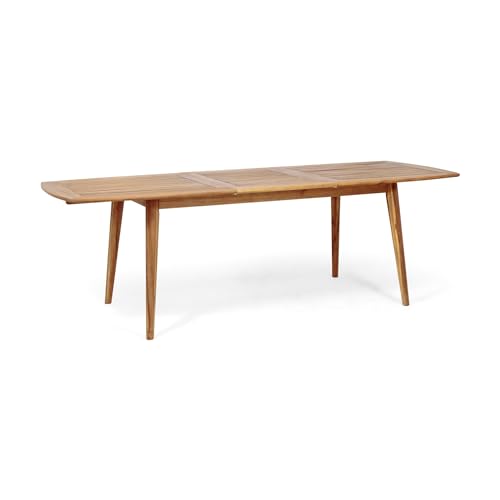
Christopher Knight Home Stamford Outdoor Acacia Wood Expandable Dining Table, Teak
Check price on Amazon
5 Piece Round Foldable Teak Outdoor Patio Dining Set
Check price on Amazon
EliteEdge 71" Oval Farmhouse Compact Dining Table for 6 People, Natural | Rustic Wood Double Pedestal Base, Spacious Kitchen & Dining Room Table for Home or Office
Check price on Amazon
9 Piece Oval Extendable Teak Outdoor Patio Dining Set
Check price on Amazon
Flash Furniture Commercial Grade 55x31 in Metal Dining Table, Natural/Gray | Faux Teak Poly Slats
Check price on Amazon
Christopher Knight Home Hizto Oval Outdoor Dining Table, Tapered Vertical Slatted Single Base, Slatted Design Acacia Wood Patio Dining Table, Solid Wood Outdoor Table for Garden Backyard, Light Teak
Check price on AmazonWhat Makes Natural Teak Different from Other Woods
Teak (Tectona grandis) is a tropical hardwood native to Southeast Asia, and its natural properties set it apart from oak, walnut, mango, and pine. The wood contains natural oils — tectoquinone and caoutchouc — that make it inherently resistant to moisture, insects, and rot. This is why teak was historically the wood of choice for ship decks and outdoor furniture, and why a natural teak dining table handles the occasional spill or humid day far better than most alternatives.
Visually, natural teak offers a warm golden-brown hue that deepens into a richer amber over time when exposed to light. The grain is typically straight with occasional interlocking patterns, and the texture is coarse but even. Unlike white oak modern dining tables that lean cool and pale, teak carries a warmth that pairs naturally with earthy, rustic, and transitional interiors.
If you are still comparing wood species, our guide to dining table materials and finishes breaks down how teak compares to oak, walnut, and mango in terms of hardness, maintenance, and visual character.
Key Features to Look For in a Natural Teak Dining Table
Solid vs. Veneer
Solid teak planks offer superior durability and can be refinished. Veneered teak uses a thin top layer over engineered wood — lighter and more stable, but less forgiving over time. For a long-term investment, solid teak is the stronger choice.
Grain Matching
Well-made teak tables book-match or slip-match planks for visual continuity. Look for consistent grain direction and color across the top — mismatched planks are a sign of lower-grade assembly.
Joinery Quality
Mortise-and-tenon joints, doweled aprons, and properly reinforced corners indicate a table built to last. Avoid tables held together primarily with screws and brackets.
Finish Type
Natural teak is often finished with oil, wax, or a matte lacquer. Oil finishes enhance the wood's natural feel and are easy to refresh; lacquer offers more surface protection but requires professional repair if damaged.
Moisture Content
Properly kiln-dried teak (typically 8–12% moisture content) resists warping and cracking. Ask about drying methods — air-dried teak is traditional but less dimensionally stable.
Base Construction
Legs should be solid teak or a complementary hardwood, not softwood painted to match. Check that the base feels stable with no wobble and that the apron supports the top evenly.
Natural Teak Dining Table Tiers: What to Expect at Each Level
Teak furniture spans a wide range of construction quality. Rather than focusing on numerical figures, here is how the market segments by tier — so you can match your expectations to the category you are shopping in.
| Tier | Construction | Best For |
|---|---|---|
| Entry-Level Tier | Teak veneer over engineered wood or mixed hardwood frames; simpler joinery; lighter weight | Apartment living, first dining setup, seasonal use, or spaces where the table may be moved frequently |
| Mid-Tier | Solid teak top with complementary hardwood base; mortise-and-tenon joinery; oil or matte finish | Family dining rooms, everyday use, buyers who want authentic teak character without flagship-level construction |
| Premium Tier | All-solid teak construction; book-matched grain; reinforced joinery; hand-applied oil or wax finish | Long-term family use, design-focused interiors, buyers who plan to keep and maintain the table for decades |
| Flagship Tier | Old-growth or plantation-certified solid teak; traditional joinery; hand-finished surfaces; often made to order | Heirloom-quality dining rooms, architectural projects, and collectors who value craftsmanship over convenience |
A mid-tier solid teak table is typically the sweet spot for most households: it delivers real teak durability and character without the flagship-tier commitment. Entry-level veneer tables are a reasonable fit for smaller spaces or temporary setups, while premium and flagship tiers reward buyers who treat the table as a permanent piece.
Choosing the Right Size and Shape
Teak works beautifully in both rectangular and round formats. A rectangular teak table suits formal dining rooms and larger families, while a round teak table encourages conversation and fits well in compact spaces. If you are planning a round layout, our guide to dining room lighting for a round table covers pendant placement and spacing.
For seating capacity, a standard rule is 24 inches of table width per person on the long side. A 72-inch rectangular table comfortably seats six; an 84-inch table seats eight. If you need flexibility for holidays, consider an extendable teak model — our extendable dining table guide explains leaf mechanisms and storage options.
For smaller dining areas, a small dining table with four chairs is often the most practical configuration. And if you prefer a bench on one side for a casual look, a teak dining table with bench pairs naturally with the wood's relaxed character.
How to Care for a Natural Teak Dining Table
Teak is low-maintenance compared to many hardwoods, but it is not maintenance-free. The natural oils that protect the wood can dry out over time, especially in heated homes or dry climates. A simple routine keeps the surface resilient and the color even.
- Dust regularly with a soft microfiber cloth to prevent grit from dulling the finish.
- Wipe spills promptly with a damp cloth, then dry immediately — teak resists moisture but prolonged standing water can still leave marks.
- Oil once or twice a year with a teak-specific oil or furniture wax to replenish the wood's natural moisture balance. Our guide to wood dining table wax and polish walks through the process step by step.
- Avoid harsh cleaners — ammonia, bleach, and abrasive pads can strip the finish and dull the grain.
- Use coasters and placemats for hot dishes and icy drinks to prevent heat rings and water marks.
- Keep out of direct sunlight for extended periods to slow uneven color shifts; rotate decor to avoid shadowing.
- Address scratches early with a touch-up pen or light sanding followed by oil — small fixes prevent bigger refinishing jobs later. See our dining table scratch touch-up guide for methods.
If your table develops water rings or heat marks, our guides to water ring removal and heat mark repair cover the most effective at-home fixes.
Styling a Natural Teak Dining Table
Natural teak's warm tone and visible grain make it a versatile styling base. It works equally well in rustic, Scandinavian, coastal, and modern-transitional interiors. The key is to let the wood remain the focal point rather than covering it with heavy linens or busy patterns.
For a relaxed everyday look, pair a teak table with woven placemats, stoneware plates, and a simple ceramic centerpiece. For a more polished setup, use a dining table runner in linen or cotton to add texture without hiding the grain. A round dining table centerpiece arrangement with low branches or a bowl of fruit keeps sightlines open for conversation.
If you are refreshing an older teak table, our redo dining room table guide covers refinishing and restyling options, and our vintage teak dining table article explores the character and restoration potential of older pieces.
Indoor vs. Outdoor Teak: What to Know
Teak is one of the few woods genuinely suited to both indoor and outdoor use. An outdoor teak dining table will weather to a silver-grey patina if left untreated, while an indoor natural teak table retains its golden-brown tone with regular oiling. If you plan to use the table on a covered patio or in a sunroom, choose a finish rated for UV exposure and re-oil more frequently.
For indoor use, the main environmental considerations are humidity and temperature swings. Teak handles normal household conditions well, but avoid placing the table directly over heating vents or next to radiators. Our dining table humidity care guide explains how to manage seasonal moisture changes.
Common Mistakes When Buying a Natural Teak Dining Table
- Confusing teak veneer with solid teak. Always confirm construction details — "teak finish" is not the same as solid teak.
- Ignoring moisture content. Poorly dried teak can warp or crack within months. Ask about kiln-drying standards.
- Overlooking the base material. A solid teak top on a softwood base is a mixed construction that may not hold up as well as an all-hardwood build.
- Choosing size by looks alone. Measure your room and walkway clearance before committing. Our dining table space planning guide helps you get the proportions right.
- Skipping a protection plan. A simple table pad or felt-backed runner prevents everyday scratches. See our dining table pad protection guide for options.
- Not planning for maintenance. Teak needs occasional oiling. If you prefer a zero-maintenance surface, a glass or laminate top may suit you better.
For a broader checklist of pitfalls, see our article on dining table buying mistakes.
Frequently Asked Questions
Is natural teak good for a dining table?
Yes. Teak's natural oils make it resistant to moisture and insects, and its hardness (around 1,070 lbf on the Janka scale) handles daily use well. It is one of the most durable natural woods for dining furniture.
Does teak darken or lighten over time?
Indoor teak typically deepens to a richer amber with age and light exposure. Outdoor teak left untreated weathers to a silver-grey patina. Oiling indoor teak helps maintain its warm golden-brown tone.
How often should I oil a teak dining table?
Once or twice a year is typical for indoor tables. In dry climates or heated homes, you may need to oil more frequently — every 3–4 months if the wood looks dry or dull.
Can I use a teak dining table outdoors?
Yes, teak is excellent outdoors. If you want to preserve the golden-brown color, oil it regularly and keep it under cover. If you like the weathered grey look, leave it untreated and clean it occasionally with mild soap and water.
Is solid teak worth it over veneer?
For a long-term dining table, solid teak is the stronger investment. It can be sanded and refinished, handles wear better, and develops character over time. Veneer is a reasonable choice for lighter use or tighter spaces where the table may be moved often.
How do I remove water rings from a teak table?
Light water rings often lift with a dry cloth and a gentle rub of mineral oil or a 50/50 vinegar-and-oil mix. For stubborn marks, a hairdryer on low heat can help evaporate trapped moisture. See our water ring removal guide for detailed steps.
Ready to Choose Your Natural Teak Dining Table?
Explore our curated selection of natural teak dining tables and find the one that fits your space, style, and seating needs.
Explore Buying Guides