
Teak Dining Table with Bench: Complete Buying Guide
Everything you need to know about choosing a teak dining table with bench — from wood grade and construction to bench sizing, styling, and long-term care. Built to last, made for everyday living.
Explore Recommended SetsQuick summary: A teak dining table with bench is a long-term investment in durability, natural warmth, and family-friendly seating. Teak's dense grain and natural oils resist moisture, making it a reliable choice for busy dining rooms, patios, and open-plan kitchens. This guide covers construction, bench styles, sizing, and practical care so you can choose with confidence.
Why Teak for a Dining Set
Teak (Tectona grandis) is one of the most respected hardwoods for furniture because of its natural oil content and tight grain. These properties give teak strong resistance to moisture, insects, and everyday wear. For a dining table that will anchor family meals for years, that durability matters. Teak also ages beautifully: left untreated, it matures to a soft silvery-grey; oiled, it keeps a warm golden-brown tone.
Compared to softer woods, teak holds its shape well across seasonal humidity changes, which reduces the risk of warping or splitting in solid tops. That stability is especially valuable on long dining tables and benches, where a flat, consistent surface is essential for comfortable seating and clean table settings.
If you are weighing teak against other hardwoods, our guide to the white oak modern dining table is a useful comparison point, and our vintage teak dining table article explores how older teak pieces age and what to inspect when buying pre-owned.
Teak vs Common Bench-Set Materials
| Material | Durability | Moisture Resistance | Maintenance | Best For |
|---|---|---|---|---|
| Solid teak | Excellent — dense, tight grain | High — natural oils | Low to moderate; oil annually if desired | High-traffic family dining, covered patios |
| Teak veneer over engineered core | Good — stable core, thinner top layer | Moderate — sealed surfaces needed | Moderate; avoid standing water | Indoor dining rooms, consistent climate |
| Oak | Very good — hard and heavy | Moderate — needs finish | Moderate; oil or lacquer upkeep | Indoor dining with classic styling |
| Acacia / mango | Good — varied grain | Moderate — requires sealing | Moderate; periodic re-oiling | Entry-level to mid-range sets |
| Pine / rubberwood | Fair to good — softer surface | Low to moderate — needs protection | Higher; dents and marks more likely | Starter-tier indoor sets |
Anatomy of a Teak Table + Bench Set
Understanding construction helps you judge quality before you buy. A bench set has two core components — the table and the bench — and each has details that affect comfort, stability, and lifespan.
The Table
- Top construction: Solid teak planks (edge-glued or butcher-block style) are the most durable. A teak veneer over a stable engineered core can be a good indoor option, but check that edges are solid wood or well-sealed.
- Thickness: A thicker top resists flexing and feels more substantial. Entry-level sets often use thinner tops; premium and luxury tiers typically use thicker solid stock.
- Base style: Trestle and pedestal bases offer generous legroom — important with benches, since guests slide in from the side. Four-leg bases are classic but can crowd bench seating at the corners. Our dining table frame guide and dining table leg guide go deeper.
- Joinery: Look for reinforced corner blocks, through-bolts, and tight, consistent joints. Solid build quality matters more than decorative flourishes.
The Bench
- Seat thickness: A thicker bench seat distributes weight better and stays flat over time.
- Apron and stretchers: A bench with a sturdy apron and cross-stretchers resists racking and wobble — critical in a household with kids.
- Length relative to table: A bench is usually slightly shorter than the table so it tucks under cleanly. If you plan to seat three adults per side, measure carefully.
- Backless vs backed: Backless benches tuck fully under the table and save visual space; backed benches add comfort for long meals.
Bench Styles & Seating Options
The bench is what makes this set distinctive. There are several approaches, and the right one depends on how you use your dining room.
Backless Bench
The classic pairing. Tucks completely under the table, keeps sightlines open, and works well in compact dining areas. Best for casual meals and families with children.
Bench with Back
Adds support for longer dinners and guests who linger. Takes more floor space and may block the table edge from tucking, so measure clearance carefully.
Bench + Chair Mix
A popular compromise: bench on one long side, chairs on the other. It balances informality with comfort and makes it easier to seat guests with different needs. See our dining chair selection guide.
Corner / L-Shaped Bench
Maximizes seating in a nook or corner. Works best with square or compact rectangular tables; check that the bench depth matches the table edge for comfortable reach.
Storage Bench
A lift-top or drawer bench adds practical storage for linens, placemats, and board games. Verify that the hinge and lid construction is reinforced.
Upholstered Bench
A cushioned teak bench softens the look and improves comfort. Choose outdoor-grade or easy-clean fabric for families; indoor sets can use a wider range of textiles.
Sizing & Seating Capacity
Bench seating changes the math of table sizing. Because people sit closer together on a bench, you can often seat one more person per side than with chairs — but comfort depends on elbow room and table length. Use the table below as a planning baseline.
| Table Length | Bench Seating (per side) | Bench Length Guide | Best For |
|---|---|---|---|
| Up to 120 cm | 2 adults | 100–110 cm | Compact kitchens, breakfast nooks |
| 120–150 cm | 2–3 adults | 110–140 cm | Small families, everyday meals |
| 150–180 cm | 3 adults | 140–165 cm | Standard family dining rooms |
| 180–210 cm | 3–4 adults | 165–190 cm | Larger families, hosting |
| 210 cm and up | 4+ adults | 190 cm and up | Entertaining, open-plan dining |
Allow roughly 60 cm of table width per person on a bench, and at least 45 cm of bench depth for comfortable seating. If your room is tight, our guide to standard dining table dimensions for 8 gives a useful reference for larger setups, and dining table space planning covers walkway clearance in detail. For unusually compact spaces, explore small dining table with four chairs configurations or a narrow dining table for 2.
Room Clearance Checklist
- Leave 90–100 cm between the table edge and walls or other furniture for bench pull-out and walkway space.
- Confirm the bench tucks fully under the table without hitting the apron or legs.
- Check that bench ends do not block traffic paths when pushed in.
- If using a rug, size it so the bench stays on the rug when pulled out. See our dining table rug placement guide.
Comfort: Bench vs Chairs
Bench seating is sociable, space-efficient, and family-friendly — children can slide along easily, and benches tuck away to free up floor space. The trade-off is that backless benches offer less lumbar support for long meals. Many households solve this by pairing a bench with a backed bench or a mix of chairs on the opposite side.
If comfort is a priority, look for a bench with a slight seat contour, a cushioned pad, or a low backrest. Also consider the seat height relative to the table: a comfortable bench seat sits roughly 25–30 cm below the tabletop. Our dining table chair height guide explains the same principles for bench seating.
For very tight spaces, a bench often outperforms chairs because it eliminates the need for pull-out clearance behind each seat. That makes it a natural fit for small dining bistro tables and studio apartment dining ideas.
Quality Tiers & What to Expect
Teak dining sets span a wide range of construction quality. Instead of focusing on numbers, judge sets by their position in the market and the materials and joinery used.
| Tier | Typical Construction | What You Gain | Best For |
|---|---|---|---|
| Entry-level | Teak veneer or thinner solid stock, simpler joinery, basic finish | A teak look with lighter weight and simpler assembly | Indoor dining with moderate use |
| Mid-range | Solid teak top with mixed hardwood base, reinforced corner blocks | Better stability, smoother surfaces, more consistent grain matching | Everyday family dining |
| Premium | Solid teak throughout, thicker top, precision joinery, quality hardware | Improved rigidity, longer lifespan, refined finish | High-traffic homes and hosting |
| Luxury | Select-grade teak, thick slab or book-matched top, hand-finished details | Heirloom-level build, distinctive grain, minimal maintenance over decades | Design-led dining rooms, long-term investment |
Mid-range sets typically offer the best balance for most households: solid teak where it matters most (the top and bench seat) with sturdy supporting construction. Entry-level sets can work well in low-humidity indoor environments, while premium and luxury tiers make sense when the set will be used daily for many years. For broader context on materials, see our dining table materials and finishes hub and the solid oak dining table guide for a comparison with another popular hardwood.
Buying tip: Ask whether the teak is FSC-certified or sourced from responsibly managed plantations. Certified teak supports sustainable forestry and is a sign of a manufacturer that pays attention to sourcing.
Teak Care & Maintenance
Teak is low-maintenance compared with many hardwoods, but a little care keeps it looking its best and extends its service life.
- Dust and wipe regularly with a soft, slightly damp cloth. Avoid abrasive cleaners that can dull the finish.
- Oil annually (optional): Teak oil preserves the golden-brown tone and adds moisture resistance. Skip it if you prefer the natural silver-grey patina.
- Use coasters and placemats to prevent heat marks and ring stains. Our dining table placemat guide covers practical protection.
- Address spills promptly — even moisture-resistant teak can stain if liquids sit overnight.
- Check hardware seasonally and tighten bolts on the table base and bench frame.
- For outdoor use, choose a covered patio or use a fitted cover during heavy rain. Our large outdoor teak dining table guide covers outdoor-specific care.
For deeper maintenance routines, the dining table care and maintenance hub and the wood dining table wax and polish guide are useful next reads. If your set will sit near a window, see sunlight fade prevention.
Buying Checklist
Before you commit, run through this checklist to avoid common mistakes.
- Measure twice: Table length, bench length, seat height, and clearance on all sides.
- Confirm solid vs veneer: Check product specs and look for solid wood edges.
- Inspect joinery details: Reinforced corners, cross-stretchers on the bench, and stable leg attachments.
- Decide bench vs chair mix: Consider comfort, hosting style, and who uses the table daily.
- Plan the finish: Oiled (warmer tone) versus natural (silver-grey patina) — both are valid, but choose deliberately.
- Check assembly requirements: Some sets ship flat-packed; confirm tools and instructions are included.
- Review the warranty: A longer structural warranty signals confidence in build quality.
For more guidance, our first dining table checklist and dining table buying mistakes articles are practical companions to this guide. If you are furnishing a full room, browse dining table decoration items and dining table cloth sets to complete the look.
Recommended Teak Dining Table with Bench Sets
⚠️ AFFILIATE DISCLOSURE: This website contains affiliate links. As an affiliate Associate, we earn from qualifying purchases. If you make a purchase through these links, we may receive a small commission at no additional cost to you. Read our full affiliate policy.
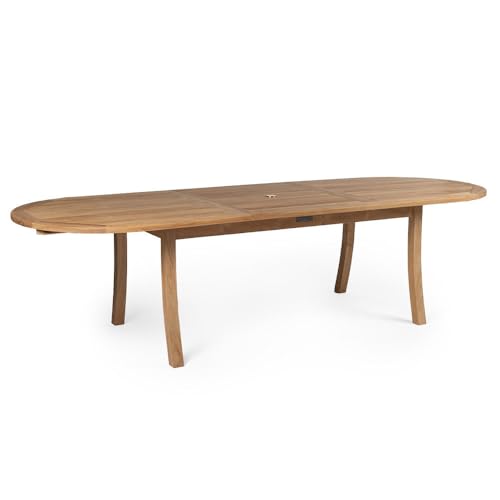
TITAN GREAT OUTDOORS Ash & Ember Sage Grade A Teak Extended Oval Dining Table, 82.5"-115" Extended Length, Seats 6 to 8 People, Weather-Resistant Patio Dining Furniture
Check price on Amazon
Ulax furniture Nuova 60" Round Teak Dining Table – Solid Wood Indoor/Outdoor Patio Table with Umbrella Hole, Comfortably Seats 6 (Black)
Check price on Amazon
Christopher Knight Home Outdoor Dining Table Set with Bench, 70" Acacia Wood Patio Table and 57" Bench, Teak Finish Slatted Garden Furniture for Deck Backyard Seating
Check price on Amazon
Tangkula Teak Wood Folding Outdoor Table, Patio Dining Table for 4 | 32" Square Bistro Table, Slatted Tabletop, Sturdy X-Frame, Space Saving, Table for Deck, Porch, Poolside, Balcony & Garden
Check price on Amazon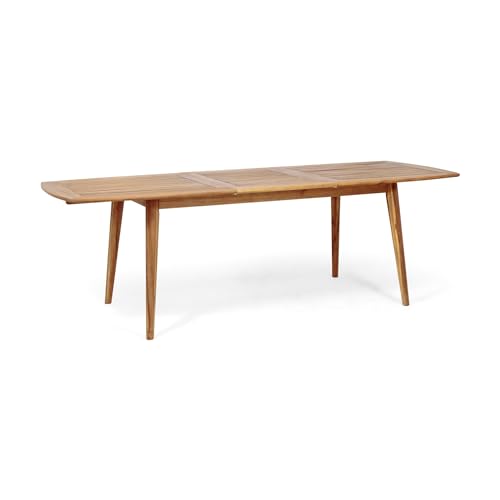
Christopher Knight Home Stamford Outdoor Acacia Wood Expandable Dining Table, Teak
Check price on Amazon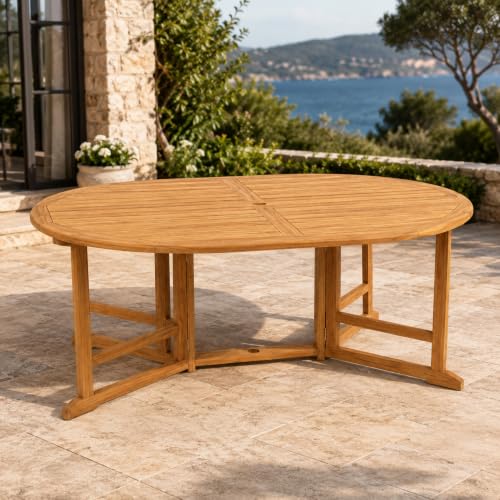
71" Oval Foldable Teak Outdoor Patio Dining Table
Check price on Amazon
Homary 118" Outdoor Dining Table, Teak Top, Umbrella Hole, Seats 6-8 | Seats 6-8 with solid teak top, aluminum frame, umbrella hole, 110 lbs capacity or outdoor dining
Check price on Amazon
TITAN GREAT OUTDOORS Ash & Ember Luna Grade A Teak 47" Round Dining Table, Drop Leaf Design, Indoor Outdoor Patio or Porch Dining, Weather Resistant Solid Wood with Umbrella Hole
Check price on AmazonFrequently Asked Questions
Is teak a good choice for an indoor dining table?
Yes. Teak's density and natural oils make it highly resistant to moisture and everyday wear, which is ideal for busy dining rooms. Indoors, it holds its shape well across seasonal humidity changes. An oiled finish keeps the warm tone; untreated teak gradually develops a silver-grey patina.
How many people can sit on a teak dining bench?
As a general rule, allow about 60 cm of bench length per adult. A 150 cm bench comfortably seats two to three adults, while a 180 cm bench seats three. For mixed groups, pairing a bench with chairs on the opposite side often gives the most flexible seating.
Should I choose a backless bench or a bench with a back?
Backless benches tuck fully under the table, save space, and suit casual family meals. Benches with backs offer more lumbar support for long dinners but take up more floor space. Many households choose a backless bench on one side and chairs on the other for a balanced setup.
How do I care for a teak dining table and bench?
Dust regularly with a soft damp cloth, use coasters and placemats, and wipe spills promptly. Apply teak oil once a year if you want to preserve the golden-brown tone. Check bolts and joinery seasonally, and cover the set if it is used outdoors in wet weather.
Can a teak dining set be used outdoors?
Teak is one of the most weather-resistant hardwoods and is commonly used outdoors. For longevity, place the set on a covered patio and use a cover during heavy rain. Untreated outdoor teak will weather to a silver-grey tone. Our large outdoor teak dining table guide covers this in more detail.
What size room do I need for a teak table with bench?
Plan for 90–100 cm of clearance around the table edges for bench pull-out and walkways. A 150 cm table with a 140 cm bench works comfortably in a dining area roughly 2.4 m by 2.8 m or larger. For compact rooms, consider a small dining table with four chairs or a narrow dining table for 2.
Ready to Choose Your Teak Dining Set?
Browse our recommended teak dining table with bench sets above, and use this guide to confirm sizing, bench style, and construction quality before you decide. A well-chosen teak set is a long-term investment in everyday meals and gatherings.
Explore Recommended Sets