
Lazy Susan Dining Table Set: The Complete Guide
Everything you need to know about rotating-center dining tables — how they work, who they suit, what to check before buying, and how to get the most from every shared meal.
Jump to Buyer EssentialsWhy lazy Susan dining table sets matter: A rotating centerpiece turns the dining table into a genuinely shared surface. Instead of passing plates hand to hand, everyone simply spins the tray to reach what they need. For families, hosts, and anyone who values smooth mealtime flow, this is one of the most practical upgrades you can make. This guide walks you through the design, the materials, the seating implications, and the everyday habits that keep a lazy Susan dining table set working beautifully for years.
Recommended Lazy Susan Dining Table Sets
⚠️ AFFILIATE DISCLOSURE: This website contains affiliate links. As an affiliate Associate, we earn from qualifying purchases. If you make a purchase through these links, we may receive a small commission at no additional cost to you. Read our full affiliate policy.
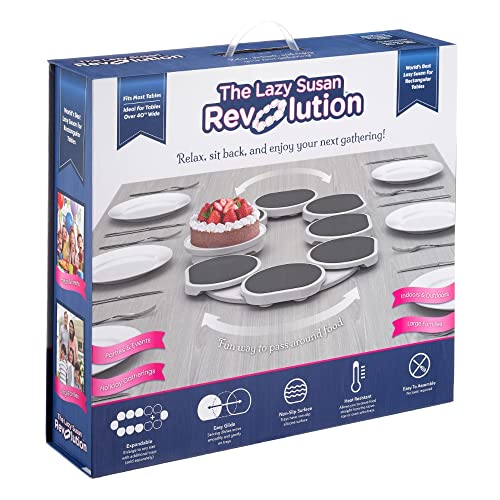
The Lazy Susan Revolution - Full Set - Dark Gray - The First Patented Lazy Susan Turntable Expandable for Rectangular & Oblong Tables - Kitchen & Dining Tables - Great Gift! Parties & Gatherings.
Check price on Amazon
7-Pcs Round Dining Table Set, 59"D Modern Dining Room Table Set of 6, Marble Dining Table with 31.5" Detachable Lazy Susan, Sintered Stone Tabletop with 6 Curved Back Chairs for Home, Kitchen
Check price on Amazon
Leavader 7-Piece Round Marble Dining Table Set, 59" D Round Dining Room Table with 31.5" Removable Lazy Susan Turntable, 1 Table & 6 Chairs Set for Dining Room, Kitchen
Check price on Amazon
55'' Round Dining Table Set for 6, Walnut Dining Table Set with Lazy Susan | Round Dining Table Set with 26'' Lazy Susan, Walnut Kitchen Table Set with Hidden Storage, Space Saving Dining Table Set
Check price on Amazon
Light Gray- The Lazy Susan Revolution - The First Patented Lazy Susan Turntable Expandable for Rectangular & Oblong Tables - Kitchen & Dining Tables - Great Gift! Parties & Gatherings
Check price on Amazon
Acacia Wood 13" Lazy Susan Turntable Organizer for Table Top, Farmhouse Round Wooden Lazy Susan for Cabinet Kitchen Centerpieces Coffee Table, for Condiments Spices, Bathroom Vanity Tray Decor
Check price on Amazon
TamBee 24 Inch Lazy Susan Hardware Heavy-Duty Mute Lazy Susan Bearing 600lb Capacity Bearing Turntable Ring Mechanism Kit for Smooth Rotation, Universal Hardware for DIY Projects, Table (Base Only)
Check price on Amazon
LAMU 2 Pack 9'' 10'' Lazy Susan Turntable Organizer for Table Top Cabinet, Wooden Lazy Susan for Kitchen, Pantry, Countertop, Bathroom Vanity, Spice Organization, Wood Decor
Check price on AmazonWhat Exactly Is a Lazy Susan Dining Table Set?
A lazy Susan dining table set combines a standard dining table — most often round or oval — with a rotating tray built into or placed at the center of the tabletop. The rotating element is the "lazy Susan," a circular platform that spins freely on a bearing mechanism so that dishes, condiments, and serving bowls can be moved around the table with a gentle push. In a complete set, the table typically arrives with matching chairs or benches designed at the correct seat height for comfortable reach across the rotating center.
These sets are especially common in round configurations because a circular table gives every diner roughly equal distance to the center. That symmetry is what makes the rotating tray genuinely useful rather than a novelty. If you are exploring round options first, the round dining table set for four with chairs is a natural starting point for smaller households, while larger families may prefer the round dining table set for eight to ten where a central tray becomes even more valuable.
The rotating mechanism itself can be integrated (recessed into the tabletop) or freestanding (a separate tray placed on top). Integrated designs feel more seamless and are easier to keep clean; freestanding trays are more flexible and can be removed when not needed. Both approaches work well, and the right choice depends on how often you host shared, multi-dish meals versus simple everyday dining.
Core Benefits of a Rotating-Center Dining Set
Effortless Sharing
No more reaching across neighbors or passing heavy bowls. A gentle spin brings any dish within easy reach, which keeps conversation flowing and reduces spills during busy family meals.
Equal Access for Everyone
On a round table with a central rotating tray, every seat has roughly the same distance to the center. That fairness makes these sets especially popular with larger households and frequent hosts.
Better Use of Table Space
Serving dishes live on the rotating tray rather than crowding the edges, freeing up each diner's place setting area. The result is a tidier tabletop with room for glasses, plates, and elbows.
Encourages Shared Dining
Family-style meals — where multiple dishes sit at the center — become natural with a rotating tray. It subtly encourages everyone to try more dishes and linger a little longer at the table.
Compact Yet Social
Round tables with rotating centers are surprisingly efficient in smaller rooms. The circular footprint fits corners and nooks well while keeping the social feel intact.
Easy to Style
The rotating center doubles as a display platform for a centerpiece, candles, or seasonal decor. When the meal is over, the tray becomes a styling surface rather than dead space.
Buyer Essentials: What to Check Before Choosing
- Rotating mechanism quality: A smooth, quiet bearing is the heart of any lazy Susan table. Entry-level tiers often use simple plastic rings, while mid-range and premium tiers move to metal bearings that spin more evenly and last longer. Test the rotation in person if possible, or read owner feedback about wobble and noise.
- Table diameter and seating: The rotating tray needs clearance from each place setting. As a rule of thumb, leave at least 10–12 inches between the edge of the tray and the table edge for comfortable plates. Smaller sets suit four diners; larger diameters comfortably seat six to eight.
- Tabletop material: Wood tops feel warm and quiet; glass tops are easy to wipe but can amplify noise; stone tops are heavy-duty but require careful weight distribution. Consider how the material pairs with the rotating tray's finish.
- Tray diameter: A tray that is too small cannot hold serving dishes; one that is too large crowds place settings. A tray roughly one-third to one-half the table diameter is a reliable starting point.
- Chair height and reach: Because diners reach toward the center, seat height matters. Standard dining height works for most adults; counter-height sets need a taller tray position to remain comfortable. If you are considering a taller silhouette, review the 60-inch round counter-height dining table for reference.
- Assembly and weight: Integrated rotating tables are heavier and require stable assembly. Check whether the base is pedestal-style or leg-style, and confirm the set includes all hardware. Pedestal bases are common on round sets because they free up legroom.
- Cleaning and maintenance: Crumbs and spills inevitably find their way under the tray. Look for removable trays or sealed bearings that tolerate gentle wiping. Wood trays benefit from occasional conditioning; glass trays simply need a streak-free cleaner.
- Room flow: A round table with a rotating center needs clearance around its full perimeter for chairs to pull out. Measure your walkway before committing, especially in compact dining nooks.
Market Tiers at a Glance
Lazy Susan dining table sets sit across several market tiers. The table below describes what each tier generally offers so you can match expectations to your household's needs. These are relative positions, not absolute judgments.
| Tier | Typical Rotation | Materials | Best For |
|---|---|---|---|
| Entry-level | Simple ring bearing, occasional wobble | Engineered wood, basic laminates | Light everyday use, first shared table |
| Mid-range | Smoother metal bearing, quieter spin | Solid wood or quality veneer, tempered glass | Families who dine together daily |
| Premium | Sealed precision bearing, very stable | Hardwood, stone, thick tempered glass | Frequent hosts and larger households |
| Luxury / flagship | Custom integrated rotation, near-silent | Exotic hardwood, marble, designer finishes | Statement dining rooms, formal entertaining |
Space, Seating, and Everyday Comfort
A lazy Susan table is most rewarding when the surrounding room supports it. Round sets need a little more breathing room around the perimeter than rectangular tables of the same seat count, because chairs fan out at every angle. As a practical guideline, allow about 24 inches of clearance behind each chair so it can slide out without bumping a wall or walkway. If your dining area is tight, consider a smaller diameter with a proportionally sized tray — a well-scaled small set often outperforms an oversized one in daily use.
Seating style also matters. Chairs with arms need more pull-out space than armless chairs, and benches work well on one side of a round set only when the tray sits high enough for comfortable reach. For mixed seating, the round dining table set with upholstered chairs shows how comfort and style can coexist around a rotating center. If you prefer a more casual look, the round bench seat for dining table arrangement is worth reviewing for its space-saving qualities.
Lighting deserves a mention too. A pendant or chandelier centered above a round table highlights the rotating tray and makes shared dishes look inviting. Keep the fixture high enough that diners can see across the table; roughly 30–34 inches above the tabletop is a common target. If you are planning the broader room, the dining room table styles overview can help you align the table silhouette with the rest of the space.
Materials and Finishes That Hold Up
Because the center of a lazy Susan table sees constant handling, material choice has a direct effect on longevity. Wood tops — especially sealed hardwood — offer warmth and quiet rotation, but benefit from coasters and trivets under hot dishes. Glass tops are easy to wipe and visually light, though they can be noisy and show fingerprints. Stone tops are heavy-duty and elegant, but the weight must be supported by a robust base and the tray mechanism should be rated for the load.
On the rotating tray itself, look for a finish that matches the table and resists staining. Removable trays are easier to clean thoroughly; fixed trays require careful wiping around the bearing. If the set includes chairs, check that the upholstery or wood finish is practical for daily meals rather than only formal occasions. A coordinated set feels more intentional, but mixing in complementary pieces is perfectly acceptable if the scale and tone align.
For households that entertain outdoors or in sunrooms, consider how the materials respond to humidity and temperature swings. Solid wood expands and contracts; engineered materials are more dimensionally stable; metal accents should be powder-coated or otherwise protected against rust. The same principles apply whether you are choosing a formal indoor set or a more relaxed outdoor arrangement like the outdoor table and chairs dining setup.
Who Gets the Most From a Lazy Susan Set?
These sets shine for families who eat together regularly, hosts who serve multiple dishes at once, and anyone who enjoys the social rhythm of a shared table. They are also a smart fit for compact dining rooms, because a round table with a rotating center keeps the footprint efficient while preserving a generous feel. Households that mostly eat plated, single-dish meals may find the rotating tray less essential, though it still works well as a styling surface and a place for condiments.
If your dining habits lean toward buffet-style or family-style serving, the rotating center becomes a genuine daily convenience rather than an occasional feature. It is also a thoughtful choice for multigenerational households, where diners of different heights and reach can all access dishes without leaning awkwardly. The key is matching the tray size and table diameter to your typical number of diners, then letting the set settle into your routine.
Related Dining Table Ideas to Explore
If you are still weighing configurations, these related guides can help you compare shapes, materials, and seating arrangements around a rotating center.
Ready to Bring a Rotating Center to Your Dining Room?
Compare the recommended lazy Susan dining table sets above, check availability, and choose the configuration that fits your household's daily rhythm.
Explore Recommended SetsFrequently Asked Questions
How does a lazy Susan dining table actually work?
The rotating tray sits on a bearing mechanism at the center of the table. A gentle push spins the platform, bringing serving dishes and condiments within reach of every diner. Integrated designs recess the tray into the tabletop; freestanding designs place a separate rotating tray on top.
Are lazy Susan tables only for round dining tables?
Round and oval tables are the most natural fit because the rotating center is equidistant from every seat. Square and rectangular tables can use a freestanding lazy Susan, but the reach becomes less even toward the ends of the table.
How much clearance should there be between the tray and each place setting?
Aim for roughly 10–12 inches between the edge of the rotating tray and the table edge. This leaves room for a plate, glass, and cutlery without crowding, and allows diners to reach the tray comfortably.
Can I remove the lazy Susan tray for cleaning?
Many freestanding trays lift out for easy cleaning; integrated trays are usually fixed but can be wiped around the bearing. Check the product details before choosing, especially if you prefer thorough cleaning after saucy or crumb-heavy meals.
What is the best table diameter for a family of four?
A table around 40–48 inches in diameter comfortably seats four with a rotating center. Larger diameters — roughly 54–60 inches — suit six diners, while eight or more typically call for a bigger footprint. Measuring your room's clearance first is always the safest step.
Do lazy Susan tables wobble?
Wobble usually comes from an entry-level bearing or uneven assembly. Mid-range and premium sets with metal bearings and sturdy pedestal bases are generally stable. Checking owner feedback and confirming all hardware is tightened during assembly will minimize wobble.