
High Bench for Dining Table: The Complete Guide
Everything you need to know about choosing a high dining bench — sizing, materials, comfort, style compatibility, and the top-tier options worth exploring for your dining space.
START THE GUIDEWhy a high bench? A high bench for a dining table brings a relaxed, communal feel to your dining area. It pairs beautifully with counter-height and bar-height tables, saves visual space compared to individual chairs, and instantly adds a casual, modern or farmhouse character to the room. This guide walks you through every decision — from seat height and depth to material durability and comfort — so you can choose with confidence.
What Is a High Bench for a Dining Table?
A high bench for a dining table is a long, backless (or low-back) seating piece designed to sit at counter height or bar height alongside a tall dining table. Unlike standard dining benches that pair with 28–30 inch tables, high benches are built taller — typically with seat heights between 24 and 30 inches — to match counter-height (34–36 inch) or bar-height (40–42 inch) tables.
These benches are especially popular in open-plan kitchens, breakfast nooks, and casual dining areas. They offer a clean, uncluttered look because they tuck neatly under the table when not in use, and they can seat multiple people along one side without the visual bulk of individual chairs.
If you are still deciding between a bench and chairs, you may also want to explore our guide on seating bench for dining table for a broader comparison. And if you are planning a high-top setup from scratch, our article on high dining table set for 2 provides a useful starting framework for pairing benches with compact high tables.
High benches come in several forms: solid wood, metal frame with wood seat, upholstered top, and backless or with a low backrest. Each type serves a slightly different purpose — from rugged farmhouse durability to soft, upholstered comfort for long dinners.
Matching Bench Height to Table Height
The single most important measurement when buying a high bench is the seat height relative to your table. A mismatched bench is uncomfortable and unsafe. Use this simple rule: the bench seat should sit roughly 10 to 12 inches below the tabletop surface for comfortable legroom and arm clearance.
| Table Type | Typical Tabletop Height | Ideal Bench Seat Height | Best For |
|---|---|---|---|
| Standard Dining Table | 28–30 inches | 18–20 inches (standard bench) | Formal dining rooms, family kitchens |
| Counter-Height Table | 34–36 inches | 24–26 inches (high bench) | Breakfast nooks, kitchen islands |
| Bar-Height Table | 40–42 inches | 28–30 inches (tall bench) | Casual entertaining, open-plan spaces |
Always measure your table before ordering. A bench that is too low forces you to reach up awkwardly; a bench that is too high leaves no legroom under the table and can feel unstable. If you are still weighing table shapes, the standard round dining table sizes guide can help you understand how a round high-top table pairs with a curved or straight bench.
Also consider bench depth: 14–16 inches is standard for backless benches, while upholstered benches with a slight backrest may need 17–20 inches of depth. Depth affects comfort more than most buyers expect — shallow benches feel perchy, while overly deep benches push you away from the table.
Comfort & Ergonomics Essentials
High benches are often chosen for their looks, but comfort determines whether you actually enjoy using them. Since a backless bench offers no lumbar support, pay attention to these details:
- Seat contour: A gently scooped or saddle-shaped seat distributes weight better than a flat plank.
- Edge profile: Rounded or eased edges prevent pressure points on the backs of your thighs.
- Footrest: For counter-height and bar-height benches, a built-in footrest (or a stretcher bar) is essential — dangling feet become uncomfortable quickly.
- Cushioning: A 1.5–2 inch high-density foam cushion adds comfort without making the bench feel mushy. Removable, washable covers are a practical bonus.
- Stability: A bench that rocks or flexes feels unsafe at height. Look for reinforced joinery and a solid, wide base.
If you plan to use the bench with a high-top table in a casual dining setup, pair it with a supportive chair on the opposite side. Our guide on the adjustable dining chair covers how to keep seat heights consistent across mixed seating, which matters when one side is a bench and the other is a chair.
Materials & Build Quality
The material you choose affects durability, maintenance, and the overall aesthetic of your dining space. Here is how the most common high bench materials compare:
Solid Wood
Solid hardwood — oak, walnut, teak, mango, and pine — is the most popular choice for high benches. Hardwoods like oak and walnut resist wear and hold up to daily use, while pine and mango sit at a friendlier entry-level position. Look for kiln-dried wood and reinforced corner blocks. If wood selection is a priority, our guide on good wood for dining table and bench construction is a helpful companion read.
Metal Frame
Powder-coated steel and aluminum frames are heavy-duty, rust-resistant when finished properly, and pair well with industrial or modern interiors. A metal-framed high bench with a wood or upholstered seat is a strong mid-range option that balances durability and design flexibility. For a broader look at metal dining furniture, see our article on metal indoor dining table options.
Upholstered
Fully upholstered high benches — often built on a solid wood or metal frame — add softness and a premium feel. Performance fabrics and easy-clean faux leathers are practical for households with children. Check that the upholstery is tight and evenly stitched, and that the foam is high-density rather than soft filler.
Engineered & Mixed Materials
Some benches use engineered wood cores with hardwood veneers for a consistent look at a mid-tier position. These are stable and uniform but require care around moisture. Mixed-material benches (wood seat + metal legs, for example) are among the most versatile designs for modern and industrial spaces.
Build Quality Checkpoints
Whichever material you choose, inspect the joinery (mortise-and-tenon or reinforced metal brackets are best), confirm the bench has a weight rating suitable for multiple adults, and check for adjustable leveling feet — especially useful on tile or slightly uneven floors.
Styles & Design Compatibility
High benches work across a surprisingly wide range of interior styles. Match the bench to your table and room character for a cohesive result:
- Farmhouse & rustic: Chunky solid wood benches with visible grain and a distressed or natural finish. Pair with a matching farmhouse table — our farmhouse rustic dining table set guide shows how to tie the look together.
- Modern & minimalist: Slim metal frames, clean lines, and neutral wood tones. A backless bench keeps sightlines open in compact rooms.
- Industrial: Black steel legs with reclaimed-look wood seats. This style pairs naturally with the pieces covered in our retro metal dining table article.
- Scandinavian: Light oak or ash, tapered legs, and a simple silhouette. A high bench in this style works beautifully with a compact high-top setup.
- Contemporary luxury: Upholstered benches in performance fabric or leather, with polished or brushed metal accents.
For small spaces, a high bench is a smart space-saver because it slides fully under the table. If your dining area is tight, browse our ideas for a small space dining table for 6 to see how benches and compact tables combine efficiently. And for styling the finished space, our dining room table decor modern guide offers practical centerpiece and layering ideas.
Tier Comparison: Entry to Luxury
To help you position your expectations, here is how high dining benches generally compare across market tiers. Use this as a framework — not every bench fits neatly into one tier, but most cluster around these profiles.
| Tier | Typical Construction | Comfort & Finish | Best For |
|---|---|---|---|
| Entry-Level | Pine or engineered wood, basic joinery, simple metal legs | Flat seat, basic finish, minimal contouring | Occasional use, starter homes, casual nooks |
| Mid-Range | Solid hardwood or reinforced metal frame, better joinery | Contoured seat, footrest, durable finish options | Daily family use, open-plan kitchens |
| Premium | Kiln-dried hardwood, mortise-and-tenon joinery, quality hardware | Ergonomic contour, high-density cushioning, refined finishes | Frequent entertaining, design-focused homes |
| Luxury | Premium hardwoods or designer metalwork, upholstered tops | Tailored upholstery, superior ergonomics, signature detailing | Statement dining spaces, long-term investment |
As a general rule, mid-range benches offer a meaningful step up in stability and comfort compared to entry-level models, while premium and luxury tiers focus on joinery precision, material grade, and ergonomic refinement. Choose the tier that matches how often the bench will be used and how prominent it will be in your room.
Recommended High Benches for Dining Tables
⚠️ AFFILIATE DISCLOSURE: This website contains affiliate links. As an affiliate Associate, we earn from qualifying purchases. If you make a purchase through these links, we may receive a small commission at no additional cost to you. Read our full affiliate policy.

HOOBRO Dining Bench, Bamboo Dining Room Bench with PU Leather Upholstered Seat, for Kitchen, Living Room, Hallway, Kitchen, Entryway, Brown and Black CB13CD01
Check price on Amazon
Roundhill Furniture Biony Fabric Counter Height Dining Bench with Nailhead Trim, Grey
Check price on Amazon
Roundhill Furniture Biony Fabric Counter Height Dining Bench with Nailhead Trim, Tan
Check price on Amazon
Signature Design by Ashley 1-Piece Wood Dining Bench, 48" 2-Tone Farmhouse | Sturdy Solid Wood Frame with Mango Veneer and MDF Substrate Seat, Space-Saving 48-Inch Profile, Wildenauer Series
Check price on Amazon
Signature Design by Ashley Counter Height Dining Bench, 49", Antique White | Antique White Farmhouse Style, Backless Frame, Upholstered Seat, Kitchen Island Use, Robbinsdale Series
Check price on Amazon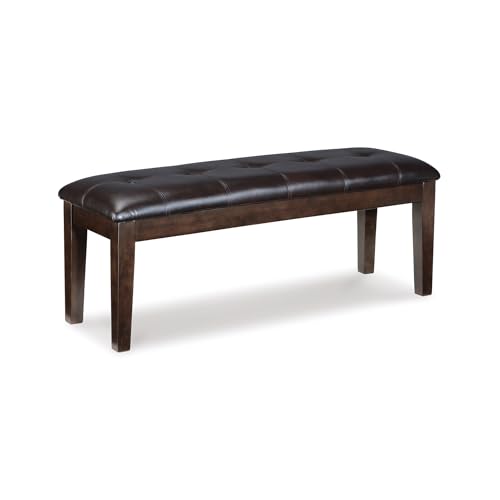
Signature Design by Ashley Haddigan 1-Piece Dining Bench, Faux Leather | Upholstered Button Tufted Seat, Wood and Engineered Wood Frame, 18.75 in Seat Height, 2-Person Capacity, Dark Brown Finish
Check price on Amazon
Signature Design by Ashley Ralene Tufted Upholstered Dining Room Bench, Medium Brown
Check price on AmazonStep-by-Step Buying Checklist
Before you commit to a high bench, run through this checklist to avoid the most common mistakes:
- Measure your table height. Confirm whether it is standard, counter-height, or bar-height, then choose a bench seat 10–12 inches below the tabletop.
- Measure the available length. A bench should be shorter than the table by at least a few inches on each end so people can slide in and out comfortably.
- Check clearance and walkway. Leave at least 30–36 inches of clearance behind the bench for pulling out and walking past.
- Decide on backrest or backless. Backless benches tuck away neatly; a low backrest adds comfort but needs more clearance.
- Confirm the footrest. Essential at counter and bar height.
- Verify the weight rating. Make sure the bench is rated for the number of adults who will sit on it simultaneously.
- Match the finish to your table. Coordinating wood tones or metal finishes keeps the pairing intentional.
- Consider mixed seating. Many homes pair a bench on one side with chairs on the other — keep seat heights consistent.
If you are furnishing a compact apartment, the ideas in our apartment size dining table and chairs guide show how benches can replace chairs to free up floor space. For households that need flexible seating, a bench also complements an extendable dining table 4 to 10 setup by adding extra seats along one side during gatherings.
Care & Maintenance Tips
A high bench takes more daily wear than a decorative piece — people slide on and off it constantly. Protect your investment with simple habits:
- Wood benches: Dust weekly and apply a furniture wax or oil appropriate to the finish every few months. Wipe spills promptly to prevent moisture rings.
- Metal frames: Wipe with a damp cloth and mild soap. Touch up any chips in the powder coating to prevent rust.
- Upholstered tops: Vacuum regularly and blot (never rub) spills immediately. Use a fabric protector if the upholstery allows it.
- Felt pads: Add felt pads under the legs to protect hard floors and reduce noise.
- Check hardware: Tighten bolts and screws every few months, especially on metal-framed benches.
Frequently Asked Questions
What height should a high bench be for a dining table?
For a counter-height table (34–36 inches), choose a bench with a 24–26 inch seat height. For a bar-height table (40–42 inches), choose a 28–30 inch seat height. The general rule is to keep the seat 10–12 inches below the tabletop.
Can a high bench be used with a standard dining table?
No — a high bench is too tall for a standard 28–30 inch table. For standard tables, choose a bench with an 18–20 inch seat height instead. Always match the bench to the table height.
Is a backless high bench comfortable for long meals?
Backless benches are fine for casual meals and shorter sittings. For long dinners, look for a gently contoured seat, a footrest, and optional cushioning. A low-back version offers more support if space allows.
How many people can sit on a high dining bench?
Allow about 24 inches of bench length per adult for comfortable seating. A 48-inch bench comfortably seats two adults, while a 72-inch bench seats three. Check the manufacturer's weight rating before seating multiple people.
Should I pair a high bench with chairs or use benches on both sides?
Both approaches work. A bench on one side and chairs on the other is the most common and practical arrangement — it offers back support for some diners while keeping the bench side flexible. Benches on both sides create a very communal, picnic-style feel best suited to casual spaces.
Do high benches need a footrest?
Yes, at counter and bar height a footrest is strongly recommended. Without one, feet dangle and pressure builds on the backs of the thighs, making the bench uncomfortable within minutes.
How do I keep a high bench stable?
Choose a bench with a wide base and reinforced joinery, avoid overloading it beyond its rating, and use adjustable leveling feet on uneven floors. Periodically re-tighten any bolts or screws.
Ready to Choose Your High Dining Bench?
Browse our curated high bench selections above, compare features, and find the piece that fits your table height, room style, and daily routine.
EXPLORE HIGH BENCH OPTIONS