
Dining Table with Stools Underneath: The Ultimate Space-Saving Guide
Everything you need to know about choosing, arranging, and styling a dining table with tuck-under stools — from height matching to daily comfort.
Start the GuideWhat Is a Dining Table with Stools Underneath?
A dining table with stools underneath is exactly what it sounds like: a dining table paired with backless or low-profile stools that slide completely beneath the tabletop when not in use. Instead of traditional dining chairs with tall backs that occupy permanent floor space, this arrangement keeps the footprint of your dining area as small as the table itself.
This setup is especially popular in apartments, studio units, breakfast nooks, and open-plan kitchens where every square foot matters. When the stools are tucked away, the table can double as a workspace, a prep surface, or a clear walkway. When guests arrive, the stools pull out in seconds and the table becomes a full dining destination.
The concept is closely related to other compact solutions such as a small dining table or a folding butterfly dining table, but the defining feature is the stool-based seating that disappears under the table rather than folding flat or folding against a wall.
Quick definition: A dining table with stools underneath uses backless or low-back stools that tuck fully below the apron and tabletop, preserving floor space and creating a clean, uncluttered look between meals.
Key Benefits for Compact Living
Why do so many design-savvy households choose this configuration? The advantages go beyond simple space savings.
1. Reclaimed Floor Space
Traditional chairs stick out 18 to 24 inches behind the table edge even when pushed in. Backless stools can sit entirely under the table, freeing that zone for walking, cleaning, or opening nearby cabinets. In a tight kitchen, this can be the difference between a cramped corner and a functional workflow.
2. Visual Breathing Room
Low-profile stools keep sightlines open. In an open-plan living area, you can see over the table to the sofa or window, which makes the whole room feel larger. This is a major reason this setup pairs so well with an apartment dining table and chairs strategy that prioritizes visual lightness.
3. Flexible Seating Count
Backless stools are easy to move, stack, or borrow from other rooms. Need seating for six but only have room for four at the table? Pull two stools from the kitchen island. This flexibility is hard to match with fixed dining chairs.
4. Easy Cleaning
With no chair backs and legs tucked away, sweeping and mopping under the table becomes a quick task. There is less furniture to move and fewer crevices for crumbs to hide.
5. Casual, Social Atmosphere
Stools encourage a relaxed, café-style vibe. They work beautifully for breakfast bars, kitchen islands, and casual family meals where formality is not the goal.
Types of Tuck-Under Stool Setups
Not every stool-and-table pairing is the same. The right combination depends on your room, your routine, and how often the table is used for long meals versus quick tasks.
Backless Square or Round Stools
These are the classic tuck-under option. With no backrest, they slide completely under the table and disappear from view. They are ideal for entry-level and mid-range setups where space is the top priority. A small 4-seater dining table paired with four backless stools is a textbook compact configuration.
Saddle-Style Stools
Saddle stools have a gently contoured seat that supports the thighs and hips. They are slightly more comfortable than flat stools for medium-length meals and still tuck under most tables with adequate apron clearance. They sit in the mid-range tier of comfort and construction.
Low-Back Stools
A short backrest (under 8 inches) offers light lumbar support while still allowing the stool to slide under the table. These work best with tables that have a high apron or a pedestal base, such as a pedestal leg dining table, which leaves more open space beneath the top.
Nesting or Stacking Stools
Some stools are designed to nest into one another or stack vertically. When paired with a table that has generous under-clearance, this is the most storage-efficient option. It is a favorite for multi-purpose rooms that switch between dining, working, and entertaining.
Stools with Built-In Storage
A newer category includes stools with lift-off seats or hollow interiors for storing small items. These add utility but often add height and weight, so measure carefully before committing.
Pro tip: If you want the tuck-under look but still need back support, choose a stool with a backrest that stops at least 2 inches below the table apron. This preserves the ability to slide the stool fully under the table.
Height Matching and Clearance Rules
Height is the single most important measurement in a dining table with stools underneath. Get it wrong and the stools will not tuck in, or they will be uncomfortable to sit on.
The 10 to 12 Inch Rule
Leave 10 to 12 inches of space between the top of the stool seat and the underside of the tabletop. This range allows comfortable legroom and lets most people slide their thighs under the table without scraping.
Standard Height Pairings
| Table Type | Typical Table Height | Suggested Stool Seat Height | Best For |
|---|---|---|---|
| Standard dining table | About 30 inches | About 18 inches | Everyday meals, family dining |
| Counter-height table | About 36 inches | About 24 inches | Casual kitchen dining, breakfast nooks |
| Bar-height table | About 42 inches | About 30 inches | Social entertaining, café-style spaces |
If you are unsure which table height suits your room, our guide to the ideal height for a dining table breaks down the ergonomics in detail. For counter-style layouts, a 32-inch high dining table is a common middle ground that pairs well with 22-inch stools.
Apron and Base Clearance
Beyond seat height, check the apron depth. A deep apron (more than 4 inches) reduces the opening a stool must pass through. Pedestal and trestle bases generally offer more tuck-under room than four-leg tables with thick aprons. If you are considering a 32-inch round dining table and chairs, confirm the apron height before assuming stools will slide under.
Sizing the Table and Stool Count
How many stools fit underneath depends on table length, stool width, and how much elbow room each diner needs. Here are practical starting points.
Rectangular Tables
- 36 to 48 inches long: Two stools per long side, or three backless stools on one side.
- 48 to 60 inches long: Three stools per long side is comfortable; four is possible with narrow backless stools.
- 60 to 72 inches long: Three to four stools per side; consider a mix of stools on one side and a bench on the other.
Round Tables
- 30 to 36 inches diameter: Two to three stools.
- 36 to 42 inches diameter: Three to four stools.
- 42 to 48 inches diameter: Four stools comfortably, five in a pinch.
Square Tables
- 30 to 36 inches square: Two stools, one per side, or four small backless stools.
- 36 to 42 inches square: Four stools, one per side.
For a tighter footprint, a 2-foot wide dining table can work with stools tucked on the long sides only, leaving the ends open for walking. A very small dining table may only accommodate two stools total, which is still enough for a couple or a solo diner who occasionally hosts one guest.
Measure twice: Add the width of all stools plus at least 2 inches of gap between each. If the total exceeds the table length minus 6 inches, reduce the stool count or choose narrower stools.
Material and Finish Considerations
Because stools under a table are in constant contact with the underside of the tabletop and with each other, material choice affects durability and appearance.
Tabletop Materials
Solid wood, engineered wood with veneer, glass, and stone are all compatible with tuck-under stools, but each has trade-offs. Wood tabletops show scratches more readily if stools are pushed in carelessly; a matte or oiled finish hides small marks better than a high-gloss finish. Glass tops require stools with smooth, rounded edges to avoid chipping. Stone tops are heavy and durable but unforgiving if a stool is dropped.
If you are drawn to a classic look, a wooden dining table vintage style can pair beautifully with wooden backless stools for a cohesive, warm aesthetic.
Stool Materials
- Solid wood: Durable, repairable, and warm. Mid-range to premium tier depending on species.
- Metal frames: Heavy-duty and stable; look for rust-proof finishes and rubber feet.
- Plastic or polypropylene: Lightweight and easy to move; best for entry-level and outdoor-adjacent use.
- Upholstered seats: More comfortable but bulkier; check that the cushion does not prevent tucking.
Finish Compatibility
Match stool glides to your floor. Felt glides protect hardwood; rubber glides grip tile and prevent sliding. Avoid bare metal feet on wood floors unless you use a protective pad.
Comfort and Daily Use Tips
Backless stools have a reputation for being less comfortable than dining chairs, but that is largely a matter of matching the stool to the use case.
Match the Stool to the Meal Length
For meals under 30 minutes, backless stools are perfectly fine. For longer dinners, choose saddle-style seats or low-back stools with contoured cushions. If you regularly host multi-course meals, consider a hybrid: stools on one side and traditional chairs on the other.
Footrests Matter
A footrest ring or built-in foot bar dramatically improves comfort on taller stools. If your table is counter-height or bar-height, prioritize stools with a footrest.
Seat Width and Depth
A seat width of at least 14 inches and a depth of 12 to 15 inches suits most adults. Narrower seats are fine for children or occasional use but become uncomfortable for daily dining.
Keep the Tuck Zone Clear
Do not store boxes, bags, or cleaning supplies under the table if you rely on tuck-under stools. The whole benefit depends on that space staying open.
Real-world tip: If your household includes older adults or anyone with back concerns, use low-back stools rather than fully backless ones. The small amount of lumbar support makes a noticeable difference over a meal.
Protecting the Tabletop
Stools that slide in and out dozens of times a day will eventually contact the table edge or underside. A few simple habits prevent most damage.
- Use glides: Felt or rubber glides on stool feet reduce friction and noise.
- Round the stool tops: Rounded seat edges are less likely to catch on the table apron.
- Add a table pad: A thin protective pad under the tabletop guards against upward knocks from stool backs.
- Choose the right finish: Matte and oiled finishes hide micro-scratches better than high-gloss lacquer.
- Teach the push-in motion: A gentle two-handed push is safer than kicking the stool under the table.
For broader guidance, see our articles on dining table pad protection and scratch touch-up.
Buying Checklist by Tier
Use tier descriptors rather than numeric ranges to compare options across the market. The right tier depends on how often the table is used and how long you plan to keep it.
| Tier | Typical Characteristics | Best For |
|---|---|---|
| Entry-level | Lightweight frames, basic finishes, simpler joinery; adequate for occasional use | First apartments, temporary setups, guest overflow seating |
| Mid-range | Solid wood or reinforced metal, better glides, contoured seats, smoother tuck-under action | Everyday family dining, long-term compact living |
| Premium | Hardwood construction, precision joinery, premium upholstery, refined finish | Design-forward spaces, daily use with long meal sessions |
| Luxury | Statement materials, artisan construction, integrated storage or custom sizing | High-end interiors, entertaining-focused dining rooms |
Mid-range models usually offer smoother tuck-under mechanics than entry-level options, while premium and luxury tiers focus on materials and finish longevity. For a compact table that doubles as a workspace, a dining table to desk conversion setup benefits from mid-range stools that are comfortable for both sitting and sliding.
Before you buy: Measure your space, confirm the table apron height, count your typical diners, and decide whether you need back support. These four factors narrow the field faster than any other criteria.
Frequently Asked Questions
What is a dining table with stools underneath?
A dining table with stools underneath is a space-saving furniture design where stools are stored or tucked directly beneath the tabletop when not in use. This arrangement maximizes floor space and keeps the dining area looking tidy.
Are stools under a dining table comfortable for everyday use?
Yes, when properly selected. Backless stools are ideal for quick meals and casual dining, while low-back or saddle-style stools offer more support for longer seating sessions. Comfort depends on stool height matching the table and adequate legroom.
What table height works best with tuck-under stools?
Standard dining tables (about 30 inches high) pair best with stools around 18 inches tall. Counter-height tables (about 36 inches) suit stools around 24 inches, and bar-height tables (about 42 inches) need stools around 30 inches. Always leave 10–12 inches between the stool seat and the tabletop underside.
How many stools can fit underneath a dining table?
It depends on table length and stool width. A typical 48-inch rectangular table fits two to three backless stools per long side, while a 36-inch round table fits two to three stools around it. Measure the apron clearance and stool footprint before buying.
Do stools underneath a table scratch the tabletop?
They can if stools are pushed in carelessly. Choose stools with rubberized or felt glides, avoid sharp metal edges, and consider a table pad or protective finish. Backless stools with rounded tops slide in more safely than tall-backed chairs.
Explore More Compact Dining Solutions
If a stools-underneath setup sounds right for your space, browse related compact tables and seating configurations to complete your dining area.
Browse Small Dining Tables See Folding OptionsRecommended Dining Tables with Stool Storage Potential
⚠️ AFFILIATE DISCLOSURE: This website contains affiliate links. As an affiliate Associate, we earn from qualifying purchases. If you make a purchase through these links, we may receive a small commission at no additional cost to you. Read our full affiliate policy.

Winsome Suzanne Kitchen Table Set with Stools, Coffee, 33" | Convenient Sturdy Mobile Kitchen & Dining Room Table & Chairs with Storage for Small Spaces, Dorms, Apartments
Check price on Amazon
Karl home 83.8" Bar Table and Chairs Set, 4 Adjustable PU Stools, Brown | High Top Counter Height Table with 24‑26" Stools for Kitchen Breakfast, Bistro, Dining Room, Living Room
Check price on Amazon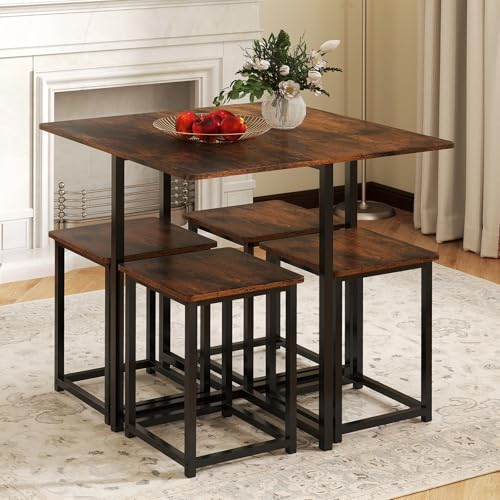
Tangkula Compact Dining Table Set for 4, Small Kitchen Table Set with Square Stools and Metal Frame, Perfect for Small Spaces, Home Kitchen Bar and Apartments
Check price on Amazon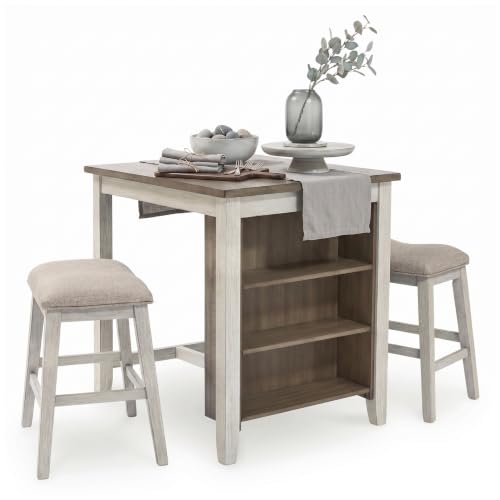
Signature Design by Ashley Skempton 3-Piece Counter Height Dining Table Set | Wood, Acacia Veneer and Engineered Wood, 3 Built-In Open Shelves, 2 Upholstered Stools, Space-Saving Design, Dining Room
Check price on Amazon
NicBex 5 Piece Counter Height Dining Table Set, Farmhouse Wooden Dinner Table Set for 4, 39" Square Table & 4 High Back Bar Stools, Black&Gray
Check price on Amazon
Roundhill Furniture Cylina Solid Wood Glass Top Round Counter Height Table with 4 Stools
Check price on Amazon
NAFORT Dining Table Set with Counter Height Table & 4 Bar Stools, 5-Piece Bar Table and Chairs with Footrest & Back Support, Space-Saving Dinette Set for Pub, Kitchen &Dining Room, Restaurant
Check price on Amazon
Signature Design by Ashley 5-Piece Round Counter Height Dining Set, Gray | 42-Inch Round Dining Table with 2 Storage Shelves, 4 Upholstered Bar Stools, Wrenning Series
Check price on AmazonDisclaimer
The information provided on DiningTablePicks is for educational and informational purposes only. We are not professional interior designers or furniture technicians, and our content should not replace professional advice. Always consult with a qualified expert regarding furniture safety, material durability, or technical concerns. Some content may use AI assistance. Always check product warranties and safety standards before purchasing. If you do not agree, please do not use this website. Read the full disclaimer.