
Dining Room Server Table: The Complete Guide to Choosing and Using One
A dining room server table bridges storage, serving, and style. This guide explains the types, sizes, materials, and layout rules that help you choose a piece that works for your room and your hosting habits.
Why a server table matters: Most dining rooms are asked to do more than hold a table and chairs. A server table adds a landing zone for serving dishes, a home for linens and tableware, and a visual counterweight that makes the whole room feel considered. If you are still choosing the centerpiece of your dining space, start with our dining table buying guide and then return here to plan the supporting storage piece.
What Is a Dining Room Server Table?
A dining room server table is a storage-and-surface piece placed against a wall or at the edge of the dining zone. It typically combines a flat top for serving with drawers, cabinets, or open shelving underneath. The category overlaps with buffets, sideboards, and consoles, and manufacturers often use the terms loosely. What distinguishes a server table in practice is proportion: it tends to be slightly taller and narrower than a traditional buffet, which makes it useful in rooms where floor space is limited but vertical storage still matters.
In daily use, a server table holds serving platters, water pitchers, and dessert plates during meals. Between meals, it becomes a display surface for lamps, art, or seasonal decor. In smaller homes, it can double as a coffee station or a compact bar. The practical value comes from combining three functions in one footprint: serving, storage, and styling.
Server Table vs. Buffet vs. Sideboard: What's the Difference?
The terminology is genuinely inconsistent across retailers. Use this rough framework as a starting point, then judge each piece by its actual dimensions and storage layout rather than its label.
| Piece | Typical Proportion | Best For |
|---|---|---|
| Server table | Narrower depth, slightly taller top; often 2–4 drawers plus cabinet doors | Compact dining rooms, frequent serving, dual-purpose console use |
| Buffet | Longer and lower; broad serving surface is the priority | Formal dining rooms, large-format hosting, holiday spreads |
| Sideboard | Mid-depth, storage-heavy, often with adjustable shelving | Everyday tableware storage, rooms that need concealed organization |
If you are comparing surface materials for the top of the piece, the same trade-offs that apply to dining tables apply here. Our guides on marble versus granite and wood versus glass are useful references for the serving surface itself.
Types of Dining Room Server Tables
The right type depends on how much you host, how much you need to store, and how much wall space you can dedicate. The tiers below describe market positioning and build quality, not any specific figure.
Compact Two-Door Server
Usually engineered wood with a veneer top and two cabinet doors. A solid choice for starter dining rooms or apartments where the piece must stay narrow. Look for reinforced back panels and adjustable shelves.
Drawer-and-Cabinet Server
The most versatile layout: two or three drawers for cutlery and linens plus cabinet space below. Mid-tier models often upgrade to dovetailed drawer boxes and soft-close hardware, which noticeably improves daily use.
Solid Wood Sideboard Server
Solid hardwood frames and tops with quality joinery. These pieces are a long-term investment and handle heavy serving use well. Expect more consistent grain matching and finer finish work.
Stone-Top or Statement Server
Marble, quartz, or specialty stone surfaces paired with premium cabinetry. These are focal-point pieces best suited to formal dining rooms where the server is visible from adjacent living areas.
Bar or Beverage Server
Built around a beverage function: wine storage, glass racks, or an integrated cooler zone. Useful if you entertain often and want drinks to stay out of the main kitchen traffic path.
Convertible Console Server
A shallow piece designed to work as a console in open layouts and as a serving station during meals. Often the best fit for open-concept dining zones.
How to Size a Server Table for Your Dining Room
Sizing is where most purchases go wrong. A server table that is too deep blocks circulation; one that is too long overwhelms the dining table. Use these working rules as a starting point.
Depth and walkway clearance
- Most server tables run roughly 14 to 20 inches deep. Deeper pieces provide more serving surface but eat into walkway space.
- Leave at least 36 inches of clear walkway in front of the server. In high-traffic rooms, aim closer to 42 inches.
- If the server sits behind seated diners, add extra clearance so chairs can push back without hitting the piece.
Length and visual balance
- A server table typically looks balanced at about half to two-thirds the length of the dining table.
- In narrow rooms, a shorter server with vertical storage reads better than a long low piece.
- If the server is the only furniture on that wall, slightly longer proportions can anchor the room.
Height
- Standard server height sits near typical dining table height, which keeps serving comfortable.
- Counter-height servers work in rooms with bar-height seating but can feel tall next to standard dining chairs.
For a deeper treatment of circulation and placement, see our dining table pathway width guide and space planning guide.
Materials and Finishes for a Server Table
The server table top takes more abuse than most people expect: hot dishes, condensation from pitchers, and occasional spills. Match the material to your actual serving habits.
Solid wood
Warm, repairable, and timeless. Oak and walnut are the most common choices, and both age gracefully. Solid wood tops can be refinished if they develop scratches, which makes them a strong long-term investment. Our wooden dining table buying guide covers species differences in detail.
Stone and quartz
Marble and quartz tops handle heat and moisture well and look polished in formal rooms. Marble requires sealing and is vulnerable to acidic spills; quartz is more forgiving. Granite is a durable middle path with strong visual character.
Glass
Glass tops keep small rooms feeling open, but they show fingerprints and require regular cleaning. They work best in modern or Scandinavian-styled dining rooms.
Veneer and engineered wood
Common in entry-level and mid-range pieces. Quality veneer over a stable substrate performs well when the edges are properly sealed. Check that the top has a protective finish rated for moisture.
Finish choice matters as much as material. Matte finishes hide smudges; glossy finishes reflect light but show every mark. Our guides on modern dining table styling and rustic dining table styling show how finish direction changes the feel of the whole room.
Placement and Layout Ideas
Placement determines whether a server table feels integrated or awkward. The most reliable approach is to place it on the wall opposite the main sightline into the room, so it reads as a balanced backdrop rather than an obstacle.
- Opposite the dining table: the classic layout. Keeps serving within arm's reach and balances the visual weight of the table and chairs.
- As a room divider: in open layouts, a low server table can separate the dining zone from a living area without blocking sightlines. See our open concept dining layouts guide.
- Under a window: works well if the piece is low enough not to block light. Avoid tall servers in front of windows.
- Flanking a focal point: paired servers on either side of a window or artwork create a strong symmetric composition. Our dining room symmetry guide explains the proportions.
- In a compact nook: a narrow server can replace a second console and free up floor space. See compact dining nook arrangement.
Lighting deserves its own plan. A server table benefits from a layered approach: a pair of lamps for ambient light, plus a picture light or wall sconce if the surface is used for display.
Storage Strategy: What Should Live in a Server Table?
A server table only earns its footprint if the storage inside is organized around how you actually host. A practical division:
- Drawers: cutlery, napkins, placemats, serving utensils, bottle openers, and small linens.
- Upper cabinet zone: everyday plates, bowls, and glassware that you reach for often.
- Lower cabinet zone: serving platters, large bowls, and seasonal tableware that you use less frequently.
- Open shelving: display pieces, cookbooks, or a beverage station. Open storage looks best when it is styled, not packed.
Adjustable shelving is one of the most underrated features. It lets the piece adapt as your tableware collection changes. If you plan to store heavy stoneware, check the shelf weight rating and the quality of the shelf pins.
Matching a Server Table to Your Dining Set
An exact match is not required, and in many rooms a coordinated contrast looks more deliberate. Three approaches work reliably:
- Same wood family, different tone: pair an oak dining table with a walnut server, or a dark-stained table with a lighter natural server. The shared material family keeps the room cohesive.
- Shared finish language: if the dining set is matte, keep the server matte. Mixing high-gloss and matte in the same visual field usually reads as accidental.
- Hardware continuity: repeating the same metal finish in the server hardware and the dining lighting ties the room together without requiring matching furniture.
If your dining table is a strong statement piece, a quieter server is usually the better choice. Our guides on editor's choice dining tables and popular dining table brands show how statement pieces are typically balanced in styled rooms.
Styling the Top Surface
The server top is the most visible surface in the room after the dining table itself. Keep the composition simple and functional.
- Anchor with height: a pair of lamps or a tall vase gives the surface vertical structure.
- Leave serving space: reserve at least half the surface for actual serving during meals.
- Layer in threes: a lamp, a low bowl, and a small framed piece is a reliable formula.
- Rotate seasonally: swap in holiday or seasonal decor rather than adding to the arrangement permanently.
For more composition ideas, see our guides on dining table vignette ideas, floral centerpiece ideas, and dining table wall decor.
Care and Maintenance
Server tables are working furniture, so maintenance should be simple and regular.
- Wood tops: dust weekly, wipe with a damp cloth, and re-oil or re-wax according to the finish type. Use coasters and trivets for hot dishes.
- Stone tops: reseal marble and granite on the manufacturer's schedule, and clean with pH-neutral products.
- Glass tops: clean with a non-ammonia glass cleaner and avoid abrasive pads.
- Hardware: tighten drawer pulls and hinges periodically, especially on pieces used daily.
Our dining table material care guide covers surface-specific routines in more depth, and the warranty claim process guide explains how to document issues if something goes wrong.
Common Buying Mistakes to Avoid
- Buying too deep: a 20-inch server in a narrow room turns a walkway into an obstacle course.
- Ignoring drawer quality: drawer boxes and glides are the first things to fail on daily-use pieces. Dovetail joints and soft-close glides are worth prioritizing.
- Overlooking the back panel: if the server is visible from an open living area, the back finish matters.
- Skipping the wall anchor: tall server tables should be secured to the wall, especially in homes with children or pets.
- Choosing style over storage: a beautiful piece with no usable storage becomes clutter. Measure your tableware before you commit.
Ready to Compare Server Tables?
Browse curated options, check availability, and compare features from our recommended selection below. For broader dining room planning, explore our style and design hub.
Frequently Asked Questions
What is a dining room server table used for?
A dining room server table provides a flat surface for serving food and drinks while offering enclosed storage for linens, tableware, and serving pieces. It also acts as a decorative anchor that balances the dining table and chairs.
How much space do I need for a dining room server table?
Plan for a server table that is roughly 14 to 20 inches deep and leave at least 36 inches of walkway clearance in front of it. The length should stay proportional to your dining table, typically around half to two-thirds of the table's length.
Should a server table match the dining table?
Matching is optional. Many designers pair a server table that complements the dining table through shared wood tones, finish family, or hardware rather than an exact match. Coordinated contrast often looks more intentional and layered.
What is the difference between a server table and a buffet?
The terms overlap heavily. A buffet usually refers to a wider, lower storage piece with a long serving surface, while a server table tends to be a bit taller and narrower. In practice, many pieces can be called either depending on the manufacturer.
Can a server table be used in an open-concept dining area?
Yes. In open layouts, a server table often works best as a low visual divider between the dining zone and living space, and it can double as a console for drinks, books, or display objects.
Recommended Dining Room Server Tables
⚠️ AFFILIATE DISCLOSURE: This website contains affiliate links. As an affiliate Associate, we earn from qualifying purchases. If you make a purchase through these links, we may receive a small commission at no additional cost to you. Read our full affiliate policy.

HOSTACK Kitchen Buffet Sideboard Storage Cabinet, Coffee Bar Cabinet, White | 55"W Farmhouse Kitchen Cabinet with Doors and Adjustable Shelves, Buffet Cabinet with 3 Drawers for Entryway Living Room
Check price on Amazon
HOOBRO Bar Table, Rectangular Pub Table, 47.2" Counter Height Bar Table, Industrial Bar Height Table, Dining Table for Kitchen, Living Room, Easy to Assemble, Rustic Brown BF50BT01
Check price on Amazon
Homhedy Coffee Bar Storage Cabinet with Drawers, Kitchen Buffet Cabinet | Sideboard Cabinet with Doors, Farmhouse Buffet Cabinet, Adjustable Shelves, for Kitchen / Dining / Living Room, Black
Check price on Amazon
HOSTACK 60" W Sideboard Buffet Cabinet with Storage, Kitchen Cabinet, White | 36 Tall Kitchen Buffet Storage Cabinet with 4 Drawer, Large Coffee Bar Cabinet, Modern Buffet Table for Dining Living Room
Check price on Amazon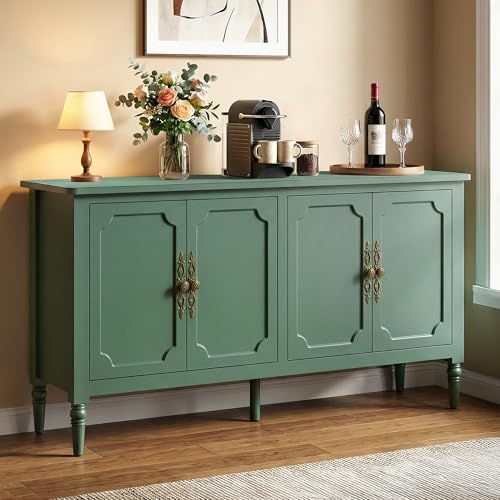
RoyalCraft Buffet Cabinet with Storage, 59" Painted Sideboard Coffee Bar | Vintage Kitchen Storage Cabinet with Adjustable Shelves, Mid Century Modern Credenza for Dining& Living Room, Entryway, Green
Check price on Amazon
HOSTACK Kitchen Buffet Cabinet with Storage, Sideboard Coffee Bar, White | Farmhouse Kitchen Storage Cabinet with 3 Drawers & Adjustable Shelf & Doors, 42.5"W Buffet Table for Dining Living Room
Check price on Amazon
VASAGLE Farmhouse Buffet Cabinet, Coffee Bar with 2 Drawers | White Sideboard, 55.1 x 15.7 x 31.5 in, Adjustable Shelves, Rustic White and Honey Brown, LIRY Collection, UBBK381W01V1
Check price on Amazon