
Custom Teak Dining Table: The Complete Buying & Design Guide
Everything you need to plan a bespoke teak dining table — from grading and joinery to sizing, finish choices, and long-term care — so your table fits your room, your habits, and your years ahead.
Start Planning Your TableWhy a custom teak table? Teak is one of the most trusted hardwoods for dining furniture because of its natural oils, tight grain, and resistance to moisture and pests. A custom build lets you control the exact length, width, height, edge profile, leg style, and finish — turning a generic furniture purchase into a piece designed around your household. This guide walks you through every decision so you can order with confidence.
Recommended Custom Teak Dining Tables
⚠️ AFFILIATE DISCLOSURE: This website contains affiliate links. As an affiliate Associate, we earn from qualifying purchases. If you make a purchase through these links, we may receive a small commission at no additional cost to you. Read our full affiliate policy.
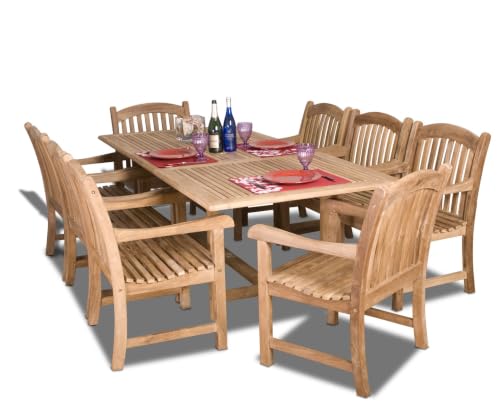
Amazonia Newcastle 9-Piece Outdoor Rectangular Dining Table Set | Certified Teak | Ideal for Patio and Indoors, Light Brown
Check price on Amazon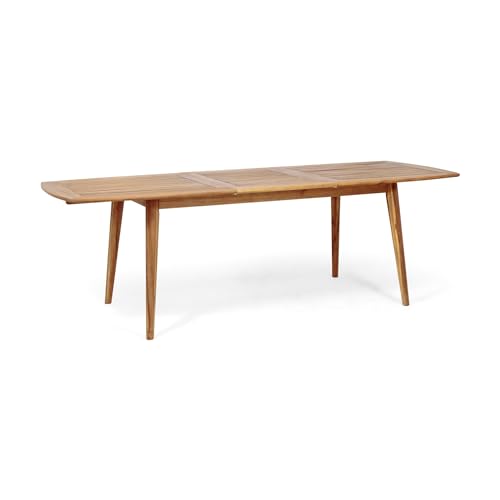
Christopher Knight Home Stamford Outdoor Acacia Wood Expandable Dining Table, Teak
Check price on Amazon
Amazonia Berlin 11-Piece Teak Finish Rectangular Extendable Patio Dining Set | Stackable Chairs | Ideal for Outdoors and Indoors
Check price on Amazon
Tangkula Teak Wood Folding Outdoor Table, Patio Dining Table for 4 | 32" Square Bistro Table, Slatted Tabletop, Sturdy X-Frame, Space Saving, Table for Deck, Porch, Poolside, Balcony & Garden
Check price on Amazon
VINGLI Rectangular Outdoor Dining Table, Solid Cedar Wood Patio Table for 4-6 People, Waterproof Garden Table for Yard, Deck, Poolside (Teak)
Check price on Amazon
BTEXPERT 27.5" Square Outdoor Dining Table Faux Teak Wood Steel Slat Top | Heavy-Duty Commercial Bistro Table for Restaurant, Cafe, Deck, Porch & Backyard UV Fade Weather-Resistant Powder-Coated Steel
Check price on Amazon
Amazonia Berlin Patio Extendable Table | Teak Finish | Durable and Ideal for Indoors and Outdoors
Check price on Amazon
Flash Furniture 30 in Square Dining Table with Faux Teak Poly Slats | Faux Teak Poly Slats, Durable Construction, Commercial Use
Check price on AmazonWhat Makes Teak a Standout Dining Table Wood
Teak (Tectona grandis) is a dense tropical hardwood prized for its natural oil content, which acts as a built-in protectant against moisture, rot, and insects. That same oil gives teak its warm golden-brown tone, which deepens into a richer honey patina over time. For a dining table — a surface that sees spills, hot plates, and daily elbow contact — those qualities translate into real-world durability.
Compared with softer woods like pine, teak resists dents and scratches more effectively. Compared with very hard woods like walnut or oak, teak is slightly more forgiving on dishware and offers superior moisture resistance. That combination makes it a favorite for families who want a table that looks refined but can handle daily life. If you are weighing material options more broadly, our guide to identifying a good-quality dining table covers the fundamentals of construction and material grading.
Understanding Teak Grades and Sourcing
Not all teak is equal. Before you commission a custom build, it helps to understand what you are choosing between.
| Grade / Source | Characteristics | Best For |
|---|---|---|
| Plantation teak (managed) | Consistent grain, responsibly harvested, well-seasoned stock widely available | Most indoor dining tables; balanced tier choice |
| Old-growth teak | Denser, darker, tighter grain; limited availability | Premium and heirloom builds |
| Reclaimed teak | Character-rich, weathered patina, variable grain | Rustic and character-driven designs |
| Teak veneer over engineered core | Stable, lighter, consistent surface | Large spans where solid wood movement is a concern |
For indoor dining tables, well-seasoned plantation teak is the practical sweet spot for most households: it delivers the durability teak is known for without the scarcity concerns of old-growth stock. Reclaimed teak suits buyers who want visible history and texture in the grain.
Solid Teak vs. Veneer: What to Specify
A fully solid teak top is the traditional choice and the one most buyers picture when they order custom. It offers the most authentic grain continuity and can be refinished repeatedly over decades. However, solid wood moves with humidity, so very wide single-slab tops require careful joinery, breadboard ends, or batten supports to stay flat.
Teak veneer over a stable engineered core is a legitimate option for large tables, especially when you want a perfectly flat, wide surface with a consistent look. The trade-off is that veneer cannot be sanded and refinished as aggressively as solid wood. If long-term refinishing matters to you, specify solid teak for the top and discuss how the maker handles wood movement.
Joinery and Frame Construction to Look For
The top gets the attention, but the frame and joinery determine whether a table stays rigid for years. Ask your maker these questions before committing.
- Corner joinery: Mortise-and-tenon or doweled joints outperform simple butt joints and screws. Premium builds often use through-tenons for visual and structural integrity.
- Apron and leg attachment: Legs should be attached with mechanical fasteners or traditional joinery that allows for seasonal wood movement rather than glue alone.
- Top attachment: Figure-eight fasteners, z-clips, or slotted buttons allow the top to expand and contract without cracking.
- Bracing: Long tables benefit from cross-bracing or a stretcher to prevent racking and sagging.
If you are comparing construction styles across different table families, our 70-inch wood dining table guide illustrates how span length affects bracing decisions.
Sizing Your Custom Teak Table
Custom sizing is the biggest advantage of a bespoke build. Use these starting points, then adjust for your room.
| Seating | Typical Length | Typical Width | Notes |
|---|---|---|---|
| 4 people | 48–54 in | 30–36 in | Compact dining nooks and kitchens |
| 6 people | 72 in | 36–40 in | Most popular family size |
| 8 people | 84–96 in | 40 in | Consider a stretcher for long spans |
| 10 people | 96–108 in | 40–44 in | Verify doorway clearance before ordering |
Allow at least 36 inches of clearance on all sides for chair pull-out and walkways. For extended family gatherings, consider an extendable design; our extendable marble-top dining table guide explains how extension mechanisms work, and the same principles apply to teak builds.
Edge Profiles, Legs, and Base Styles
Teak rewards clean detailing. A straight or lightly eased edge keeps the grain as the focal point, while a live-edge or chamfered profile adds character. Base options include:
Four-Leg Base
Straightforward, stable, and easy to pair with chairs or benches. Best for rectangular and square tops.
Pedestal Base
Frees up legroom and works well for round or oval teak tops. Choose a wide foot for stability.
Trestle Base
Adds visual weight and suits reclaimed or live-edge teak. Requires precise joinery to avoid wobble.
Metal or Mixed-Material Base
Steel or blackened metal legs contrast warmly with teak grain for a contemporary look.
Finishes for a Teak Dining Table
Teak can be left natural, oiled, or sealed. Each finish changes both the look and the maintenance routine.
- Natural / unfinished: Highlights raw grain and patinas over time, but needs periodic oiling and is more vulnerable to stains.
- Oil finish: Penetrates the wood, keeps a matte natural look, and can be refreshed by the owner. Popular for dining tables because it is easy to repair locally.
- Hardwax oil: Offers more water resistance than plain oil while retaining a natural feel.
- Lacquer or polyurethane: Provides a protective film and a smoother, sometimes glossier surface. Less forgiving to repair but easier day-to-day.
For a family table, a hardwax oil or a quality lacquer is often the balanced tier choice. If you want to understand how finishes affect longevity across materials, see our terrazzo dining table guide for a comparison of surface strategies.
Step-by-Step: Ordering a Custom Teak Dining Table
- Measure your room and clearances. Note door and stair widths, and confirm the table can physically reach the room.
- Decide seating and shape. Rectangular for formal dining, round for sociability, oval for a softer footprint.
- Choose your teak grade and construction. Solid vs. veneer, plantation vs. reclaimed, and the joinery standard you expect.
- Select edge profile, base, and finish. Match these to your room's style and your tolerance for maintenance.
- Request a drawing and sample. Ask for a scaled sketch and a wood/finish sample before production.
- Confirm lead time and delivery plan. Large tables need careful handling; clarify white-glove delivery and assembly.
Caring for Your Teak Dining Table
Teak is low-maintenance, but a few habits keep it beautiful for decades.
- Dust with a soft, dry cloth weekly and wipe spills promptly.
- Use coasters, trivets, and placemats for hot or wet items.
- Re-oil oiled finishes once or twice a year, or when the surface starts to look dry.
- Avoid harsh chemical cleaners, abrasive pads, and prolonged direct heat.
- Keep the table away from radiators and direct sun where possible to limit uneven patina.
Outdoor teak follows a different routine because of weather exposure. If you are considering a table that may live on a covered porch, our reclaimed wood outdoor dining table guide covers weather resistance and seasonal care.
Matching a Teak Table to Your Interior Style
Teak's warm golden-brown tone pairs naturally with neutral palettes, linen upholstery, and greenery. In a farmhouse setting, a solid teak top with a trestle base reads as relaxed and organic — similar in spirit to a white and brown farmhouse dining table but with a richer wood tone. In darker, moodier rooms, a teak top can echo the depth of a dark wood farmhouse dining table while keeping a warmer feel.
If you need flexibility for holiday hosting, an extendable teak build is worth considering. The principles in our solid pine extendable dining table guide translate well to teak, especially around leaf storage and mechanism care.
Frequently Asked Questions
Is a custom teak dining table worth the investment?
Yes, for most households it is a long-term investment. Teak's natural oils and dense grain resist moisture, insects, and everyday wear, so a well-built table can serve a family for decades. Custom sizing and joinery mean you get a table that fits your room rather than a compromise.
What is the difference between plantation teak and old-growth teak?
Old-growth teak is denser and darker with tighter grain, but it is increasingly rare. Plantation teak is harvested from managed forests, more consistently available, and still delivers strong durability. For most homes, well-seasoned plantation teak is the balanced choice.
How do I size a custom teak dining table for my room?
Allow at least 36 inches of clearance around the table for chair pull-out and walkways, and plan roughly 24 inches of table edge per diner. A 72 by 36 inch rectangular table seats six comfortably; 84 by 40 inches suits eight. Always confirm doorway and stair clearance before finalizing a large build.
How should I care for a teak dining table indoors?
Dust regularly, wipe spills promptly, and avoid harsh chemical cleaners. For oiled finishes, reapply teak or furniture oil once or twice a year depending on use. Use coasters and placemats under hot or wet items, and keep the table away from direct heat and prolonged harsh sunlight.
Ready to Explore Custom Teak Options?
Browse curated teak dining tables and compare features, then use this guide to plan your ideal build.