
Corner Booth Dining Table: A Complete Guide to Cozy, Space-Smart Dining
Everything you need to plan, choose, and enjoy a corner booth dining table — from measuring your nook to picking the right bench style, table shape, and materials.
Why a corner booth dining table deserves your attention: Few dining arrangements blend comfort, efficiency, and charm as well as a corner booth. By tucking bench seating into an L-shaped corner and pairing it with a well-proportioned table, you free up floor space, create a natural gathering spot, and bring a warm restaurant-style feel into your home. Whether you have a compact breakfast nook or an open-plan corner begging for purpose, this guide walks you through every decision — sizing, seating, table shape, materials, layout, and upkeep — so you can buy and set up with confidence.
What Is a Corner Booth Dining Table?
A corner booth dining table is a dining setup where a table is paired with bench-style seating arranged along two walls in an L-shape. The benches — often called banquettes — may be built-in, freestanding, or modular, and the table typically slides into the open side of the L. The result is a snug, sociable nook that echoes the cozy booths found in cafes and diners, adapted for home use.
The concept is closely related to a dining table with booth seating and to a dining booth table; the key distinction is placement in a corner, which maximizes the seating-to-floor-space ratio. If you are exploring the broader category of corner-friendly furniture, our corner booth style dining table overview and the corner dining table set guide are useful companions.
Quick definition: A corner booth dining table combines an L-shaped bench seat with a table in the corner of a room. It seats two to six people comfortably, uses walls as structural support, and turns otherwise dead corner space into a functional dining zone.
Key Benefits of Corner Booth Seating
Understanding the advantages helps you decide whether this layout fits your home. Here are the main reasons homeowners choose a corner booth.
- Space efficiency: Bench seating hugs the walls, leaving the center of the room open. This makes corner booths one of the best choices for compact kitchens, small breakfast nooks, and apartments.
- Comfortable social dining: Benches encourage togetherness; diners sit side by side, and the enclosed corner feels intimate and inviting.
- Built-in storage potential: Many booth benches lift open or include drawers, offering a home for linens, board games, or seasonal items. Paired with a dining table bench with storage, the nook becomes a multifunctional hub.
- Design anchor: A corner booth visually frames the dining area, giving open-plan rooms a defined dining zone without walls or room dividers.
- Kid-friendly: Bench seating keeps younger diners seated and stable, and the enclosed shape discourages running around the table.
Space Planning: Measuring Your Corner Before You Buy
The single biggest factor in corner booth satisfaction is fit. Measure carefully before choosing a table and bench combination.
Minimum dimensions to plan for
| Setup | Suggested Corner Footprint | Seating | Best For |
|---|---|---|---|
| Compact nook | About 4 x 4 ft | 2 people | Small kitchens, apartments |
| Standard booth | About 5 x 5 ft | 3–4 people | Breakfast nooks, family kitchens |
| Large booth | About 6 x 6 ft or more | 5–6 people | Open-plan corners, dining rooms |
Clearance rules to remember
- Allow 24–30 inches of table-to-bench distance for comfortable legroom.
- Leave at least 36 inches of open floor between the table edge and any wall or furniture on the open sides, so people can slide in and out.
- If a walkway passes the nook, aim for 42–48 inches of clearance to keep traffic flowing.
- Account for bench seat depth: about 18–20 inches is standard; deeper benches feel more lounge-like but consume corner space.
For a deeper dive into clearances and flow, see our guide to dining table space planning. If your corner is especially tight, a small dining table with storage can complement the booth by providing extra surface area without expanding the footprint.
Choosing the Right Table Shape for a Corner Booth
The table you drop into a corner booth determines how efficiently the space is used and how easy it is to get in and out.
Square tables
Square is the most natural match for an L-shaped booth. The straight edges align cleanly with the benches, leaving no awkward gaps. A square table in the 36–48 inch range suits most standard corner booths and seats four comfortably. If you are comparing options, a 36 x 48 dining table set offers a slightly wider rectangle that still fits neatly against benches.
Rectangular tables
Rectangular tables shine when one leg of the L is longer than the other. A narrow rectangle — such as a compactable dining table — can run along the longer bench while leaving entry space on the short side. A slim dining table for 6 is worth considering if you want the booth to double as a homework or work-from-home station.
Round and oval tables
Round tables soften the hard geometry of an L-shaped bench and ease movement, but they usually leave wedge-shaped gaps in the corner itself. A small round table, like a 44-inch round pedestal dining table, can work if the corner is generous and the benches are freestanding rather than built-in. Oval tables offer a similar flow but fit long, shallow corners better.
Editorial tip: Bring a cardboard cutout (or tape an outline on the floor) in the exact table dimensions before you commit. It is the fastest way to catch fit problems — especially legroom and bench access — before delivery day.
Bench Seating Styles: Built-In, Freestanding, and Modular
Corner booth seating falls into three broad categories. Each has trade-offs in flexibility, storage, and installation effort.
Built-in banquettes
Built-in benches are anchored to the walls and often custom-fitted to the corner. They offer the cleanest look and the best use of irregular spaces, and they frequently include storage compartments under lift-up seats. The downside is permanence: built-ins are difficult to reconfigure and may require professional installation. They are the gold standard for dedicated breakfast nooks.
Freestanding benches
Freestanding benches sit against the walls without being attached. They are easier to install, movable if you redesign the room, and available in a wide range of styles — from upholstered settees to solid wood. A settee bench for dining table setups pairs well with a corner booth, bringing a living-room feel to the dining nook. Freestanding benches may leave small gaps against uneven walls, so measure wall straightness.
Modular and L-shaped units
Modular booth units are pre-built L-shaped benches that slot into corners. They balance the finished look of built-ins with the flexibility of freestanding furniture, and many include storage. They are a strong choice for renters or anyone who wants a booth without construction work.
Mixing bench and chairs
Not every seat in a corner booth needs to be a bench. Pairing a bench on the long wall with individual chairs on the open side increases flexibility and lets you vary seat heights. Our guide to mixed chairs at a dining table covers the styling and practical considerations. For comfort, an upholstered bench cushion — similar in spirit to an upholstered dining chair — makes long meals far more pleasant.
Materials and Finishes for Corner Booth Tables
Because a corner booth table often doubles as a breakfast bar, homework station, and gathering spot, durability matters as much as looks.
Wood tops
Solid wood — oak, walnut, teak, or mango — brings warmth and ages gracefully. A solid oak dining table is a strong mid-range to premium option for busy households, while a walnut dining table lends a richer, more formal look. Wood requires periodic oiling or waxing and protection from heat and moisture.
Stone and glass tops
Marble, quartz, and glass resist stains and wipe clean easily. A marble dining table or quartz dining table suits elegant, contemporary nooks; glass keeps small corners feeling open. These surfaces are heavier and, for stone, need sealing to prevent etching.
Laminate and engineered surfaces
High-pressure laminate and engineered wood tops are practical choices for family booths. They resist scratches and moisture well and are often found on faux marble dining table sets that mimic stone at a lower tier. They are the sensible pick for high-traffic breakfast corners.
| Material | Durability | Maintenance | Best For |
|---|---|---|---|
| Solid oak / walnut | High (mid-range to premium tiers) | Periodic oiling or waxing | Warm, long-term family booths |
| Marble / quartz | High (premium to luxury tiers) | Sealing (stone), routine wiping | Elegant, contemporary nooks |
| Tempered glass | Moderate to high | Streak-free cleaning | Visually open small corners |
| Laminate / engineered | Moderate (entry-level to mid-range) | Wipe clean, minimal upkeep | High-traffic family breakfast nooks |
Corner Booth Layout Ideas That Work
How you orient the booth within the room affects comfort and flow. These are the most reliable configurations.
- Classic breakfast nook: Bench along the window wall and an adjacent side wall, table tucked into the L, chairs on the two open sides. Ideal in kitchens with a bay window or bumped-out corner.
- Open-plan corner anchor: A booth defines the dining zone within a larger open space. Choose a style that echoes nearby living-room furniture, and keep the bench back low so sightlines stay open.
- Under-stairs booth: The sloped ceiling above a staircase corner suits a low bench and a compact square table. Use the deepest part of the corner for storage benches.
- Freestanding settee pairing: Instead of built-ins, place two freestanding benches at right angles, or pair one bench with a storage bench for a flexible, renter-friendly booth.
- Bar-height variation: For a casual feel, a high-top dining table with chairs can replace a standard-height table inside a booth, though bench heights must match.
Lighting matters too. A pendant or two downlights centered over the table, with the bottom of the fixture 30–36 inches above the tabletop, creates the warm, focused glow that makes booths feel special. See our notes on dining table lighting placement for exact heights and spacing.
Common Mistakes to Avoid
- Buying the table before measuring the corner. Always measure width, depth, and the diagonals of the corner, then plan bench and table sizes around them.
- Forgetting legroom. A deep bench with an overhanging tabletop can trap knees. Test seat-to-table clearance before finalizing.
- Blocking the only walkway. A booth should not force people to squeeze past seated diners. Keep at least one long open side facing the room.
- Ignoring bench height versus table height. Standard tables are about 30 inches high, paired with 18-inch seat heights. Bar-height setups need coordinated heights.
- Skipping storage. If the bench could lift open, it probably should — corner booths are natural storage opportunities in small homes.
- Neglecting cushions. Bare wood benches grow uncomfortable during long meals. A fitted cushion or a pair of storage bench cushions makes the booth genuinely usable daily.
Shopping Checklist Before You Commit
Use this checklist to compare options methodically. Note that we describe products by tier rather than figures: entry-level, mid-range, premium, and luxury describe relative market position, not absolute figures.
| Tier | Typical Characteristics | Best For |
|---|---|---|
| Entry-level | Laminate or engineered tops, modular benches, simpler joinery | Renters, first homes, casual breakfast nooks |
| Mid-range | Solid wood tops, upholstered freestanding benches, storage compartments | Family kitchens and everyday dining |
| Premium | Hardwood frames, stone or glass tops, fitted banquettes, refined finishes | Design-led dining rooms and long-term homes |
| Luxury | Custom banquettes, marble tops, integrated lighting, premium upholstery | Statement nooks in open-plan spaces |
Before purchasing, confirm these points with the seller or manufacturer:
- Exact dimensions of the bench footprint and table top.
- Seat height and table height compatibility.
- Whether benches are freestanding, modular, or require wall fixing.
- Weight capacity and assembly requirements.
- Upholstery cleanability, especially for family use.
- Return and warranty terms for large furniture.
If the corner booth is part of a bigger dining-room refresh, browse our guides to light gray dining table sets and black and grey dining tables to coordinate the table finish with the rest of the room.
Care and Maintenance for Corner Booths
Corner booths collect crumbs in the seam between bench and wall and take more traffic than a standalone table. A simple routine keeps them fresh:
- Vacuum or brush bench seams weekly; crumbs and dust settle quickly in the corner.
- Wipe tabletops after every meal — especially stone and glass, which show smudges.
- Oil or wax wood benches and tables every few months to prevent drying and cracking.
- Rotate cushions and spot-clean upholstery promptly to prevent stains setting.
- Check wall fixings and leg hardware every season for wobbles, especially on freestanding units.
Our overview of dining table care and maintenance covers deeper cleaning and protection schedules. For tabletop protection between meals, a properly sized dining table pad guards against heat and scratches.
Recommended Corner Booth Dining Tables and Booth Seating
⚠️ AFFILIATE DISCLOSURE: This website contains affiliate links. As an affiliate Associate, we earn from qualifying purchases. If you make a purchase through these links, we may receive a small commission at no additional cost to you. Read our full affiliate policy.

LUXOAK 3-Piece Wood Corner Dining Table Set for 4, Black & Walnut | Breakfast Nook, L-Shaped Corner Bench, Hidden Storage, Space-Saving Design for Small Spaces, Farmhouse Kitchen & Dining
Check price on Amazon
XIAO WEI 72" Corner Dining Table Set for Small Spaces, Modern Grey | Modern Marble Style, L-Shaped Design, Stable Structure, Storage Banquette, Thick Tabletop & Cushion, Seats 4-6, 3 Packages
Check price on Amazon
XIAO WEI 72" Corner Dining Table Set for Small Spaces, Caramel Brown | Modern Marble Style, L-Shaped Design, Stable Structure, Storage Banquette, Thick Tabletop & Cushion, Seats 4-6, 3 Packages
Check price on Amazon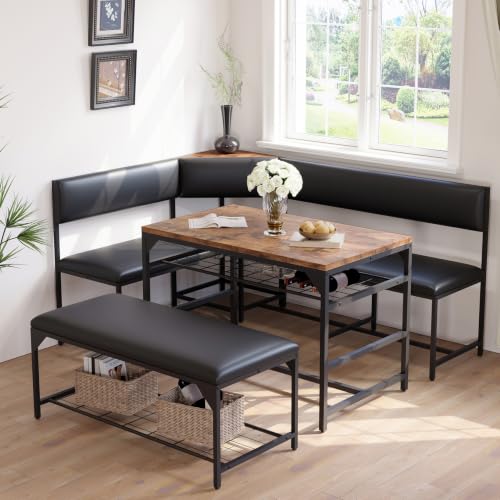
Corner Dining Table Set with Soft Seat, Rustic Brown | Breakfast Nook, L Shaped Dining Table Set for 4, Kitchen Booth Seating with Table for Small Space
Check price on Amazon
LUXOAK 3-Piece Wood Corner Dining Table Set for 4, White & Barnwood | Breakfast Nook, L-Shaped Corner Bench, Hidden Storage, Space-Saving Design for Small Spaces, Farmhouse Kitchen & Dining
Check price on Amazon
Breakfast Nook Table Set, Farmhouse 5-Piece Round Dining Table Set with Bench Seating, 47" Kitchen Nook Furniture for 4-6 People, Wood Dining Nook Set for Small Spaces (Grey, Natural Round table)
Check price on Amazon
Round Dining Table Set with Loveseat & Chairs, 47 Inch Farmhouse 5-Piece Round Table Setting for 4 to 6, Wood Circle Table and Chairs Set for Kitchen,Breakfast Nook, Indoor Conversational Seating
Check price on Amazon
Karl home Corner Dining Table Set with Storage Bench, PU Cushions, Black | Breakfast Nook Table Set , Built-In Power Outlet, L-Shaped Layout with Hidden Storage, Space-Saving, Breakfast Nook
Check price on AmazonFrequently Asked Questions
What is a corner booth dining table?
A corner booth dining table is a dining setup that pairs a table with built-in or freestanding bench seating arranged in an L-shape within a corner. This configuration maximizes space and creates a cozy, restaurant-style nook.
How much space do I need for a corner booth dining table?
A corner booth typically requires a minimum footprint of about 5 by 5 feet for a two-person setup. For four diners, plan for roughly 6 by 6 feet, plus clearance for walking paths around the open sides.
What table shape works best with a corner booth?
Square and rectangular tables are the most common pairings for corner booths because they align neatly with bench seating. Round tables can work in larger corners but may leave awkward gaps against the walls.
Are corner booth dining tables suitable for small spaces?
Yes. Corner booths are among the most space-efficient dining arrangements because the bench seating hugs the walls, freeing up floor area. They work especially well in compact kitchens, breakfast nooks, and open-plan corners.
Can I use a corner booth in a rental home?
Absolutely. Choose freestanding or modular benches instead of built-in banquettes, and use anti-slip pads under benches to protect walls. Everything can be disassembled and moved when you leave.
Ready to explore further? Compare table shapes in our round vs rectangular dining table guide, or check the wider range of dining table shopping and reviews for complementary picks.