
Cane Dining Table: A Complete Buying & Styling Guide
Discover how cane dining tables blend natural texture, lightweight elegance, and everyday practicality. Learn frame materials, weave patterns, durability expectations, and how to choose the right cane table for your dining space.
EXPLORE CANE TABLESWhat Is a Cane Dining Table?
A cane dining table is a table whose top, apron, or sides feature woven cane — a natural fiber derived from the outer bark of the rattan vine. Unlike solid wood or stone tops, cane introduces an open, textured surface that catches light and adds warmth without visual heaviness. Cane has a long heritage in furniture making, particularly in British colonial, coastal, and mid-century modern design, and it has returned to popularity because it softens contemporary interiors that would otherwise feel cold or overly minimal.
Most cane dining tables you will find today are not made of cane alone. The structural work — legs, frame, and often the tabletop substrate — is built from solid hardwood such as oak, teak, mahogany, or acacia, with cane woven panels applied over or inset into that framework. This hybrid construction is what makes a cane table practical for daily dining: the frame carries the load, while the cane provides the visual character and a slightly resilient, breathable surface.
It helps to distinguish cane from related materials. Rattan refers to the vine itself; cane is the peeled, processed strips of rattan used for weaving. Wicker is a weaving technique that can use cane, rattan, willow, or synthetic fibers. When a product is described as a cane dining table, the intention is usually a visible woven cane panel combined with a wood or metal structure. If you are comparing woven options more broadly, our guide to a solid oak mission-style dining table shows how a heavier hardwood construction contrasts with lighter woven designs.
Why Cane Appeals to Modern Buyers
Cane offers three things that solid surfaces struggle to match: texture that reads as organic and tactile, a visual lightness that keeps small or open-plan rooms feeling airy, and a design language that bridges traditional and contemporary interiors. It is also a natural material with a lower perceived environmental footprint than many synthetic alternatives, which matters to a growing share of shoppers.
Popular Cane Dining Table Styles
Cane appears across a wide range of design directions. Understanding these styles helps you match a table to your existing room rather than buying on looks alone.
- Coastal and breezy: light-toned wood frames with natural cane panels, often paired with white or linen upholstery. These tables feel relaxed and work well in bright, airy rooms.
- Mid-century modern: tapered legs, warm walnut or teak tones, and cane panels reminiscent of 1950s and 1960s design. Clean lines keep the look refined.
- Traditional and colonial: darker stained hardwood with intricate cane detailing, often with turned legs or carved aprons. These read as classic and formal.
- Scandinavian: pale ash or oak frames, minimal ornament, and generous open cane panels. The result is calm and uncluttered.
- Bohemian and eclectic: mixed materials, sometimes with metal accents or two-tone finishes, where cane adds a handcrafted feel.
Each of these directions changes how much the cane dominates the room. If you want the weave to be the focal point, choose a table with large open panels. If you want cane as texture rather than statement, look for tables where cane appears only on the apron or side panels, with a solid top. For a different visual language entirely, our square marble dining table guide shows how a solid, cool-toned surface creates an opposite effect in the same room.
Frame Materials & Weave Quality
The frame is the single most important factor in how a cane dining table performs over time. Cane is strong in tension but flexible, so it relies entirely on the frame to hold its shape and carry weight. A well-built cane table will use a hardwood frame rather than softwood or engineered substitutes in load-bearing areas.
| Frame Material | Typical Tier | Best For | Notes |
|---|---|---|---|
| Solid oak | mid-range | Family dining, everyday use | Hard, dense, and stable; takes stain well and pairs naturally with light cane. |
| Teak | premium | Humid climates, long-term investment | Naturally weather- and moisture-resistant; rich warm tone. |
| Mahogany | premium | Traditional and formal interiors | Deep reddish tone; excellent for carved detailing and colonial styles. |
| Acacia | mid-tier | Casual and coastal settings | Durable and visually interesting grain; lighter tone suits breezy rooms. |
| Rubberwood or softwood | entry-level | Occasional or light use | Lighter and more prone to movement; acceptable for secondary spaces. |
| Metal (steel or aluminum) | mid-range | Industrial and modern interiors | Sturdy and stable; pairs with cane for a contrasting look. |
Weave quality matters as much as the frame. Tightly woven cane with consistent spacing distributes stress more evenly and looks more refined. Loose or uneven weaving is a warning sign that the table may sag or develop gaps over time. When inspecting in person, press gently on the cane panels — they should give slightly but not deform permanently. Run your hand across the surface to check for splinters or rough edges, which indicate lower-grade processing.
Finish also matters. A sealed or oiled cane surface resists moisture and stains far better than bare cane. Premium tiers typically apply a protective finish to both the frame and the weave, while entry-level tables sometimes finish only the frame. If you are weighing a heavier solid construction against a woven one, our double pedestal dining table with leaves guide illustrates how robust hardwood framing supports larger, extendable formats.
Durability & Realistic Expectations
Cane dining tables are durable, but they are not indestructible, and understanding their limits prevents disappointment. Cane fiber has good tensile strength and resists everyday wear well when properly finished. The realistic concerns are moisture, heat, and sharp impact.
- Moisture: prolonged dampness weakens cane and can lead to mold or warping. Blot spills promptly and avoid placing the table in humid or damp spots without ventilation.
- Heat: hot dishes and direct sunlight can dry and crack cane over time. Use trivets and keep the table away from radiators and long sun exposure.
- Impact: sharp objects can catch and split the weave. Cane tolerates normal dining use but not rough handling or heavy point loads.
- UV exposure: continuous sunlight fades natural cane and can make it brittle. Rotate the table or use window treatments if the room is very bright.
In practice, a mid-range or premium cane table on a solid hardwood frame will handle daily family meals comfortably for many years with routine care. Entry-level cane tables are better suited to occasional use, secondary dining spaces, or rooms where the table is not the primary eating surface. If your household is very active or you host large gatherings frequently, consider a table with a solid top and cane detailing on the sides rather than a fully woven top.
A Note on Weight and Stability
Cane tables are often lighter than solid wood or stone tables of similar size, which makes them easier to move and rearrange. That lightness is an advantage in flexible rooms, but it also means stability depends on frame design. Look for tables with well-braced legs, a sturdy apron, and a low center of gravity. If the table feels light or shifts when you lean on it, the frame is underbuilt for the size.
Sizing & Room Fit
Cane's visual lightness makes it forgiving in smaller rooms, but the table still needs to fit comfortably. Allow roughly 24 inches of clear space around the table for chair pull-out, and more if the room is a main walkway. A round cane table works well in compact dining nooks because it removes corners and improves flow. Rectangular and oval cane tables suit longer rooms and larger households.
Seating capacity should be planned around the frame, not just the top. Cane tables with open side panels can feel more spacious than their dimensions suggest, which is helpful in tight rooms. For guidance on fitting a table into a specific footprint, our 36 x 36 square dining table guide and 60-inch round pedestal dining table guide show how different shapes change the usable seating area.
If your room is long and narrow, an oval or rectangular cane table with a lighter profile keeps the space from feeling blocked. For outdoor-adjacent or open-plan spaces, a high-top outdoor dining set for six demonstrates how a different format handles the same room constraints.
Chairs & Interior Pairing
Cane tables are flexible partners. The most natural pairing is matching cane or rattan chairs, which creates a cohesive woven look. Solid wood chairs in a similar tone also work well and add a bit more visual weight. Upholstered chairs introduce comfort and contrast, while metal-framed chairs give an industrial edge.
- Matching cane chairs: cohesive and airy; best for coastal, bohemian, and mid-century rooms.
- Solid wood chairs: grounds the table and adds warmth; choose a tone that complements the frame.
- Upholstered chairs: adds softness and comfort; keep fabric light or neutral so the cane remains the focal texture.
- Metal chairs: introduces contrast; works well in industrial and modern lofts.
Balance is the guiding principle. A visually light cane table pairs best with chairs that are not overly bulky, while a heavier hardwood-framed cane table can carry more substantial seating. For a broader look at how table color shapes the room, our green dining table guide shows how a bold color choice changes the mood compared with neutral cane tones.
Care & Maintenance
Cane dining tables are simple to maintain when you follow a few consistent habits. The goal is to keep the weave dry, clean, and protected without over-wetting it.
- Dust weekly: use a soft brush or a vacuum with a brush attachment to lift dust from the weave. A dry microfiber cloth works for the frame.
- Wipe spills immediately: blot rather than rub, and dry the area with a clean cloth. Do not let liquid sit in the weave.
- Clean gently: for deeper cleaning, use a barely damp cloth with mild soap, then dry thoroughly. Avoid soaking or harsh chemicals.
- Protect from heat and sun: use trivets under hot dishes and keep the table out of direct prolonged sunlight.
- Re-oil or re-seal periodically: depending on use and climate, reapply a natural oil or sealant every year or two to keep the cane supple and protected.
- Control humidity: keep the room at a stable humidity level. Very dry air can make cane brittle, while very damp air encourages mold.
If you want a broader maintenance routine that covers wood frames and woven surfaces together, our dining table care and maintenance hub collects related guides in one place.
Common Buying Mistakes
- Judging by the top alone: buyers often focus on the visible cane and ignore the frame. The frame determines how long the table lasts.
- Assuming all cane is equal: weave tightness, fiber grade, and finish quality vary widely between entry-level and premium tables.
- Ignoring the room's humidity: cane behaves differently in dry and damp climates. Match the material to your environment.
- Overestimating outdoor suitability: most indoor cane tables are not designed for full outdoor exposure. Choose weather-rated versions if needed.
- Skipping the stability test: a light table can still be stable, but only if the frame is well-braced. Check for wobble before buying.
- Buying for looks only: consider how the table will age, how easy it is to clean, and whether the weave suits your household's daily habits.
Buying Checklist
Before You Commit to a Cane Dining Table
- Confirm the frame material is solid hardwood or sturdy metal in load-bearing areas.
- Check that the cane weave is tight, even, and free of splinters or gaps.
- Verify the finish covers both the frame and the weave.
- Measure your room and confirm chair pull-out space around the table.
- Consider your climate: humid rooms favor teak or sealed finishes; dry rooms need stable humidity.
- Decide whether you want cane as the focal point or as accent texture.
- Plan chair pairing in advance to keep proportions balanced.
- Read care instructions and confirm the table suits your household's daily use.
If you are exploring woven and natural-fiber styles more broadly, our Moroccan outdoor dining table guide and modern oval dining table for six guide show how different materials and shapes change the character of a dining space. And if you are considering a propane-powered or outdoor-adjacent setup, the propane dining table guide covers a very different category of table.
Frequently Asked Questions
Is a cane dining table durable enough for everyday family use?
Yes, when the cane is tightly woven over a solid hardwood frame and finished with a protective sealant. Cane itself is a resilient natural fiber with good tensile strength. The key durability factor is the frame underneath, not the weave alone. Mid-range and premium cane tables built on solid oak, teak, or mahogany frames typically hold up well to daily family dining for many years.
How do I clean and maintain a cane dining table?
Dust the cane weave weekly with a soft brush or vacuum attachment, and wipe the frame with a damp cloth. Avoid soaking the cane, since excess moisture weakens the fiber. Keep the table away from direct heat and prolonged sunlight, and reapply a natural oil or sealant every year or two depending on use. Promptly blot spills rather than rubbing them into the weave.
Can a cane dining table be used outdoors?
Most indoor cane dining tables are not designed for full outdoor exposure. Natural cane can absorb moisture and degrade under prolonged rain and sun. If you want the cane look outdoors, choose specifically weather-treated or synthetic rattan versions rated for exterior use, and keep them under cover.
What dining chair styles pair best with a cane dining table?
Cane pairs naturally with matching cane or rattan chairs, but it also works well with solid wood chairs in a similar tone, upholstered chairs for contrast and comfort, and metal-framed chairs for an industrial edge. Keep proportions balanced: a lighter woven table benefits from chairs that are not visually too heavy.
Does cane furniture suit modern interiors or only traditional ones?
Cane is highly versatile. In traditional and coastal settings it reads as classic and relaxed, while in modern and Scandinavian interiors the open weave adds texture and warmth without visual weight. Paired with clean-lined frames and neutral finishes, cane dining tables fit contemporary rooms well.
Recommended Cane Dining Tables
⚠️ AFFILIATE DISCLOSURE: This website contains affiliate links. As an affiliate Associate, we earn from qualifying purchases. If you make a purchase through these links, we may receive a small commission at no additional cost to you. Read our full affiliate policy.

42" Round Dining Table for 4, Farmhouse Kitchen Table with Storage, Space Saving Circle Dinner Table, Rustic Wood Kitchen & Dining Room Tables with Metal Legs for Home, Apartment, Office, Restaurant
Check price on Amazon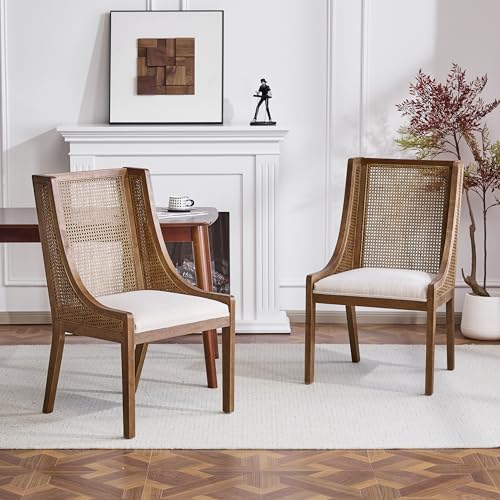
Christopher Knight Home Yone Dining Chairs Set of 2, Modern Dining Chair with Fabric Upholstery, Rubberwood Frame Kitchen Chairs with Cane Webbing, Extra Seat for Dining Room, Beige + Brown
Check price on Amazon
SOARMOTE Rattan Dining Chairs Set of 4,Upholstered Mid-Century Modern Dining Room Chairs with Cane Backrest,Retro Velvet Kitchen Chairs with Stainless Chrome Base,Green
Check price on Amazon
GIANTEX 37.5" Round Dining Table for 2-4, Farmhouse Kitchen Table with Solid Rubberwood Pedestal & Rattan Base, Modern Small Circle Dinner Table for Dinette Living Room
Check price on Amazon
Quenvo Rattan Dining Chairs Set of 4, Leather Upholstered Dining Chairs with Rattan Cane Back, Mid Century Modern Dining Room Chairs with Black Metal Legs & D-Shaped Thicken Cushion, Black
Check price on Amazon
Cesca Dining Chair Set of 4, Chair with Natural Cane Back (Green) | Modern Upholstered Kitchen Chair, Stainless Chrome Base for Dining Room, Kitchen
Check price on Amazon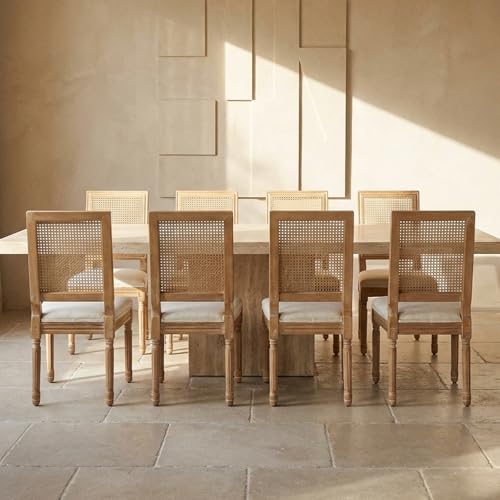
EVERLUNE Vintage French Country Dining Chairs Set of 8, Rattan Dinning Chair with a Square Back, Beige Cane Dining Chair, Kitchen and Dining Room Chairs, Sillas para Comedor
Check price on Amazon