
Double Pedestal Dining Table With Leaves: The Complete Guide
A double pedestal dining table with leaves combines generous seating, clean sightlines, and flexible expansion. This guide explains how the design works, what to check before buying, and how to choose the right configuration for your dining room.
See Recommended TablesWhy this design matters: A double pedestal dining table with leaves solves a common problem — you want a table that seats a crowd on holidays but does not dominate the room the rest of the year. Two pedestal bases support the top, and one or two leaves extend the surface when guests arrive. The result is a table that stays balanced, leaves the corners free for chairs, and adapts to your household over time.
What Is a Double Pedestal Dining Table With Leaves?
A double pedestal table uses two separate pedestal bases — each typically with a central column and spreading feet — instead of four corner legs. The tabletop spans both bases. "With leaves" means the table includes extension panels that insert into the middle of the top, usually through a slide mechanism, to lengthen the table for additional seating.
This combination is popular in formal dining rooms and large family kitchens because it offers three benefits at once: unobstructed legroom, a stable footprint, and the ability to grow the table without changing the base. If you are comparing shapes, our extendable dining table guide explains how leaf-based extension systems differ from butterfly and self-storing designs.
How the Leaf Extension System Works
Most double pedestal tables with leaves use one of three mechanisms:
- Separating halves on a slide: The tabletop splits down the middle, both halves pull apart, and one or more leaves drop into a track between them. This is the most common and most stable design for double pedestal tables.
- Apron-mounted slides: Metal slides run under the apron and support the extended top. Look for reinforced slides rated for the full leaf load.
- Self-storing leaves: The leaf folds and tucks beneath the tabletop when not in use — convenient for small homes, though the storage cavity adds a little weight to the table.
Leaf width typically ranges from narrow (around 12 inches) to wide (around 24 inches). A single wide leaf adds more seating than two narrow leaves, but two leaves give you more configurations. Think about how you actually host before choosing.
Seating Capacity: Closed vs. Extended
A double pedestal table is one of the few designs that seats well in both states. Because there are no corner legs, chairs can tuck along the long edges without obstruction.
| Configuration | Typical Seating | Best For |
|---|---|---|
| Closed (no leaves) | 6 to 8 people | Everyday family meals |
| One leaf inserted | 8 to 10 people | Weekend hosting and dinner parties |
| Two leaves inserted | 10 to 12 people | Holidays, reunions, large gatherings |
If your household is smaller and you only occasionally host, a round dining table to seat 6 may be a more compact alternative. For very tight spaces, a small condo dining table is worth considering before committing to a long rectangular table.
Stability: Why Two Pedestals Work
Some buyers worry that pedestal tables wobble. In practice, a well-built double pedestal table with leaves is among the most stable extendable designs available, for three reasons:
- Distributed support: Two wide bases spread the load across the length of the table, so the center of the extended top is not cantilevered.
- Wide feet: Quality pedestals use spreading feet or a trestle-style base that resists side-to-side sway.
- Reinforced apron: A solid apron or cross-brace ties the two pedestals together and keeps the tabletop flat when leaves are added.
When shopping, check that the pedestal feet are wide relative to the tabletop length. A table with narrow feet and a very long extended top is more prone to rocking. Solid hardwood construction, such as the kind described in our solid oak Mission-style dining table reference, generally handles leaf extension better than thin veneer over particleboard.
Materials and Finish Considerations
The material affects how the table handles extension stress and daily wear. Here is how the main options compare:
| Material | Strengths | Watch Out For |
|---|---|---|
| Solid hardwood (oak, walnut, maple) | Durable construction, repairable, ages well | Heavier; needs humidity control |
| Veneer over engineered core | Stable, resists warping, consistent grain | Harder to refinish; check core quality |
| Stone top (marble, granite) | Scratch-resistant surface, premium look | Heavy; needs a reinforced base and sealing |
| Glass top | Visually light, easy to clean | Leaf seams are more visible; shows fingerprints |
For stone surfaces, our outdoor granite dining table reference covers sealing and durability in more detail. If you are set on a glass or stone top with extension leaves, confirm with the maker that the leaf panels match the main top in thickness and material.
Room Size and Clearance
A double pedestal table with leaves needs room to extend. Measure the full extended length, then add clearance on all sides — ideally 36 inches for walkways and 42 to 48 inches behind chairs where people pass. A 48-inch wide dining table reference can help you visualize proportions. If your room is long but narrow, a 3-leaf dining table configuration may offer more flexibility than two fixed leaves.
Also consider the space needed to store leaves when not in use. Self-storing designs avoid this issue, but standard leaves need a flat, dry storage spot.
Quality Tiers: What to Expect at Each Level
Double pedestal tables with leaves span a wide range of build quality. Rather than comparing numbers, use these tiers to understand what typically changes as you move up:
Entry-Level Tier
Basic slide mechanism, veneer or engineered wood top, simpler pedestal joinery. Suitable for light use and occasional hosting. Check that leaves align flush and that the base feels firm when you lean on the extended edge.
Mid-Range Tier
Solid wood or high-quality veneer, smoother slide operation, reinforced apron, and better-finished pedestal feet. A solid choice for families who host regularly and want the table to last through years of daily use.
Premium Tier
Hardwood construction, precision slide hardware, hand-finished surfaces, and heavier pedestal bases that stay rock-solid when fully extended. Often includes self-storing leaves and protective leaf bags.
In general, mid-range and premium models offer smoother extension mechanisms and more consistent leaf-to-top alignment than entry-level designs. The difference is most noticeable when the table is fully extended and loaded with dinnerware.
Buying Checklist for Double Pedestal Tables With Leaves
Before You Buy, Verify These Points
- Measure your room's full extended length plus clearance on all sides.
- Confirm the number and width of leaves, and whether they store inside the table or separately.
- Test the slide mechanism — it should move smoothly without binding.
- Check that leaves sit flush with the main top (no lip or gap).
- Look for a reinforced apron or cross-brace between the two pedestals.
- Confirm the pedestal feet are wide enough for the extended top length.
- Ask whether the table includes a leaf storage bag or protective pad.
- Review the warranty terms for the extension mechanism specifically.
If you are also planning seating, our dining chair selection guide covers how to match chair height and style to a pedestal table. For counter-height alternatives, see the 6-person counter-height dining table set reference. And if you are comparing shapes, the extendable circle dining table guide shows how round extension tables differ from rectangular pedestal designs.
Common Mistakes to Avoid
- Buying without measuring the extended footprint: The table may fit closed but block walkways when leaves are added.
- Ignoring leaf storage: Standard leaves need a flat, dry place; plan for it before delivery.
- Overloading the extended top: Follow the manufacturer's guidance on how many leaves can be used at once and the maximum load.
- Skipping the stability test: Lean gently on the extended edge in the showroom or read verified buyer feedback about rocking.
- Mismatched chair height: Pedestal tables often have standard 30-inch height, but confirm before buying chairs.
For a broader look at what goes wrong in furniture purchases, our dining table buying mistakes article is a useful companion read.
Frequently Asked Questions
What is a double pedestal dining table with leaves?
It is a dining table supported by two pedestal bases instead of four corner legs, fitted with removable or folding extension leaves that expand the tabletop for extra seating.
How many people can it seat?
Most double pedestal tables seat six to eight people closed and extend to seat ten or more with one or two leaves, depending on tabletop length and leaf width.
Are they stable when extended?
Yes, when the pedestal bases are properly spaced and the table includes a reinforced apron or slide mechanism. Double pedestal tables are among the most stable extendable designs because support is distributed across two wide bases.
Where do the leaves go when not in use?
Leaves are usually stored in a protective bag in a closet or under a bed. Some designs include self-storing leaves that fold and tuck beneath the tabletop.
Does the pedestal base interfere with chairs?
No — because the support sits at the center of each half rather than at the corners, chairs can be placed freely along the long edges without hitting table legs.
Final Thoughts
A double pedestal dining table with leaves is one of the most practical choices for households that want a table that works for everyday meals and larger gatherings. The two-base design keeps the table stable, the leaves add flexibility, and the open corners make seating comfortable. Focus your buying decision on slide quality, leaf alignment, pedestal stability, and room clearance — those four factors matter more than any single specification.
Recommended Double Pedestal Dining Tables With Leaves
⚠️ AFFILIATE DISCLOSURE: This website contains affiliate links. As an affiliate Associate, we earn from qualifying purchases. If you make a purchase through these links, we may receive a small commission at no additional cost to you. Read our full affiliate policy.

Furnifact Black Oval Double Pedestal Dining Table, Butterfly Leaf Extension, Traditional Wood, Seats 8 Guests, Comfortable Dining Room Furniture
Check price on Amazon
East West Furniture PVT-SBR-TP Plainville Kitchen Table - an Oval Dining Table Top with Butterfly Leaf & Double Pedestal Base, 42x78 Inch, Saddle Brown
Check price on Amazon
East West Furniture NAT-SBR-TP Napoleon Dining Table - a Rectangle Wooden Table Top with Butterfly Leaf & Double Pedestal Base, 40x78 Inch, Saddle Brown
Check price on Amazon
Acme Chateau De Ville Dining Table in Cherry
Check price on Amazon
East West Furniture VAT-ESP-TP Vancouver Dining Room Table - an Oval kitchen Table Top with Butterfly Leaf & Double Pedestal Base, 40x76 Inch, Espresso
Check price on Amazon
East West Furniture AVT-SBR-TP Avon Kitchen Dining Table - an Oval Wooden Table Top with Butterfly Leaf & Pedestal Base, 42x60 Inch, Saddle Brown
Check price on Amazon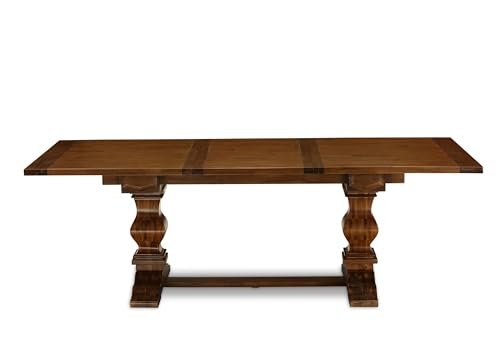
East West Furniture LAT-08-TP Lassale Modern Dining Table - a Rectangle Kitchen Table Top with Removable Leaf & Double Pedestal Base, 42x92 Inch, Walnut
Check price on Amazon