
An antique dining table and chairs set is more than furniture — it is a piece of history that can anchor a dining room for generations. Buyers searching for antique dining sets are typically in the research phase: they already know they want the character, craftsmanship, and patina of older furniture, but they need reliable guidance before committing. This guide walks through the practical and aesthetic decisions that separate a worthwhile antique investment from a restoration project that never ends.
Whether you are drawn to a formal Victorian mahogany set, a farmhouse pine table with mismatched chairs, or a compact small antique dining table for an apartment, the same core principles apply: understand the wood, verify the joinery, assess the finish, and plan the seating before you buy.
Quick orientation: Antique dining furniture generally falls into three market positions — entry-level pieces with cosmetic wear and minor repairs, mid-range sets with solid structure and original finish, and premium or museum-grade pieces with documented provenance and period-correct details. Knowing which tier you are shopping in helps you evaluate any set fairly.
Why Choose an Antique Dining Table and Chairs?
New furniture is built to a specification; antique furniture was built to last. The practical advantages of an antique dining set are substantial:
- Solid wood construction. Most genuine antiques predate particle board and veneered MDF. Tables from the 19th and early 20th centuries are typically built from solid oak, mahogany, walnut, or pine — materials that can be sanded, repaired, and refinished repeatedly.
- Joinery that holds. Dovetails, mortise-and-tenon joints, and hand-cut pegs are common in antique dining tables. These joints often outlast modern dowel-and-cam construction by decades.
- Patina and character. The surface of an antique table tells a story. Aged shellac, worn edges, and subtle color variation cannot be replicated by factory finishes.
- Environmental sense. Reusing a piece that already exists avoids the resource footprint of new manufacturing — a genuine long-term investment in sustainability.
- Retained or appreciating value. Well-chosen antique dining sets in good condition hold their market position far better than most mass-produced furniture.
Understanding the Woods Used in Antique Dining Furniture
The wood species tells you a great deal about a piece's origin, durability, and how it should be cared for. The table below compares the most common antique dining woods:
| Wood Type | Typical Era & Region | Durability | Best For |
|---|---|---|---|
| Mahogany | 18th–20th century, Britain & America | Excellent — dense, stable, resists warping | Formal dining rooms; carved legs and pedestals |
| Walnut | 17th–19th century, Europe & America | Very good — tight grain, takes fine carving | Mid-range and premium sets; veneered table tops |
| Oak | 16th–19th century, Britain & Europe | Outstanding — heavy-duty, resistant to wear | Farmhouse and Tudor-style trestle tables |
| Pine | 18th–20th century, rural Europe & America | Good — softer, dents and scratches easily | Country kitchen tables; painted farmhouse sets |
| Teak | 19th–20th century, Asia & colonial trade | Excellent — naturally oily, weather-resistant | Colonial-style dining sets; humid climates |
If you are specifically drawn to warmer, honey-toned wood with a rich history, a vintage teak dining table is a strong option that pairs well with both period and contemporary chairs. For buyers who want the visual weight of oak with a lighter, more modern silhouette, a white oak modern dining table offers a useful reference point when comparing old and new construction.
Period Styles: Matching the Table to the Room
Antique dining furniture spans several centuries of design. Identifying the style helps you match the table to your interior and to the chairs you pair with it.
Victorian (1837–1901)
Heavy, ornate, and often mahogany or walnut. Victorian dining tables frequently feature carved pedestals, ball-and-claw feet, and extension leaves. The chairs are typically upholstered with high backs. These sets suit formal dining rooms with generous floor space.
Edwardian (1901–1910)
Lighter and more restrained than Victorian pieces, often in mahogany with inlaid details. Edwardian dining sets are a practical mid-range choice: substantial enough to feel formal, but less visually heavy than their predecessors.
Farmhouse and Country (18th–early 20th century)
Pine or oak trestle tables, scrubbed tops, and simple ladder-back chairs. Farmhouse sets are the most versatile antiques — they work in kitchens, open-plan living areas, and modern rustic interiors. A rustic drop-leaf dining table is a classic example of this category, offering a compact footprint that expands when guests arrive.
Mid-Century and 1950s
Technically vintage rather than antique, but often grouped together by buyers. A 50s-style dining table brings clean lines, tapered legs, and formica or wood-veneer tops. These sets pair beautifully with period chairs and suit smaller modern homes.
How to Inspect an Antique Dining Table Before Buying
Condition is the single biggest factor in whether an antique set is a sound long-term investment. Use this checklist when viewing a piece in person or evaluating listing photos:
1. Check the Structure and Joinery
- Lift one corner of the table gently — a solid table should not twist or wobble. Some movement is normal in antique furniture, but excessive flex suggests loose joints.
- Inspect the joints under the table top. Look for tight dovetails, mortise-and-tenon joints, and original pegs. Gaps filled with modern wood filler or glue are a sign of past repairs.
- Check the legs for splits, especially near the top where they meet the apron. Hairline cracks along the grain are usually cosmetic; cracks across the grain are structural.
- For pedestal tables, test the base for stability and check that the pedestal has not been shortened or replaced.
2. Assess the Finish and Surface
- Original finish — even worn — is generally preferable to a heavy modern refinish. A uniform, glass-smooth surface on an antique usually means the piece has been stripped and re-coated.
- Look for water rings, heat marks, and ink stains. Most are repairable, but severe staining through the veneer is a warning sign.
- On veneered tops, tap gently across the surface. A hollow sound indicates delamination that will need professional attention.
3. Verify the Chairs
- Wiggle each chair — the frame should be rigid. Loose chair joints are common and repairable, but check how many chairs need work.
- Sit on each chair and check the seat rails. Sagging seats often indicate broken webbing or a split rail.
- Confirm that the chairs and table are a matched set or a compatible pairing. Mismatched sets are fine aesthetically, but they should share a similar wood tone and scale.
Buyer's tip: A table with one or two minor issues is often a better choice than a heavily restored piece. Original patina and honest wear are what give antique furniture its character — and its long-term value.
Choosing the Right Shape and Size
Antique dining tables come in several configurations, each suited to different rooms and hosting styles:
- Rectangular tables are the most common antique form and the most flexible for seating six or more. Extension leaves are common on 19th-century examples.
- Round tables encourage conversation and suit compact rooms. A vintage circular dining table is a classic choice for smaller dining areas and breakfast nooks.
- Drop-leaf and gateleg tables are the original space-saving design — closed for daily use, opened for guests. See our oak drop-leaf dining table guide for a detailed look at this format.
- Extension tables add seating capacity when needed. If you plan to host, an antique extension dining table gives you the best of both worlds.
Before you buy, measure the room carefully. As a rule of thumb, allow at least 36 inches of clearance between the table edge and any wall or furniture to pull chairs out comfortably. For a detailed sizing reference, see our standard dining table dimensions for 8 guide. If your room is tight, a small dining table with four chairs is a practical antique-sized configuration.
Matching Antique Tables with the Right Chairs
The chairs you pair with an antique table have as much impact on the room as the table itself. There are two approaches:
Matched Sets
A table and chairs that were made together, in the same wood and style, offer visual harmony and often better proportions. Matched antique sets are the most straightforward choice for formal dining rooms. When evaluating a matched set, check that all chairs share the same joinery and finish — replacement chairs are common and can be hard to spot.
Curated Pairings
Pairing an antique table with chairs from a different era or style is a well-established design approach. A heavy mahogany table with modern upholstered chairs, or a farmhouse pine table with mismatched painted chairs, can look intentional and characterful. The key is to keep the scale consistent: chairs should be proportionate to the table's height and depth. For chairs that suit taller tables, see our guide to chairs for tall dining table configurations.
Comfort matters too. Antique chairs often have thinner seats than modern equivalents; consider adding seat cushions if you plan to use the set daily. If you need flexible seating for occasional guests, foldable chairs for dining table use are an easy supplementary option that can be stored away.
Restoration: What to Do and What to Leave Alone
Restoration decisions have a direct impact on both the appearance and the resale position of an antique dining set. The general principle is to do as little as possible while keeping the piece structurally sound.
Cleaning and Conservation
Start with a gentle clean using a soft cloth and a mild wood soap. Avoid silicone-based polishes, which can penetrate the finish and cause clouding. Waxing with a traditional paste wax restores lustre without altering the original finish.
Minor Repairs
Loose joints, minor scratches, and small dents are straightforward to address. Wood filler, hide glue, and matching wax sticks are the standard tools. For a detailed walkthrough, see our guides on dining table scratch touch-up and wobbly dining table fix.
Full Refinishing
Stripping and refinishing an antique table should be a last resort. It removes the original patina and can reduce value on premium pieces. If the finish is beyond saving, consult a professional restorer before proceeding — especially for veneered or inlaid surfaces. Our dining table refinishing guide covers the process in detail.
When to Call a Professional
Structural repairs, veneer replacement, carving restoration, and upholstery work are best left to specialists. A professional assessment is worthwhile before buying any piece with significant damage, and it is essential for premium-tier antiques.
Caring for an Antique Dining Table and Chairs
Antique furniture responds to its environment. A few consistent habits will keep a set in good condition for decades:
- Control humidity. Wood expands and contracts with moisture. Keep the dining room between 40% and 60% relative humidity where possible. See our dining table humidity care guide for seasonal strategies.
- Avoid direct sunlight. UV light fades wood and dries out finishes. Position the table away from prolonged direct sun or use window treatments.
- Use coasters and placemats. Heat and water are the two most common causes of surface damage. A dining table placemat guide explains the options.
- Dust regularly. A soft, dry cloth removes surface dust without scratching. Avoid abrasive cleaners.
- Treat chairs gently. Avoid standing on chairs or leaning back on two legs — antique chair joints were not designed for that stress.
For a full seasonal maintenance routine, see our dining table routine upkeep guide and seasonal deep cleaning articles.
Styling an Antique Dining Set
Antique furniture is visually rich on its own, so styling should be restrained. A few well-chosen pieces are usually enough:
- Centerpieces. A low bowl of seasonal foliage or a simple ceramic vase suits most antique tables. See our round dining table centerpiece ideas for shape-specific guidance, or explore small dining table centerpiece ideas for compact setups.
- Linens. A linen runner or a simple table cloth for dining table use can protect the surface while adding texture. For rectangular tables, see our dining table cloth rectangle guide.
- Lighting. A pendant or chandelier centered over the table completes the room. Our dining room lighting for round table guide covers placement for circular tables.
- Wall decor. A large mirror or a pair of framed prints behind the table balances the visual weight of antique wood. See our dining table wall decor ideas.
If you are staging a home for sale, an antique dining set can be a strong asset. Our home staging dining room table guide explains how to present period furniture to its best advantage.
Recommended Antique Dining Table and Chairs
⚠️ AFFILIATE DISCLOSURE: This website contains affiliate links. As an affiliate Associate, we earn from qualifying purchases. If you make a purchase through these links, we may receive a small commission at no additional cost to you. Read our full affiliate policy.
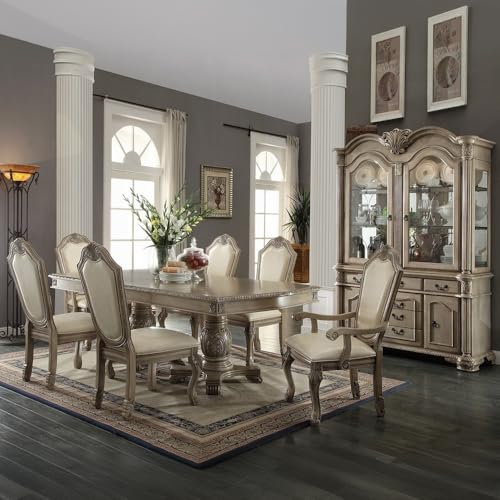
7-Piece Dining Set with Dining Extension Table, 4 Side Chairs and 2 Arm Chairs (A-Antique White)
Check price on Amazon
Roundhill Furniture Prato 6-Piece Dining Set, Dining Table with 4 Cross Back Chairs and Bench, Antique White and Distressed Oak Finish
Check price on Amazon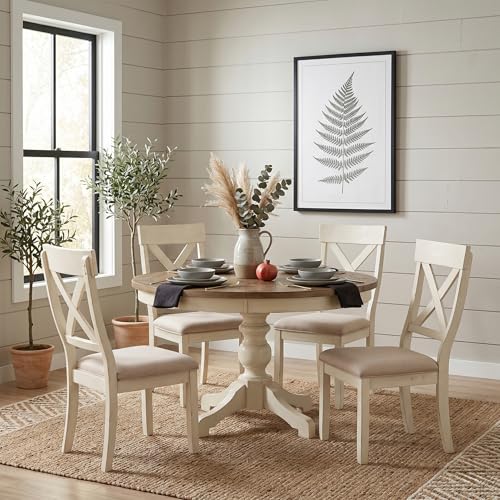
Roundhill Furniture Prato 5-Piece Round Dining Table Set with Cross Back Chairs, Antique White and Distressed Oak
Check price on Amazon
Harper & Bright Designs Modern Dining Table Set for 4,Round Table and 4 Kitchen Room Chairs,5 Piece Kitchen Table Set for Dining Room,Dinette,Breakfast Nook,Antique White
Check price on Amazon
Merax Dining Table Set for 4, Extendable Round Kitchen Table Set with 4 Upholstered Chairs, Solid Wood Table and Chairs Set for Kitchen, Dining Room, Antique White
Check price on Amazon
SoarFlash French Dining Chairs Set of 4, Vantage Dining Chair with Round Back, Wood Leg Farmhouse Country Rattan Dining Chair for Kitchen,Bedroom,Oatmeal
Check price on Amazon
Roundhill Furniture Prato 5-Piece Round Dining Table Set with Cross Back Chairs, Antique Blue and Weathered Walnut
Check price on Amazon
Roundhill Furniture Prato 7-Piece Dining Table Set with Cross Back Chairs, Antique White and Distressed Oak
Check price on AmazonFrequently Asked Questions
How can I tell if a dining table is genuinely antique?
Look for hand-cut joinery, irregular saw marks, aged patina in crevices, and wear patterns consistent with decades of use. Check the underside of the table and the backs of chairs — these areas are rarely refinished and often reveal construction details. Provenance documents and maker's marks add confidence, but they are not present on every piece.
Should I refinish an antique dining table?
Only if the existing finish is failing and the piece is not a premium or museum-grade example. Refinishing removes original patina and can reduce value. For mid-range pieces with damaged surfaces, a careful professional refinish can be worthwhile. Always conserve rather than restore when possible.
Can I mix antique chairs with a modern table?
Yes — this is a common and effective design approach. Keep the scale consistent and choose chairs that complement the table's wood tone or finish. Upholstered antique chairs with a clean-lined modern table often work particularly well.
What is the best wood for an antique dining table?
Mahogany and oak are the most durable and widely available antique dining woods. Walnut offers excellent carving detail, while pine and teak suit specific styles and climates. The best choice depends on the look you want and the room's humidity conditions.
How many chairs should I pair with an antique table?
Measure the table's length and allow roughly 24 inches of seating width per person. A standard rectangular table seats six comfortably; extension tables can seat eight or more. For compact antique tables, a four-chair configuration is typical — see our small dining table with four chairs guide for reference.
Final Thoughts
An antique dining table and chairs set is a long-term purchase that rewards careful research. Focus on solid construction, honest condition, and a style that suits your room — and be prepared to live with minor imperfections, which are part of the appeal. Whether you choose a formal Victorian set or a rustic farmhouse table, the right antique pieces will serve your household for decades and add a depth of character that new furniture simply cannot match.
Ready to explore further? Browse our guides on modern dining table styles for contrast ideas, or review dining table decoration items to complete the look.