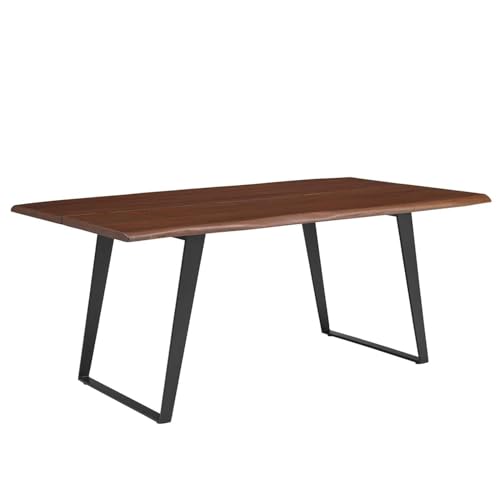
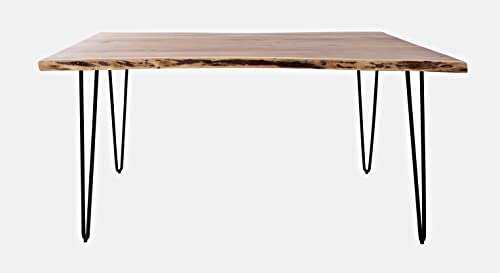
What Makes an Acacia Wood Live Edge Dining Table Special?
An acacia wood live edge dining table combines two highly desirable furniture qualities: the strength and character of acacia hardwood, and the organic silhouette of a live edge slab. Unlike fully machined tabletops with straight, uniform borders, a live edge table retains the natural curve of the tree's outer edge — including the undulating grain, subtle knots, and occasional sapwood streak that make each piece visually distinct.
Acacia itself is a dense hardwood with tight grain and natural oils that help it resist moisture and everyday wear. When paired with a live edge treatment, the result is a dining table that feels both rugged and refined — equally at home in a rustic farmhouse setting, a modern organic interior, or a transitional dining room. If you are exploring broader material directions, our dining table materials and finishes hub provides a useful comparison of wood, stone, glass, and metal options.
Because live edge tops are typically crafted from thicker slabs, these tables often carry a substantial visual weight. That presence is part of the appeal, but it also means you should plan the surrounding layout carefully. Our dining table space planning guide can help you balance table size, chair clearance, and walkway flow.
Key Material Traits of Acacia Wood
Acacia is a hardwood sourced from a fast-growing tree family, which contributes to its broad availability in furniture markets. Its grain is typically interlocked, with a warm palette ranging from honey-gold to deep chocolate-brown, and often featuring contrasting darker streaks. These natural variations are exactly what make acacia an excellent candidate for a live edge design.
Dense & Durable
Acacia's tight grain structure gives it strong resistance to dents and scratches, making it well-suited to daily dining use.
Moisture Resistant
Natural oils in the wood help it repel moisture, an advantage for a surface that sees spills and condensation.
Rich Color Variation
Heartwood and sapwood contrast, plus dark grain streaks, produce a visually dynamic surface with organic depth.
That said, acacia is not uniform across all boards. Slabs with significant color contrast, mineral streaks, or small filled knots are common in live edge designs — and many buyers consider these features part of the charm. If you prefer a more uniform surface, a light wood dining table for 4 with straighter grain or a solid cherry dining table set may be a better fit for your taste.
Understanding the Live Edge Design
The term "live edge" refers to a slab that keeps the natural outer contour of the log rather than being cut into a perfect rectangle. For an acacia wood live edge dining table, this typically means one or both long edges follow the tree's natural curve, often including a strip of lighter sapwood just beneath the bark line.
What to Look For in a Live Edge Top
- Stable slab construction: Quality live edge tables use properly kiln-dried slabs or jointed panels to reduce the risk of warping and cracking over time.
- Balanced edges: A well-crafted top maintains a visually pleasing edge profile on both sides, even if the curves are asymmetrical.
- Filled and sanded surface: Natural checks and small knots are usually filled and sanded smooth so the dining surface remains functional and comfortable.
- Finish quality: Look for a consistent protective finish — oil, wax, lacquer, or polyurethane — that seals the grain without obscuring the natural texture.
Live edge designs vary in how dramatic the natural border appears. Some tables keep a subtle undulation, while others showcase pronounced curves and a raw, organic profile. If you want a more sculpted wooden look but prefer straight edges, a curved wood dining table offers a softer alternative, while a wooden dining table and chairs set remains a classic starting point for traditional rooms.
Design tip: A live edge top naturally draws the eye. Balance its organic character with simple, clean-lined chairs rather than heavily carved seating. This contrast keeps the table as the focal point without visual clutter.
Seating and Size Considerations
Acacia live edge dining tables come in a range of footprints, from compact two- or four-seat versions to generous eight-seat slabs. Because live edge tops are often irregular in outline, measure the usable seating zone rather than relying only on nominal dimensions.
For tighter spaces, a small rectangular dining table set or a small width dining table may pair well with a lighter live edge top. For larger gatherings, a dining table with bench 6-seater layout can complement the rustic character of live edge wood, since benches echo the natural, informal feel of the slab.
Matching Chairs and Benches
- Wood-framed chairs: Continue the natural material story with wooden dining chairs that echo the table's tone.
- Upholstered chairs: A soft upholstered seat adds comfort and contrast, especially in a modern organic scheme.
- Mixed seating: Pair a bench on one side with chairs on the other for a relaxed, farmhouse-inspired arrangement.
- Metal accents: A metal leg dining table base can be paired with a live edge top for an industrial-organic hybrid.
If you are working with a compact dining zone, our dining table for narrow space guide and tiny apartment dining table ideas can help you adapt a live edge design to a smaller footprint.
Quality Tiers in Acacia Live Edge Tables
Acacia wood live edge tables appear across multiple market tiers. Instead of focusing on numeric figures, consider the relative construction quality and material selection within each tier.
| Tier | Typical Construction | Best For |
|---|---|---|
| Entry-level | Jointed acacia panels with simulated live edge; thinner top; basic finish | Occasional use, casual dining nooks, first-time buyers |
| Mid-range | Solid acacia slabs or thicker panels; kiln-dried; oil or lacquer finish; more pronounced natural edges | Everyday family dining, rustic and modern organic interiors |
| Premium | Single-slab or book-matched solid acacia; hand-finished edges; premium protective finish; stable base construction | Design-focused dining rooms, long-term investment pieces |
| Luxury | Exceptional slab selection with distinctive grain; artisan finishing; custom base options; commercial-grade durability | Statement dining spaces, collectors of natural wood furniture |
Entry-level tables often use thinner tops and panel construction to keep the design accessible, while premium and luxury tiers prioritize single-slab thickness, hand-finished edges, and more refined base joinery. Mid-range models typically offer the most balanced combination of natural character and structural stability for everyday dining.
Care and Maintenance for Acacia Live Edge Tables
Acacia is durable, but a live edge surface still benefits from consistent care. Because the natural edge exposes more end-grain and contour, it can be more sensitive to moisture intrusion than a fully sealed straight edge.
Routine Care
- Wipe spills promptly with a soft, slightly damp cloth, then dry the surface.
- Use coasters and placemats to reduce heat and moisture exposure.
- Dust regularly with a dry microfiber cloth to maintain the finish.
- Avoid harsh chemical cleaners that can strip oils or dull the finish.
Long-Term Protection
- Re-oil or re-wax oiled finishes periodically according to the maker's guidance.
- Keep the table away from direct, prolonged sunlight to limit fading and drying.
- Maintain stable indoor humidity to reduce the risk of seasonal movement.
- Use felt pads under objects and avoid dragging items across the surface.
For deeper guidance, our wood dining table wax and polish article and dining table routine upkeep guide cover step-by-step maintenance. If minor damage occurs, the dining table scratch touch-up guide and water ring removal guide offer practical fixes. Seasonal shifts can also affect solid wood, so our dining table humidity care guide is worth reviewing if you live in a variable climate.
Styling an Acacia Live Edge Dining Table
Because the table itself is a strong visual statement, styling should enhance rather than compete. A few principles help the natural character shine:
- Keep centerpieces low and natural: A wooden bowl, simple greenery, or a linen runner lets the grain remain visible.
- Layer textures: Combine a woven runner with ceramic tableware and soft linen napkins for an organic, tactile look.
- Choose warm lighting: A pendant or chandelier with warm-toned bulbs highlights the amber and honey tones in acacia.
- Anchor with a rug: A natural-fiber or neutral rug grounds the table and softens the room. Our dining table rug placement guide explains sizing and positioning.
If you enjoy changing your tablescape through the seasons, our dining table vignette ideas and dining table centerpiece guide provide plenty of inspiration. For a more rugged or industrial room, a black dining table with white chairs contrast can be adapted to a live edge top paired with dark metal chairs.
Who Should Choose an Acacia Wood Live Edge Dining Table?
This table style suits buyers who value natural materials, appreciate variation and imperfection, and want a dining centerpiece that feels distinct from mass-produced furniture. It is a strong fit for:
- Rustic, farmhouse, and modern organic interiors
- Open-plan dining rooms where the table is a focal point
- Households that prefer warm wood tones over painted or glass surfaces
- Buyers seeking a long-term investment in solid wood furniture
Conversely, if you prefer a perfectly uniform surface, a highly polished look, or a very low-maintenance finish, a marble dining table or a glass dining table may align better with your priorities. For a different natural wood aesthetic, the round rubberwood dining table and curved wood dining table are worth comparing.
Frequently Asked Questions
Is acacia wood suitable for a dining table?
Yes. Acacia is a dense hardwood with good resistance to wear and moisture, making it a practical choice for dining surfaces. A properly finished live edge top offers durability along with distinctive natural character.
Will a live edge top warp or crack over time?
Quality live edge tables use kiln-dried slabs and stable base construction to minimize movement. Maintaining stable indoor humidity and avoiding direct heat or prolonged sunlight greatly reduces the risk of warping or cracking.
How do I clean a live edge acacia table?
Use a soft, slightly damp cloth for routine cleaning and dry immediately. Avoid abrasive cleaners and standing water. For oiled finishes, reapply the recommended oil periodically to keep the surface protected.
What chairs work best with a live edge dining table?
Simple wooden chairs, upholstered seats, and benches all pair well. Choose seating that complements rather than competes with the table's organic edges — clean silhouettes and natural materials tend to work harmoniously.
Is a live edge table practical for everyday family dining?
Yes, particularly in mid-range and premium tiers with a durable protective finish. Filled and sanded surfaces function like standard tabletops, while the natural edge adds character without compromising daily use.
Ready to explore acacia wood live edge dining tables? Browse our curated selection below to compare designs, natural edge profiles, and construction quality across tiers.
Use the product cards below to view details and check availability.