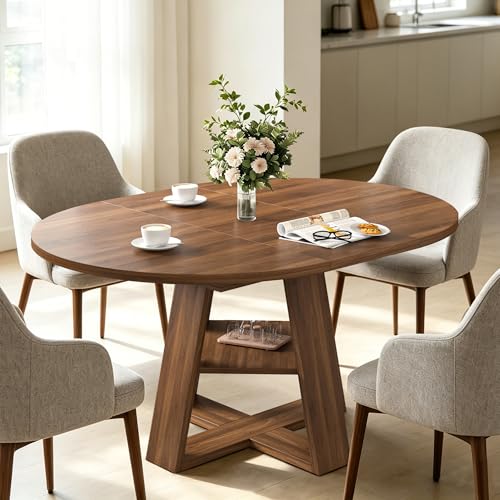
What Is a Dining Table Removable Leaf?
A dining table removable leaf is a separate tabletop panel that slots into the middle of an extendable table. When the leaf is in place, the table gains length — usually enough to seat two to four more people. When the leaf is out, the table returns to its compact footprint and the leaf is stored away.
Unlike a butterfly or self-storing leaf that folds and tucks underneath the tabletop, a removable leaf is fully detached. That design difference matters: removable leaves are generally simpler to operate, easier to clean, and less prone to hidden mechanical wear, but they require dedicated storage space. If you are comparing extension styles, our extendable dining table set guide covers the broader category of expandable designs.
How the Removable Leaf Mechanism Works
Most removable leaf tables use one of three mechanisms:
- Pull-apart with center gap: The two table halves slide apart on tracks, you drop the leaf into the gap, then push the halves back together until they lock. This is the most common and most reliable design.
- Drop-in leaf with alignment pins: The leaf sits on guide pins or dowels and is secured by latches or brackets underneath. Common on mid-tier and high-end tier wooden tables.
- Add-a-leaf stacking: The table accepts two or more leaves in sequence for very large gatherings. Typically found on professional-grade and commercial-grade banquet tables.
Regardless of mechanism, the goal is the same: a flush, stable surface with no visible gap and no wobble at the seam.
How Much Extra Space Does a Removable Leaf Add?
Leaf depth determines how many extra diners the table can seat. Here is a practical reference using standard seating clearances (about 24 inches of table edge per person):
| Leaf Depth | Extra Seats (approx.) | Best For |
|---|---|---|
| 12 inches | 1 per side (2 total) | Everyday tables that occasionally seat two extra guests |
| 16–18 inches | 1 per side (2 total), more comfortable spacing | Four-seater tables that need to become six-seaters |
| 20–24 inches | 2 per side (4 total) | Six-seater tables that need to become eight- or ten-seaters |
| Two or more leaves | 4+ total | Holiday hosting, large families, banquet-style setups |
Always measure your room before committing. A table that seats ten is only useful if there is walking clearance around it. Our guide to large dining tables explains how much clearance you need on each side, and the round pedestal dining table guide is useful if you prefer a shape that handles extension differently.
Removable Leaf vs. Other Extension Types
Removable leaves are not the only way to expand a table. Here is how they compare to the alternatives:
| Extension Type | How It Works | Best For |
|---|---|---|
| Removable leaf | Separate panel inserted into the center gap | Occasional hosting; households with storage space |
| Butterfly leaf | Folds out from under the tabletop | Frequent extension; no extra storage needed |
| Self-storing leaf | Leaf stores inside the table frame | Small homes; convenience-first buyers |
| Drop-leaf | Hinged side panels fold down | Very tight spaces; studio apartments |
If you want a table that does not require storage space for the leaf, a self-storing or butterfly design is usually the better fit. If you want the simplest, most durable mechanism and don't mind storing the leaf, a removable leaf is the most straightforward choice.
Materials and Finishes for Removable Leaf Tables
The leaf has to match the tabletop in both material and finish, or the seam will be visible when the table is extended. Here is how common materials hold up:
Solid Wood
Solid wood is the most common material for removable leaf tables. Oak, walnut, and teak are the most durable choices. The main risk with wood is seasonal movement — the leaf and the tabletop can expand and contract at different rates, which can create a slight seam gap over time. Mid-tier and high-end tier wooden tables usually account for this with proper grain alignment and expansion allowances. For a deeper look at wood options, see the grey and wood dining table set guide.
Stone and Marble
Marble and stone tops with removable leaves are heavier and require reinforced frames. The leaf must be handled carefully because it is heavy and brittle. Stone leaves are usually found on premium and luxury tier tables where the frame is built to handle the load. Our marble dining room table guide covers weight and care considerations.
Glass and Composite
Glass leaves are lighter and easier to handle, but they need careful alignment to avoid chipping at the seam. Composite and engineered surfaces are more forgiving and often found on entry-level and mid-range tables. If you are considering glass, our stone and outdoor table guide touches on how different surfaces behave in different environments.
Stability: What Keeps a Removable Leaf Table From Wobbling
A removable leaf table is only as stable as its frame. When the table is extended, the two halves are connected only by the track and the leaf itself. If any of those components are weak, the table will flex or wobble under load.
Look for these construction details:
- Reinforced apron: The apron (the frame under the tabletop) should extend across the full length of the table when extended, not just the two halves.
- Locking mechanism: A latch or cam lock that secures the two halves together when the leaf is inserted.
- Metal track or glides: Wood-on-wood tracks wear faster; metal tracks or high-grade glides last longer and slide more smoothly.
- Leg placement: Legs at the corners of the extended table, not just the compact table, prevent tipping when someone leans on the end.
Entry-level tables sometimes skip the locking mechanism and rely on the leaf alone to hold the halves together. That works for light use but is not ideal for a table that will be extended regularly. Mid-range and high-end tier tables typically include proper locks and reinforced aprons.
How to Set Up and Remove a Removable Leaf
The process is simple, but doing it correctly protects the finish and the mechanism:
- Clear the table. Remove everything from the surface before extending.
- Pull the halves apart. Grip the ends of the table and pull evenly. Most tables slide on tracks; some require lifting slightly.
- Insert the leaf. Align the leaf with the gap and lower it into place. If the table has alignment pins, seat the leaf on the pins first.
- Push the halves together. Slide the halves back until they meet the leaf. You should feel the locking mechanism engage.
- Check the seam. Run your hand along the seam. There should be no gap and no step between the leaf and the tabletop.
To remove the leaf, reverse the process. Never force the halves apart — if they resist, check that the lock is fully released.
Storing the Leaf Correctly
Improper storage is the most common cause of leaf damage. Follow these rules:
- Store flat, never upright. Leaning a leaf against a wall can cause it to warp over time.
- Use a protective sleeve. A cloth sleeve or padded cover protects the finish from scratches and dust.
- Keep it climate-stable. Avoid basements, garages, and attics where humidity and temperature swing widely. Wood leaves in particular will warp in humid storage.
- Keep it away from direct sunlight. UV exposure can fade the finish and cause the leaf to no longer match the tabletop.
If you live in a humid climate, consider a self-storing leaf design instead, since the leaf stays protected inside the table frame. Our coastal farmhouse dining table guide discusses how humidity affects wood furniture in coastal homes.
Care and Maintenance for Removable Leaf Tables
A removable leaf table needs the same care as any quality dining table, plus a few leaf-specific habits:
- Clean the seam regularly. Crumbs and dust collect in the gap between the leaf and the tabletop. Wipe the seam with a soft cloth after each use.
- Lubricate the track. Apply a dry lubricant (not oil) to metal tracks every few months to keep them sliding smoothly.
- Check the locking mechanism. Tighten any loose screws on the latch or brackets. A loose lock is the most common cause of wobble.
- Refinish the leaf with the table. If you sand or refinish the tabletop, refinish the leaf at the same time so the finish matches.
For outdoor or patio-adjacent tables, our counter-height patio dining table guide and patio couch and dining table guide cover weather-resistant care routines that also apply to indoor-outdoor removable leaf designs.
Choosing the Right Removable Leaf Table for Your Space
Use this decision framework to narrow your options:
- If you host a few times a year: A mid-range removable leaf table with a single 16–18 inch leaf is the sweet spot. It gives you comfortable seating for six without dominating the room day-to-day.
- If you host large gatherings regularly: Look for a table that accepts two leaves, and check that the frame is reinforced for the extended length. Professional-grade and commercial-grade banquet tables are built for this.
- If you have limited storage: A self-storing or butterfly leaf design is a better fit than a removable leaf.
- If you want a round or oval table: Removable leaves are less common on round tables, but some oval tables use a center leaf. Our round dining table for six guide covers shape-specific considerations.
Whichever direction you choose, confirm the leaf depth, the locking mechanism, and the frame reinforcement before buying. Those three details determine whether the table will feel solid when extended or flex under load.