
Wooden Circular Dining Table: The Complete Buyer's Guide
Everything you need to know before buying a round wooden dining table — from wood species and diameter sizing to finish choices, chair pairing, and long-term care. Make a confident, informed decision for your dining space.
Explore Wooden Circular TablesWhy a wooden circular dining table deserves your attention: A round wooden table is one of the most sociable and versatile pieces of dining furniture you can own. With no corners to navigate, it encourages conversation, improves flow in compact rooms, and brings natural warmth to any interior. This guide walks you through every decision point — wood type, size, base style, finish, and maintenance — so you can choose a table that fits your home and your lifestyle for years to come.
What Makes a Wooden Circular Dining Table a Smart Choice
A circular wooden dining table combines two timeless qualities: the natural beauty and durability of real wood, and the sociable, space-efficient geometry of a round top. Unlike rectangular tables, a round table places every diner at a similar distance from the center, which makes conversation easier and serving more natural. The absence of sharp corners also reduces bump hazards in busy households with children or frequent foot traffic.
Round wooden tables work particularly well in open-plan spaces where the dining area blends into a kitchen or living room. Because the shape is visually softer, it integrates smoothly with surrounding furniture without creating harsh sightlines. If your home has a compact dining nook, a circular table can often seat the same number of people as a rectangular table while feeling noticeably more open.
Wood itself adds a layer of character that other materials cannot match. Solid oak, walnut, and maple develop a subtle patina over time, and the visible grain gives each table a unique identity. For buyers who want a long-term investment rather than a temporary piece, a well-built wooden circular table is one of the most rewarding choices in dining furniture.
Choosing the Right Wood Species
The wood species determines the table's color, grain pattern, hardness, and how it responds to humidity and daily wear. Here is a comparison of the most common options for circular wooden dining tables:
| Wood Type | Character | Durability | Best For |
|---|---|---|---|
| Solid Oak | Prominent open grain, light to medium honey tones | High — hard and dense | Family homes, heavy daily use |
| Walnut | Rich chocolate-brown, smooth grain, refined look | High — strong and stable | Formal dining rooms, modern interiors |
| Maple | Pale, uniform, subtle grain | Very high — hard surface | Scandinavian and minimalist styles |
| Ash | Light with bold, flowing grain | High — shock-resistant | Rustic and farmhouse settings |
| Teak | Golden-brown, naturally oily surface | Very high — moisture-resistant | Humid climates, indoor-outdoor use |
| Pine | Light, knotty, casual appearance | Moderate — softer wood | Entry-level tier, casual dining |
Solid oak remains the most popular choice for a wooden circular dining table because it balances durability with strong visual character. Walnut is the preferred option for buyers who want a more premium, darker aesthetic. If you are furnishing a formal dining room and want a cohesive look, a dark oak dining table set demonstrates how a darker wood tone can anchor an entire room. For buyers who want a natural, lighter finish, a natural wood dining table and chairs set shows how to pair wood tones for a harmonious result.
Pay attention to whether the table is built from solid wood, veneer over engineered wood, or a mix of both. Solid wood tops can be sanded and refinished in the future, which extends the table's life considerably. High-quality veneer over a stable core can be a smart choice for mid-range and premium tiers, as long as the manufacturer uses a thick, well-bonded layer. Entry-level tier tables often use thinner veneers or softer cores, which are fine for lighter use but less suitable for a busy family dining room.
Determining the Right Diameter and Seating Capacity
Because a circular table has no long sides, seating capacity is determined almost entirely by diameter. As a general rule, allow about 24 inches of table edge per person to sit comfortably with elbow room and a full place setting. The table below gives practical guidance for common diameters:
| Diameter | Comfortable Seating | Typical Room Context |
|---|---|---|
| 30–36 inches | 2 people | Breakfast nooks, apartments, kitchens |
| 42–48 inches | 4 people | Small to medium dining rooms |
| 54–60 inches | 4–6 people | Standard family dining rooms |
| 60–72 inches | 6–8 people | Large dining rooms, entertaining spaces |
If you are planning a 6-seater round table, a diameter of at least 54 inches is usually necessary for comfortable seating. Buyers comparing shapes often find that a round table with a leaf offers more flexibility than a fixed round table; the 48-inch round dining table with leaf is a good example of how an extendable round table can serve both everyday meals and larger gatherings without permanently occupying extra floor space.
Always measure your room before committing. Leave at least 36 inches of clearance from the table edge to walls or other furniture so chairs can pull out and people can walk behind them. In tighter spaces, 30 inches is a workable minimum, but only if the table is not placed along a busy walkway. A circular table's footprint is simply the diameter of the top, so measuring is straightforward — but the clearance around it matters just as much as the table itself.
Pedestal vs. Legged Bases for Round Tables
The base style of a circular wooden dining table has a significant effect on comfort, seating flexibility, and visual weight. The two main options are pedestal bases and four-leg bases.
Pedestal Bases
A central pedestal base is the classic pairing for a round table. Because there are no legs at the corners, diners can sit anywhere around the perimeter without hitting a table leg. Pedestal bases are usually made from solid wood or wood with a metal reinforcement plate, and many designs include a cross-shaped foot or a weighted disc for stability. High-end tier pedestal tables often include a self-leveling foot or a wider base plate to reduce wobble on uneven floors.
One consideration with pedestal tables is stability at larger diameters. A 60-inch or larger round top on a single narrow pedestal can feel less rigid than a four-leg design, so look for a pedestal with a wide foot spread or a double-pedestal configuration in larger sizes.
Four-Leg Bases
Four-leg round tables place legs at the corners of an imaginary square beneath the top. They tend to be very stable and are often easier to move. The trade-off is that the legs can interfere with chair placement, especially in smaller diameters. If you choose a four-leg design, check that the leg spacing allows chairs to tuck in without hitting the legs.
For a modern, industrial look, some buyers prefer a metal frame with a wooden top. If that style appeals to you, the industrial farmhouse dining table guide explores how mixed materials can work together. For a more compact metallic accent, a small chrome dining table shows how metal bases can complement a wooden top in smaller spaces.
Finish Options and Their Trade-offs
The finish protects the wood and defines the table's visual character. The most common finishes for a wooden circular dining table are:
- Oil finish: Penetrates the wood, enhances natural grain, and is easy to spot-repair. Requires periodic re-oiling. Best for buyers who appreciate an authentic, matte wood feel.
- Wax finish: Gives a soft, low-sheen look and a smooth touch. Needs regular re-waxing and offers less moisture resistance than lacquer.
- Lacquer: A hard, protective film that resists spills and stains. Available in matte, satin, and gloss. Matte lacquer is a popular choice for modern interiors because it hides fingerprints and scratches better than gloss.
- Polyurethane: A durable, moisture-resistant coating suitable for busy households. Can look slightly plastic if applied too thickly, so quality of application matters.
- Distressed or rustic finish: Intentionally worn surfaces that hide scratches and suit farmhouse and cottage styles.
For a family dining table, a matte or satin lacquer over a hard wood such as oak or maple offers the best balance of protection and appearance. Oil and wax finishes are beautiful but demand more maintenance. If you want a table that develops character over time, oil is a rewarding choice; if you want low-maintenance durability, lacquer is the safer option.
Pairing Chairs With a Round Wooden Table
Chair selection is where many buyers underestimate the impact of their choices. A round table pairs well with a variety of chair styles, but a few practical rules help:
- Seat height: Standard dining tables are about 30 inches high, so chairs with a seat height of 18 to 19 inches work best. Always check the table's apron height to ensure chairs tuck in.
- Number of chairs: Match chair count to the diameter. Avoid squeezing extra chairs around a small table — it makes the table feel cramped and reduces comfort for everyone.
- Style balance: A pedestal round table looks elegant with upholstered or spindle-back chairs. A four-leg farmhouse round table pairs naturally with ladder-back or cross-back chairs.
- Wood tone matching: You do not need to match chair wood exactly to the table, but staying within a similar undertone — warm with warm, cool with cool — creates a cohesive look.
If you are furnishing a full dining room, a coordinated set can simplify the process. The 9-piece dining room table set illustrates how a complete set can unify a room, while a 6-person outdoor dining table set shows how seating arrangements scale for larger groups.
Wooden Circular Tables in Different Room Contexts
A round wooden table adapts to many room types, but the ideal size and style shift with the context:
Compact Kitchens and Breakfast Nooks
A 30- to 36-inch round table for two is the classic nook solution. Look for a pedestal base to maximize legroom and consider a drop-leaf or folding design if the space doubles as a walkway.
Standard Family Dining Rooms
A 48- to 54-inch round table seats four to six and is the most versatile size for most homes. If you host larger groups occasionally, an extendable round table with a leaf is a practical compromise.
Large Entertaining Spaces
A 60- to 72-inch round table becomes a statement piece. In these sizes, a double pedestal or a wide-foot single pedestal is preferable for stability. Pair with a large rug and consider lighting placement carefully, since a round table benefits from a centered chandelier or pendant.
Outdoor use is also possible with the right wood. Teak and other naturally oily woods handle humidity well, and a granite outdoor dining table shows an alternative approach for buyers who want a stone top with a wooden or metal base.
Care and Maintenance for Long-Term Durability
A wooden circular dining table can last for decades with proper care. The essentials are simple:
- Wipe spills promptly. Wood finishes resist moisture for a time, but standing liquid can penetrate seams and cause swelling or staining.
- Dust regularly with a soft, dry cloth. Avoid abrasive pads that can dull the finish.
- Re-oil or re-wax according to the finish. Oil finishes typically need reapplication once or twice a year; wax finishes need more frequent attention.
- Use coasters and placemats. Heat and condensation are among the most common causes of ring marks and finish damage.
- Control humidity. Wood expands and contracts with moisture. Keep indoor humidity within a moderate range and avoid placing the table next to radiators or air vents.
- Protect from direct sunlight. Prolonged UV exposure can fade or discolor wood over time.
- Check and tighten hardware. Pedestal and leg connections can loosen with use; a periodic tightening keeps the table stable.
If the table develops minor scratches, a matching wood touch-up marker or a light application of furniture wax can often restore the surface. For deeper damage, professional refinishing may be worthwhile, especially on solid wood tables where the top can be sanded and re-finished.
Tier Guide: What to Expect at Each Level
Wooden circular dining tables are available across a wide range of quality tiers. This guide uses a consistent tier system to help you understand what each level typically offers:
| Tier | Typical Construction | Best For |
|---|---|---|
| Entry-level | Veneer over engineered wood, thinner tops, simpler bases | Light use, temporary setups, first apartments |
| Mid-range | Solid wood top or thick veneer, reinforced pedestal or four-leg base | Everyday family dining, long-term home use |
| Premium | Solid hardwood, precision joinery, high-quality finish, stable pedestal | Design-conscious buyers, heavy daily use |
| Luxury | Hand-selected hardwood, hand-finished surfaces, custom sizing available | Formal dining rooms, statement pieces |
Mid-range tables usually offer the best balance of durability and design for most households. Moving up to the premium tier typically means better joinery, more consistent grain matching, and finishes that hold up longer under daily use. Luxury-tier tables are often made to order and may include features like book-matched tops or hand-carved pedestals.
Quick Buying Checklist
Before you finalize your purchase, confirm the following: measured room clearance of at least 36 inches around the table; diameter matched to your seating needs; solid wood or high-quality veneer construction; a finish suited to your maintenance preference; a base style that allows comfortable chair placement; and a chair count that matches the table diameter without crowding.
Recommended Wooden Circular Dining Tables
⚠️ AFFILIATE DISCLOSURE: This website contains affiliate links. As an affiliate Associate, we earn from qualifying purchases. If you make a purchase through these links, we may receive a small commission at no additional cost to you. Read our full affiliate policy.

LITTLE TREE Round Dining Table for 4-6 People, 47 Inches Dining Room Table with Wooden Pedestal Base, Circle Kitchen Tables for Dining Room, Kitchen, Living Room, Oak
Check price on Amazon
LITTLE TREE Round Dining Table for 4-6 People, 47 Inches Dining Room Table with Engineered Wood Pedestal Base, Brown Dinner Tables, Circle Kitchen Tables for Kitchen, Living Room
Check price on Amazon
LITTLE TREE Round Dining Table for 4-6 People, 47 Inches Dining Room Table with Wooden Pedestal Base, Modern Dinner Table, Circle Kitchen Tables for Dining Room, Kitchen, Living Room(Table Only)
Check price on Amazon
42" Round Dining Table for 4, Farmhouse Kitchen Table with Storage, Space Saving Circle Dinner Table, Rustic Wood Kitchen & Dining Room Tables with Metal Legs for Home, Apartment, Office, Restaurant
Check price on Amazon
ONBRILL 43 Inch Round Dining Table for 4, Modern Kitchen Table, Walnut | Wooden Circle Dining Tables with Cross Base, Beveled Profile Design, for Kitchen, Living Room, Easy Assembly(Table Only)
Check price on Amazon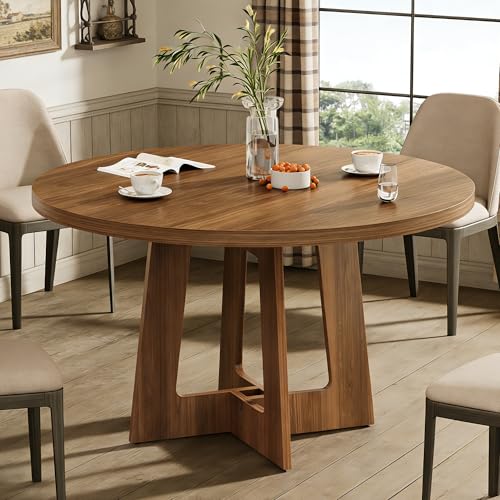
Sanyz Round Dining Table for 4, Wooden Dining Room Table, Circle Kitchen Table for Home Dining Room Kitchen Living Room (Walnut Brown)
Check price on Amazon
LITTLE TREE 31.5" Round Dining Table for 4, Kitchen Table for Dining Room | Wood Small Dinner Table with Wooden Tabletop and Octagonal Base for Apartments, Office & Restaurants
Check price on Amazon
IDEALHOUSE 47" Round Dining Table for 4-6, Farmhouse Wood Kitchen Table | Accent Furniture with Wooden Tabletop & 4 Sturdy Legs, Circle Dinner Table for Dining Room, Living Room, Walnut
Check price on AmazonFrequently Asked Questions
What size wooden circular dining table seats four people comfortably?
A round wooden table with a diameter of about 42 to 48 inches generally seats four adults comfortably, allowing roughly 24 inches of table edge per person plus room for place settings and a centerpiece.
Which wood is best for a circular dining table?
Solid oak and walnut are the most popular choices. Oak offers a hard, durable surface with visible grain, while walnut brings a darker, refined tone. Maple, ash, and teak are also strong options depending on your climate and style preference.
How much clearance do I need around a round wooden table?
Allow at least 36 inches from the table edge to walls or other furniture so chairs can pull out and people can walk behind them. In tighter spaces, 30 inches is a workable minimum if the table is not against a busy walkway.
Do round wooden dining tables work in small rooms?
Yes. A circular wooden table has no corners, so it improves circulation and lets people slide in and out more easily. In small dining rooms or nooks, a round table often feels more spacious than a rectangular table of similar seating capacity.
How do I care for a wooden circular dining table?
Wipe spills promptly, dust with a soft cloth, and re-oil or re-wax sealed wood surfaces periodically according to the manufacturer's instructions. Use coasters and placemats, keep the table away from direct heat and prolonged sun exposure, and control indoor humidity to prevent cracking.
Ready to Choose Your Wooden Circular Dining Table?
You now have the knowledge to select a round wooden table that fits your space, your seating needs, and your maintenance preferences. Browse our curated selection of wooden circular dining tables and compare features to find the right one for your home.
View Recommended Tables