
White Pine Dining Table: The Complete Buying and Care Guide
White pine brings a light, airy tone and an easygoing grain to dining rooms of every style. This guide explains how pine behaves, how to finish and protect it, and how to choose a white pine dining table that fits your home and daily life.
Why white pine deserves a closer look: White pine is one of the most approachable natural woods for dining furniture. Its pale surface reflects light beautifully, its grain is calm enough for both rustic and modern interiors, and it responds well to sealing, staining, or painting. The trade-off is softness, which is why understanding finish quality and daily protection matters more here than with almost any other wood. Read on to learn exactly what to expect from a white pine dining table.
What Makes White Pine Different from Other Woods
White pine is a softwood, meaning it grows faster and is naturally less dense than hardwoods such as oak or walnut. That has real consequences for a dining table. On the positive side, the wood is lightweight, easy to move, and takes finishes evenly because its grain is relatively uniform. On the cautious side, it dents and scratches more readily, so the quality of the protective finish and the way you use the table become central to its long-term appearance.
The color of white pine is another defining trait. Freshly milled boards lean toward a creamy, pale straw tone with subtle amber warmth. Over time, exposed pine tends to deepen slightly toward honey, especially under daylight. If you prefer a stable pale look, a finish with UV inhibitors helps slow that shift. For buyers who want a lighter-toned natural table without the weight and density of oak, white pine is a strong candidate — and comparing it with a solid oak oval dining table is a useful exercise before deciding.
Key Characteristics at a Glance
| Property | What It Means for a Dining Table |
|---|---|
| Wood type | Softwood, lighter than most hardwoods |
| Grain pattern | Straight, even, and calm — easy to stain or paint |
| Natural tone | Pale cream to light honey, warms slightly with age |
| Dent resistance | Moderate to low; finish and protection matter most |
| Weight | Lightweight and easier to reposition or extend |
| Best suited for | Light-use dining rooms, painted tables, casual kitchens |
White Pine Dining Table Tiers: What to Expect at Each Level
Not all white pine tables are built the same. The difference usually lies in board selection, joinery, thickness, and finish quality rather than the species itself. The tiers below describe relative market positioning and construction quality without reference to any specific figure.
Entry-Level Tier
Typically uses thinner boards, simpler joinery, and a basic sealed finish. Suitable for light use, casual kitchens, or a secondary dining space. Expect a friendly, informal look with a shorter lifespan under heavy daily activity.
Mid-Range Tier
Better board selection, thicker tops, and more careful joinery. Finishes are usually more durable and the table feels more solid. A sensible choice for family dining rooms that see regular but not extreme use.
Premium Tier
Carefully matched boards, reinforced frames, and high-quality sealing or oiling. These tables are designed for longevity and often pair pine with harder secondary woods for structural components, giving a balance of warmth and stability.
Luxury / Artisan Tier
Hand-selected knot-free or character-rich boards, traditional joinery, and multi-stage finishes. These tables are treated as statement furniture and are often built to order with a strong focus on craftsmanship and finish detail.
A useful rule of thumb: the higher the tier, the more of the table's durability comes from construction and finish rather than from the wood itself. A well-finished mid-range pine table can outlast a poorly finished higher-tier one, so inspect joinery and finish quality carefully. If you want a table that can grow with a household, look at extendable dining room table sets, which pair pine warmth with practical flexibility.
Choosing the Right Shape and Size
White pine's light tone makes it visually forgiving in compact rooms, but shape still drives how the table feels. Rectangular tables use wall space efficiently and suit most dining rooms. Round tables soften tight corners and encourage conversation. Oval tables offer a middle path — generous seating without hard edges. If you lean toward round or oval, a round wood dining table at 48 inches is a common starting point for four to six seats.
For larger rooms or households that host often, pine tables with a pedestal base can feel more open than four-legged designs. A round pedestal extending dining table is worth considering if you want the visual lightness of pine without sacrificing seating capacity. And for corner placements in kitchens or breakfast nooks, a corner dining set with a round table can make a small footprint feel intentional rather than cramped.
Seating and Clearance Basics
- Allow roughly 60 cm of table edge per seated person for comfortable elbow room.
- Leave at least 90 cm of clearance behind chairs for pulling in and out.
- Keep 75–80 cm between the floor and the table apron for legroom.
- For pine, add a little extra clearance if the table has a thick top or decorative apron.
Finishes for White Pine: Sealed, Oiled, Stained, or Painted
Because pine is soft, the finish is the single most important factor in how the table ages. Each approach changes both the look and the maintenance routine.
Sealed or Lacquered
A clear sealant or lacquer creates a protective film over the wood. It resists spills well and keeps cleaning simple, though the film can chip over time in high-impact spots. This is the most common finish on mid-range and premium pine tables.
Oiled
Oiled finishes penetrate the wood rather than sitting on top, giving a natural, tactile surface. They highlight pine's grain beautifully but require periodic re-oiling. Oiled pine is a good match for rustic and farmhouse interiors and pairs naturally with a wood trestle dining table style.
Stained
Pine can be stained to a deeper tone, but its uneven absorption can cause blotchiness unless a pre-stain conditioner is used. A stained pine table offers the warmth of darker wood at a lighter structural weight. Dark stains are a popular route for buyers who want the look of a dark extendable dining table while keeping pine's construction advantages.
Painted
White pine takes paint exceptionally well. A painted table is easy to refresh, hides small dents, and suits cottage, coastal, and farmhouse styles. Use a primer and a durable topcoat, and expect to touch up edges periodically.
Durability and Daily Protection
White pine will show its history. Small dents and dings are part of its character, but you can slow wear significantly with a few habits:
- Use coasters for hot and cold drinks, and placemats for plates with rough bases.
- Place a fitted table pad on the surface during crafts, homework, or holiday meals.
- Wipe spills promptly, especially with oiled finishes.
- Keep the table out of direct heat sources and avoid prolonged direct sunlight.
- Maintain moderate indoor humidity to reduce seasonal wood movement.
- Refresh the finish every few years, or sooner if water stops beading on the surface.
If you plan to host regularly or have young children, consider a pine table with a reinforced frame and a hard-wearing sealed finish. For households that need to reconfigure seating often, a extendable dining table with folding chairs combines pine's light look with practical storage and flexibility.
Quick check before you buy: Run your hand along the tabletop edges and feel for rough spots or thin finish. Ask whether the wood is kiln-dried, whether the frame uses reinforced joinery, and how the finish should be maintained. These three answers tell you more about long-term performance than the species label alone.
Styling a White Pine Dining Table
Pine's pale, neutral surface is a natural backdrop. In modern rooms, pair it with simple ceramics, linen runners, and matte metal accents. In farmhouse settings, layer woven placemats, stoneware, and soft candles. Because pine reads warm rather than cool, it sits comfortably alongside natural fibers, terracotta, and muted greens. A cypress dining table offers a similar warm, natural feel if you want to compare tones before committing.
If your dining room is large and you want a statement piece, a bigger pine table can anchor the space. A large round dining table in pine is an unusual but striking choice for open-plan rooms where conversation and flow matter equally.
Common Mistakes to Avoid
- Buying pine for a high-traffic family table without a durable finish.
- Ignoring humidity levels — pine can move if the room swings between very dry and very damp.
- Choosing a stain without testing on a hidden area first.
- Placing hot dishes directly on the surface, even on sealed tables.
- Overlooking clearance around chairs in compact rooms.
Frequently Asked Questions
Is white pine a good wood for a dining table?
Yes, for the right setting. White pine offers a light tone, calm grain, and easy finishing. It suits casual dining rooms, kitchens, and painted or sealed tables. It is softer than hardwoods, so choose a durable finish and protect the surface from heavy impacts.
How do I protect a white pine dining table from dents?
Use coasters, placemats, and a fitted table pad during heavy use. Avoid dragging objects across the surface, keep sharp items off the table, and refresh the protective finish periodically so the wood stays sealed.
Can a white pine dining table be painted?
Yes. White pine takes paint well because of its even grain. Prime first, sand lightly between coats, and finish with a durable topcoat. Painted pine is a common choice for farmhouse and cottage styles.
Does white pine furniture warp or crack?
Pine can move with humidity changes. A properly kiln-dried table with a stable frame and sealed surface is far less likely to warp. Keep the table away from direct heat and maintain moderate indoor humidity to reduce risk.
Recommended White Pine Dining Tables
⚠️ AFFILIATE DISCLOSURE: This website contains affiliate links. As an affiliate Associate, we earn from qualifying purchases. If you make a purchase through these links, we may receive a small commission at no additional cost to you. Read our full affiliate policy.

Signature Design by Ashley Valebeck Extendable Dining Table, Farmhouse | Seats Up to 8 with 16.5 in Removable Leaf, Rustic Two-Tone Pine Wood, Veneer and Engineered Wood, Sturdy Trestle Base
Check price on Amazon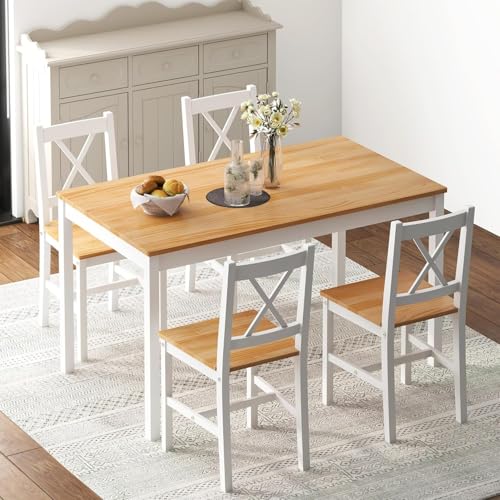
sogesfurniture 5 Pieces Small Dining Table Set with Chairs for 4 People | 42.5 Inch Rectangular Space Saving Kitchen Table, Modern Farmhouse Kitchen Dining Room Furniture, Pine Wood Frame, Oak&White
Check price on Amazon
Merrick Lane Jessamine 46" x 30" Rectangular Rustic Solid Pine Farm Dining Table, Antique Farmhouse Wooden Dining Table for Kitchens and Parties, Rustic White
Check price on Amazon
Furniture Dash Wood Dining Table Corona
Check price on Amazon
5-Piece Farmhouse Dining Table Set for 4, Solid Pine Counter Height Kitchen Table and 4 Stools, for Small Spaces, Apartments, Breakfast Nook in Distressed White with Rustic Wood Top
Check price on Amazon
Furniture Dash - Solid Wood Dining Chair Set of 2 - Durable, Elegant, Comfortable - Perfect for Dining Rooms - Distressed Harvest White Finish
Check price on Amazon
SAFAVIEH Forest Wood Dining Table, 43.3" Antique White DTB1000A | Dining Table, Pine, 43.3" Overall, Assembly Required, dining room, kitchen, breakfast nook
Check price on Amazon
SECONIQUE Santos Butterfly Folding Dining Table Set with 4 Chairs – Space-Saving Table with Nesting Chairs and Storage Shelf – White & Distressed Pine Finish
Check price on AmazonReady to Choose Your White Pine Dining Table?
Review the tier descriptions above, confirm your room size and clearance, and check the finish details before deciding. A well-chosen pine table can be a warm, long-lasting centerpiece for years of everyday meals.
Explore More Dining Table Guides