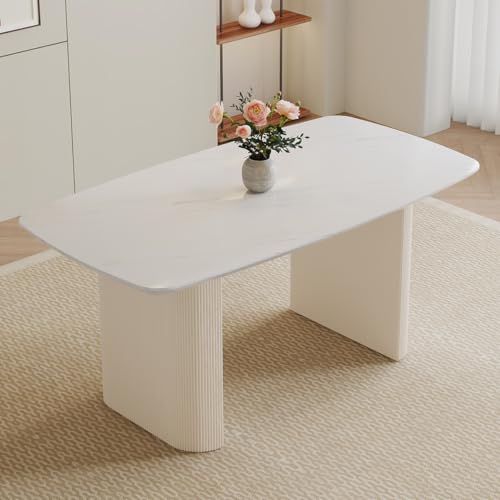
What Is a White Fluted Dining Table?
A white fluted dining table is a table finished in white with a fluted—also called ribbed or reeded—surface treatment. The fluting can appear on the tabletop edge, the apron, or the pedestal base, and it consists of evenly spaced vertical grooves that create a rhythmic, textured pattern. The white finish keeps the look bright and airy, while the fluting adds depth that flat surfaces cannot provide.
Fluted design draws from classical architecture and has been reinterpreted in modern furniture. In a dining table, it works as a subtle focal point: the grooves read as clean lines from a distance and as rich texture up close. For buyers who want a table that feels distinctive without loud color or heavy ornament, the white fluted dining table is a strong candidate.
Quick Definition
Fluted: A surface decorated with shallow, vertical grooves. On furniture, fluting is often applied to pedestal bases, table aprons, and edge profiles to add visual rhythm and a handcrafted, architectural feel.
Design Appeal: Why Fluting Works in White
White is a reflective, space-expanding color, and fluting multiplies that effect by introducing shadow lines across the surface. The result is a table that looks different from every angle and in every lighting condition. Key design benefits include:
- Texture without color: Fluting adds visual interest while keeping a neutral palette, which suits minimalist, coastal, transitional, and modern interiors.
- Light play: The ridges catch daylight and lamp light, creating gentle highlights and shadows that make the table feel dynamic.
- Architectural character: A fluted pedestal or apron gives the table a structural, column-like quality that anchors the room.
- Disguised wear: On light-colored furniture, texture can help mask minor scuffs and fingerprints compared with a perfectly flat gloss surface.
The overall effect is refined rather than flashy. If your dining room leans toward quiet luxury or soft modern design, a white fluted table pairs naturally with warm woods, natural fibers, and muted upholstery.
Materials and Construction Options
The material beneath the white finish determines how the table feels, how long it lasts, and how the fluting is formed. Here are the common construction types for fluted dining tables.
| Material | Fluting Method | Best For | Tier Positioning |
|---|---|---|---|
| Solid wood (oak, ash, beech) | Carved or CNC-milled grooves; painted white | Long-term daily use, premium feel | Premium to luxury |
| Engineered wood with veneer | MDF or plywood core, routed fluting, painted or lacquered | Stable surfaces, smooth finish | Mid-range |
| MDF with lacquer finish | Molded or routed fluting, multi-coat lacquer | Sculptural bases and smooth edges | Entry-level to mid-range |
| Stone or composite top with fluted base | Fluted wood or plaster base under a stone top | Contrast between smooth top and textured base | Premium to luxury |
Solid wood fluting is the most tactile and repairable option, but it is also the heaviest and typically sits in the premium tier. Lacquered MDF offers crisper groove edges and a very smooth finish, making it a popular choice for modern sculptural bases in the mid-range tier. Whichever material you choose, inspect the groove depth and consistency: shallow, uneven fluting can look like a manufacturing flaw rather than a design feature.
What to Check Before You Buy
Because fluted tables are sold in many constructions, a few checks will separate a well-made piece from a compromised one. Use this checklist during research and when reviewing product listings.
1. Groove Quality and Consistency
Look closely at how the fluting is executed. The grooves should be evenly spaced, consistent in depth, and free of rough edges. On painted surfaces, the finish should flow smoothly into the grooves without pooling or drips. Crisp, uniform fluting signals better manufacturing control.
2. Finish Durability
White finishes vary in resilience. A quality lacquer or polyurethane coating resists moisture and everyday scuffs. Ask whether the finish is water-resistant and whether touch-up materials are available. Matte and satin finishes hide minor marks better than high gloss, which is worth considering for a family dining table.
3. Base Stability
Fluted pedestals are visually striking but must be engineered to resist wobble. A wide, weighted base and secure tabletop attachment matter, especially on larger round tables. If the table has a central pedestal, check whether it includes a stabilizing plate or leveling feet.
4. Seating and Size Fit
Fluted tables come in round, oval, and rectangular shapes. Round fluted tables are sociable and space-efficient, while rectangular versions suit larger households. Plan for at least 36 inches of clearance around the table for chair movement and walkways. For compact rooms, consider a pedestal design that eliminates corner legs and maximizes legroom.
If your room is tight, explore small round dining table set options and compare them with a small rectangular dining table set before deciding on shape. A round table sized for four is a practical benchmark for fluted designs in apartments.
5. Edge Profile and Chair Pairing
The tabletop edge interacts with your chairs. A thick fluted edge can look heavy with delicate chairs, while a slim edge suits minimalist seating. Bring chair measurements or compare heights: the gap between seat and tabletop should leave comfortable legroom. For a coordinated look, review black chairs for a dining table as a high-contrast pairing, or blue chairs for a dining table for a softer accent.
White Fluted Table Shapes and Room Fit
Shape changes how a fluted table reads in a room. Here is how the main options compare.
| Shape | Room Fit | Seating Strength | Design Note |
|---|---|---|---|
| Round pedestal | Compact dining areas, nooks, open-plan corners | 4 to 6 people | Fluted pedestal becomes a sculptural focal point |
| Oval | Medium to large dining rooms | 6 to 8 people | Soft silhouette balances the vertical grooves |
| Rectangular | Formal dining rooms, family spaces | 6 to 10 people | Fluted apron or legs add rhythm along the length |
| Square | Symmetrical layouts, small family dining | 4 people | Strong geometric pairing with fluted base |
Round and oval shapes soften the strict verticality of fluting, while rectangular tables let the fluting run in dialogue with the table's length. If you are working with a narrow room, a slim dining table with bench or a dining table for a narrow space can preserve circulation while still delivering the fluted look in a pedestal or apron detail.
Styling a White Fluted Dining Table
A textured white table is a versatile styling canvas. The goal is to let the fluting remain visible rather than covering it with heavy tablecloths. Consider these approaches:
Modern Minimalist
Keep the tabletop nearly bare: a low ceramic bowl, a single sculptural vase, or a pair of candlesticks. Choose chairs with clean lines in leather or bouclé. The contrast between smooth seating and fluted table creates visual interest without clutter.
Warm Transitional
Layer a natural linen runner across the table and add woven placemats. Pair with wood-framed chairs or upholstered seating in warm neutrals. The white fluting stays crisp while the surrounding textures add softness. A high-back bench for a dining table can introduce a relaxed, family-friendly seating option.
High-Contrast Contemporary
Use black or deep-toned chairs against the white table for a graphic look. Add a dark centerpiece or matte black candle holders. The fluting reads as a bright sculptural element against the darker surrounding pieces. If you want to explore this direction, black dining table with white chairs guidance offers a useful inverse reference for balancing contrast.
For more layout and styling direction, the broader dining room table styles overview can help you align the fluted table with your room's overall design language.
Care and Maintenance for White Fluted Surfaces
Fluting introduces grooves that need slightly more attention than a flat surface. A simple routine keeps the white finish bright and the texture crisp.
- Dust the grooves regularly: Use a soft microfiber cloth or a soft-bristle brush to lift dust from the channels before it settles.
- Wipe with a mild cleaner: A pH-neutral cleaner on a damp cloth is sufficient for most white finishes. Dry immediately with a clean cloth.
- Avoid abrasive tools: Scouring pads and harsh solvents can dull the finish and leave visible marks in the grooves.
- Use coasters and placemats: Protect the tabletop from heat, condensation, and direct contact with acidic foods.
- Address spills promptly: Blot rather than rub, especially near groove edges where moisture can linger.
If the table has a painted finish, keep a small touch-up kit recommended by the manufacturer. For deeper cleaning routines that apply to many table types, see the site's care and maintenance resources.
White Fluted Table vs. Other White Tables
White dining tables come in many styles. Understanding the differences helps you confirm the fluted option is right for your room.
| Table Style | Visual Effect | Best For | Consideration |
|---|---|---|---|
| White fluted | Sculptural, textured, architectural | Design-forward dining rooms, soft modern interiors | Grooves require routine dusting |
| White flat-panel | Clean, minimal, seamless | Minimalist and Scandinavian spaces | Less visual depth than fluted |
| White marble top | Luxurious, cool, veined | Formal dining rooms, elegant settings | Stone requires sealing and careful care |
| White farmhouse | Warm, casual, cottage-inspired | Family kitchens and relaxed dining areas | Distinct style that may not suit modern rooms |
The fluted table's advantage is texture: it delivers personality without relying on color contrast or pattern. If you like the white palette but want more visual weight, a fluted base or apron provides it. For a related comparison in white family-friendly styles, the white farmhouse dining table set overview is a useful reference point.
Common Buying Mistakes to Avoid
- Ignoring groove maintenance: Fluting traps dust. If you prefer minimal upkeep, choose a design where fluting is limited to the base rather than the entire tabletop edge.
- Undersizing the table: White and textured surfaces look larger in showrooms. Measure your room and confirm clearance on all sides before committing.
- Mismatching chair scale: Heavy, oversized chairs can crowd a fluted pedestal table. Balance visual weight between table and seating.
- Overlooking finish type: Matte and satin finishes are more forgiving than high gloss on a white textured surface.
- Skipping stability checks: Pedestal tables need secure bases. Read reviews about wobble and check for leveling features.
Frequently Asked Questions
What is a white fluted dining table?
It is a dining table with a white finish and a surface or base featuring repeating vertical grooves called fluting or ribbing. The texture adds shadow play and architectural character to the table.
Are fluted dining tables durable?
Durability depends on the core material and finish quality. Solid wood and well-made engineered wood with a quality white finish handle daily use well. Routine cleaning of the grooves keeps the table looking fresh.
How do I clean a white fluted dining table?
Dust the grooves with a soft microfiber cloth or soft-bristle brush, then wipe with a mild pH-neutral cleaner and dry immediately. Avoid abrasive pads and harsh solvents.
What size white fluted dining table should I choose?
Match the size to your room and seating needs. Leave at least 36 inches of clearance around the table. Round fluted tables suit compact and social spaces, while rectangular versions fit larger dining rooms.
Can a white fluted table work in a small dining room?
Yes. A round pedestal fluted table is especially space-efficient because it eliminates corner legs. A bright white finish also helps a small room feel more open.
Ready to Choose Your White Fluted Dining Table?
Use the buying checklist above to compare groove quality, finish durability, base stability, and room fit. When you are ready to explore specific models, review the recommended options below.
View Recommended Tables