
White Dining Table with Black Legs: The Complete Buying Guide
A white tabletop paired with black legs is one of the most versatile two-tone combinations in modern dining design. This guide explains how to choose the right top material, leg construction, size, and finish so you can buy with confidence.
Explore Recommended TablesWhy this combination works: The white top brings brightness and a clean visual line, while black legs anchor the table and add graphic contrast. Together they fit modern, Scandinavian, industrial, and transitional interiors, and they are easy to coordinate with almost any chair color or dining room palette.
What Defines a White Dining Table with Black Legs
A white dining table with black legs is a two-tone piece built from a light-colored top and a dark frame. The contrast can be subtle or bold depending on the finish. Matte white tops with satin black legs read calm and architectural, while gloss white tops with powder-coated black steel create a sharper, more contemporary statement.
This style is popular because it solves a common design problem: an all-white table can feel cold or disappear into pale walls, and an all-black table can feel heavy in a small room. Splitting the difference keeps the surface bright and the base grounded. If you are comparing broader style directions, our dining table style and design hub covers how to match a table to your interior.
The two-tone approach also works across shapes. A large round wood dining table with a whitewashed top and black base feels softer than a full black piece, while a sintered stone round dining table with black legs delivers a more modern, low-maintenance look.
Tabletop Materials: What to Look For
The top decides how the table feels day to day and how much care it needs. Here is how the most common white surfaces compare when paired with black legs.
White Lacquered Wood
A painted or lacquered wood top gives a smooth, uniform white surface. Matte and satin finishes hide fingerprints better than gloss. Look for a sealed edge to prevent moisture from lifting the finish.
White Oak or Ash
Solid or veneered white oak keeps visible grain, which adds warmth against black legs. A whitewashed or limed finish is more forgiving of scratches than solid paint.
White Marble
Marble brings natural veining and a premium feel. It is heavy, so the base must be reinforced. A solid marble dining table needs sealing and quick spill cleanup to avoid staining.
Sintered Stone and Quartz
Engineered surfaces resist scratches, heat, and stains well, making them a practical choice for busy homes. They pair cleanly with slim black steel legs.
White Glass
Glass keeps the top visually light and reflects light around the room. It shows smudges and needs frequent cleaning, but it is easy to wipe down.
Laminate and Veneer
Entry-level and mid-range options often use laminate over engineered wood. Quality varies widely, so check edge banding and water resistance before choosing.
For a deeper comparison of top materials and their care needs, see our materials and finishes hub.
Leg Construction and Frame Types
The base carries the weight and controls stability. Black legs are usually made from powder-coated steel, solid wood, or a wood-and-metal mix. Each has trade-offs.
| Leg Type | Best For | Notes |
|---|---|---|
| Powder-coated steel | Modern and industrial looks | Durable and rust-resistant when properly coated; check for reinforced joints |
| Solid black wood | Warm, transitional interiors | Softer underfoot and easier to repair, but can chip at the base |
| Trestle frame | Large rectangular and oval tops | Distributes weight well and leaves more legroom at the ends |
| Pedestal base | Round and oval tables | Improves flow around the table and suits compact rooms |
| Splayed tapered legs | Mid-century and Scandinavian styles | Lighter visual footprint; confirm stability on larger tops |
For large oval tops, a trestle or pedestal frame is usually more stable than four thin legs. Our large oval dining table that seats 8 guide explains how base design affects seating comfort at the ends.
Choosing the Right Size and Shape
Size matters more than finish. Measure your room and plan for clearance around the table before you commit to a shape.
- Rectangular: Efficient for narrow rooms and the most common shape for six or more seats.
- Round: Great for conversation and tight corners; a round sintered stone table with black legs is a practical modern pick.
- Oval: Softens a long room and removes sharp corners in walkways.
- Square: Works well for four seats in a compact nook.
- Extendable: Ideal if you host occasionally; a black oak extendable dining table shows how a dark frame pairs with an extending mechanism.
As a rule, allow at least 90 cm of clearance between the table edge and walls or furniture so chairs can pull out comfortably. Our space planning guide walks through measuring and layout step by step.
Matching Chairs and Room Style
Black legs give you flexibility with seating. Light wood chairs soften the contrast, black chairs create a cohesive monochrome look, and upholstered chairs add warmth. A white top with black legs also works with benches for a relaxed farmhouse feel.
If you are building a full farmhouse look, our farm style dining room table and chairs guide covers how to combine wood tones and painted finishes. For a more contemporary setting, pair a white top with black metal legs and slim upholstered seats.
For chair sizing and comfort, see our dining chair selection guide.
Care and Maintenance Tips
A two-tone table needs care on both surfaces. White tops show spills, and black legs show scuffs and dust.
- Wipe spills promptly with a soft, damp cloth and dry immediately.
- Use placemats and coasters daily to protect the white top from heat and rings.
- Avoid abrasive cleaners and scouring pads, which dull painted and stone surfaces.
- Dust black legs weekly; touch up powder-coated steel with a matching paint pen if chipped.
- Reseal stone tops as recommended and re-oil wood tops periodically.
- Use felt pads under the legs to protect hard floors.
For detailed routines, read our care and maintenance hub and the stain removal guide.
Common Buying Mistakes to Avoid
- Ignoring base stability: A large white top needs a reinforced frame; thin legs can wobble over time.
- Choosing gloss without testing light: Gloss white reflects glare and shows fingerprints more than matte.
- Underestimating weight: Marble and stone tops are heavy; confirm the base is rated for the load.
- Skipping measurements: Measure doorways and hallways before delivery, not just the room.
- Overlooking edge finish: Sealed edges prevent moisture damage on painted and veneered tops.
Our dining table buying mistakes article expands on these points with practical checks.
Recommended White Dining Tables with Black Legs
⚠️ AFFILIATE DISCLOSURE: This website contains affiliate links. As an affiliate Associate, we earn from qualifying purchases. If you make a purchase through these links, we may receive a small commission at no additional cost to you. Read our full affiliate policy.
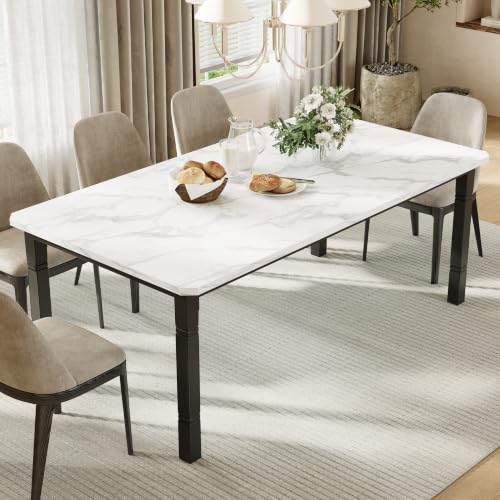
Garvee 71" Dining Table for 6-8 People, Kitchen Table with Metal Frame | 71" Wooden Kitchen Table with Sturdy Metal Frame, Dining Room Table for Dining Room, Kitchen, Black Leg & Marble White
Check price on Amazon
Roundhill Furniture Noyes Metal Dining Table with Laminated Faux Marble Top, Off-White
Check price on Amazon
Garvee Large Dining Table for 6-8 People, 79" Wooden Kitchen Table | Kitchen Table with Sturdy Metal Frame, Dining Room Table for Dining Room, Kitchen, Black Leg & Marble White
Check price on Amazon
79IN Industrial Dining Table for 6-8 People, Wooden Rectangle Long Dinner Kitchen Table with Metal Legs, Round Corners, Writing Office Desk for Dining Room, Living Room, Marble White & Black Legs
Check price on Amazon
Trygoal 47" Marble Grain Dining Table, Modern Kitchen Table, White Black | Tempered Glass Countertop with Lower Mdf Board, Seats 4-6 with Black Metal Legs, Space-Saving for Dining, Small Kitchens
Check price on Amazon
71IN Industrial Dining Table for 6-8 People, Wooden Rectangle Long Dinner Kitchen Table with Metal Legs, Round Corners, Writing Office Desk for Dining Room, Living Room, Marble White & Black Legs
Check price on Amazon
Squireewo 70IN Dining Table for 6 PeopleW/Thickened Waterproof Tabletop,WT | Modern Wooden Dining Table,Rectangle Dinner Table with Heavy Duty Legs for Kitchen, Dining Room (White)
Check price on Amazon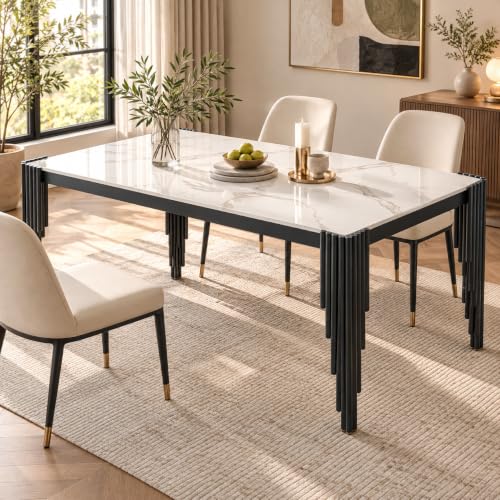
KEIKI 49" Rectangular Dining Table, White Marble-Look Top, Black Metal Legs | Seats 4, MDF Tabletop, 29.3" W x 29.5" H, Small Apartment Kitchen Use, Easy-Clean Surface, Floor-Protecting Foot Pads
Check price on AmazonFrequently Asked Questions
What tabletop materials work best with black legs?
White lacquered wood, matte white oak, white marble, sintered stone, and white quartz all pair well with black legs. Choose a matte or satin finish for a softer look and a gloss finish for a more dramatic contrast.
Are black metal legs strong enough for a large white tabletop?
Yes, when the frame is reinforced and the legs are thick-walled steel with proper bracing. For larger oval or rectangular tops, look for a pedestal or trestle frame with cross-bracing to prevent wobble.
How do I keep a white tabletop looking clean?
Wipe spills quickly with a soft damp cloth, use placemats and coasters daily, and avoid abrasive cleaners. For wood tops, reapply a protective finish periodically; for stone tops, reseal as recommended by the manufacturer.
Does a white and black dining table suit small rooms?
Yes. A white top reflects light and makes a room feel larger, while slim black legs keep the visual footprint light. Round and oval shapes work especially well in compact dining areas.
Can I mix a white top with a black extendable frame?
Yes. Extendable frames in black steel or black-stained wood work well with white tops. Check that the extension mechanism is rated for the top's weight and that the table stays level when fully extended.
Final thought: A white dining table with black legs is a long-term choice when you prioritize a stable base, a top material that matches your daily routine, and a size that fits your room. Start with measurements, then match the finish to your interior style.