
Walnut Veneer Dining Table: The Complete Guide
Everything you need to know about walnut veneer dining tables — how they are built, how they perform, how they compare to solid walnut, and how to care for them so they stay beautiful for years.
Explore Top PicksWhy walnut veneer deserves your attention: A walnut veneer dining table gives you the rich, chocolate-toned grain and warm character of genuine walnut without the weight, movement, and structural quirks of a solid slab. For buyers who love the look of walnut but want a stable, well-engineered surface, veneer construction is one of the smartest choices in modern dining furniture.
What Is a Walnut Veneer Dining Table?
A walnut veneer dining table uses a thin layer of real walnut wood — typically between 0.5 mm and 1.5 mm thick — bonded to a stable core panel. That core is usually MDF, plywood, or a honeycomb structure, chosen for its dimensional stability and flatness. The result is a tabletop that looks and feels like walnut on the surface while benefiting from an engineered base that resists warping, cracking, and seasonal movement.
Walnut itself is prized for its deep brown heartwood, subtle purple undertones, and flowing grain patterns. When sliced into veneer, that grain is preserved and often book-matched — meaning two adjacent slices are joined like a mirror image — creating symmetrical patterns that solid wood rarely achieves at this scale.
If you are still comparing table materials and construction styles, our compact wood dining table guide is a useful starting point for understanding how wood-based tables are typically built.
How Walnut Veneer Tables Are Constructed
Understanding construction helps you judge quality before you buy. A well-built walnut veneer dining table typically involves several layers of craftsmanship:
- The core panel: A stable substrate — usually MDF or a multi-layer plywood — forms the structural base. Higher-grade tables use denser cores with better moisture resistance.
- The veneer layer: Real walnut slices are glued under pressure to the core. Premium tables use thicker veneer slices that can be lightly sanded and repaired.
- Edge banding: The edges are finished with solid walnut strips or matching veneer so the table looks like solid wood from every angle. Poor edge banding is one of the first signs of a lower-tier build.
- Surface finish: Lacquer, oil, or polyurethane seals the veneer and protects it from moisture and daily wear.
- Frame and legs: These may be solid walnut, solid hardwood, or metal, depending on the design. Check whether the legs are solid or veneered — solid legs are generally more durable.
If you want to compare shapes and seating formats before committing, our guide to an eight-foot dining table shows how larger veneer tops are typically engineered for stability.
Walnut Veneer vs Solid Walnut: Key Differences
This is the comparison most buyers want. Both deliver the walnut look, but they behave differently over time.
| Feature | Walnut Veneer | Solid Walnut |
|---|---|---|
| Stability | High — engineered core resists warping and cracking | Moderate — solid wood moves with humidity |
| Weight | Lighter, easier to move and assemble | Heavy, often requires two people |
| Grain consistency | Book-matched, symmetrical, highly controlled | Natural variation, unpredictable knots |
| Repairability | Light sanding and refinishing only | Can be sanded and refinished multiple times |
| Market tier | Entry-level to premium depending on build | Premium to luxury |
| Best for | Stable, large tops; modern and mid-century designs | Heirloom pieces and rustic styles |
In short, veneer gives you more consistency and stability, while solid walnut gives you more long-term refinishing potential. Neither is inherently better — the right choice depends on how you use your dining room and how much maintenance you are comfortable with.
Benefits of Choosing Walnut Veneer
- Authentic walnut appearance: Real wood grain, texture, and color — not a printed imitation.
- Structural stability: The engineered core resists the seasonal movement that can affect solid wood tops.
- Larger, flatter surfaces: Veneer allows for wide, seamless tabletops that would be difficult and heavy in solid wood.
- Consistent grain patterns: Book-matched veneer creates elegant symmetry that looks intentional and refined.
- Lighter weight: Easier to move, assemble, and reposition in open-plan spaces.
- Good value for its tier: Veneer construction typically delivers the walnut aesthetic at a more accessible position in the market than solid walnut.
If you are furnishing a smaller space, pairing a veneer top with a compact base is a practical strategy — our guide to a small wood dining table for four covers size and layout considerations.
Popular Finishes for Walnut Veneer Tables
The finish determines how the walnut grain reads and how well the surface resists daily wear. Most walnut veneer tables use one of these approaches:
- Matte lacquer: A modern, understated look that highlights the grain without glare. Popular in contemporary and Scandinavian interiors.
- Satin polyurethane: Balanced sheen with strong moisture resistance. A solid choice for family dining rooms.
- Oil finish: Deep, natural warmth with a tactile feel. Requires periodic re-oiling but can be spot-repaired more easily.
- Gloss lacquer: A reflective, polished surface that makes walnut look darker and more dramatic. Needs careful maintenance to avoid smudges.
Our broader frosted glass round dining table guide is useful if you are comparing how different surface materials handle light and reflections in a dining room.
Choosing the Right Size and Shape
Walnut veneer tops work across a wide range of shapes. The right choice depends on your room dimensions, seating needs, and traffic flow:
- Rectangular: The most versatile option for four to eight diners. Works well against a wall or centered in a dedicated dining room.
- Round: Great for conversation and tight spaces. Round veneer tops are often book-matched radially for a striking effect.
- Oval: A softer alternative to rectangular that still seats larger groups comfortably.
- Pedestal base: Frees up legroom and pairs well with veneer tops in modern settings.
As a rule of thumb, allow 24 inches of table width per seated diner and at least 36 inches of clearance around the table for chair pull-out and walkways. For larger gatherings, an expandable round dining table for six is a smart way to keep a compact footprint day to day.
How to Care for a Walnut Veneer Dining Table
Veneer is durable, but it is not indestructible. A few consistent habits will keep the surface looking new:
- Wipe spills immediately. Moisture left on the surface can dull the finish and, over time, seep into seams.
- Use coasters and placemats. Hot mugs, cold glasses, and wet dishes are the most common causes of surface marks.
- Avoid harsh cleaners. Stick to a soft, slightly damp cloth and a mild pH-neutral cleaner. Abrasive sprays can scratch the finish.
- Control humidity. Keep the room between 40% and 60% relative humidity where possible. Extreme dryness can cause veneer edges to lift.
- Protect from direct sun. Prolonged UV exposure can fade walnut over time. Use blinds or curtains during peak sun hours.
- Use felt pads under decor. Vases, lamps, and centerpieces can scratch the finish if moved without protection.
Quick repair tip
For light scratches on an oiled or satin-finished veneer top, a walnut-colored touch-up marker or a small amount of matching wood wax can blend the mark. For deeper gouges, consult a professional restorer rather than sanding aggressively.
If your table sits in a busy family room, consider a protective table pad for daily use — our pedestal dining table guide discusses how base styles interact with floor protection and daily maintenance.
Where Walnut Veneer Works Best
Walnut veneer is remarkably versatile. Its deep, warm tone pairs well with both neutral and bold palettes, and its stability makes it a strong choice for open-plan layouts where a table is visible from multiple rooms.
- Modern dining rooms: Matte walnut veneer with slim metal legs creates a clean, architectural look.
- Mid-century interiors: Tapered wooden legs and warm walnut veneer are a classic combination.
- Transitional spaces: A pedestal walnut veneer table bridges traditional and contemporary styles.
- Outdoor-adjacent dining areas: If your dining space opens to a patio, a sturdy veneer top with a solid base handles temperature shifts better than solid wood. Our rectangular outdoor dining table guide covers related considerations for semi-outdoor setups.
Buying Checklist: What to Inspect
Before you commit to a walnut veneer dining table, run through this quick inspection list:
- Veneer thickness: Thicker veneer is more durable and more repairable. Ask the seller or check the specification sheet.
- Edge banding quality: Edges should be flush, smooth, and consistent in color. Lifting or visible seams are warning signs.
- Grain matching: Book-matched panels should mirror cleanly. Misaligned grain suggests lower-grade production.
- Core material: MDF and multi-layer plywood are common. Denser cores generally perform better over time.
- Finish consistency: The surface should be even, with no drips, bubbles, or dull patches.
- Base stability: The table should not wobble when gently pushed. Check leg joints and any hardware.
- Warranty terms: A clear warranty on the veneer and finish is a good sign of manufacturer confidence.
If you are also furnishing a patio or covered porch, our redwood outdoor dining table guide explains how wood furniture behaves in outdoor conditions.
Common Mistakes to Avoid
- Sanding the veneer aggressively. Veneer is thin — heavy sanding can burn through to the core.
- Placing hot pans directly on the surface. Even heat-resistant finishes can be damaged by sustained heat.
- Using silicone-based polishes. These can build up and make future refinishing difficult.
- Ignoring humidity swings. Rapid changes in moisture can cause veneer edges to lift over time.
- Choosing the wrong base for your space. A heavy pedestal in a narrow room can block traffic flow. Consider a lighter base or a different shape if space is tight.
For rooms with limited space, a couch bench for a dining table can free up chair clearance and make the layout feel more open.
Recommended Walnut Veneer Dining Tables
⚠️ AFFILIATE DISCLOSURE: This website contains affiliate links. As an affiliate Associate, we earn from qualifying purchases. If you make a purchase through these links, we may receive a small commission at no additional cost to you. Read our full affiliate policy.

Epecoya 59-Inch Extendable Dining Table, Kitchen Table for 4-6 People | Farmhouse Wood Space-Saving Expandable Dinner Table, Round to Oval Pedestal Dining Table, Dark Brown Walnut
Check price on Amazon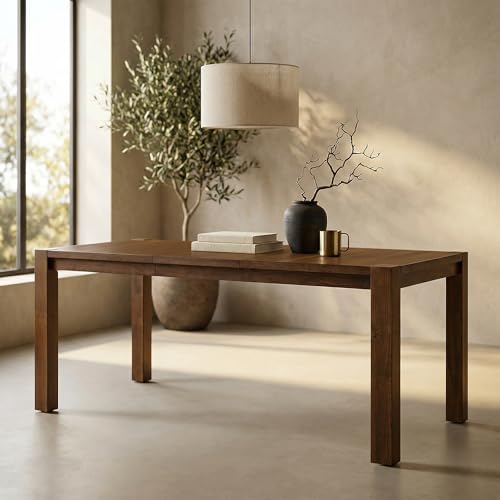
Farati 60"-80" Extendable Dining Table, Modern Rectangular Wood Kitchen Table, Farmhouse Expandable Dinner Table, Traditional Large Extension Meeting Desk for Dining Room, Living Room, Walnut
Check price on Amazon
ONBRILL 47 Inch Round Dining Table for 4-6, Walnut | Circle Kitchen Table with Fluted Base, Modern Farmhouse Dinner Tables for Kitchen, Living Room
Check price on Amazon
CONSDAN Dining Table for 4-6, Table Only, Walnut Veneer Top, Solid Wood Frame, Round Rectangular Shape, Softly Curved Edges, Elegant Look
Check price on Amazon
DAYALANE 70"Modern Wood Dining Table, Rectangular Kitchen Table/Walnut | For 4-6 Seats, Solid MDF Wood Dining Room Table Rectangular Kitchen Table, Walnut Veneer, Modern Style Home Office Table
Check price on Amazon
ModernMate 63"-78" Extendable Dining Table for 6-8 with Drawer, Walnut | Rectangular Kitchen Table, Double Pedestal Hidden Storage Legs, 3-Tier Pull-Out Drawers, Dining Room, Office, (Table Only)
Check price on Amazon
COLAMY ALVORA 72 Inch Dining Table, Rectangular Wood Dining Room Table for 6-8 People, Modern Farmhouse Kitchen Table, Natural Oak Veneer, Stable Heavy Duty Frame,Walnut
Check price on AmazonFrequently Asked Questions
Is a walnut veneer dining table as durable as solid walnut?
A well-made walnut veneer dining table can be very durable. The veneer is bonded to a stable engineered core, which resists warping and splitting better than a solid wood slab in fluctuating humidity. The top layer still needs protection from heat, moisture, and sharp impacts, but quality veneer tables hold up well for decades with proper care.
Can a walnut veneer dining table be refinished?
Light sanding and re-oiling or re-lacquering is possible on quality veneer, but heavy sanding is not recommended because the veneer layer is thin. For deep scratches or worn edges, a professional restoration is the safest route. Many veneer tables can be refreshed with a new topcoat rather than fully stripped and sanded.
How do I prevent water rings on a walnut veneer table?
Always use coasters, placemats, and trivets. Wipe spills immediately with a soft dry cloth rather than letting moisture sit. Avoid placing hot dishes directly on the surface, and consider a protective table pad for heavy daily use.
What is the difference between walnut veneer and walnut laminate?
Walnut veneer is a thin slice of real walnut wood bonded to a core panel, so it carries genuine wood grain and texture. Walnut laminate is a printed synthetic layer that imitates the look but has no real wood content. Veneer ages and repairs more like solid wood, while laminate is more uniform but less authentic.
Ready to choose your walnut veneer dining table?
Use the recommendations above to compare builds, finishes, and base styles — then pick the table that fits your room, your routine, and your long-term plans.