
Unfinished Solid Wood Dining Table: The Complete Buyer Guide
An unfinished solid wood dining table gives you full control over color, sheen, and protection. This guide explains wood species, grain matching, sanding standards, finish systems, and seating setup so you can choose and complete the right table with confidence.
Explore Recommended OptionsWhy this guide matters: Unfinished furniture is not a shortcut — it is a deliberate starting point. The wood arrives raw, and everything from the final tone to the surface durability depends on the decisions you make next. Read this page end to end before you buy, and you will know exactly what to inspect, what to ask the seller, and how to finish the table so it lasts for years.
What Is an Unfinished Solid Wood Dining Table?
An unfinished solid wood dining table is built from real wood planks or slabs and shipped with no stain, oil, wax, lacquer, or polyurethane topcoat. The surface is usually sanded to a working grit but left raw so the buyer can apply the finish of their choice. This is the opposite of a factory-finished table, where color and protection are locked in before delivery.
Solid wood means the top is milled from actual timber rather than a veneer over particleboard or MDF. That distinction matters for unfinished tables because raw veneer cannot be sanded aggressively without risk of burn-through, while solid wood can be sanded, repaired, and refinished repeatedly over its lifetime.
Buyers typically choose unfinished tables for three reasons: they want a specific stain or natural oil look, they want to avoid factory chemical finishes, or they plan to match the table to existing furniture in the room. If you are still deciding on the overall style, the broader black and grey dining table set guide is a useful companion for palette decisions.
Unfinished vs Pre-Finished: Which Suits Your Room?
Both options are legitimate. The right choice depends on your tolerance for DIY work, your desired finish, and how quickly you need the table in service.
| Factor | Unfinished Solid Wood | Pre-Finished Table |
|---|---|---|
| Color control | Full control — you choose stain, oil, or clear coat | Fixed at the factory |
| Time to use | Days to weeks of finishing work | Ready on delivery |
| Repairability | High — sanding and refinishing are straightforward | Moderate — depends on the factory finish |
| Chemical exposure | You choose low-VOC oils if preferred | Determined by the manufacturer |
| Best for | DIY finishers and custom color matching | Buyers who want immediate use |
If your priority is a table that matches an existing room palette, unfinished is usually the better path. If your priority is zero setup time, a pre-finished table is simpler.
Wood Species: What to Look For in a Raw Table
The species determines grain character, hardness, movement, and how the wood responds to finish. These are the most common options for unfinished dining tables.
Oak
Oak is dense, open-grained, and highly durable — a strong choice for family dining rooms. Red oak takes stain evenly; white oak has tighter grain and a cooler natural tone. Both accept oil and lacquer well and resist dents better than softer woods.
Walnut
Walnut is a premium species with rich chocolate tones and flowing grain. It is softer than oak but finishes beautifully with clear oil, which preserves its natural depth. Walnut is often the top-tier choice for statement dining tables.
Maple
Maple is hard, fine-grained, and pale. It takes stain unevenly, so many finishers prefer clear coats that let the natural blond tone show. It is a strong mid-range option for modern interiors.
Pine
Pine is an entry-level softwood with prominent knots and warm honey tones. It dents more easily, so it suits casual or rustic dining rooms rather than formal spaces. It is a solid choice for a first DIY finishing project.
Teak and Mahogany
Both are dense tropical hardwoods with strong natural oils. They finish well with penetrating oil and are naturally resistant to moisture. They sit in the premium to luxury tier and suit humid climates.
Grain, Knots, and Board Layout
The grain pattern is part of the value of a raw table. Before you buy, ask for photos of the actual top, not just a stock image. Look for:
- Grain continuity — planks should flow in a matched direction so the top reads as one surface.
- Knot placement — small, tight knots are character; large loose knots may need filling before finishing.
- Color variation — natural heartwood and sapwood contrast is normal in solid wood and adds depth; extreme mismatch may look patchy after a light stain.
- Board width — wider boards mean fewer seams and a more premium look.
If you plan a dark stain, subtle grain differences will mostly disappear. If you plan a clear oil finish, grain and color variation become the main visual feature.
Sanding Standards: What "Ready to Finish" Should Mean
Sellers describe unfinished tables differently. A table labeled "sanded" may be at 80 grit, which is a rough prep level, while a properly prepared top is usually taken to 150–180 grit before the first finish coat. Ask the seller for the final grit number. If they cannot confirm it, plan to sand the top yourself.
For a dining table, a practical sanding sequence is:
- Inspect for mill marks, glue lines, and raised grain.
- Sand progressively: 80, 120, then 150 or 180 grit.
- Wipe with a damp cloth to raise grain, then sand lightly at the final grit.
- Remove all dust before applying the first coat.
Do not skip intermediate grits. Jumping from 80 to 180 leaves scratches that show up dramatically once a finish is applied.
Finish Options for an Unfinished Dining Table
Your finish choice determines the table's look, protection level, and maintenance routine. These are the main categories, ranked from simplest to most durable.
Essential Tier — Penetrating Oil
Soaks into the wood, enhances grain, and feels natural to the touch. Easy to apply and spot-repair. Requires periodic re-oiling. Best for low-traffic or carefully used dining rooms.
Balanced Tier — Hardwax Oil
Combines oil penetration with a thin wax layer for better water resistance. A good middle ground for family dining tables. Spot repairs are possible without a full refinish.
Top Tier — Polyurethane or Lacquer
Forms a protective film on top of the wood. Highest resistance to spills, heat, and daily wear. Less natural feel and harder to spot-repair, but ideal for heavy daily use.
If you plan to match the table to a specific interior palette, a black and grey dining table set look is achievable with a dark stain plus matte topcoat. If you prefer a natural, light look, clear hardwax oil over oak or maple is the most reliable route.
Seating and Configuration for Your Raw Table
The finish is only half the decision. The seating layout shapes how the room feels and how the table is used day to day.
- A rectangle dining table with bench configuration suits long rooms and casual family dining.
- A round dining table with chairs that tuck under works well in compact spaces and encourages conversation.
- If you host larger gatherings, consider an extendable dining table with storage so leaves and linens stay organized.
- For formal entertaining, a single pedestal dining table keeps the seating perimeter clear of legs.
- For large family events, a 12 person dining table or an extendable table that seats 10 is worth planning for early.
- For everyday households, a 6 seater dining table and chairs set is one of the most versatile configurations.
- For small apartments or breakfast corners, a 36 inch dining table is a practical compact footprint.
Whatever the shape, leave at least 36 inches of clearance around the table for chairs to pull out comfortably. Chair height should pair with a standard 28–30 inch table height for typical dining comfort.
What to Inspect Before You Buy
Pre-Purchase Checklist
- Confirm the top is solid wood, not veneer over MDF.
- Ask for the final sanding grit number.
- Request photos of the actual top, including close-ups of seams and knots.
- Check that the frame is reinforced at the corners and legs.
- Confirm the table is flat — ask for a straightedge photo across the surface.
- Verify the leg attachment method: bolted brackets are easier to tighten than glued joints.
- Ask whether the wood has been kiln dried and to what moisture content.
- Confirm delivery packaging protects corners and edges during transit.
Common Mistakes to Avoid
- Finishing without testing. Always test your stain or oil on the underside first.
- Skipping dust removal. Dust trapped under a topcoat creates visible grit.
- Applying thick coats. Thin, even coats dry faster and bond better than heavy ones.
- Finishing both sides unevenly. Wood moves with humidity; sealing the underside helps balance moisture absorption.
- Ignoring room humidity. Solid wood expands and contracts; keep the room between 35% and 55% relative humidity.
- Using the table too soon. Film finishes need full cure time before heavy use — follow the product's stated schedule.
Maintenance After Finishing
Once the table is finished, maintenance depends on the finish system you chose. Oil-finished tables benefit from a light re-oil every 6–12 months depending on use. Film-finished tables need only a damp cloth wipe for daily cleaning and a mild soap solution for occasional deep cleaning. Avoid abrasive cleaners on any finish, and use coasters and placemats to reduce heat and moisture stress on the surface.
If a spot gets damaged, oil finishes can usually be repaired with a light sanding and re-oil in that area. Film finishes may require localized sanding and re-coating, which is easier if you keep a small amount of the original finish on hand.
Choosing the Right Tier for Your Household
Unfinished tables span the full market range. The tier that fits you depends on how the table will be used.
- Entry-level tier: Pine or rubberwood construction with simpler joinery. Suitable for casual dining rooms or first DIY projects.
- Mid-range tier: Oak or maple with reinforced corner blocks and consistent grain. A good balance of durability and finish quality.
- Premium tier: Walnut, teak, or wide-plank oak with matched grain and heavier frames. Suits formal dining rooms and long-term use.
- Luxury tier: Single-slab or book-matched hardwood tops with hand-selected grain and premium joinery. A long-term investment piece.
Across every tier, the finishing work you do will have more impact on the table's appearance and durability than the tier label alone. A well-finished mid-range oak table will often outperform a poorly finished premium table over ten years of daily use.
Recommended Unfinished Solid Wood Dining Tables
⚠️ AFFILIATE DISCLOSURE: This website contains affiliate links. As an affiliate Associate, we earn from qualifying purchases. If you make a purchase through these links, we may receive a small commission at no additional cost to you. Read our full affiliate policy.

International Concepts Solid Wood Top Dining table, 30 x 48, Unfinished
Check price on Amazon
Furniture Dash Wood Dining Table Corona
Check price on Amazon
IC International Concepts Solid Wood Java Butterfly Leaf Dining Table
Check price on Amazon
International Concepts Table Top Solid with Wood Counter Height Turned Legs, 30 by 48-Inch, Unfinished
Check price on Amazon
IC INTERNATIONAL CONCEPTS Solid Wood Top Table - Turned Legs
Check price on Amazon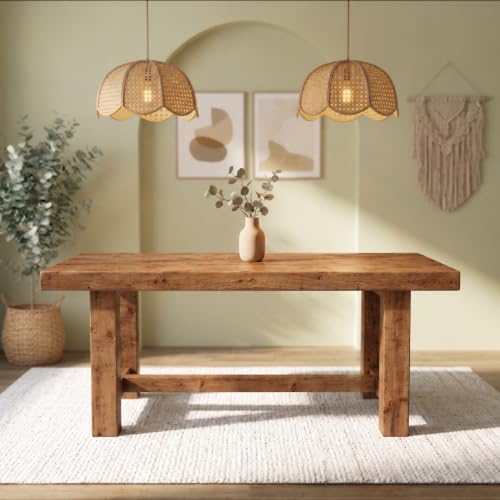
TRIBEWOOD 63-Inch Solid Wood Rectangular Dining Table for 4-6 People | Farmhouse Kitchen Table with Trestle Base, Real Wood Dining Tables for Dining Room,Apartment ,Elegant Details, Easy Assembly
Check price on Amazon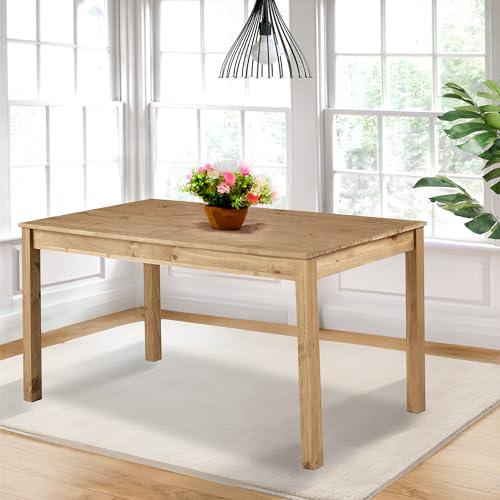
Furniture Dash - Solid Wood Dining Table - 59.06" W, 29.53" D, 29.72" H - 50.26lb (Natural Brown)
Check price on Amazon
Muwuele 47"-63" Solid Wood Extendable Dining Tables for 4-8, Natural | Compact Expandable Kitchen Table, Easy Assembly, Mid Century Modern, Dinner Table for Small Space, Dining Room, Apartment
Check price on AmazonFrequently Asked Questions
What is an unfinished solid wood dining table?
It is a table made from real wood and shipped with raw, sanded but unsealed surfaces. No stain, oil, or topcoat has been applied, so the buyer chooses and applies the finish.
Why choose unfinished over pre-finished?
Unfinished tables let you control the exact color, sheen, and protection level. They also suit buyers who prefer low-VOC natural oils or who want to match an existing room palette.
How long does it take to finish an unfinished dining table?
Most projects take two to five days of active work spread over a week or more, because each coat needs drying time between sanding and application.
Can an unfinished table be used outdoors?
Only if the wood is a rot-resistant species and the finish is a weather-rated exterior oil or marine-grade topcoat. Indoor furniture built from unfinished wood is not automatically outdoor-safe.
Which wood species is easiest for a first finishing project?
Pine and oak are the most forgiving. Pine is soft and takes stain unevenly, but it is easy to sand; oak is harder and holds oil and lacquer predictably. Walnut and maple are less forgiving for beginners.
Do I need to finish the underside of the table?
Yes. Sealing the underside helps balance moisture absorption and reduces the risk of the top warping as humidity changes across seasons.
Final thought: An unfinished solid wood dining table is a starting point, not a finished product. Choose a species that suits your room, confirm the sanding standard, and pick a finish system that matches your maintenance routine. Do that, and you will have a table that fits the room and lasts for years.