
Teak Outdoor Extension Dining Table: The Complete Buying Guide
Everything you need to know before choosing a teak outdoor extension dining table — from wood grades and extension mechanisms to weather care, sizing, and long-term durability.
A teak outdoor extension dining table combines two of the most practical qualities for outdoor entertaining: the natural weather resistance of teak and the flexibility of an extendable surface. It lets a compact patio table serve everyday meals, then expand for guests without permanently taking over your outdoor space. This guide walks through the decisions that matter most so you can buy with confidence.
Why Teak Is the Benchmark Wood for Outdoor Tables
Teak has earned its reputation because its heartwood is dense, naturally oily, and rich in silica. Those properties make it resistant to moisture absorption, rot, fungal growth, and termite attack — the exact threats that destroy ordinary outdoor furniture. Unlike softwoods that need constant sealing, teak can be left outdoors year-round with minimal intervention.
Teak also behaves well structurally. It expands and contracts less dramatically than many woods when humidity shifts, which matters enormously for an extension table where leaves must slide, fold, or lift smoothly season after season. If you want to compare this material against other solid timber options, our solid wood dining table guide explains how different woods perform in real-world conditions.
Left untreated, teak develops a silver-gray patina that many owners prefer for a relaxed, weathered look. If you want to preserve the warm honey-brown tone, a periodic clean and sealer application keeps it close to its original appearance.
Understanding Teak Grades Before You Buy
Not all teak is equal, and the grade directly affects durability, appearance, and how well the table ages. Most reputable makers reference a grading system based on how much heartwood versus sapwood is used.
| Tier | Characteristics | Best For |
|---|---|---|
| Grade A (top-tier) | Heartwood-dominant, minimal knots, uniform grain, tight color consistency | Long-term outdoor investment, exposed patios |
| Grade B (mid-tier) | Some knots and light sapwood, good grain, minor color variation | Sheltered patios, covered porches, balanced budgets |
| Grade C (entry-level) | Noticeable sapwood, knots, wider color range, more visible defects | Seasonal use, covered areas, casual settings |
Grade A is the safest choice for a table that will sit fully exposed to sun and rain. Higher sapwood content in lower grades is more vulnerable to moisture and requires more attentive maintenance over the years.
Extension Mechanisms: Which Type Suits Your Space
The extension system is where teak outdoor tables differ most, and it is the feature you will interact with every time you host. Each mechanism trades off setup effort, storage, and stability.
Butterfly Leaf
A butterfly leaf folds in half and stores inside the table body, then unfolds and locks into place when needed. It is the most convenient option for frequent hosts because there are no loose panels to store. The trade-off is a more complex mechanism that must be built to tight tolerances to stay smooth in humid conditions.
Drop-Leaf
Drop leaves hinge down at the sides and lift up to extend the surface. This design is excellent for compact balconies or narrow patios where every inch counts. Stability is generally strong when the leaves are supported by proper brackets or gate legs.
Separate Leaf Panels
The table splits in the middle and one or more loose leaves are inserted. This is the most traditional and often the most robust approach, with fewer moving parts. The catch is that you must store the leaves safely when not in use, ideally indoors or in a dry cover.
Sizing an Extension Table for Your Patio
An extension table's real value is its range: a closed footprint that fits your everyday space, and an open footprint that seats a crowd. Measure both states before committing.
- Closed size: Should comfortably seat your household for daily meals without dominating the patio.
- Extended size: Should provide enough seating for your typical hosting maximum.
- Clearance: Plan roughly 36 inches of walking space around the table edge so chairs pull out freely.
- Umbrella compatibility: Confirm the table accepts a center or offset umbrella if shade is a priority.
If your outdoor area is tight, a compact round table option can maximize flow, while larger covered terraces may benefit from a large square table layout. For a broader look at planning clearance, see our guide to space around a dining table.
Weather Care and Long-Term Maintenance
Teak's resilience does not mean zero maintenance. A few simple habits keep an outdoor extension table functional and attractive for many seasons.
- Clean regularly: Use mild soapy water and a soft brush to remove dirt, pollen, and mildew before it embeds in the grain.
- Protect the mechanism: Keep the extension track clear of grit and lubricate moving parts according to the manufacturer's guidance.
- Seal if desired: Oiling or sealing preserves the golden tone but is optional; untreated teak ages to a graceful silver-gray.
- Cover when idle: A breathable cover protects the surface and mechanism during long off-seasons without trapping moisture.
- Inspect hardware: Tighten bolts and check brackets at the start of each outdoor season.
For a broader maintenance reference, our dining table cover guide explains how to choose protective covers that let wood breathe. If you plan to pair teak with stone surfaces elsewhere in the home, the marble dining table guide covers care for natural stone.
Style Pairing for Outdoor Teak Tables
Teak's warm, natural tone is remarkably versatile. A classic silhouette suits traditional patios and garden settings, while cleaner modern lines work well on contemporary decks. If you are building a cohesive look, our classic style dining table guide covers how to balance traditional forms with modern outdoor materials.
Pairing teak with matching benches or slatted chairs keeps the look unified and practical for outdoor use. Lighter cushions and natural textiles soften the wood's warmth without competing with it.
Quick Comparison: What to Prioritize by Use Case
| Scenario | Priority Feature | Suggested Tier |
|---|---|---|
| Frequent outdoor hosting | Smooth butterfly or drop-leaf mechanism, Grade A heartwood | Premium to luxury |
| Covered patio, everyday use | Solid separate-leaf design, Grade B tolerance | Mid-range |
| Seasonal or compact balcony | Drop-leaf compact footprint, lighter build | Entry-level to mid-tier |
| Large garden dining | Extended seating capacity, reinforced frame | High-end tier |
Frequently Asked Questions
Is teak a good wood for an outdoor extension dining table?
Yes. Teak's natural oils and dense fibers make it highly resistant to moisture, insects, and rot, making it one of the most reliable woods for outdoor furniture exposed to the elements.
What is the difference between Grade A and Grade C teak?
Grade A teak comes from the heartwood and is largely free of knots, sapwood, and defects. Grade C includes more sapwood, knots, and color variation, requiring more attentive care over time.
How much space do I need around an extension dining table?
A common guideline is about 36 inches of clearance between the table edge and walls or furniture so chairs pull out and people walk behind them comfortably.
Should I oil my teak outdoor extension dining table?
Oiling is optional. Untreated teak weathers to a silver-gray patina. If you prefer the warm golden-brown tone, apply a dedicated teak sealer or oil periodically after cleaning and drying.
Ready to Explore Teak Outdoor Extension Tables?
Compare models, mechanisms, and build quality to find the table that fits your patio and your hosting style.
Explore Buying GuidesRecommended Teak Outdoor Extension Dining Tables
⚠️ AFFILIATE DISCLOSURE: This website contains affiliate links. As an affiliate Associate, we earn from qualifying purchases. If you make a purchase through these links, we may receive a small commission at no additional cost to you. Read our full affiliate policy.
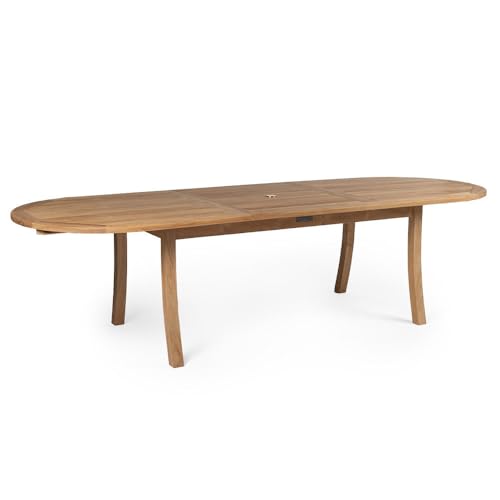
TITAN GREAT OUTDOORS Ash & Ember Sage Grade A Teak Extended Oval Dining Table, 82.5"-115" Extended Length, Seats 6 to 8 People, Weather-Resistant Patio Dining Furniture
Check price on Amazon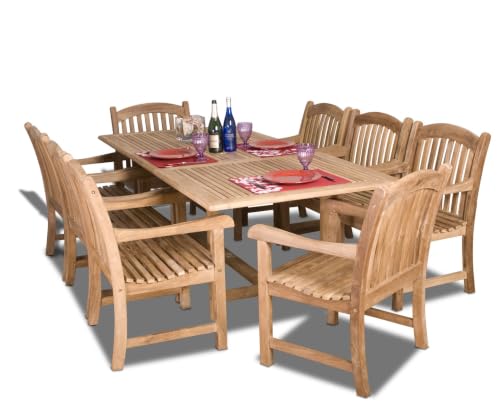
Amazonia Newcastle 9-Piece Outdoor Rectangular Dining Table Set | Certified Teak | Ideal for Patio and Indoors, Light Brown
Check price on Amazon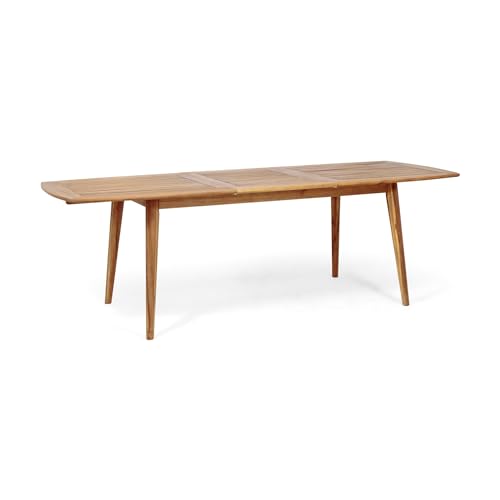
Christopher Knight Home Stamford Outdoor Acacia Wood Expandable Dining Table, Teak
Check price on Amazon
Christopher Knight Home Hawoo Acacia Wood Extendable Dining Table, Rectangular Expandable Dining Room Table, Farmhouse Outdoor Kitchen Table, Teak
Check price on Amazon
Amazonia Berlin Patio Extendable Table | Teak Finish | Durable and Ideal for Indoors and Outdoors
Check price on Amazon
Anderson Teak Sahara Rectangular Double Extension Table - Outdoor Patio Dining 126"
Check price on Amazon
SEEHILL Teak Expandable Outdoor Dining Table for 8, Never-Rust Aluminum Patio Dining Table, 63''-83'' X-Shaped Extendable Dining Table with Umbrella Hole for Garden Porch Deck Indoor or Outdoor Meals
Check price on Amazon
82"-118" Oval Extendable Teak Outdoor Patio Dining Table
Check price on AmazonFinal Buying Checklist
Before you commit, run through this short checklist to avoid the most common outdoor table mistakes:
- Confirm the teak grade and heartwood content.
- Test the extension mechanism for smooth, wobble-free operation.
- Verify both closed and extended dimensions against your patio.
- Check hardware material — stainless steel is the outdoor standard.
- Confirm umbrella compatibility if shade matters.
- Review the warranty and care instructions.
For a deeper look at how different wood species compare for durability and care, the custom walnut table guide offers a useful contrast for indoor wood selection.