
Teak Outdoor Extendable Dining Table: The Complete Buying Guide
Everything you need to evaluate a teak extendable patio table — lumber grade, joinery, extension mechanisms, seating capacity, and long-term weather care — so you can choose with confidence.
Jump to the VerdictWhy this guide exists: A teak outdoor extendable dining table solves two problems at once — it survives year-round exposure to sun and rain, and it adapts from everyday family meals to larger gatherings. But not all teak tables are equal. The lumber grade, the way the extension leaf is stored, and the joinery of the frame all determine whether the table stays flat and stable for a decade or develops wobble within a few seasons. This guide walks you through each factor in plain language so you can compare options on substance rather than marketing claims.
What Makes Teak the Reference Standard for Outdoor Tables
Teak (Tectona grandis) earns its reputation from two natural properties: a high concentration of protective oils and a dense silica content within the grain. Together these resist moisture penetration, fungal growth, and insect attack far better than most hardwoods. That means a well-built teak table can remain outdoors in rain, heat, and cold without the rot and warping that plague softer woods.
Equally important, teak ages predictably. Left untreated, the surface gradually shifts from warm golden-brown to a soft silver-grey patina while the structure underneath stays intact. If you prefer the original honey tone, periodic oiling maintains it; if you prefer the weathered look, simply clean it. This flexibility is why teak remains the default choice for serious outdoor dining furniture.
If you are comparing teak against other weather-ready materials, our dining table materials and finishes hub breaks down how stone, metal, and composite surfaces behave under outdoor conditions.
Why Choose an Extendable Teak Table
An extendable design turns a compact patio table into a flexible hosting surface. In its closed position, the table fits comfortably on a balcony or small terrace. When guests arrive, one or two extension leaves increase the length substantially, accommodating additional diners without a second table.
- Adaptable footprint: keeps daily use compact while providing room for occasional gatherings.
- Single investment: replaces the need for both a small everyday table and a large event table.
- Consistent finish: the extension panels match the main top, so the table looks unified when open.
- Better seating logic: most extendable teak tables seat four to six closed and up to ten extended.
If your space is fixed and compact rather than flexible, a purpose-built round model may suit better — see our guide to the 55-inch round dining table for a comparison of fixed versus extendable footprints.
Teak Grades: What the Label Actually Means
The single most misunderstood factor in teak furniture is grading. "Grade A" and "Grade B" are not regulated terms, but they are used consistently enough in the trade to be useful reference points.
| Grade | What It Indicates | Best For |
|---|---|---|
| Grade A heartwood | Cut from the inner heartwood, minimal knots, uniform grain, high natural oil content | Tables left outdoors year-round; premium and luxury tier builds |
| Grade B | May include sapwood, more knots, and visible colour variation | Covered patios, seasonal use, entry-level and mid-range builds |
| Grade C | Higher proportion of sapwood and defects; less oil-rich | Occasional or sheltered use only |
For a table that will live permanently outside, insist on grade A heartwood. The oil content is what protects the wood, and sapwood contains far less of it. A premium-tier table built from grade A heartwood will typically outlast an entry-level table of the same nominal dimensions by a wide margin.
Extension Mechanisms Compared
The extension system is the most mechanically complex part of the table and the most common failure point. Three designs dominate the market:
Butterfly Leaf (Self-Storing)
The leaf folds and stows beneath the tabletop, so there is no separate panel to store or lose. This is the most convenient design for regular use, but the folding hardware must be robust. Look for stainless-steel hinges and a positive locking mechanism.
Drop-In Leaf
One or two loose panels slot into the centre after the top is drawn apart. This design is simpler and often more rigid once assembled, but you must store the leafs separately when not in use. Confirm the leafs are made from the same grade of teak as the main top.
Sliding Rail System
The top halves glide apart on metal rails to reveal a central gap. This offers the smoothest operation and the most stable extended surface, and is common on high-end and professional-grade tables. The trade-off is weight and complexity — inspect the rail material carefully, since outdoor moisture attacks low-grade steel.
Key check: Whatever the mechanism, all metal components should be stainless steel or marine-grade hardware. Standard steel fittings corrode quickly outdoors and can stain the surrounding teak.
Joinery and Frame Construction
Teak's durability means nothing if the frame is poorly joined. The strongest outdoor tables use mortise-and-tenon joints, often reinforced with dowels or stainless hardware. Avoid tables that rely on screws driven directly into end grain, which loosen as the wood expands and contracts with humidity.
- Leg construction: chunky, solid legs resist racking better than thin turned legs, especially when the table is extended.
- Aprons and stretchers: cross-bracing beneath the top keeps the table rigid; extended tables need extra support to prevent sag.
- Slatted tops: allow water to drain and air to circulate, reducing standing moisture. Ensure slats are closely spaced for a stable dining surface.
- Movable parts: any table with an extension mechanism must account for seasonal wood movement; oversized fixed panels without allowance can crack.
For a deeper look at how frames and legs affect stability across table types, our dining table frame guide and dining table leg guide cover the structural fundamentals.
Sizing and Seating Capacity
Seating capacity depends on both the closed and extended length. As a working rule, allow roughly 60 cm of table edge per diner for comfortable elbow room, and at least 75 cm of clearance on all sides for chairs to pull out.
| Configuration | Typical Seating | Best For |
|---|---|---|
| Compact / closed | 4 to 6 diners | Everyday family meals, balconies, small terraces |
| One leaf extended | 6 to 8 diners | Weekend hosting, medium patios |
| Fully extended | 8 to 10 diners | Large gatherings, garden parties |
For very large gatherings, a dedicated large-format table may be more practical than extending a smaller one repeatedly — see our overview of the ten-person outdoor dining table. If you prefer a pedestal base for legroom, the white pedestal outdoor dining table shows how pedestal designs handle outdoor seating differently.
Matching Chairs and Completing the Set
Teak tables pair naturally with teak, aluminium, or woven chairs. Whatever you choose, confirm the seat height aligns with the table's apron height — a mismatch causes knee collisions and awkward posture. Our dining chair selection guide and dining table chair height guide explain the measurements to check.
If you prefer a coordinated look, a complete round dining table and chair set or a maple dining table and chairs set demonstrates how matched materials create visual cohesion. For a softer, understated palette, a neutral dining table set pairs well with the warm tones of weathered teak.
Care and Long-Term Maintenance
Teak is genuinely low-maintenance, but a few habits extend its life considerably:
- Clean regularly: wash with mild soap and water, then rinse and allow to dry. Avoid harsh detergents that strip natural oils.
- Oiling is optional: oiling preserves the golden tone and slows the silver-grey patina. Apply a thin coat of dedicated teak oil once or twice a year if you want to maintain the original colour.
- Cover when idle: a breathable cover protects against debris and standing water during long periods of non-use. Avoid sealed plastic covers that trap moisture.
- Inspect hardware: check stainless fittings and extension mechanisms seasonally, tightening or lubricating as needed.
- Address stains promptly: food and drink spills are easier to lift before they set into the grain.
Our dining table routine upkeep guide and humidity care guide expand on seasonal maintenance for wood surfaces.
Common Buying Mistakes to Avoid
Buyers new to teak outdoor furniture tend to make a handful of predictable errors. Avoid these and you will get far more from your table:
- Ignoring the grade: assuming all teak is equal. Grade A heartwood and grade C sapwood-heavy lumber behave very differently outdoors.
- Overlooking hardware: standard steel fittings corrode quickly and can stain the wood. Insist on stainless steel or marine-grade components.
- Miscalculating space: measuring only the table footprint without allowing chair pull-out clearance. Our space planning guide helps you measure correctly.
- Buying before testing the mechanism: extend and retract the table yourself, if possible, to confirm smooth operation and positive locking.
- Assuming the leaf is included: some listings separate the extension leaf from the base table. Confirm what is included before ordering.
For a broader checklist, see our dining table buying mistakes article.
The Verdict: What to Prioritize
When evaluating a teak outdoor extendable dining table, prioritize in this order:
- Grade A heartwood — the foundation of durability.
- Stainless or marine-grade hardware — the weak point in most outdoor furniture.
- A tested extension mechanism — butterfly, drop-in, or sliding rail, but built to last.
- Solid joinery — mortise-and-tenon construction that stays tight through seasonal movement.
- Correct sizing — closed and extended dimensions that fit your actual space.
A mid-range table built from grade A heartwood with stainless hardware will typically outperform a luxury-tier table that cuts corners on fittings. Focus on substance, and the table will serve you for many seasons.
Ready to Explore Your Options?
Browse curated teak outdoor extendable dining tables and compare features side by side.
Explore OptionsFrequently Asked Questions
Does teak need to be oiled to survive outdoors?
No. Teak contains natural oils and silica that resist moisture, insects, and rot, so it performs well unfinished. Oiling simply slows the natural silver-grey patina and deepens the golden-brown tone. Left untreated, the surface weathers gracefully and remains structurally sound.
How many people can an extendable teak table seat?
A typical extendable teak table seats four to six when compact and six to ten when fully extended, depending on panel width. Always confirm the extended length and allow roughly 60 cm of table edge per diner for comfortable elbow room.
Can a teak extendable table stay outside all year?
Yes. Teak is one of the most weather-tolerant hardwoods and handles rain, sun, and temperature swings well. A breathable cover during long idle periods protects the surface from debris and standing water, while leaving the table uncovered in normal use allows it to dry naturally.
What is the difference between grade A and grade B teak?
Grade A teak is cut from the heartwood with minimal knots and consistent grain, giving a uniform appearance and strong natural oil content. Grade B teak may include sapwood, more knots, and colour variation. For a table exposed to constant weather, grade A heartwood is the more durable and stable choice.
Recommended Teak Outdoor Extendable Dining Tables
⚠️ AFFILIATE DISCLOSURE: This website contains affiliate links. As an affiliate Associate, we earn from qualifying purchases. If you make a purchase through these links, we may receive a small commission at no additional cost to you. Read our full affiliate policy.

Amazonia Berlin Patio Extendable Table | Teak Finish | Durable and Ideal for Indoors and Outdoors
Check price on Amazon
Christopher Knight Home Hawoo Acacia Wood Extendable Dining Table, Rectangular Expandable Dining Room Table, Farmhouse Outdoor Kitchen Table, Teak
Check price on Amazon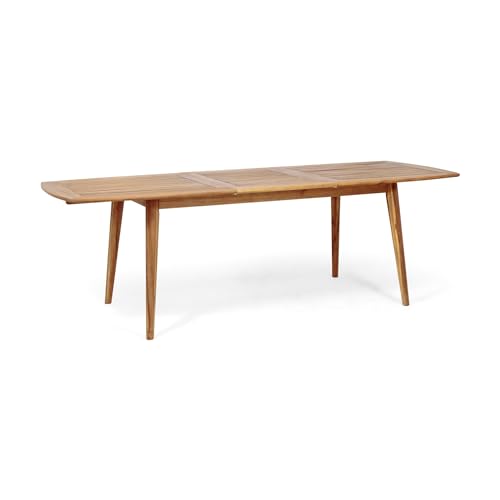
Christopher Knight Home Stamford Outdoor Acacia Wood Expandable Dining Table, Teak
Check price on Amazon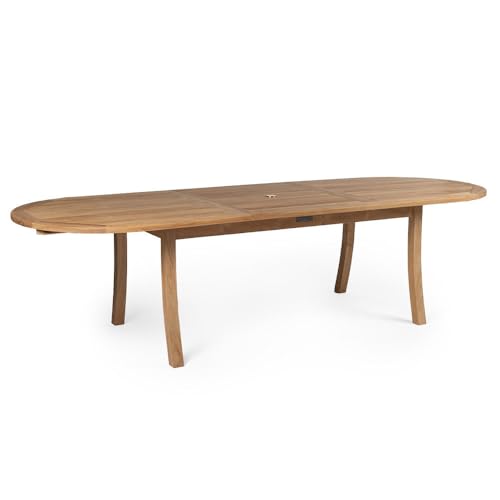
TITAN GREAT OUTDOORS Ash & Ember Sage Grade A Teak Extended Oval Dining Table, 82.5"-115" Extended Length, Seats 6 to 8 People, Weather-Resistant Patio Dining Furniture
Check price on Amazon
Sophia & William Teak Outdoor Table, Expandable Wood Table w/Umbrella Hole | Large rectangle acacia wood table for 6-8. Perfect for patio, deck, porch, backyard.
Check price on Amazon
Modway Marina Outdoor Patio Teak Dining
Check price on Amazon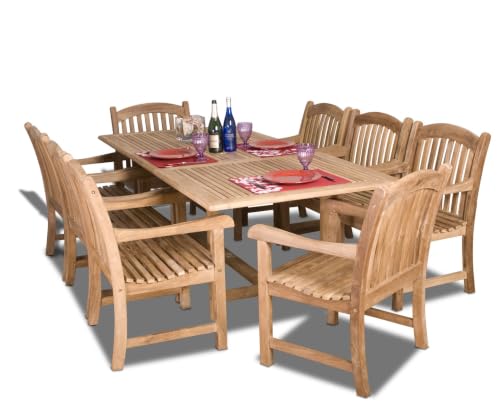
Amazonia Newcastle 9-Piece Outdoor Rectangular Dining Table Set | Certified Teak | Ideal for Patio and Indoors, Light Brown
Check price on Amazon